
ElPais
Peter Mullan, Actor And Director: ‘Militant Left-Wing Filmmakers Are On The Verge Of Extinction’

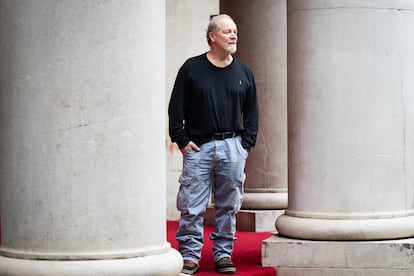
Although the Scottish actor Peter Mullan, 67, is better known for his acting work in the 1990s (Riff-Raff, Shallow Grave, Braveheart, Trainspotting, My Name Is Joe, Miss Julie or Ordinary Decent Criminal), a streak he has managed to sustain through this century (War Horse, Children of Men, Redemption, Sunshine on Leith and dozens upon dozens of other credits), there is a striking detail in his résumé of around a hundred screen performances. He has directed only three feature films — and all of them were highly successful: with Orphans (1998) he won several awards in Venice; The Magdalene Sisters (2002) took the Golden Lion in Venice; and Neds (2010) won the Golden Shell in San Sebastián. After that, there was silence as a director.
Not as an actor, though — he has always been versatile and used his rugged looks and roguish gaze to his advantage, even in fantasy series like The Lord of the Rings or The Witcher. Still, that itch remains, and although he accepts the lifetime achievement award being given to him by the Gijón Film Festival — he won with Orphans at this event — having the conversation about his past as a director elicits a couple of gestures and some bitter jokes.
Question. After winning with Neds in San Sebastián, you said you would never retire but that directing strongly appealed to you, since you started in the film industry directing shorts. What happened?
Answer. They didn’t give me any dinero [he says the word in Spanish]. I wrote several scripts for film and television. One about corruption in the administration of George W. Bush. Another one about the life of Alex Ferguson, and how a poor Glaswegian ended up face to face with the millionaires of the English league during his 27 years as Manchester United manager. With him, I also went through the social history of Scotland and England. Another one was about the film industry. Nothing — nobody gave me money.

Q. Ken Loach will not make films again, and with him the voices of a generation of left-wing filmmakers are fading.
A. For as long as I can remember, left-wing people have suffered, we have been constantly challenged. So today all that remains is the struggle, fighting to find other ways to make our films. It has never been easy. Ken hasn’t had box-office hits, but he had a loyal audience and always tried to reach as wide a public as possible. And though it’s not a new complaint, now militant left-wing filmmakers are on the verge of extinction.
Q. Global polarization doesn’t help, either.
A. I’m not so sure. I sense things are changing, because people are no longer attracted to Trump’s toxicity. My God, he was aligned with Putin and called him “my friend.” And both of them alongside Xi Jinping… Anyway, there is now a generation of young people who don’t want to resemble, as the previous cohort did, those who lead this neoliberal garbage. Billionaires like Musk, Zuckerberg and Bezos — cruel, selfish types. These kids think: “These people would literally kill us all.” They’re so implausible in their positions you wouldn’t even buy them as Bond villains [and he gestures as if holding a cat in his lap].
Q. How much choice have you been able to exercise in your acting career?
A. Quite a bit, because alongside roles close to my own views and cinematic tastes, I’ve done many fantasy series. Right now I’m on the series A Knight of the Seven Kingdoms, and that kind of entertainment lets me work on low-budget films. Last year I was in I Swear, which its director, Kirk Jones, paid for out of his own pocket and, despite being a big hit, hasn’t generated a single pound of profit for him because movie theaters kept 70% of the revenues. So how can you dedicate three years of your life to that? I’ve just shot Mountain, and we didn’t even get to three weeks of filming.
Q. How do you build small but pivotal roles like the one in I Swear or the father of Andrew Scott in Elsinore? You have to weave intense emotional relationships in two days of shooting.
A. And in that one I had to cry in a parking lot. I haven’t seen the film — is that sequence in it? [The reporter confirms it]. Well, it’s a good example. The director didn’t know if I could cry, so you go, you risk it, you satisfy him and you leave. And you don’t even know whether they’ll respect you in the edit.
Q. I suppose Loach is one of your most beloved directors, but have you worked with anyone detestable?
A. Except for one occasion, I’ve always encountered talented people, directors exceptional both creatively and humanly. The exception was Brett Ratner — an unpleasant fellow. And yes, Loach stands above them. When I won the best actor award at Cannes for My Name Is Joe, Martin Scorsese chaired the jury. At the closing ceremony he ran up to me and said [he imitates the unmistakable New York voice]: “Tell me, Peter, tell me. How does Loach do it? How does he get those performances?” I told him the truth. Ken doesn’t stare at actors. He stands to the side and listens to them. And if the dialogue sounds honest, the take is worth it. That’s why he’s a director of actors. When Krzysztof Kieślowski [the Polish auteur genius] retired, he said he would only return to cinema to act in a Loach scene, even if it was just to make tea. Those two anecdotes give you an idea of his greatness.
Q. You’ve always said you’re a fan of Luis Buñuel.
A. I’m fascinated by him! I love his work. What I like most about Buñuel is that he wasn’t afraid to place the camera and let the dream flow— without tricks, without high-minded pretensions. He was wonderfully subversive. I watch his films all the time. The Exterminating Angel blew my mind. And when I read that he directed soap operas in Mexico, I thought: “Fuck! This guy couldn’t care less.” He wasn’t snobby or elitist. When you direct soap operas, you’re down there in the mud; they treat you like dirt. What film festival would invite a Mexican soap-opera director? I love that he did it. Think about it. He began with An Andalusian Dog, worked with Salvador Dalí, his great friend was Picasso… and he ended up directing Mexican soap operas! So when he returned to Europe and began creating his masterpieces in France and Spain, there was something different in his way of working that I adore. I watch his films now because they’re entertaining and because they tackle issues like class differences, death and politics. Much like today’s Korean zombie films. You watch them and say: “My God! They’re dealing with economic inequality and discrimination. And it’s not social realism but a zombie movie!” With great actors. Why aren’t we in Europe making things this interesting? And that brings us back to left-wing cinema: we’ve been too obvious. Like singer-songwriters who play the Spanish guitar. Can’t you use an electric guitar and get closer to young people? No — we’re purists. And that’s how it’s gone for us.
Sign up for our weekly newsletter to get more English-language news coverage from EL PAÍS USA Edition

CNI
Safeguards Against Russian Interference And Cyberattack Threats Ahead Of November 29 Elections In Spain


Alberto Núñez Feijóo
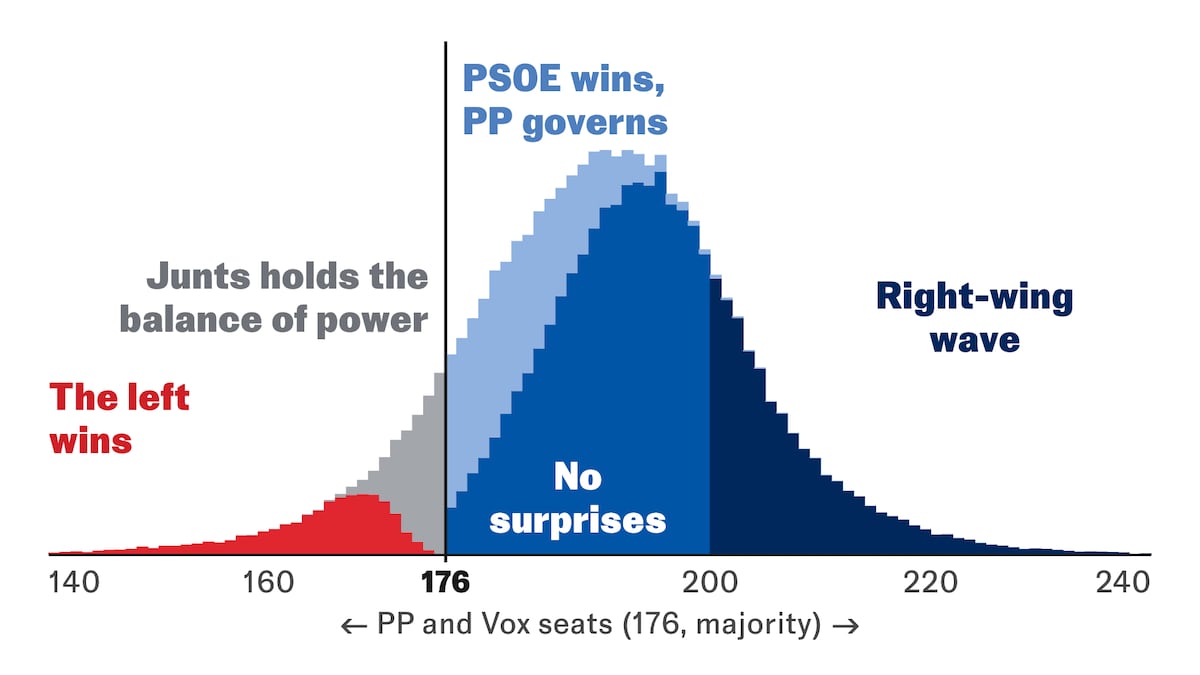
A Left-Wing Victory And Other Possible Surprises In Spain’s Election, According To The Polls

Amazon Prime Video
‘Blade Runner 2099’ Puts Two Women At The Center Of The Robotic Dystopia: ‘Our Questions Will Still Matter In 20 Years’

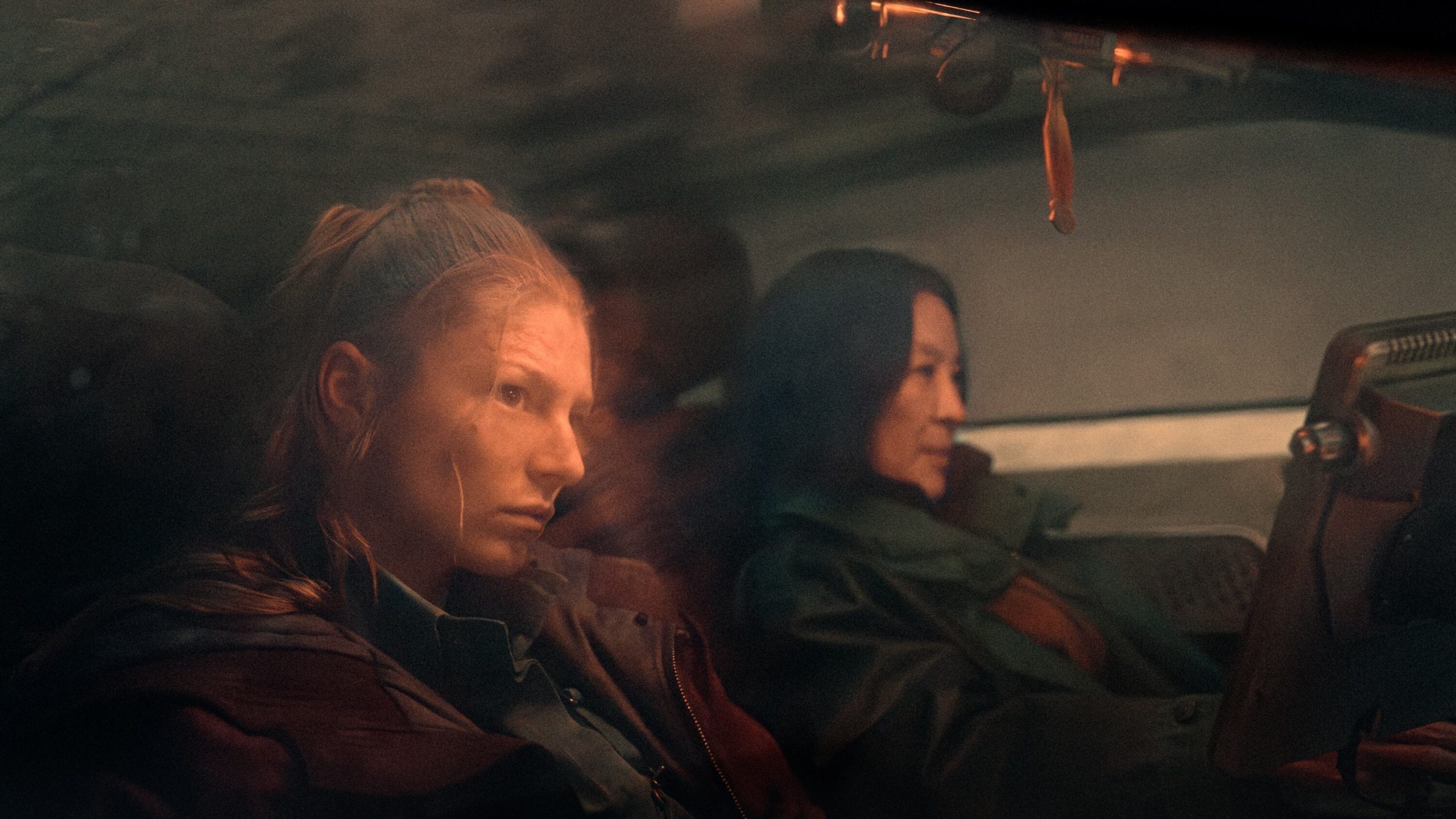
Hyper-polluted cities, police violence, megacorporate oligopolies, coexistence with artificial intelligence… the future envisioned in Blade Runner, originally set in the fictional year 2019, increasingly feels less like an alternative reality and more like our own. That is why screenwriter Silka Luisa wanted to try to update the perspective of the film that changed her career and her life.
“As a writer, you’re always looking for a challenge and for ways to sharpen your understanding of the world around you,” she says in a video call with EL PAÍS. “Blade Runner was asking deeply relevant questions about what it means to be human, what the future might look like, and what that would mean for all of us, which became fundamental. All of that anxiety is part of everyday life in our world now, so I wanted to look at those issues as a form of catharsis, to understand what it all meant.”
That initial pitch she put forward when she learned the franchise was set to expand eventually became Blade Runner 2099, an eight-episode series on Amazon Prime Video, with two women at its center: Oscar winner Michelle Yeoh (Everything Everywhere All at Once) and Hunter Schafer (best known for Euphoria), playing a replicant and a human, respectively. Even in Luisa’s original proposal to production company Alcon Entertainment, it was two female characters who replaced Harrison Ford and Ryan Gosling (the star of Blade Runner 2049) as the future’s police officers.
“I write female characters, so of course my two leads were going to be women. I always imagined there would have been female Blade Runners on the police force,” explains the creator of Shining Girls. Her writing team includes writers from Watchmen and The Acolyte, two other franchise series that brought women to the forefront.
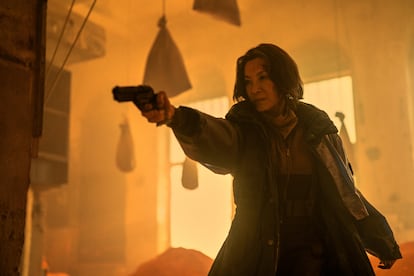
This time, 50 years after the events of the last film, Los Angeles has been reborn thanks to the adaptability of machines, which have created a utopia free of pollution. The protagonists are Cora, a human fugitive who poses as a robot in order to join the police force and undermine the system from within, and Alwyn, a replicant officer who is nearing the end of her life while investigating the mysterious disappearance of her partner. “Their relationship is at the heart of the entire story. And, as in the films, sometimes the human is more robot and the replicant more human,” the writer explains.
Despite the constant backlash on social media over the use of diverse protagonists in established franchises, in this case an Asian woman and a transgender woman, Luisa does not see it as a political choice: “Science fiction has always had female characters at its center. Ripley in Alien is hugely important to me, as the captain of her ship and someone who takes the lead. I’m simply telling a story about what it means to be human, and for that you need more than one point of view,” she says of characters who, until now, were often relegated to the roles of sidekick, prostitute (desire is also a theme here), or voiceless android.
“Blade Runner has never been about the politics of the moment,” adds Luisa. “It’s about philosophical questions that are timeless. We ask the big questions that will still matter in 10, 15, or 20 years, regardless of whatever conversation is dominating the present.”
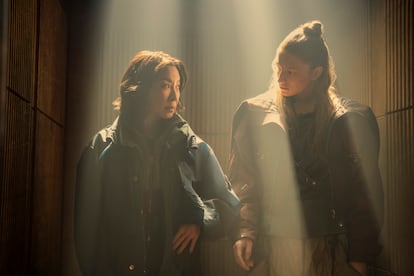
But while “replicants are different from AI because they have bodies and lived experiences in the world,” she explains, it is impossible not to draw comparisons with the present day. “What feels relevant is this idea that we don’t know what the world is going to look like, and we’re afraid of losing control amid everything that’s happening,” she explains. “I don’t know how Philip K. Dick was able to look so far into the future and predict where it would all lead, with technology colonizing more and more of our lives.”
She is quick to add, however, that as a screenwriter she has no intention of using AI herself, because she is fascinated by “the process” and would never want to lose it. “Much of what we show in the series is handmade,” she explains. “There are many artisans, and we film on location in Prague and in a city as beautiful as Barcelona. And these are artists of the highest caliber, creating a world by hand. It’s wonderful to see that collective magic when creating something. And that can never be replicated.”
Luisa says this even while working on a project set in a world increasingly dominated by entertainment franchises built on stories audiences have already seen before. What they did try to replicate, however, beyond the philosophical concerns at the heart of the story, was the instantly recognizable cyberpunk aesthetic of Blade Runner, first established by Ridley Scott and later taken in a new direction by Denis Villeneuve, who brought his own sensibility to the 2017 sequel. The metallic synthesizer sounds, the neon-lit visuals, and the neo-noir atmosphere built around a police investigation are all still there.
“Blade Runner has a very distinct aesthetic, in which the future is imagined by looking to the past,” she says. “We didn’t try to create something alien to people, something completely foreign. We built it by taking familiar objects and familiar architecture and creating a collage by piecing it all together. The design came from Ridley, who revolutionized science fiction.”
That is why cassette recorders and old television sets still appear in this future, and why the buildings are gray and made of concrete, rather than featuring sleek glass facades and pristine modern surfaces.
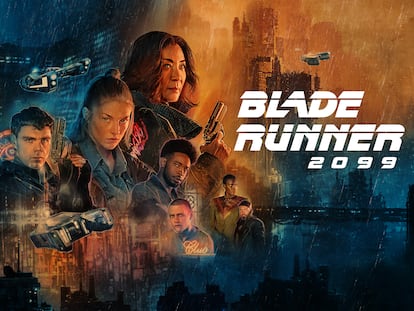
But what, then, could a series running for more than eight hours add to a universe so revered by film lovers? “I wanted a universe with more characters, more points of view — not just the police, nor just one person’s journey,” says Luisa “There are many human characters trying to navigate this new power dynamic. Some resent how they’re treated, others are jealous, and some replicants want to experience the full breadth of human experience.”
At the same time, she acknowledges that stepping into a franchise of this stature, while opening doors, can also be a daunting challenge, with many people scrutinizing your every move, especially when dealing with storylines as ambitious, expansive and complex as those in the Blade Runner universe, where everything unfolds at a deliberate pace. “Because it’s Blade Runner, it has to be maximalist. Every set has to be rich in detail and inspire a sense of wonder,” she says, without losing sight of the story’s deeper, inward journey and its meditation on what it means to be human.
What reassured her most, however, was the moment Ridley Scott signed off on the first draft. The director has not yet had a chance to see the finished series because, as Luisa explains, “he’s always filming, even at 88.” But sharing that human experience with a filmmaker she had always admired is something no replicant could ever match.
Even so, the new steward of the franchise doubts that, in the nearly 50 years since Blade Runner first appeared, we have truly absorbed the lessons it offered about living alongside androids. Today, she suggests, we have simply come to accept it as just another part of everyday life.
Sign up for our weekly newsletter to get more English-language news coverage from EL PAÍS USA Edition

Luxury Villas For Sale, Estepona – ProjectL1
Spain Awaits Key Vote On Sanchez As Right Eyes Power

Female Passenger Who Punched Malaga Airport Worker After Missing Her Ibiza Flight Tries To Appeal €400 Fine


-

 New Developments3 weeks ago
The San Roque Club – Townhouses For Sale
-
costa blanca live music4 weeks ago
Beatles tribute: The Liverpool Band returns to Orihuela Costa
-

 New Developments4 weeks ago
Stylish 3-Bedroom Apartment With Panoramic Sea Views – Benalmádena
-

 %4 days ago
Black Friday Shock As Just 6% Of Deals Pass OCU’s Genuine Bargain Test
-

 America4 weeks ago
Así Ha Sido La Primera Jornada Del World In Progress 2026: Del Anuncio De Sánchez De Ayudas Para Las Víctimas De Urda A La Reivindicación De Rebeca Grynspan Del Papel De La ONU
-
Eating out in Gibraltar4 weeks ago
Young woman left horrified after Gibraltar restaurant receipt carries shocking racist slur
-

 Uncategorized4 weeks ago
FIA explain Leclerc penalty decision as Hamilton left fuming after Ferrari clash
-

 Uncategorized4 weeks ago
F1 Results Today: Mexican Grand Prix final practice times and positions