Connect with us

%

Pope’s Spain Trip Ends In Travel Drama

Published

on

pope’s-spain-trip-ends-in-travel-drama

King Felipe comes to the rescue by lending the Pope his government jet Credit: Vatican Media

A routine flight home turned into an extraordinary travel drama when Pope Leo XIV found himself stranded in Spain after a technical fault grounded his aircraft, forcing an unexpected intervention from King Felipe VI.

The pontiff had just completed a six-day visit to Spain and was preparing to fly back to Rome from Tenerife North Airport when his departure was abruptly halted by a problem with the plane.

According to reports, the aircraft suffered a technical issue during pre-flight procedures, preventing it from taking off as scheduled. Engineers were unable to resolve the fault immediately, leaving the Pope and his entourage stuck on the ground while alternative arrangements were considered.

For most travellers, a delayed flight means hours spent waiting in an airport terminal. For the head of the Catholic Church, it led to an unusual royal rescue.

King Felipe steps in

Spain’s King Felipe VI had travelled to Tenerife to bid farewell to the Pope at the end of his visit. When it became clear that the aircraft would not be leaving on time, the King reportedly offered the use of his official Falcon government jet.

The gesture allowed Pope Leo to continue his journey to Rome without a lengthy delay, while members of the papal delegation and accompanying journalists remained behind to await a replacement aircraft.

The rare intervention quickly attracted international attention, highlighting the close ties between the Spanish monarchy and the Vatican.

A busy week across Spain

The travel disruption came at the end of a significant visit that took the Pope to several parts of Spain.

During the trip, Pope Leo celebrated Masses attended by thousands of worshippers, met political and religious leaders, and focused much of his message on migration and social inclusion.

One of the most symbolic moments of the tour came in Barcelona, where the pontiff took part in celebrations linked to the completion of the final tower of the world-famous Sagrada Família.

He also spent time in the Canary Islands, a region that has become one of Europe’s key arrival points for migrants crossing from Africa.

An unusual end to a historic visit

While aircraft faults are not uncommon in commercial aviation, it is exceptionally rare for a papal journey to be disrupted in such a public way.

Vatican watchers described the incident as one of the most unusual travel mishaps involving a Pope in recent years.

Despite the unexpected delay, Pope Leo eventually arrived safely in Rome, bringing an end to a visit that had already generated headlines across Spain. But for a few hours on a Tenerife runway, even one of the world’s most recognisable figures found himself facing a problem familiar to millions of travellers: a grounded plane and an uncertain journey home

%

Benalmadena Cable Car Stages Nighttime Rescue Drill With Provincial Firefighters And Drones

Published

on

benalmadena-cable-car-stages-nighttime-rescue-drill-with-provincial-firefighters-and-drones

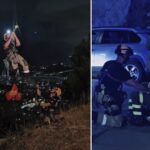
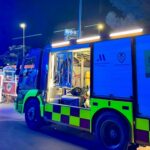
Crews run drill in the dead of night. Credit: Ayuntamiento de Benalmadena FB

Benalmadena organised its annual emergency exercise at the cable car last week, raising the level of challenge by involving firefighters from several towns across the province. But, this time, they decided to make the test even more difficult than previous years – by carrying it out in the pitch-black darkness of night.

Multiple services join forces in complex scenario

Firefighters were brought in from Benalmadena, Mijas, Fuengirola, Marbella and Malaga capital, and the provincial consortium worked together with national police, local officers, civil protection teams, Red Cross staff and the cable car’s own technicians.

Organisers recreated an incident that required the evacuation and rescue of around thirty people from cabins stranded on the line. The cable car is usually closed by nightfall, but on this occasion, they might have been thnking about the astronomy nights run during the summer or even the predicted eclipse in August of this year.

Fire crews carried out procedures for rescue work, operational coordination, victim care and resource management inside the distinctive cable car environment.

The activity allowed crews to assess joint response capacity during a demanding situation and to improve communication and other links between the different bodies involved.

Mayor observes drill with fire and police chiefs

Juan Antonio Lara, mayor of Benalmadena, attended the exercise accompanied by fire service heads of Malaga’s provincial fire brigade and the local police.

Both chiefs followed the work of the various teams at close range throughout the operation.

Drones with thermal cameras support night operations

Local police deployed their new drone unit during the evening phase of the drill. The little aircraft carried night vision equipment and thermal imaging cameras, enabling teams to obtain clear views inside the cable car cabins and to detect any passengers who, theoretically, might remain trapped inside.

Officers also used the drones to assist with search tasks, traffic control around the site and general support for the emergency response in low-light conditions.

Regular training builds readiness at popular attraction

The drill forms part of ongoing preparation designed to keep response standards high at one of the Costa del Sol’s well-known tourist sites during the busiest months of the year.

By bringing together a wide range of specialist teams and testing new technology in realistic nighttime settings, organisers noted down practical information on how modern tools can improve location and rescue times.

The exercise confirmed that the collaboration between local and provincial administrations as well as specialised organisations is excellent, supporting further progress in safety and prevention measures for the cable car ride.

Teams completed the full programme without complications and finished earlier than scheduled, providing clear evidence of effective planning and execution.

Continue Reading

%

Europe’s Most Stressful Roads Revealed

Published

on

europe’s-most-stressful-roads-revealed

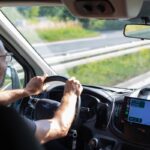
A motorist drives along a motorway as Europe’s most stressful roads are ranked. Credit : guteksk7, Shutterstock

A new study has ranked the most stressful countries to drive in across Europe, and the results may come as bad news for anyone planning a summer road trip. Poland, the Czech Republic and Romania all feature near the top, while Spain is among the easiest places to get behind the wheel.

For many holidaymakers, hiring a car is one of the best ways to explore Europe. It offers freedom, flexibility and the chance to discover places that trains and planes simply cannot reach. But depending on where you are driving, that freedom can quickly turn into frustration.

A new study by Czechvignette.cz has ranked the most stressful road networks in Europe by analysing factors including traffic congestion, road quality, vehicle density and road safety. The result is a list that highlights where drivers are most likely to face long delays, poor road conditions and higher accident risks.

At the top of the ranking is Poland, which received an overall stress score of 99.43 out of 100.

According to the researchers, the country combines some of Europe’s worst traffic congestion with below average road quality and one of the highest road death rates in the study. The report found that Poland’s infrastructure is struggling to keep pace with the growing number of vehicles using its roads every day.

For drivers arriving from Germany, the difference can apparently be noticeable almost immediately.

Mattijs Wijnmalen, chief executive of Czechvignette.cz, said one section of the A18 motorway near the German border is a good example of the issue. He explained that drivers often notice a sudden change in road surface quality after crossing into Poland, creating a very different driving experience within a matter of kilometres.

Why eastern Europe dominates the list of Europe’s toughest roads

Poland is not alone. The Czech Republic came second with a stress score of 94.92. While the country sits at the heart of Europe and serves as a major transport hub, its roads face heavy pressure from both domestic and international traffic.

Researchers found that congestion levels remain high and road quality scores lag behind many western European countries. The Czech Republic also has one of the highest rates of vehicle ownership in the ranking, with more than 600 registered vehicles for every 1,000 residents.

The study also pointed to factors that are harder to measure in statistics but which drivers experience first hand. These include sudden fog on busy routes, confusing diversions around roadworks and temporary traffic systems that can leave motorists second guessing which lane they should be in.

Romania ranked third overall, followed by Greece and Bulgaria.

What pushed these countries towards the top of the list was not necessarily traffic volume. In fact, some roads are less congested than those found in western Europe. The bigger concern is safety.

All three countries recorded some of the highest road fatality rates in the study.

Romania was singled out as being particularly challenging for inexperienced drivers. Researchers said deteriorating road surfaces, abrupt speed limit changes and strict enforcement can make driving there especially demanding.

In some areas, speed limits can drop sharply within a short distance, requiring drivers to react quickly while also keeping an eye out for cameras and police controls.

Italy scores worse than France, Germany and Spain

Many people might assume Italy would rank among Europe’s easiest places to drive thanks to its extensive motorway network.

The study suggests otherwise. Italy finished sixth overall, largely because of its exceptionally high vehicle density. Researchers found that the sheer number of cars on Italian roads creates a more stressful environment than in countries such as Spain, France, Germany and the United Kingdom.

Busy city traffic, crowded motorways and constant competition for road space all contribute to the country’s higher score.

That finding may resonate with anyone who has tried navigating Rome’s ring road, Milan’s traffic or the busy roads leading to popular coastal destinations during peak holiday season.

Spain ranks among Europe’s least stressful countries to drive in

There was better news for Spain. The country appeared among the five least stressful places to drive in Europe, alongside Sweden, Denmark, Norway and the Netherlands.

Spain’s modern motorway network, generally good road conditions and comparatively lower stress indicators helped it stand out from many other countries included in the research.

For the millions of tourists who drive in Spain every year, that ranking may not come as a huge surprise. Long stretches of well maintained motorways, relatively predictable road layouts and lower congestion levels outside major cities often make journeys less demanding than elsewhere on the continent.

The study also found that some of the most stressful moments for drivers have little to do with overall road quality.

Instead, pressure often peaks during transitions. Crossing into a new country, encountering unfamiliar toll systems or suddenly finding yourself diverted through roadworks can be enough to unsettle even experienced motorists.

Researchers noted that in countries such as Bulgaria and Romania, automated speed enforcement often begins as soon as drivers enter motorways, leaving little room for adjustment.

The rankings were compiled using data from the TomTom Traffic Index, Eurostat, the European Transport Safety Council, the World Economic Forum and World Population Review.

For anyone planning to drive across Europe this summer, the findings suggest that choosing the route may be just as important as choosing the destination.

Continue Reading

%

Ojen Local Swimming Pool Is Open

Published

on

ojen-local-swimming-pool-is-open

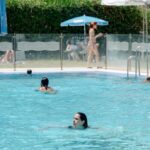
Great news for residents and visitors looking to escape the heat in the hills above Marbella as Ojen’s local town swimming pool has officially reopened its doors. The facilities are scheduled to remain open until mid September, offering a perfect spot for leisure and refreshment during the hottest months of the year.

Opening hours for the season

Monday to Friday, gates open at 12pm and close at 7pm. At weekends, swimmers can get in an hour earlier, with doors opening at 11am, still closing at 7pm. Worth noting is that advance bookings are only available up to one week ahead, so planning too far in advance is not possible.

How to book your spot at Ojen pool

Getting in requires a reservation. 75% of available tickets are sold online via the pool’s official website, while the remaining 25% are sold on the door on a first-come, first-served basis until they run out. Turning up without a booking is therefore a risk during busy periods, so booking online in advance is strongly recommended.

Prices and discounts for 2026

Entry fees are reasonable and family friendly

Under 2s: Free
Ages 2–14:€3
Ages 15 and over:€4

Cardholders benefit from reduced rates, paying just €1 for children aged 2–14 and €2 for those aged 15 and above.

How to get a pool card

A pool card can be requested using a form available at Ojen’s town hall offices, submitted with a passport-sized photograph. Cards are personal and non-transferable, and anyone who held a card in a previous season can continue using it without needing to renew. Bear in mind that holding a card does not guarantee entry availability still applies.

Facilities and location

Located at the Ojen sports centre, just five minutes from Marbella. There is a terrace bar and restaurant that serves local tapas, grilled specialties, and cold drinks. Showers, changing rooms, covered shaded areas, toilets, on-site WiFi, and parking are all available. The facility is also fully accessible for wheelchair users, providing adapted parking and dedicated toilet facilities.

For more information visit the Ojen Town Hall website

Continue Reading
Advertisement
Advertisement

Spanish Real Estate Agents

Tags

Trending

Copyright © 2017 Spanish Property & News