Connect with us

%

Protected Species Trafficking Operation Uncovered In Spain Involving Hundreds Of Reptiles

Published

on

protected-species-trafficking-operation-uncovered-in-spain-involving-hundreds-of-reptiles

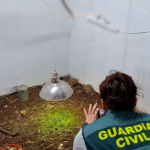
Investigators also found incubators, terrariums and containers used to transport the animals. Photo credit: Guardia Civil/Ministerio de Interior

If you’ve ever had a reptile as pets, you may have assumed that the biggest question at the time of buying them was whether you had the right enclosure, food and equipment to look after it.

But for some reptiles, there is another question before any of that: can you legally buy, sell, transport or import the animal at all? That is now under the spotlight in Spain after the Guardia Civil seized 209 reptiles and arrested three people accused of illegally trading protected species in Castellón.

209 reptiles found in two homes

The operation involved searches at properties in Jérica and Sot de Ferrer, where officers from Seprona in Valencia and Castellón found 209 reptiles. Of these, 110 were subject to different levels of protection under CITES, the international convention governing trade in threatened wild animals and plants. Among the animals was an iguana endemic to Fiji described by investigators as being in serious danger of extinction.

The searches also uncovered incubators, transport containers and terrariums, indicating that reptiles were being kept and bred as part of the suspected operation. According to the Guardia Civil, those arrested had been operating through what appeared to be a legitimate animal shipping business. Investigators allege that they obtained specimens through contacts in America, Africa and Asia, including animals taken directly from the wild.

From breeding to illegal sales

They allegedly bred reptiles clandestinely and then transported specimens to European fairs, where they could enter the legitimate market using documentation intended to establish their legal origin. The investigation is continuing as officers examine documents and electronic devices to determine the full extent of the alleged operation. 

The three suspects, two men aged 48 and 51 and a 37-year-old woman, face offences including crimes against wildlife, smuggling, money laundering and membership of a criminal organisation. They are suspects at this stage and have not been convicted. Four unlicensed pistols, almost 200 rounds of handgun ammunition, an air rifle, a Taser and an extendable baton were also seized.

What exactly is CITES?

CITES stands for the Convention on International Trade in Endangered Species of Wild Fauna and Flora. It is an international agreement designed to ensure that international trade in wild animals and plants does not threaten their survival. It does not simply mean that every CITES animal is banned from being owned or sold. 

Instead, species are divided into three levels of protection, known as Appendices. Appendix I covers species facing the greatest threat of extinction and international commercial trade in specimens is generally prohibited, subject to limited exceptions. Appendix II covers species that are not necessarily threatened with extinction now but could become so if trade is not strictly controlled. International trade can take place when the required permits or certificates are obtained. 

Appendix III covers species protected in at least one country where that country asks other CITES countries for help controlling international trade. The system is designed to make animals and their origins traceable, with permits and certificates showing where specimens came from, where they are going and why they are being traded. Spain applies CITES through European Union legislation as well as Spanish rules.

What counts as a protected species in Spain?

CITES is only one part of the picture, Spain also has its own List of Wild Species under Special Protection and the Spanish Catalogue of Endangered Species. Being protected does not necessarily mean an animal is endangered. Species can receive legal protection because of their conservation status or the need to prevent threats to their populations.

The national catalogue currently includes 1,010 taxa across plants, invertebrates, fish, amphibians, reptiles, birds and mammals. Among reptiles, 52 taxa are listed under the special protection regime, while eight are classified as vulnerable and another eight as endangered. This means the phrase “protected species” covers more than animals that are on the brink of extinction. Some species are protected because their populations require control and conservation measures, while CITES specifically addresses the international trade that can threaten wild populations.

For anyone buying an exotic animal in Spain, the rules depend on the species and how it was obtained. A species can be legally kept under certain circumstances while its international movement, import, export, breeding or sale remains subject to specific requirements. In the Castellón case, investigators are now examining whether those rules were deliberately bypassed and how many animals may have passed through the alleged trading network.

%

Hikers Are Ready To March Into Marbella

Published

on

hikers-are-ready-to-march-into-marbella

Marbella’s streets, beaches and hillside tracks will fill with walkers from nearly twenty countries between October 1 and 4, as the town hosts the fifteenth round of Marbella 4 Days Walking. Around 4,000 participants are expected, with roughly seven in ten travelling from abroad, making it one of the biggest international gatherings on the coast.

What exactly is Marbella 4 Days Walking?

Born in the Netherlands and now adopted by Marbella, this festival invites hikers of all abilities to pick between 10km, 20km and 30km circuits on each day of the event. Circuits wind through the old town, along the seafront promenade and up into the countryside towards the foothills of Sierra Blanca, giving entrants a proper look at Marbella beyond its beach clubs and marinas. Saturday and Sunday bring “Challenge” routes for anyone wanting an extra test of stamina.

Every stage starts and ends at the same central point near the seafront, where organisers lay on live music, food stalls and a proper festival atmosphere once the boots come off. Tradition has it that the closing stretch each year gets dressed up as the “Via Gladiolo” — named after the gladiolus flower, an old Roman symbol of victory, with walkers handed a flower as they cross the line.

City tourism chiefs have plenty to be happy about during this week. Organisers forecast between 20,000 and 25,000 overnight stays across the four days, a wonderful autumn boost for hotels, restaurants and shops during what is normally a quieter month once summer crowds thin out.

Remembering the man who started it all

This edition has extra meaning following the death of Hans Wohl, the festival’s founder, who passed away over the summer. Long-time participants have described his loss as deeply felt within an event that has grown from a small gathering into one of Spain’s largest walking festivals, with tributes to his legacy expected across the four days.

How to take part or cheer from the sidelines

Registration can be done via the official website, marbella4dayswalking.com, where walkers can book either a full four-day pass at €115 — covering all walking days plus entry to the evening Fiesta parties — or single days at €35 each. Places are capped at 4,000 participants, so anyone hoping to walk should check availability straight away, as spots close once that limit is reached.

Children can take part on shorter routes when accompanied by an adult, and roughly a hundred volunteers, coordinated by event representative Natascha van Steenkiste, will keep things running smoothly. No ticket is needed to watch: spectators can head to Plaza del Mar each afternoon to catch the finishes, complete with dancing, drinks and live bands.

Continue Reading

%

EuroMillions: Spain Creates Another Millionaire

Published

on

euromillions:-spain-creates-another-millionaire

Another winning lottery shop. Credit: Manuel Milan – Shutterstock

Spain has another EuroMillions millionaire after Friday night’s draw, but the country’s latest lucky ticket did not take the biggest prize on offer.

A single ticket in the UK matched all five numbers and both Lucky Stars to scoop the €130 million jackpot. The Spanish result was different, with a new millionaire created through El Millón extra random number. The winning numbers drawn were 11 – 12 – 15 – 38 – 49 and lucky stars 10 and 12.

€1 million prize lands in Cadiz

The winning El Millón code was sold at receptor 22,755 in San Enrique de Guadiaro, Cadiz, giving one Spanish ticket holder a €1 million windfall.

Spain also produced one winner in the third EuroMillions category, matching all five main numbers but missing both stars. That ticket was confirmed at lottery shop No. 8 in San Sebastian, Guipuzcoa, and collected €31,693.31. Friday’s draw attracted more than €83.1 million in total sales across the participating countries, according to Loterías y Apuestas del Estado.

Spain’s biggest EuroMillions win

Spain has a long record of big EuroMillions prizes. The country’s biggest-ever win came in October 2017, when a ticket confirmed in Las Palmas de Gran Canaria landed €190 million. That prize remains Spain’s record EuroMillions payout, with the ticket sold at lottery shop No. 54 in the El Mirador shopping centre. The previous Spanish record was €137.3 million, won in Parla, Madrid, in 2014.

Spain has also produced hundreds of other major EuroMillions winners since the game began in 2004.

Which country wins most EuroMillions jackpots?

Historical EuroMillions statistics put the UK ahead for total jackpot-winning tickets, with 137, followed by France with 133 and Spain with 124. Those figures cover the game’s history and can change as new jackpots are won.

Spain’s position is particularly notable given that the UK and France have larger populations, while EuroMillions tickets are sold across nine participating countries. Friday’s jackpot has now been won, so Tuesday’s EuroMillions draw will offer a guaranteed €17 million to whoever matches five numbers and two Lucky Stars.

Continue Reading

%

Noah’s Ark Is 100% Confirmed As Huge Discovery Is Made, Scientists Say

Published

on

noah’s-ark-is-100%-confirmed-as-huge-discovery-is-made,-scientists-say

Formation contains the buried remains of Noah’s Ark and has described the latest evidence as confirmation that the formation is man-made. Photo credit: MehmetO/Shutterstock

For thousands of years, the story of Noah’s Ark has been one of those tales that refuses to disappear. Whether you see it as religious history, legend or one of the world’s great archaeological mysteries, there is one question that has never gone away: where is the ship? Now researchers investigating a strange boat-shaped formation in eastern Türkiye say they have found something beneath the ground that could change the search completely.

New scans have detected what appear to be straight lines, right-angle intersections and sizeable spaces beneath the formation, while drilling has recovered layers of organic material and encountered an exceptionally hard underground layer that reportedly broke the drill bit. The team behind the investigation has even claimed that the latest work has “100 percent confirmed” that the formation is man-made, but there is an important catch: nobody has actually uncovered Noah’s Ark, yet.

What has been found beneath the site?

The investigation is taking place at the Durupınar Formation, around 20 miles south of Mount Ararat. The site has attracted Ark hunters for decades because its outline looks remarkably similar to a ship when viewed from above.

It was first identified in aerial photographs in 1959 and measures around 157 metres long. Researchers have repeatedly debated whether the unusual shape is the remains of a vessel or simply the result of natural geological processes. This year, however, researchers have taken the investigation much further.

Radar reveals mysterious structures

An international team led by archaeologist Professor Cenker Atila of Sivas Cumhuriyet University has been carrying out geological and archaeological work using ground-penetrating radar, electrical resistivity tomography, LiDAR and core drilling. The project has official approval from Turkish authorities.

The radar surveys have produced some of the most intriguing results so far. Researchers say they have identified features that appear to form possible corridors, chambers and tunnels beneath the surface. One group of anomalies appears to extend for roughly 151 feet, with an average height of more than 14 feet.

Underground features raise new questions

Other areas detected by the radar reportedly measure around 26, 39 and 23 feet in height. There is also a particularly intriguing section where researchers say the underground features appear to divide into three layers. That has led the team to draw comparisons with the biblical description of the Ark as having three decks.

But radar cannot simply show archaeologists a photograph of a room buried underground. The equipment detects changes in materials and boundaries beneath the surface, meaning the features still have to be physically investigated before anyone can establish what produced them.

Then the drilling began

That is where the latest phase becomes particularly interesting. Researchers have taken core samples from inside and outside the boat-shaped formation, reaching depths of up to around 18 metres. According to the research team, the cores have produced layers containing large amounts of organic material. They are now being sent for laboratory testing to determine exactly what the material is and how old it might be.

At one point, the drilling reportedly stopped after the equipment struck an extremely hard layer around four to five metres beneath the surface. The drill bit broke when it hit the material. Andrew Jones, founder of Noah’s Ark Scans and vice president of the research project, said petrified or highly mineralised wood are among the possibilities being considered.

That is still only a possibility. The material has not been confirmed as wood, let alone wood from a ship. Independent laboratory testing, including dating, will be needed before researchers can establish what they have actually recovered. The team has also reported encountering several cavities during drilling, including one that filled with mud and water.

A robot could go inside

The next step could be even more dramatic. Researchers are preparing a small exploration robot called Gopher, designed to enter narrow spaces through the boreholes and capture video footage while collecting samples. The idea is to investigate the underground spaces identified by the radar without immediately cutting open large sections of the formation. If the cavities really do contain man-made structures, the footage could provide the first direct visual evidence of what lies beneath the mysterious mound.

Researchers have also collected around 1,000 soil samples from 150 locations and found pottery outside the formation dating from the Chalcolithic period through to the Iron Age. That shows people were using or visiting the area over a very long period, although the pottery does not prove any connection with Noah or the Ark.

Is Noah’s Ark really there?

This is where the extraordinary claims need to be separated from what has actually been established. Jones has said he believes the Durupınar Formation contains the buried remains of Noah’s Ark and has described the latest evidence as confirmation that the formation is man-made.

However, at the moment there is currently no peer-reviewed scientific study proving that the underground structures were constructed by humans, and no wooden vessel has been uncovered for them to be confirmed a peer review study would be necessary.

The mystery is far from settled

National Geographic has previously reported that many archaeologists consider the Durupınar formation a natural geological feature and that modern searches for the Ark remain highly controversial. The biblical reference itself says the Ark came to rest on the “mountains of Ararat”,over 4.300 years ago which does not necessarily identify the modern Mount Ararat or the Durupınar site. Even the project’s own Turkish website says its work is investigating the geological and geophysical evidence rather than authenticating the historical or religious claim.

So, after centuries of searching, there is still no confirmed Ark sitting beneath the Turkish mountains. What researchers do have is a very unusual formation, increasingly detailed images of what lies beneath it, physical samples now heading for laboratory analysis and a plan to send a robot into the unexplored spaces. And that means the next stage of the investigation may finally produce something much more useful than another photograph of a rock that looks like a ship: evidence that can actually be tested.

Continue Reading

Trending

Copyright © 2017 Spanish Property & News