
Buying exotic animals in Spain
Protected species trafficking operation uncovered in Spain involving hundreds of reptiles

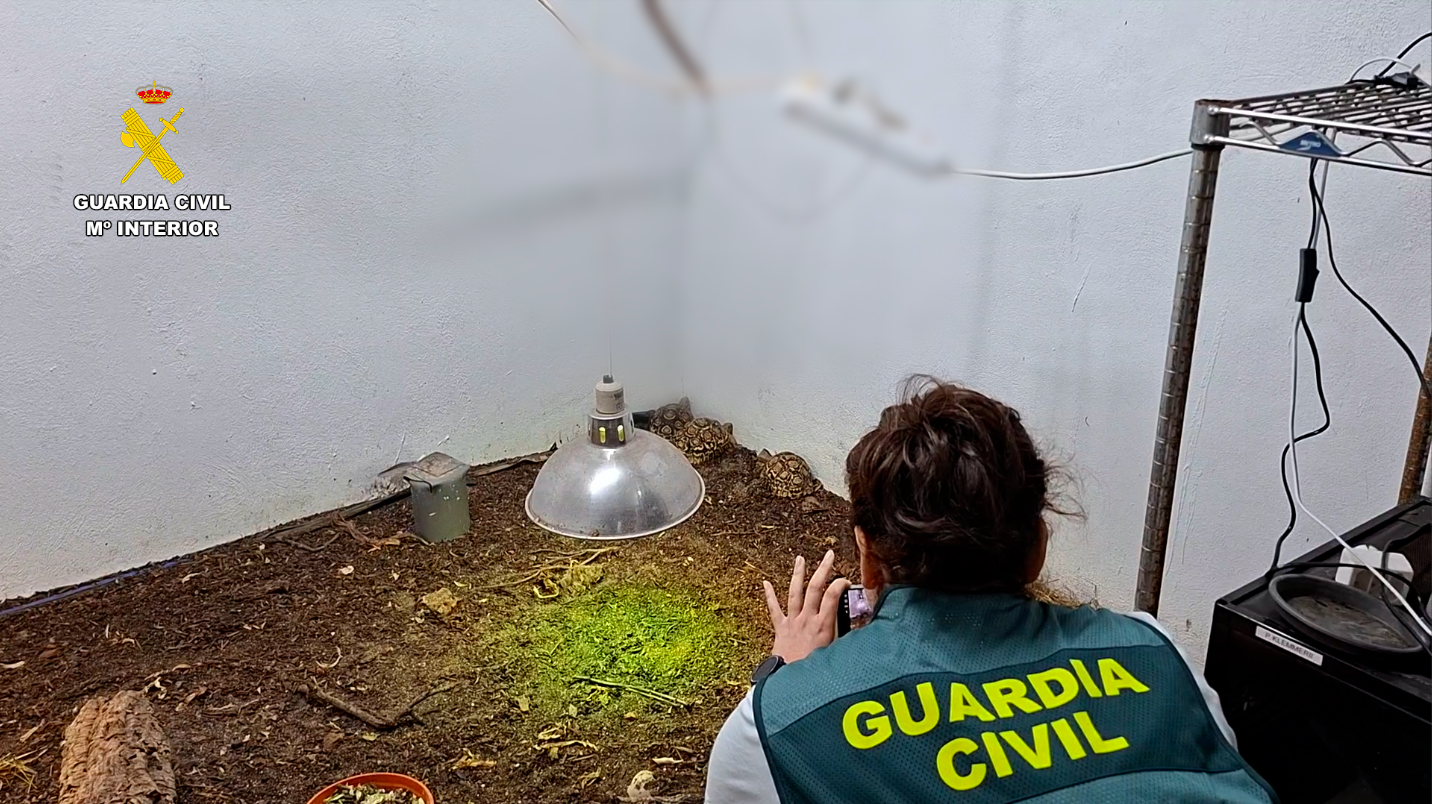
Investigators also found incubators, terrariums and containers used to transport the animals. Photo credit: Guardia Civil/Ministerio de Interior
If you’ve ever had a reptile as pets, you may have assumed that the biggest question at the time of buying them was whether you had the right enclosure, food and equipment to look after it.
But for some reptiles, there is another question before any of that: can you legally buy, sell, transport or import the animal at all? That is now under the spotlight in Spain after the Guardia Civil seized 209 reptiles and arrested three people accused of illegally trading protected species in Castellón.
209 reptiles found in two homes
The operation involved searches at properties in Jérica and Sot de Ferrer, where officers from Seprona in Valencia and Castellón found 209 reptiles. Of these, 110 were subject to different levels of protection under CITES, the international convention governing trade in threatened wild animals and plants. Among the animals was an iguana endemic to Fiji described by investigators as being in serious danger of extinction.
The searches also uncovered incubators, transport containers and terrariums, indicating that reptiles were being kept and bred as part of the suspected operation. According to the Guardia Civil, those arrested had been operating through what appeared to be a legitimate animal shipping business. Investigators allege that they obtained specimens through contacts in America, Africa and Asia, including animals taken directly from the wild.
From breeding to illegal sales
They allegedly bred reptiles clandestinely and then transported specimens to European fairs, where they could enter the legitimate market using documentation intended to establish their legal origin. The investigation is continuing as officers examine documents and electronic devices to determine the full extent of the alleged operation.
The three suspects, two men aged 48 and 51 and a 37-year-old woman, face offences including crimes against wildlife, smuggling, money laundering and membership of a criminal organisation. They are suspects at this stage and have not been convicted. Four unlicensed pistols, almost 200 rounds of handgun ammunition, an air rifle, a Taser and an extendable baton were also seized.
What exactly is CITES?
CITES stands for the Convention on International Trade in Endangered Species of Wild Fauna and Flora. It is an international agreement designed to ensure that international trade in wild animals and plants does not threaten their survival. It does not simply mean that every CITES animal is banned from being owned or sold.
Instead, species are divided into three levels of protection, known as Appendices. Appendix I covers species facing the greatest threat of extinction and international commercial trade in specimens is generally prohibited, subject to limited exceptions. Appendix II covers species that are not necessarily threatened with extinction now but could become so if trade is not strictly controlled. International trade can take place when the required permits or certificates are obtained.
Appendix III covers species protected in at least one country where that country asks other CITES countries for help controlling international trade. The system is designed to make animals and their origins traceable, with permits and certificates showing where specimens came from, where they are going and why they are being traded. Spain applies CITES through European Union legislation as well as Spanish rules.
What counts as a protected species in Spain?
CITES is only one part of the picture, Spain also has its own List of Wild Species under Special Protection and the Spanish Catalogue of Endangered Species. Being protected does not necessarily mean an animal is endangered. Species can receive legal protection because of their conservation status or the need to prevent threats to their populations.
The national catalogue currently includes 1,010 taxa across plants, invertebrates, fish, amphibians, reptiles, birds and mammals. Among reptiles, 52 taxa are listed under the special protection regime, while eight are classified as vulnerable and another eight as endangered. This means the phrase “protected species” covers more than animals that are on the brink of extinction. Some species are protected because their populations require control and conservation measures, while CITES specifically addresses the international trade that can threaten wild populations.
For anyone buying an exotic animal in Spain, the rules depend on the species and how it was obtained. A species can be legally kept under certain circumstances while its international movement, import, export, breeding or sale remains subject to specific requirements. In the Castellón case, investigators are now examining whether those rules were deliberately bypassed and how many animals may have passed through the alleged trading network.






Protected species trafficking operation uncovered in Spain involving hundreds of reptiles
Manchester City found guilty on 114 of 115 charges that could send them down
How close is Spain to becoming the world’s most visited country?


-
Latest2 weeks ago
The Vocabulary You Need To Understand The Spanish Citizenship Process
-

 Argentina2 weeks ago
The Falklands: The Open Wound That Unites Argentines
-

 Alex Saab1 week ago
Maduro Ally Alex Saab Pleads Guilty In US Money-Laundering Case
-
easyJet2 weeks ago
146 slide off easyJet flight after powerbank fire at Milan airport
-

 New Developments1 week ago
How To Get A Tourist Rental Licence In Andalusia (Spain) – Step-By-Step Guide 2025
-

 Uncategorized2 weeks ago
‘Lewis will never trust Charles again’ – F1 journalist issues shocking Ferrari statement – GPFans.com
-

 %2 weeks ago
€111 Million EuroMillions Jackpot Won
-

 %2 weeks ago
Benahavis Wildfire Stabilised: 300 Hectares Burnt