Connect with us

%

HMS Queen Elizabeth Opens Its Doors In Gibraltar

Published

on

hms-queen-elizabeth-opens-its-doors-in-gibraltar

HMS Queen Elizabeth drops by Gibraltar. Credit: NL X

A huge British aircraft carrier, a clear blue sky and hundreds of people eager to step aboard made for a memorable Sunday in Gibraltar on October 25.

HMS Queen Elizabeth opened its doors to the public, giving visitors a rare opportunity to explore the 65,000-tonne Royal Navy flagship and get a closer look at the people and technology behind Britain’s naval strength.

The response was striking. Around 1,000 free tickets for the open day were snapped up in just four minutes, according to local reporting. For many, the occasion was about more than seeing an impressive piece of military engineering. The sight of a British aircraft carrier flying the flag is a powerful reminder of the Royal Navy’s place in Britain’s history and its continuing role around the world.

A reminder of British pride

HMS QUEEN ELIZABETH making an impressive sight as she nears into Gibraltar this morning #shipsinpics #shipping #shipspotting #naval @air_intel @WarshipCam
@NavyLookout @UKForcesTracker @seawaves_mag @HMSQNLZ
@RNGibSqn https://t.co/lq2azot613

— Daniel Ferro (@Gibdan1) October 24, 2026

There is something distinctive about seeing a ship of this size arrive in port. Its vast flight deck, towering structure and imposing presence make it difficult to ignore, even from the surrounding coastline.

For British visitors and expatriates watching the photographs from Gibraltar, the occasion may also stir a sense of familiarity and national pride. The Royal Navy has long been part of Britain’s identity, from its maritime history to its modern role in protecting national interests and working with allied forces.

That connection is particularly strong in Gibraltar, where British military personnel have served for generations and the Royal Navy has played an important role in the territory’s history.

The arrival also follows Gibraltar’s recent celebration of its distinctive British identity, including plans for traditional red telephone boxes and London-style bus stops. In a recent EWN report, Gibraltar’s plans for red more telephone boxes and London-style bus stops explored how familiar British symbols continue to have a place in the territory’s public life.

A flagship with a serious role

HMS Queen Elizabeth arrived in Gibraltar on Saturday, October 24, at the start of a three-month deployment after leaving Portsmouth in September and visiting Belfast earlier in October.

The carrier is capable of operating up to 40 aircraft and is serving as the afloat command platform for NATO’s Allied Reaction Force. Its programme includes advanced operational training, including work involving RAF Chinook helicopters and emerging uncrewed technologies.

The deployment is part of the Royal Navy’s preparations for future operations alongside NATO allies. The service has published further details of HMS Queen Elizabeth’s deployment to strengthen NATO readiness, explaining the carrier’s role in training and collective defence.

The visit gives the public a glimpse of a working warship rather than a museum exhibit. The crew are preparing for further training and multinational exercises with NATO allies, with the programme continuing into 2027.

Gibraltar’s enduring connection with the Navy

The relationship between the Royal Navy and Gibraltar stretches back centuries, and the territory continues to provide important support for British forces operating in the region.

The latest visit offered residents a chance to see one of the UK’s two aircraft carriers at close quarters, while the ship’s crew had an opportunity to meet members of the local community.

Gibraltar Broadcasting Corporation described the arrival as another demonstration of the long-standing links between Gibraltar and the Royal Navy.

For those who associate the Royal Navy with British history, service and tradition, the open day was also a reminder that these connections remain very much alive.

Under the bright October sunshine, HMS Queen Elizabeth provided a striking sight in the harbour. The thousands of people who wanted tickets may have been drawn by curiosity about the technology and scale of the vessel, but for some, the attraction will have been more personal: the chance to see a major symbol of Britain up close.

The carrier is due to remain in Gibraltar for seven days before sailing back into the Atlantic for the remainder of the year.

%

Burnham’s Free Movement Bid: Could This Solve The 90-Day Issue?

Published

on

burnham’s-free-movement-bid:-could-this-solve-the-90-day-issue?

Andy Burnham ready to negotiate. Credit: repic – Shutterstock

British people with second homes in Spain could benefit if the UK eventually restores freedom of movement with the European Union, following Andy Burnham’s call for an “honest discussion” about the country’s post-Brexit relationship with Europe.

The UK Prime Minister’s comments have reopened a debate that could have practical consequences for thousands of Britons who want to spend more time at their Spanish properties without applying for residency or arranging a long-stay visa.

However, Burnham has not proposed a specific change to the rules for British homeowners, and no agreement has been reached.

Why Burnham’s comments are interesting to Brits in Spain

In an interview with The Sunday Times, published on October 25, Burnham said Britain needed an evidence-based discussion about whether to restore free movement with the EU. He argued that migration patterns had changed since Brexit, suggesting that before the UK left the bloc, more people came to Britain for a few years before returning home.

Burnham wants Britain to consider its future relationship with Europe as a whole, rather than treating freedom of movement as a separate issue. He is due to meet EU leaders in Brussels on November 20, according to the UK Government’s announcement of the next UK-EU summit.

The debate could be important to British people living between the UK and Spain, particularly those who own holiday homes but do not have Spanish residency.

Could free movement remove the 90-day limit?

Since Brexit, British visitors have generally been limited to 90 days in any rolling 180-day period across the Schengen area. Time spent in Spain, France and other Schengen countries counts towards the same allowance, as explained in the European Commission’s official guide to Schengen visa rules.

Owning a property in Spain does not exempt British citizens from the restriction. Those wanting to stay longer generally need an appropriate visa or residence status. The UK Government’s Spain entry requirements explain the rules for British visitors and those planning longer stays.

A genuine restoration of free movement rights could potentially allow British citizens to live in Spain without being subject to the current short-stay limit. Britain did not need to belong to the Schengen area to enjoy free movement when it was an EU member.

However, the outcome would depend on the terms of any future agreement. A limited mobility deal would not necessarily restore the same rights as full free movement. EWN previously examined efforts by MPs to change the 90-day travel rule for Britons in Spain.

Is a change likely anytime soon?

Burnham’s comments do not mean the rules are about to change. Labour’s 2024 election manifesto ruled out restoring free movement, joining the EU single market or re-entering the customs union. The Labour Party’s 2024 manifesto set out its position on Britain’s future relationship with the EU.

The debate about closer ties with Europe has continued, but that is not the same as a government decision to restore free movement. Any major change would involve political and diplomatic negotiations, with the EU likely to expect Britain to accept reciprocal rights and other obligations.

Burnham has also said he cannot imagine recommending that Britain adopt the euro or join the Schengen area. Neither decision, on its own, determines whether a separate agreement on free movement could be reached.

For UK owners of second homes, the distinction is important: a discussion about closer EU ties is not the same as a deal restoring the right to spend unlimited time in Spain.

What could complicate talks?

For the time being, British second-home owners should continue to plan around the existing 90-day limit unless they have another legal basis for staying longer.

Immigration rights and Spanish tax residency are also separate matters. Spending more than 183 days in Spain in a calendar year will generally make someone tax-resident there, although other circumstances can affect that assessment. The Spanish Tax Agency’s guidance on tax residence explains the main criteria.

Burnham’s intervention has reopened a debate with potentially important consequences for Britons in Spain. Whether it leads to any change for second-home owners, however, will depend on what Britain and the EU are prepared to agree.

Continue Reading

%

41 Injured As Coach Plunges Down Embankment

Published

on

41-injured-as-coach-plunges-down-embankment

Bus veered off road in mountains in Catalonia. Credit: AC X

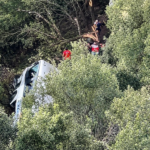
At least 41 people have been injured after a bus plunged down a 20-metre embankment following a collision with a car in Catalonia on Sunday, October 25.

Twenty of those treated were reported to have suffered serious injuries, according to initial reports from the region. Emergency services were continuing to assist those affected as the scale of the incident became clear.

A Fogars de Montclús, 30 dotacions #Bomberscat seguim treballant en l’accident de l’autobús precipitat pel voral de la BV-5114 (avís 16.43 h). Hem pujat per terra i amb helicòpter la gent que quedava al talús i seguim amb el triatge de ferits assistint @semgencat https://t.co/minNJUvTjn

— Bombers (@bomberscat) October 25, 2026

Bus crashes down embankment in Barcelona province

The accident happened on the BV-5114 road near Fogars de Montclús, in Barcelona province, in the Montseny Natural Park area. The bus, operated by Sagalés, was carrying around 60 people when it plunged down the embankment following a collision with a car. Some passengers managed to climb back up to the road themselves, while others were trapped inside and needed rescuers to help them out.

Catalonia’s Emergency Medical Service (SEM) deployed 15 ambulances, two medical helicopters and three joint teams of medical staff and firefighters to deal with the incident. Firefighters also sent 20 units to the scene to help with the rescue operation and assist those injured.

Road closed as emergency teams respond

The regional authorities activated the alert phase of Catalonia’s Procicat emergency plan following the crash. The BV-5114 was completely closed at kilometre 18.4 while emergency crews worked at the scene. The 112 emergency telephone service received 25 calls relating to the incident. A support centre was also opened at Can Ramis in Sant Celoni, offering assistance and psychological support to those affected.

The Mossos d’Esquadra regional police, firefighters and medical teams were involved in the response, with police investigating the circumstances of the collision. The cause of the crash has not yet been established.

Initial reports did not record any deaths, although the number and severity of the injuries meant that the situation remained serious. Further details about the passengers, including their identities and nationalities, had not been confirmed in the initial reports. We will endeavour to update this story as more news comes in.

Continue Reading

%

Bar Regulars Kill Wild Boar. Were They Justified?

Published

on

bar-regulars-kill-wild-boar.-were-they-justified?

Amnistía Animal protesters and runaway boar. Credit: AA X

A panicked wild boar tore through central Zaragoza on the final night of the Fiestas del Pilar, charging into a packed bar and injuring a woman before the owner and customers stabbed it to death. Animal rights campaigners are furious and have now forced an official investigation, turning one chaotic night into a public argument about self-defence, urban wildlife and what cities should do when a large animal shows up uninvited.

Chaos on the streets then inside the bar

Local police first received calls around 12.40am on October 18 reporting a boar racing through the city centre. Units from local and national police, firefighters and an animal rescue team tried to herd it out of town and hopefully back to the woodland where it belonged. Instead the panicked sprinting animal of around 50 kg carried on careering through the streets. Video shows it sprinting along tram tracks near Plaza de España while late-night crowds watched.

It finally ducked into El Jardín del Temple, a busy nightlife spot in the Casco Viejo. Inside the crowded bar it charged a woman, leaving her with minor injuries. Some accounts say it also bit someone. The bar owner, described by witnesses as a hunter, and several others then killed the animal with a knife. Police arrived to find it already dead. Earlier Euro Weekly News coverage captured the initial chase and the injury.

Amnistía Animal complaint and SEPRONA investigation

Amnistía Animal quickly labelled the killing unnecessary and “a sangre fría” (in cold blood). The group filed a complaint with SEPRONA, the Guardia Civil’s nature protection unit, which has opened an investigation into the circumstances of the death and the animal’s origin. Campaigners want to know whether the boar came from nearby woods, the Huerva river area or was released deliberately. They also demand a clear local government protocol so that trained staff, not private individuals, handle future cases with sedation and release options rather than knives. Heraldo reported the SEPRONA probe after the complaint was filed.

On 24 October roughly fifty people marched in Plaza España, some wearing boar masks and setting up a small altar with flowers and drawings. Chants included “No es fiesta si hay violencia”. The planned walk to the bar itself was restricted because of another event at the same time. Activists have also criticised the city council for what they see as a lack of preparation. El Periódico de Aragón covered the demonstration.

Were the people in the bar justified?

Supporters of the bar regulars argue they faced an immediate threat in a confined space. A wild boar, even a smaller one, can knock people over, bite and, if it has tusks, cause deep cuts. In a crowded festival bar there was little room to manoeuvre and no time to wait for specialist teams. The priority, they say, was stopping further injury once the animal had already charged someone.

Critics counter that the boar was frightened rather than aggressive, that clearing the bar and waiting might have worked, and that stabbing was disproportionate. They point out that police were already on the streets and that professional wildlife handlers should have been called. Spanish cities are seeing more of these encounters as boar numbers rise and animals learn to use urban food sources. Similar cases have been reported elsewhere, including a woman charged by a boar while walking in northern Spain.

Broader pressure on Spanish cities

Wild boar populations have grown across Spain because of milder winters, more food and fewer natural predators. Catalonia has paid hunters to cull animals partly because of disease risks to livestock. In places such as Mijas, the animals regularly dig up public gardens and cost councils tens of thousands of euros in repairs. Malaga has even contracted archers to manage urban boar numbers. Zaragoza’s episode is unusual only because it happened in the middle of one of the country’s biggest festivals and ended with private citizens taking lethal action.

SEPRONA’s investigation will look at whether any offence was committed and whether better procedures are needed. For many residents the practical question remains simpler: if a large wild animal is already inside a bar and has injured someone, what else are the people there supposed to do?

Were the people in the bar justified? Or, should they have waited for the authorities to arrive before acting? This is what any investigation will focus on.

Continue Reading

Trending

Copyright © 2017 Spanish Property & News