
ElPais
Providence, The City That Embraces The World Cup Without Hosting A Single Match














Bruce Willis
Emma Heming, Wife And Caregiver For Bruce Willis: ‘I Thought I Had To Take It All On Myself And That I Was A Failure Because I Needed Support’

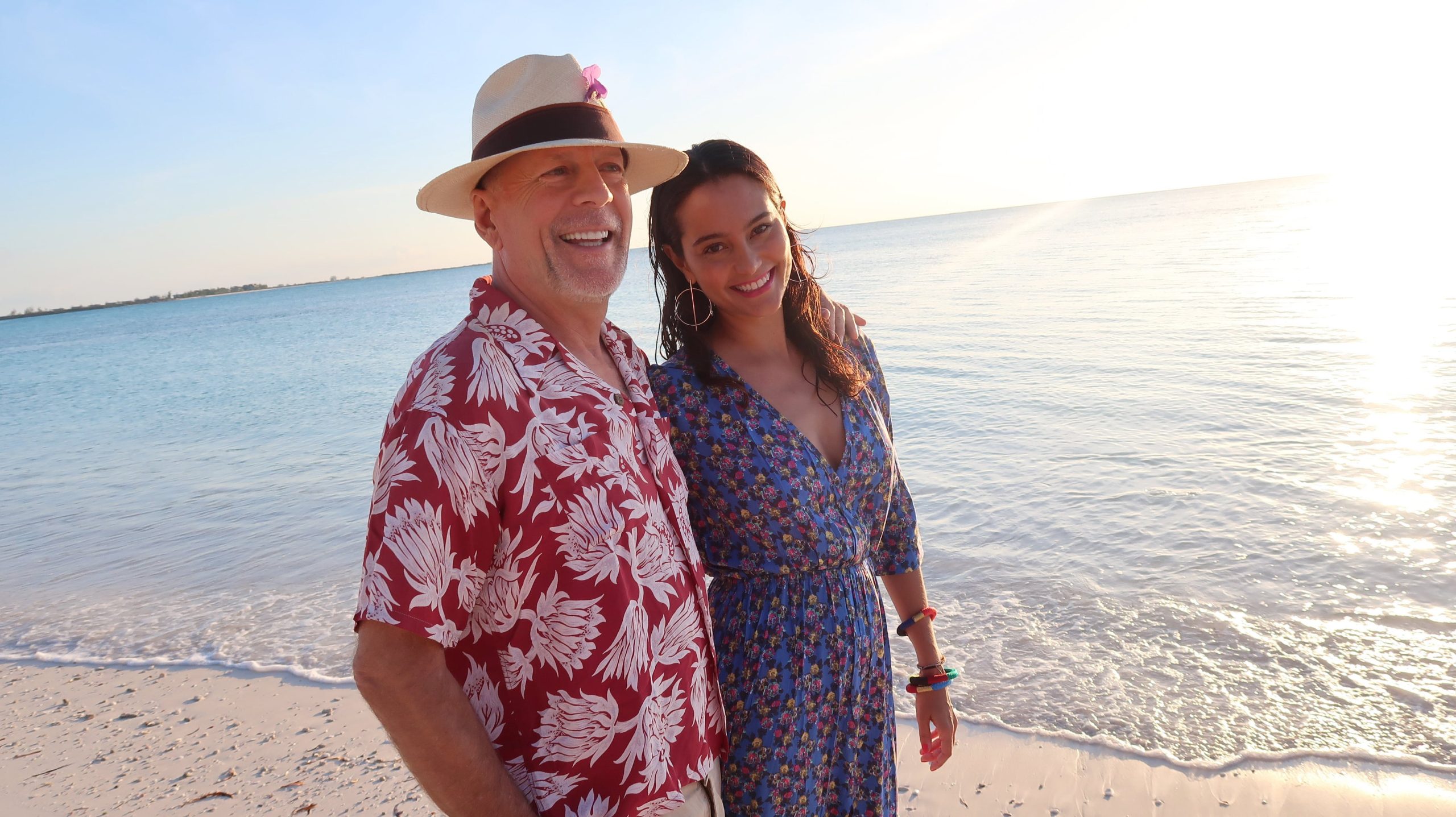
When Emma Heming Willis walked into a neurologist’s office nearly four years ago, she left with a whirlwind of emotions. Fear, surprise, anxiety, disorientation. But to cope with them, she left with just one thing: a piece of paper. A single brochure, a single printed sheet, was all the former model — who turns 48 on June 18 — took with her from that medical center. She was drowning in medical jargon and technical terms but was lost as to how to proceed. Because she had just been told that her husband, superstar Bruce Willis, the kind-hearted action hero admired around the world, not only had aphasia — as they had known for months — but also frontotemporal dementia, an incurable and irreversible condition. And there she was, a small piece of paper in her hand, the world crumbling beneath her feet. Perhaps that was the spark that led Heming to become, in addition to a wife, mother, caregiver, and patient advocate, an author.
In September, Emma Heming Willis published The Unexpected Journey, a guide to caring for the caregiver. Specifically, it’s aimed at caregivers of people with dementia, but it’s also for anyone who cares for a dependent person. A gentle yet thorough book, featuring insights from doctors, therapists, specialists, and people who have walked that path, it has just been published in Spanish under the title Un viaje inesperado. In fact, there are already more than a dozen editions in different languages, which she searches for on the shelves of her home library in Los Angeles. “I think it shows that this is a universal problem,” she says about the warm welcome the book has received globally. “There are so many caregivers out there without any guidance or roadmap. And we’re all figuring it out as we go. I’m so excited that this book is now available in Spain.”
From that room, she speaks with EL PAÍS early on a Tuesday morning. She’s an early riser; she was up at four in the morning. She has no shortage of work. She cares for her husband of more than 17 years, as well as her two daughters, Mabel, 14, and Evelyn, 12. She manages her foundation, her literary projects, and, above all, raises awareness about the importance of caregivers receiving help without feeling guilty. “And it’s not just my story, right? It’s so many people’s. This is the issue: walking out of there with nothing was really hard. And then realizing that, okay, I have to figure this out. I have to understand what support now is needed for Bruce, for our two young children,” she recalls. So she used the most logical, yet also the worst, method: searching on the internet. “And you know what the internet is like; when you look up any kind of disease, it’s a horrible place to go, and leaving that appointment, I just realized how unsupported caregivers are. We walk out with no support, and we’re asked to do so much where it’s not humane,” she reflects.
And yet Heming knows exactly where she stands: she is a young, healthy woman in a stable family, with access to support, financial resources, an education, and good connections. She doesn’t deny these advantages. In fact, she uses them precisely to reach a wider audience. “I know I’m in a privileged position because I have access, I have resources that many people don’t have,” she acknowledges. “And I knew I had all this important information and couldn’t keep it to myself. I wanted to be able to put it into a book.”
When a neurologist shared statistics with her about caregivers “who sometimes die before their loved ones,” it had a profound impact on her. “That book is probably 25% my story, but I really feel like the beauty of it are the experts and the specialists that share what they know. It’s not just me saying, ‘Oh, go get support, go get help.’ It’s the experts and specialists that say it; they give the caregiver permission to care for themselves, to ask for support, and to know that they’re not a failure if they need the help and support. I thought I had to take it all on myself and that I was a failure because I needed to ask for support.”
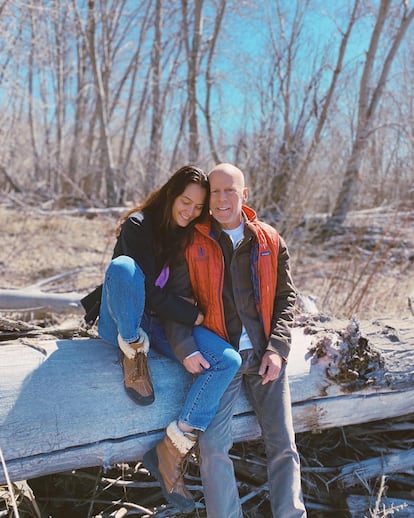
Before reaching that point, the Heming-Willis family went through the ordeal of getting a diagnosis. At first the model found the actor acting strangely; she couldn’t quite put her finger on it, but he wasn’t himself. She even began to think that maybe he no longer loved her, that he wanted to leave his family behind — she couldn’t make sense of any of it. After a long journey, in early 2022, they were told he was suffering from aphasia, a speech disorder. It was in late 2022 that the actor was diagnosed with frontotemporal dementia, which has caused his comprehension and memory to gradually fade. You can see it, for example, in how Heming refers to him in the book and in the interview: she speaks in a painful past tense. Because she knows her husband is no longer the man he once was.
A few months later, in February 2023, the family decided to go public with the diagnosis. Heming says that, in doing so, they also wanted to change the way this disease — and so many other neurological conditions, such as Alzheimer’s — are viewed by the general public. “I think that our family knew that by showing what we were going through with Bruce and this disease, we would see a change in how people look at dementia, how people talk about it. Moving away from the shame and the stigma that surrounds it, I wanted our two young children to not have to think that they have to talk about their dad’s disease in a hushed home like this was some dark family secret.”
“Bruce is so beloved and he has such a global reach. And I knew that this announcement could hopefully change what people perceive dementia to be. So I was really happy that we were able to get the support that our family needed. I am happy that we were able to share and make this conversation normalized,” she says.
All of this has led Heming — with the support of Willis’s ex-wife, Demi Moore, and the three older daughters from the couple’s previous marriage — to become an advocate for neurodegenerative diseases. Her insights have been featured in magazines and on television shows and have helped millions of people understand what it’s like to live with someone who is ill — even if that person is famous. In fact, she publicly asked the paparazzi not to chase and photograph Willis, because it affected him and them as a family. “I just wanted to protect my husband; I just wanted him to be able to navigate the world safely. I just wanted to be able to protect his space,” she recalls. “At People magazine there was an editor that when I came out with that statement, they made a conscious decision that they would never photograph anyone who was sick and publish it. And I felt like that was right.”
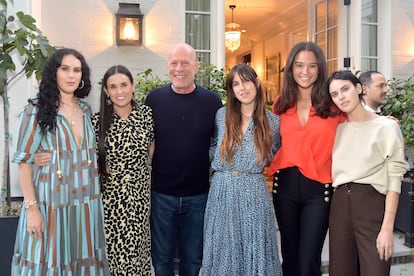
In her nearly 300-page guide, she helps caregivers manage the situation and, above all, take care of themselves. She speaks from experience, because when she felt overwhelmed, she isolated herself from her friends and loved ones, living in “a little bubble,” as she calls it, until she realized what she was doing and how “unhealthy” it was. That’s why she reaches out to another group: those who, though close by, don’t know how to help.
“People don’t know what to do; they don’t want to overstep. The message that I would get is that ‘if there’s anything you need, please let me know.’ That’s very well-meaning, and you know that’s a beautiful gesture, but it just puts another added stress on the caregivers to figure out, well, what can I ask? And it gets very complicated.” She encourages caregivers to raise their voice. “Caregivers need to understand that this is not a solo mission, and we’re not a failure because we are asking for support. We really need to learn to bring back our communities in our lives. We need to be able to depend on our neighbors. We live in this world that is so disconnected, and we need to get back to the sense of community and support and the idea that if parenting takes a village, so does caregiving.”
When they discovered the illness, the couple had two young daughters, who are now teenagers. “Bruce has three adult daughters, so I had to learn how to communicate with them about something that I was even still trying to come to terms with as well. We always feel like we make the world and everything be rainbows and unicorns for our children. But that’s not our world. And what we’re going through as a family with their father and his disease, that’s not that world. So it’s been really important for me to learn how to communicate with them in an age-appropriate way. When I give them the information, I wait for them to sort of ask me questions. And when they ask me the questions, I give them truthful answers. Which isn’t always easy, but I think that helps them feel a little bit more safe in that, knowing that I’m never going to tell them something that’s not true. And that if anything changes, I’m going to let you know.” Although not everything is ideal: “I’m not saying I do it perfectly all the time. I’m not a perfect caregiver. I’m not a perfect person. I’m not a perfect mom, of course. I think as caregivers and parents, we’re just trying to do the best that we can. And my daughters know that.”
Faced with this lack of awareness, Heming is also creating a guide to help family members of patients with frontotemporal dementia know what to do in the early stages. Shouldn’t that be the healthcare system’s job? Exactly, she says. “We need to understand as a society that we will need care or give care in our lives. No one is exempt from being a caregiver. It might not be happening to some now, but it will, and I think we don’t have a healthcare system that even sees the caregiver. They are unsupported. So we need to figure out a better system. We have to use our voices to be able to make the changes that we need.”
Still, she feels proud of herself. “That’s what I want caregivers to know, that in the beginning, it’s really hard. You’re learning new things. You have to come to terms with your person and this disease, and you’re dealing with the grief and the pain of that. For me, it was about really understanding that there is nothing that I can do to change the outcome of this disease. And I’ve tried; I’ve tried everything that I possibly can, but there is no treatment, there is no cure for this disease, so I’ve been able to educate myself, surround myself with people that are way smarter than me and that have been on this journey longer than me. I am really proud of where I am today and how far I’ve come. I know our support system will be prepared, and that really helps settle the anxiety a little bit. Not a lot, but at least it brings it down to know that I’ll be prepared, you know?”
The disease has also brought her something: “I think there’s one thing that’s beautiful about dementia. It gives you the gift of time. We can get so busy in life and be juggling a million things, but I think learning how to be present and be with the people that we love is so important. It’s allowed me to slow down in certain respects to really be able to appreciate the people and the love and the support that we have within our lives, so that we can continue to provide for Bruce and my family.”

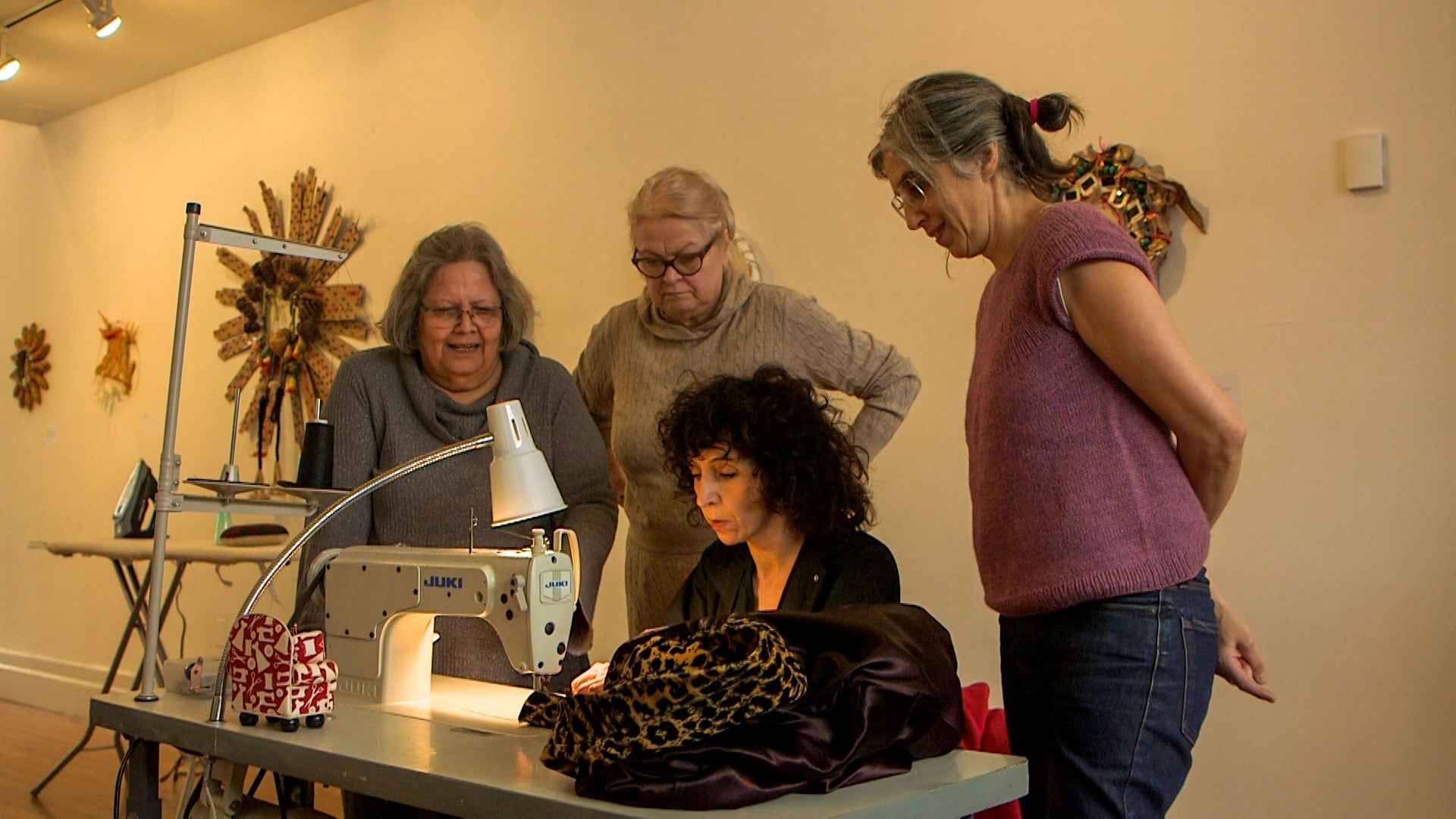
In East Harlem one Sunday out of every month, a group of people meet with the intention of bringing objects back to life. In El Barrio Artspace PS109, a project has transformed an abandoned school into an art center in which several tables have been set up in a simulation of an operating room. Only here, the surgeons are repair experts. Jorge Ramírez and his daughter Jorgette Mariñez come one day in March in the hopes of fixing an electric kettle that has simply decided to stop working.
“I bought it five years ago and everyone tells me that I should just buy another, that it’s easier,” says Mariñez. “But why not try to fix it first?” She and her father are Harlem residents. They heard about Repair Café on social media and were intrigued by the community event with a mission to repair objects.
Rocío Salceda, 48, a Spanish artist and language teacher, founded the collective in New York City in 2022, inspired by a model first born in 2009 in Amsterdam. She says the project started with five people and clothing repair lessons on her sewing machine.
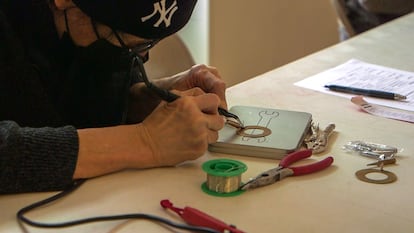
“I went around New York and saw the number of things that are thrown out, but are new: televisions, washing machines, all kinds of things,” she recalls.
According to the United Nations, we are increasingly producing and replacing more objects instead of repairing them. In New York City alone, according to the company Recycle Track Systems, more than 14 million tons of waste are generated every year. Electrical devices, from cell phones to household appliances, represent one of the quickest-growing categories of waste. In 2022, more than 60 million tons were produced worldwide, the weight equivalent of nearly 6,000 Eiffel Towers.
An act of rebellion
New York City promotes obligatory recycling and compost, which requires that food and organic waste be separated for collection. Even so, a large part of electrical appliances wind up in the garbage when they stop working. For example, an exercise carried out by E-Waste Statistics calculated that in the United States alone, a person can generate 46 pounds of electronic waste every year.
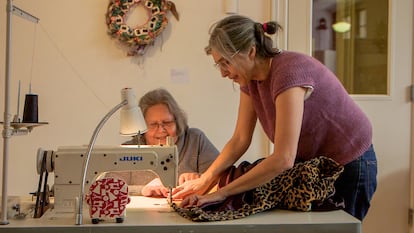
Cuauhtémoc Romero, one of Repair Café’s collaborators, explains that repair has to do with the mentality one learns while young. “Growing up in Mexico, I knew that what I had, if it broke, wasn’t so easily replaced with something new.”
One of the things on which he has worked is an iPod Classic, a music player that Apple stopped manufacturing in 2014. Though for Romero, many repairs involve a “trial and error” process, he says that technology lends a hand. “It would be almost impossible if I didn’t get my phone out and look for a YouTube tutorial,” he says.
As these community networks grow, the debate over supporting repairs has also arrived at the state legislature. In 2022, the state of New York approved the Digital Fair Repair Act, a law tied to the Right to Repair movement that looks to require electronic device manufacturers to offer access to parts, tools, and information on how to repair their products.
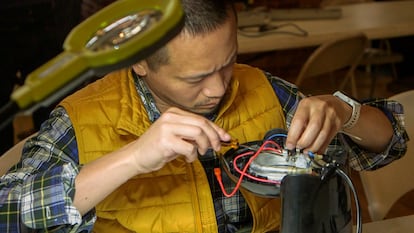
But even with legal changes, for many New Yorkers, repair continues to take place principally in informal and community spaces. Initiatives like the Repair Cafés — meeting spaces where volunteers provide free help in fixing household objects — have arisen to fill that need. Here, neighbors bring lamps, clothes and small household appliances, working with people with technical expertise on trying to fix them.
For Romero, the solution to the throwaway culture is in the hands of public policy. “You’ve got to address the problem more systematically. It should be something that has a place in the governmental programs, where repairing something would be easier.”
Sign up for our weekly newsletter to get more English-language news coverage from EL PAÍS USA Edition

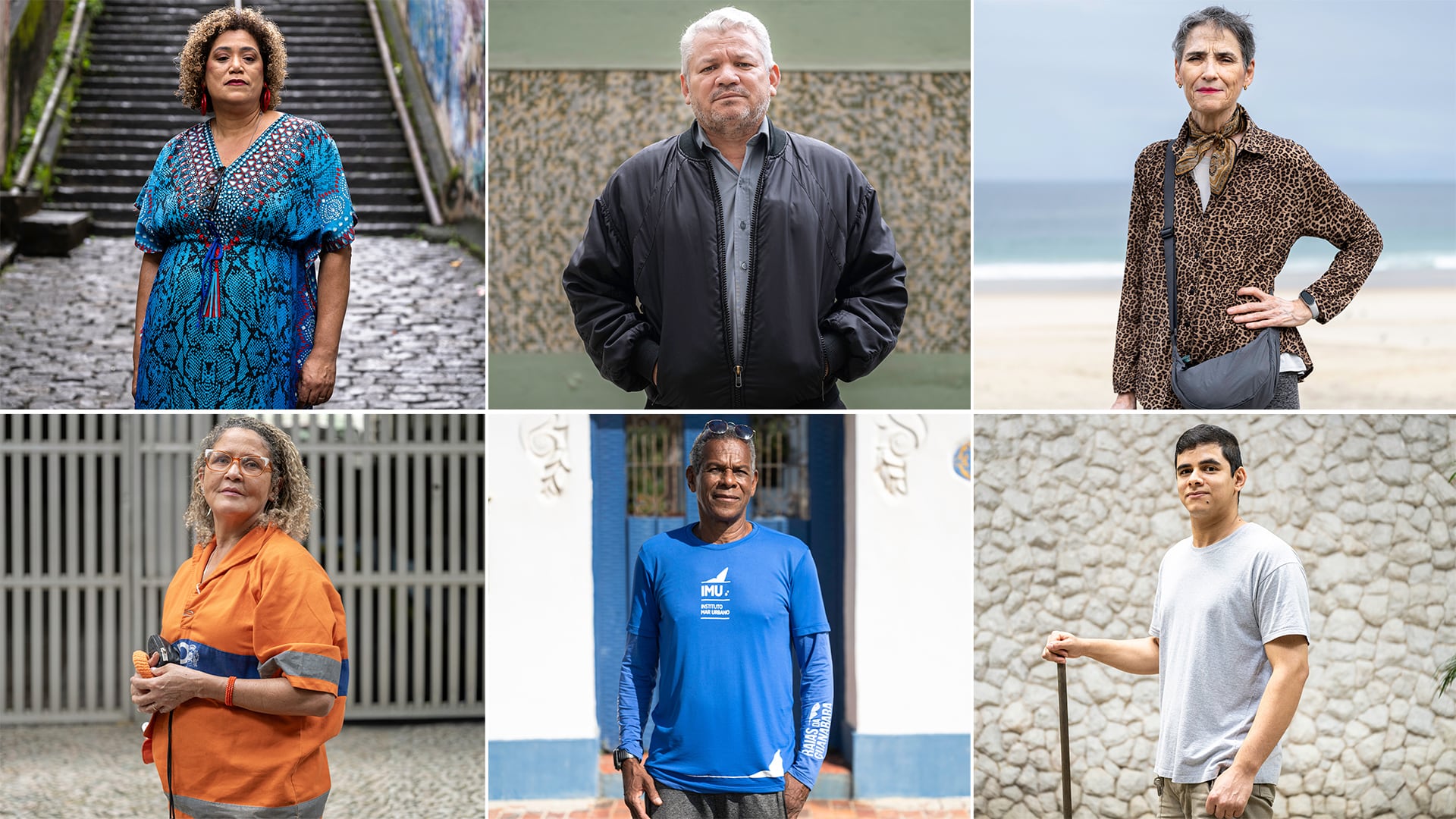
While waiting to complete paperwork at a notary’s office, Ms. Ivone Souza Silva, 64, who has deep-set circles under her eyes and shoulder-length hair, smiles as she recalls a childhood anecdote: “At school, the surname of half the class or almost half was Silva, like me… And like Ayrton Senna.” And so, unexpectedly, this housewife mentions a fact many of her fellow Brazilians do not know about the Formula 1 champion whose death behind the wheel at the peak of his career in 1994 shocked the sporting world. On Wednesday morning she learned that his full name was Ayrton Senna da Silva.
Although in Brazil the second surname, the paternal one, is the main one, the driver — like many other Brazilians — chose instead to use his first surname, the one with an Italian ring to in, instead of the surname shared by more Brazilians. No fewer than 34 million, according to the 2022 census. In other words, almost one in six citizens bears this surname, which means ‘forest’.

It’s rare to go a day without encountering several people with that surname on the street or on the news. The best known is undoubtedly Luiz Inácio Lula da Silva, the president of the republic. No surprise — just like one in three people in his home state of Pernambuco. Lula was still taking his first steps in politics in 1982 when, shrewdly, he went to the notary to add his lifelong nickname to his official name. That is how the seasoned trade-unionist and budding politician ensured he appeared on ballots simply as Lula. Those four letters, which mean ‘squid’ in Portuguese, and the little finger he lost to a lathe at 19 are his electoral brand. Six decades later, he hopes to crown his political career with a fourth presidential term.
His wife, now Janja Lula da Silva, also belongs to the large Silva family by birth and by marriage. And so does one of the most emblematic ministers: environmentalist Marina Silva, who was born on a rubber plantation in the Amazon, managed to succeed in politics — even to dream of the presidency — without ever giving up the name, although in this country she is known simply as Marina, with that typically Brazilian familiarity. Another member of this big club is the country’s most controversial and admired footballer on his way to the World Cup, Neymar da Silva Santos Júnior.
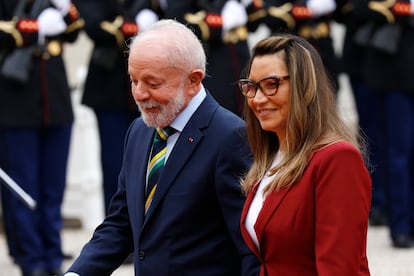
The surname Silva arrived in Brazil with the Portuguese colonizers starting in the 1500s. Many adopted it to bury their past. Among those who settled inland, Silvas proliferated. Coastal residents preferred Costa. Forced to take Catholic baptisms, enslaved people were given only first names. But after abolition, they needed surnames for life in freedom. Many received their owners’ names, often with a preposition — da Silva, de Souza — to make ownership clear.
While some exalted Silva as a surname of the people, many born with it tucked it away on identity cards in order to shine in life under a less common name. “He was just another Silva (…) a star that doesn’t shine,” goes the chorus of a rap by MC Bob Rum (or Moysés Osmar da Silva) that was a hit in the 1990s. It told the story of an ordinary poor man, a family father who goes to a funk dance in a neighborhood and is shot dead for no apparent reason.
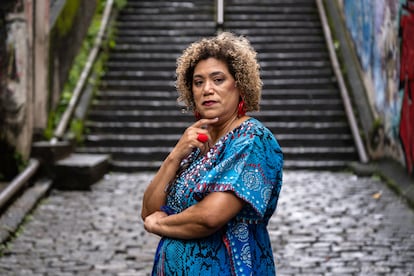
In recent years, just as pride in growing up in a favela has grown, more people have embraced surnames that were once considered ordinary. In that context, the television series Not just another Silva was launched a couple of years ago, featuring interviews with famous and anonymous people united by those five letters. “We want to reclaim the name, which many associate with poor people, but today belongs to powerful people,” said the show’s presenter, another Silva named René, at the premiere.
“When we were teenagers, we all wanted foreign surnames,” recalls the notary’s client in central São Paulo. Her attitude changed with age. Married to an Italian, she started a life in Palermo. And she decided to keep her very Brazilian surnames. “I did not give up my surnames; I remained Souza Silva, although that wasn’t the custom there. Unfortunately, when I lived in Italy there was no option for children to take the mother’s surname. I would have liked that,” she admits. “Now you can,” she adds with a triumphant smile just as her number appears on the screen. It’s her turn.
Sign up for our weekly newsletter to get more English-language news coverage from EL PAÍS USA Edition

Última Hora De La Guerra De Estados Unidos E Israel Contra Irán, En Directo | Irán Confirma El Acuerdo De Paz Con Estados Unidos, Que Se Firmará El Viernes En Suiza

From Andalucía To Buckingham: The Surprising Orange Tradition Linking Sevilla To King Charles III

Así Le Hemos Contado El Empate Entre Países Bajos Y Japón En El Mundial 2026 (2-2)

Europe Enters The ‘era Of Deportations’

Peru’s Roberto Sánchez And Keiko Fujimori Urge Caution As Vote Count Continues In Very Tight Presidential Election

Spain, A Country Of 50 Million People With Infrastructure For 40 Million: ‘The Cracks Are Starting To Show’


-
 Africa2 weeks ago
Europe Enters The ‘era Of Deportations’
-
 Alberto Fujimori7 days ago
Peru’s Roberto Sánchez And Keiko Fujimori Urge Caution As Vote Count Continues In Very Tight Presidential Election
-
 Barcelona1 week ago
Spain, A Country Of 50 Million People With Infrastructure For 40 Million: ‘The Cracks Are Starting To Show’
-

 %2 weeks ago
Major Strike In Portugal To Cause Widespread Disruption To Air And Rail Travel
-

 Uncategorized1 week ago
Max Verstappen F1 future hangs in the balance as three teams block 2027 rule changes
-
David Beckham1 week ago
A Journey Through The Ages Of Soccer In The United States
-

 Brasil2 weeks ago
Caetano Veloso: ‘Right Now Concern Predominates Within Me; Brazil Seems Unable To Save Itself’
-
Latest1 week ago
Today In Spain: A Roundup Of The Latest News On Friday