
ElPais
Rafael Zabalza, The Spanish Pharmacist Who Operated As A Sniper In Puebla In His Spare Time

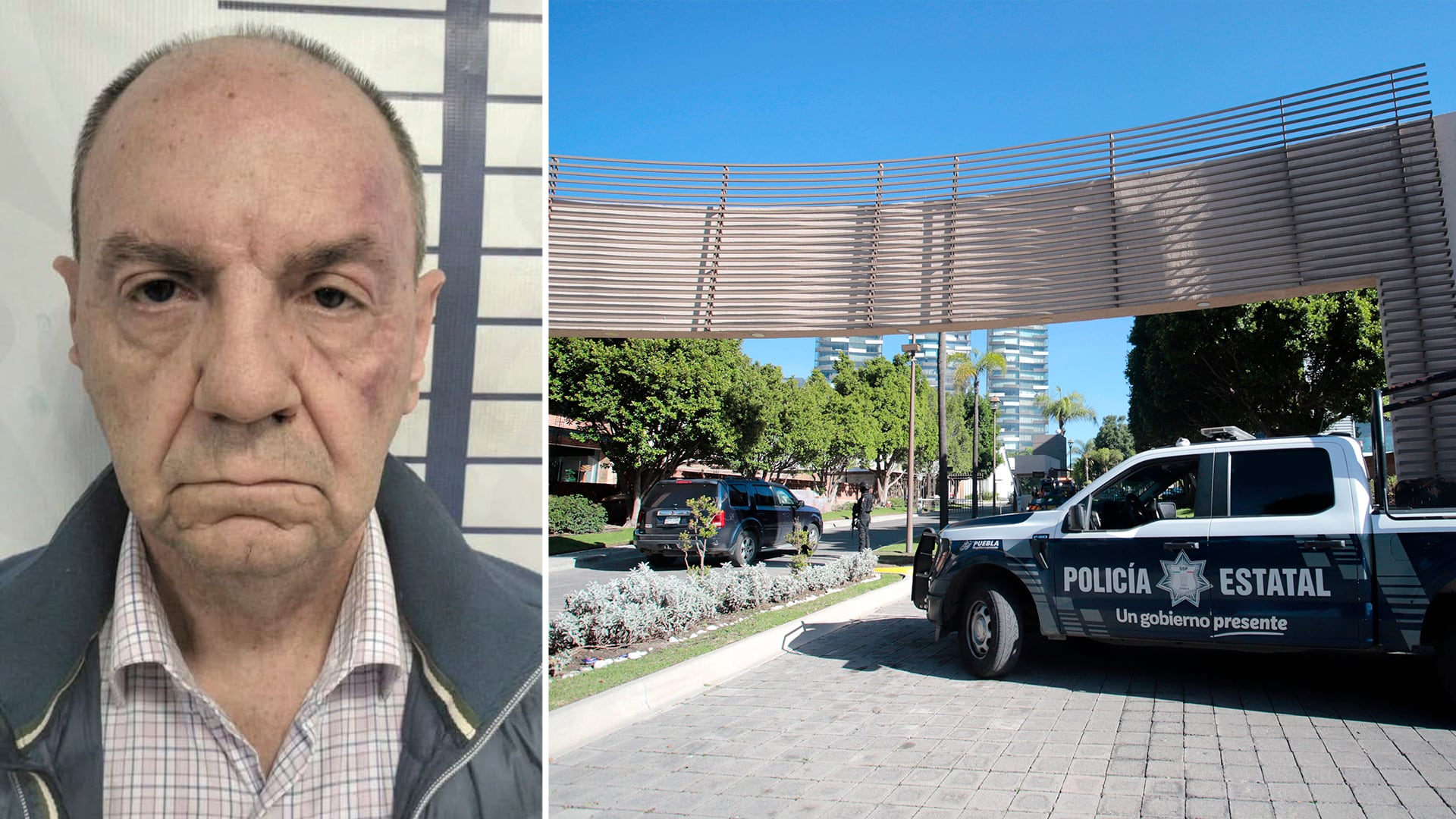
Driving on Atlixcáyotl Avenue, Puebla’s main thoroughfare, became a risky activity. There, from time to time, Rafael Zabalza, a 65-year-old Spanish pharmacist, would appear in a pickup truck and fire indiscriminately at drivers. Over three months he attacked at least 11 motorists and one motorcyclist at various points in Angelópolis, the city’s most exclusive neighborhood, spreading a sense of terror among Puebla residents. In the early hours of Tuesday the prosecutor’s office identified him and located him, and he greeted officers with gunfire at one of his properties. He was arrested along with an arsenal.
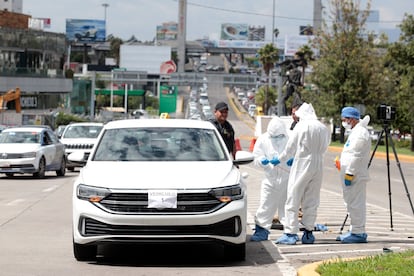
According to the prosecutor’s office, Zabalza left his home in the Santa Fe area armed, got into a white GMC Denali pickup with no license plates and drove to different points along Atlixcáyotl Avenue to attack drivers. The assaults occurred at different times and on different stretches of the avenue, with no pattern, which hampered the investigation for weeks. The first attacks took place in April, but for several weeks the victims did not file formal complaints and the prosecutor’s office learned about them through social media, where videos circulated showing cars with bullet holes. Residents of Puebla began warning about a suspected sniper and fear spread rapidly.
José Luis Hernández González, metropolitan investigations prosecutor, explained that it was not until June that a young man injured by a firearm came forward to file a complaint. Since then 10 investigative files have been opened: one for attempted homicide and the rest for damage to others’ property and dangerous attacks. Two more people did not file complaints. “We thought they were isolated incidents, but when we reconstructed the events and carried out technical and scientific investigations, we noticed coincidences,” Hernández said during the case presentation on Tuesday.
Using the case information the prosecutor’s office mapped a criminal polygon where they reviewed private cameras and the C5 surveillance system. Among the tools used was El Faro, a three-dimensional technology that allowed them to trace bullet trajectories and calculate shooting distances. Some victims also managed to identify the alleged attacker. State Attorney General Idamis Pastor and state Secretary of Public Security Francisco Sánchez González said the identification of the businessman was made possible “thanks to the analysis of behavioral patterns and the tracking of a plateless pickup that appeared repeatedly in the different attacks.” Sánchez acknowledged it “was a tough, complicated task” because anonymity and surprise were key, since the person “had no defined pattern, no fixed stretch or schedule.” Authorities say the attacks “caused terror and panic” among the population. “Thank God we only have one injured person,” Sánchez said.
A pickup with no plates and an arsenal
Shortly after 4.00 a.m. on Tuesday, agents went to the first of two homes they were able to link to Zabalza. They knocked on the door and he fired on the police and a patrol car, “endangering the integrity of public servants,” the statement says. However, he was detained and the prosecutor’s office has added that attack to his file for aggravated attempted homicide and damage to others’ property. In that first raid authorities seized a semiautomatic handgun, a rifle, a shotgun, live ammunition and the white GMC Denali pickup with no license plates that he used to shoot at his victims.
At a second property in the Anzures neighborhood they found two .22-caliber firearms, 536 .22-caliber live rounds, 23 9mm live rounds, computers, tablets and nearly 800,000 pesos in cash. Some of those weapons allegedly had permits and registration, while others were for exclusive military use. Attorney General Pastor described the investigation as “surgical” and rejected criticism from citizens who had questioned the prosecutor’s office for months.
Although the prosecutor’s office has not commented on it, on social media citizens have recalled similar events that have taken place in the same area since the summer of 2023. They mention the cases of two men — one riding a motorcycle and another on a bicycle — who were shot in the chest and arm. Months later, in November, two truck drivers also died in that sector of Angelópolis. Local press then documented that one died after being shot in the chest and the other died days later from a stray bullet. At the time the prosecutor’s office said it would try to trace the bullets, although no arrests were made.
💥🚨 Operativo en Santa Fe termina con la captura del presunto “tirador de la Atlixcáyotl”
Aseguraron a Rafael N. luego de un despliegue policiaco en La Vista Country Club. El detenido habría intentado repeler la acción disparando contra los elementos de seguridad. pic.twitter.com/6qVl1NOsxl
— Todo Puebla (@TodoPuebla) July 14, 2026
After the arrest, a prior interview with Zabalza circulated on social media in which he promoted a domino tournament. “It’s a way to make friends, to foster camaraderie, to transmit values and principles like camaraderie, loyalty, and fair play,” he said in the recording.
Rafael Zabalza was identified as a businessman in the pharmaceutical sector, originally from Spain, with no criminal record. He has also been linked to the civil association ITEBIO, where he allegedly signed an agreement with a university to develop academic and technological projects.
Sign up for our weekly newsletter to get more English-language news coverage from EL PAÍS USA Edition









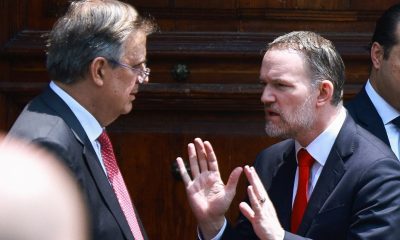


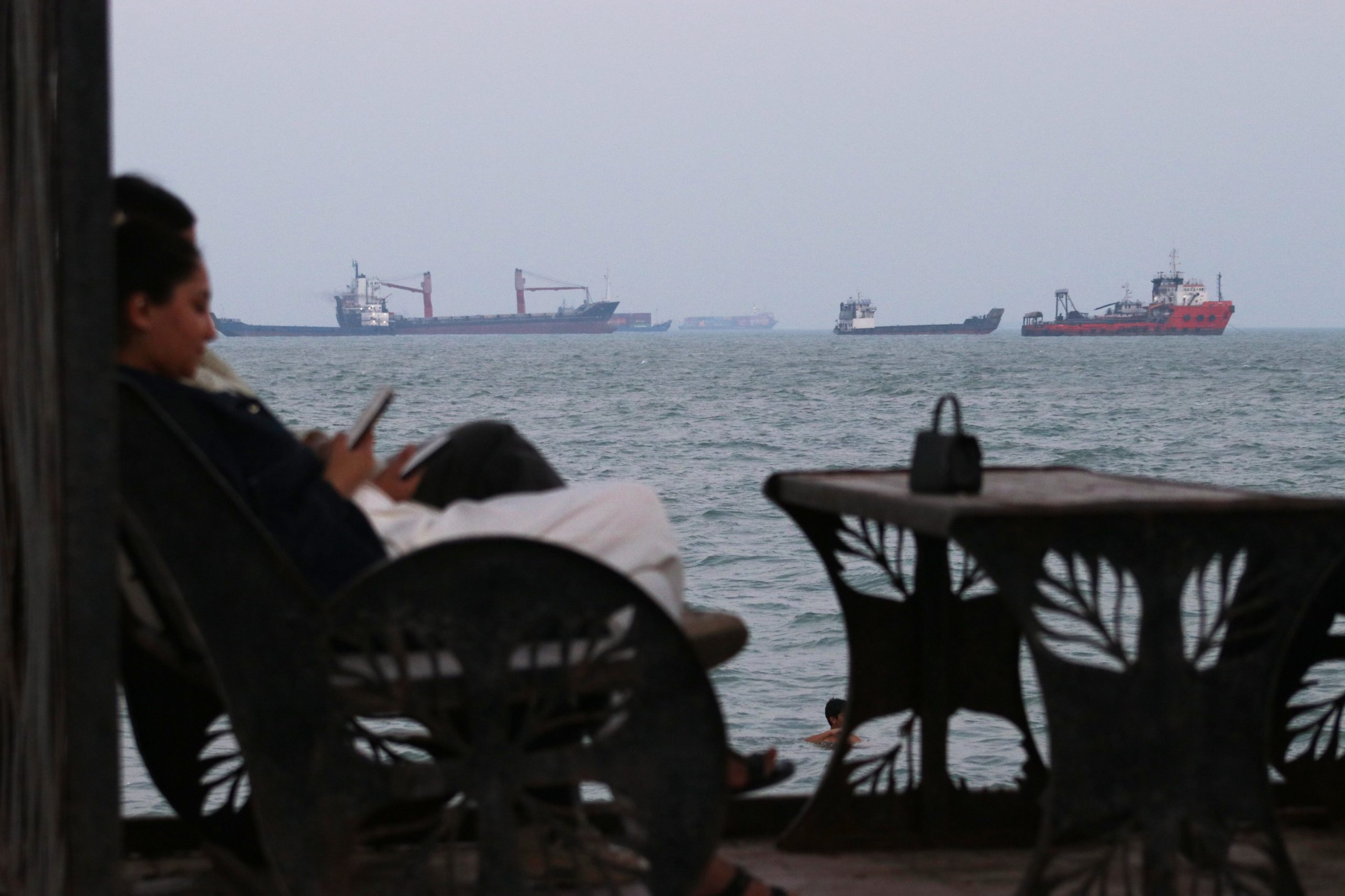
Tuesday, June 23. U.S. Secretary of State Marco Rubio lands in Abu Dhabi with a clear message: the Strait of Hormuz, he says, is an “international waterway” and, as such, “no country is allowed to charge tolls or fees” there. “That’s existing international law. That’s the way it is in international waterways all over the world, and that’s the way we expect it’ll be here.” His words were directed at several addressees: the United Arab Emirates, the friendly country he is visiting, and the other hydrocarbon exporters of the Persian Gulf, which should be able to export without hindrance. And, of course, Iran, which — in his words — will not be able to cash in on the ships transiting the crucial artery for the transport of oil, gas, and their derivatives.
Monday, July 13. All the hopes raised by the ceasefire agreement evaporate. Donald Trump has just notified Congress that his country is back at war, and his rhetoric on Hormuz takes a radical turn: “The U.S.A… will be reimbursed, at the rate of 20% on all cargo shipped, for any and all costs necessary to do the job of providing safety and security to this very volatile section of the World.” Shortly before, in an interview with Fox News, his favored network, he had called the U.S. the “guardian angel” of the strait.
Tuesday, July 14. As the clock ticks down toward the entry into force of a new U.S. blockade of Hormuz, effective only for Iranian ships, Trump doubles down… and then retreats in his own way: “I have decided to replace the 20% United States Reimbursement Fee with Trade and Investment Deals that the various Gulf States will be making into the United States,” he wrote on his social network, Truth, only to say later at a White House appearance that he does not believe “anyone should be able to charge a fee for the use of the strait.”
The damage, however, has already been done.
Despite how far-fetched the idea is — and despite the fact that the Republican magnate has made a habit of not keeping his word, his promises, or his threats — an administration source had assured on Monday that Trump’s position on this point was “very serious.” “This is what he’s always wanted to do, but people tried to talk him out of it. To him, this was his instinctual decision always, and he’s sort of just come back around to it,” the source told the news site Semafor.
Among those who publicly opposed that “instinctual decision” were Rubio, the vice president of the United States, J. D. Vance, and the secretary of defense, Pete Hegseth. A review of the archive turns up several statements against the idea of charging a toll… when it was supposed to come from Tehran.
Iran — which has been discussing the matter with its neighbor Oman for weeks — has repeatedly tabled an option that this Monday changed sides. It is Trump —who, together with Benjamin Netanyahu, launched the war that led to the closure of Hormuz — who now sees a possibility to charge for transiting those waters.
On either side, the mere idea wipes out any hint of security in an area critical to the global economy. It lends legitimacy to tolls that have “no legal basis,” as the International Maritime Organization (IMO, part of the United Nations) pointed out on Tuesday, but which increasingly seem closer to reality.
With this U-turn, yet another by Trump, the Republican also hands his opponents a powerful argument: Tehran can only see its proposal to charge for crossing Hormuz vindicated. “The president of the United States is completely right. Whoever guarantees the safe passage of merchant ships through the strait must be compensated for this service,” Iran’s foreign minister, Abbas Araghchi, wrote after the Republican’s proposal. He added his own interpretation immediately after: “Iran has always been the guardian of the strait and will remain so forever. Twenty percent is, of course, excessive. We will be fair.”
Trump’s outburst and subsequent backtrack in fact bring Iran and Oman even closer. This Monday, hours after listening to the White House, Omani authorities reaffirmed that their “priority” remained reaching an agreement “with Iran to guarantee freedom of navigation.” Even countries that initially wavered between the two contenders seem to be drifting further from Washington. No Middle Eastern capital was consulted by the Trump administration before it launched its proposal, according to reports by the Qatari outlet Al Jazeera and the U.S. site Axios.
From Trump’s Truth post on Tuesday, it is also unclear whether the “Trade and Investment Deals that the various Gulf States will be making into the United States,” announced ostensibly to mask his latest reeling in of threats and, according to Washington analysts, to avoid their unwanted effect on gasoline prices in an election year, are new pacts. Or whether the Republican was simply referring to deals sealed after his visit to the region last year, from which he returned with, among other gifts for him and his family, a plane donated by Qatar that the president hopes to use as Air Force One and that has already raised initial security concerns.
The Schrödinger strait
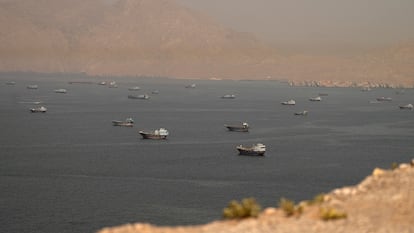
In recent days Hormuz has again been the Schrödinger strait: open according to the United States, closed according to Iran. On the ground, the reality is much more nuanced: some ships are still crossing, yes, but in dribs and drabs compared both with prewar transit volumes and with the weeks immediately after the memorandum of understanding was signed. Those who dare do so under cover, with their transponders switched off, to go as unnoticed as possible and avoid being attacked.
Transits have collapsed especially on the southern route, a lane that runs in Omani waters and which, on paper, is under the protection of the U.S. Navy. That, according to the specialist outlet Lloyd’s List, indicates that “shipowners’ confidence in that protection is eroding.”
In the last week alone, at least seven vessels have been attacked by Iran, mostly large tankers linked to Emirati, Saudi, and Qatari hydrocarbon companies that participate in a scheme in which these vessels, escorted by U.S. warships or monitored by aircraft, assume the risk of transiting Hormuz to then transfer their cargo to smaller ships off the port of Fujairah (United Arab Emirates).
“It is unlikely that ships will steam ahead full speed to assume the same risks while also paying a high tax,” warns Paul Donovan, chief economist at Swiss investment bank UBS, in an analysis published on Tuesday. “A 20% fee would be about 15 times higher than the levy Iran had considered and, as a proportional tax, would amplify fluctuations in the price of oil,” he notes.
The Baltic and International Maritime Council (Bimco), the largest shipowners’ association by membership, estimates that supertankers — which carry between one and two million barrels of crude — would have to pay about $27 million per voyage, while container ships would owe between $65 million and $260 million, depending on their cargo capacity. “While some cargo owners and operators might decide to absorb these additional costs, in most cases this expense will be passed along the supply chain and reflected in higher costs for consumers,” the analysis sent to this newspaper explains.
The shipping industry, which had already opposed the possibility of an Iranian fee or toll, is furious at Trump’s notion. “Charging tolls for passage through international waters would be fundamentally wrong,” Hapag-Lloyd told EL PAÍS in a comment sent by email. “Tolls for infrastructures like the Suez or Panama canals are different because they reflect significant investments in infrastructure. That is not the case in Hormuz.”
The UN Convention on the Law of the Sea (UNCLOS), the foundational text for governing global relations in this key area, prohibits imposing “tolls” in exchange for the passage of merchant ships through natural straits, although some, like the Turkish straits, do levy pilotage fees due to their greater navigational difficulty (the Bosphorus has a minimum width of 700 meters compared with Hormuz’s 30 kilometers).
Even harsher was Brazil’s president, Luiz Inácio Lula da Silva, who compared Trump to privateers: “He says he will clear the strait, but for every ship the oil owner must pay him 20%. This used to be called piracy. An important country like the U.S., which long fought against piracy, cannot now become a pirate.”
Price increases
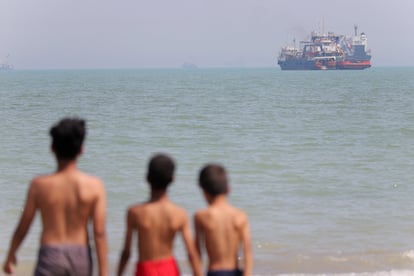
Joining the toll proposal was the decision to reimpose the U.S. blockade in the Gulf of Oman to prevent trade to and from Iranian ports, a move that also raises tensions in the area and which, according to Jakob Larsen, Bimco’s head of security, will lead Iran to “increase its threats” against maritime traffic. Trump’s proposal, which raises transport costs and represents an “additional disincentive” for transiting the strait, would only make sense if it contributed to a “significant reduction of the Iranian threat,” something Larsen says “is unclear how it is intended to be achieved.” For that reason, he believes all this entails “a grave risk of escalation” in Hormuz which, combined with the restriction of Iranian crude exports that the U.S. naval blockade seeks, “will put further upward pressure on oil prices.”
The fragile peace promised by the June agreement “has come to an end,” declare Gregory Brew, Clayton Allen, and Firas Maksad of the risk consultancy Eurasia Group. It has happened, moreover, more than a month earlier than planned: the original agreement had been a cessation of hostilities until August 17, with Hormuz open throughout that period and the world finally getting a breather after the sequence of convulsions. “Although for now it is unlikely that the U.S. will resume large-scale bombings against Iran similar to those in the March war, the volume transported through the strait will fall from between 30% and 50% [of prewar levels, in recent weeks] to between 5% and 15% until both sides reduce tensions.” In plain terms: oil, gas, and fertilizers will be more expensive, until further notice.
Bridges and power plants
“Next week it gets really bad for them,” Trump declared. “We’re going to knock out all their power plants. We’re going to knock out all their bridges unless they get to the table and negotiate,” he added, repeating earlier threats that were at the time condemned by UN officials.
Sign up for our weekly newsletter to get more English-language news coverage from EL PAÍS USA Edition
Che Guevara
Omar Sixto, Cuban-American Businessman: ‘The Solution For Cuba Is Not An Invasion, But A Humanitarian Takeover Of The Island’

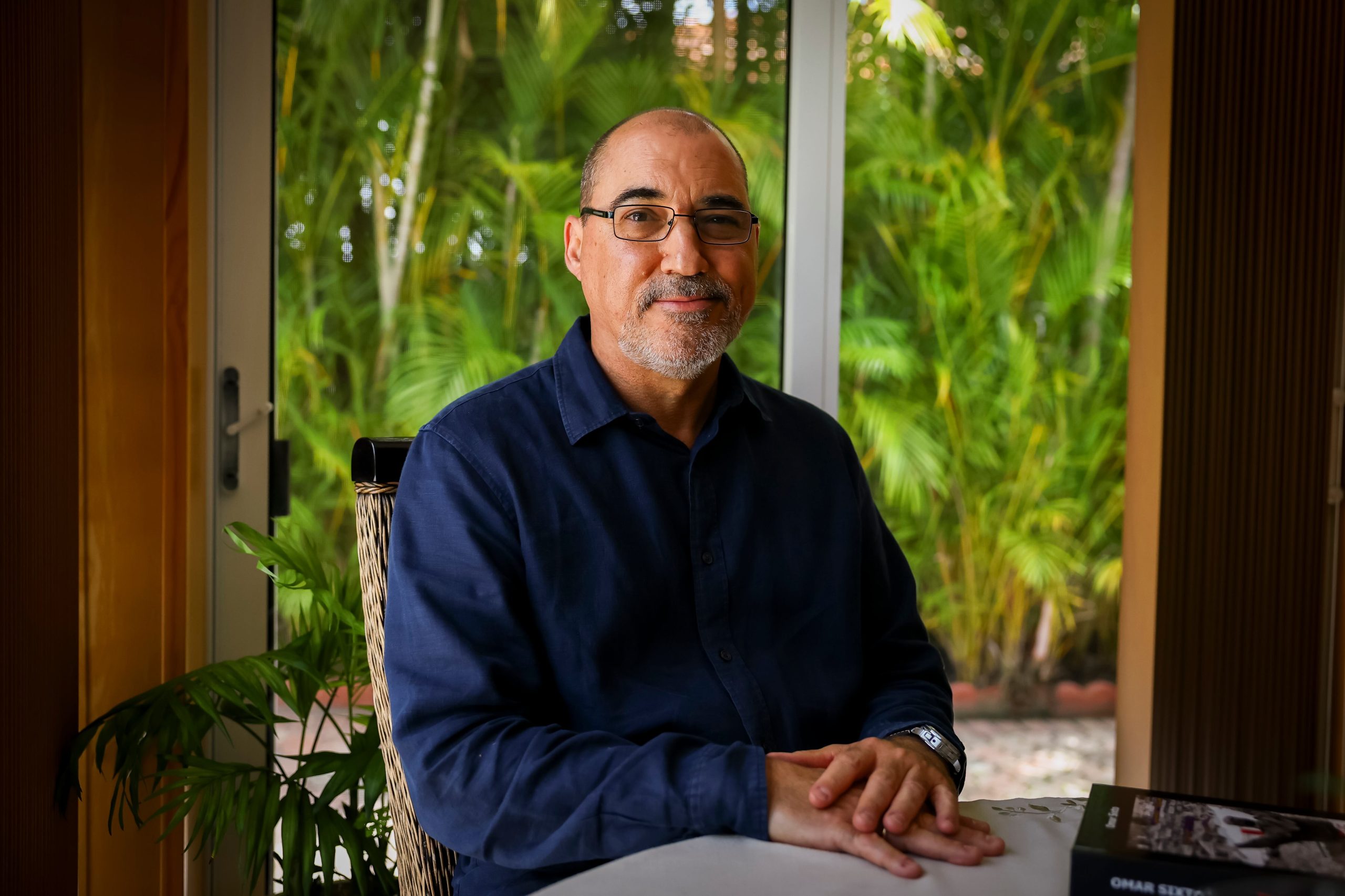
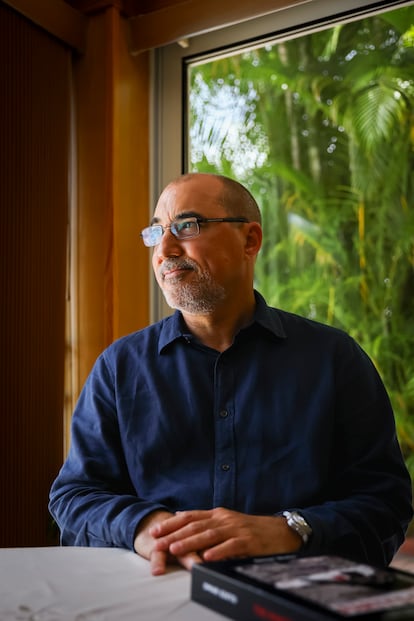
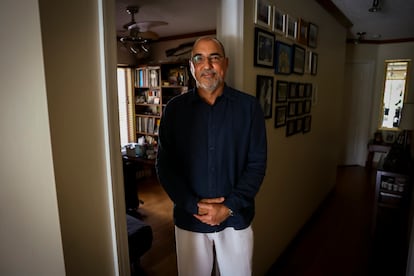
The Cuban-American businessman Omar Sixto (Havana, 1969) left the island 30 years ago and first settled in Madrid, Spain to pursue his history studies; later he moved to the United States, but he still maintains an emotional and intellectual bond with Cuba. A few months ago he published the essay Se acabó la diversión. La economía cubana: el salto del capitalismo al socialismo (1959-1965) [The fun is over. The Cuban economy: the jump from capitalism to socialism (1959-1965)], a detailed portrait of how far-reaching decisions—expropriations, nationalization, walking out on international financial institutions—were made very quickly and led Cuba to integrate into the Soviet production system until the USSR’s collapse.
For Sixto, that period produced “the failure” that Cuba is experiencing today. Like so many exiles living in Florida, he is watching events on the island with a mixture of sorrow and outrage: Cuba is a country on the brink of collapse that, since January, has received only one Russian ship with fuel because of the oil blockade imposed by U.S. President Donald Trump. The seed of this book lies in his years as a history student in Havana, during perestroika, when researching the economy “was almost forbidden.”
Although it is his military clothing and tactical equipment company that “puts food on the table,” Sixto sees his book as his own “small contribution so that, someday, Cubans on the island can return to civilization,” he says during a video interview from Miami. He is also connected as an external adviser to the newly created Cuban-American Chamber of Commerce, which seeks capital to help Cubans inside the island. In his view, a “humanitarian takeover” of Cuba is necessary to deliver basic infrastructure. Sixto, who says he is not affiliated with any party, is disappointed by Trump’s “inaction,” and fears the president may end up striking a deal with the regime.
Question. Why focus on the first six years of the Revolution?
Answer. It was an economy dependent on the United States, as almost all economies in the world were, as Mexico’s economy is today. That is a vulnerability, but not inherently bad. From January 1, 1959, Fidel Castro didn’t just change the rules of the game—he completely changed the game. That transformation took shape in those years. I stop in 1965 because that is when the important role Ernesto Guevara played in the destruction of the economy began to wane. In 1959, the first thing Fidel Castro and his group sought was to consolidate power. To do that they had to take economic power away from the class that would oppose them, and that is what they did. First they took property from the wealthy, then they took money from everyone. In 1960 they carried out the first massive confiscations of U.S. capital, of banks, and then they began with Cubans. Everything changed: within two years, a happy, music-loving country was in uniform and marching, and in three years it had nuclear weapons and the world was on the brink of nuclear war. It was a radical change in very few years.
Q. A happy country, you say? Your book documents the enormous inequalities that existed and the massive support the Revolution had.
A. When you move a society into a mood, it creates a wave: everyone wanted change in Cuba. The economy was much better than Spain’s at that point; Spaniards were still emigrating to Cuba. There were problems and suffering, as in all countries. I say it was a happy country because it worked. I say happy compared with what Cubans experienced afterward, because even under [Fulgencio] Batista’s dictatorship it was fairly lenient; it did not have a structured policy of repression comparable to Castroism. The only bombs that exploded in cinemas, theaters and restaurants were placed by Fidel Castro’s people.
Q. What does that span of time reveal for analyzing Cuba’s present?
A. It shows how they disarmed an economy that worked and tried to assemble one that they saw from the start did not work. And what was their solution? Keep trying, turning one screw here and another one there. By 1963 there was already a structural economic crisis. They survived thanks to Soviet subsidies, and remained parasitic on the Soviet Union until 1989. When the USSR ended, they were left adrift and introduced tourism, especially with the Spanish. They survived a few years on that until 1999, when [leftist Venezuelan leader] Hugo Chávez fell from the sky for them, and later [his successor Nicolás] Maduro until January 3. That short period is the cornerstone of today’s failure.
Q. In your book it seems that the shift to socialism was less a design responding to technical economic considerations than an abrupt jump driven by ideological motivations.
A. It began after they received the first embrace from [Soviet revolutionary Anastas] Mikoyan in Havana and then from [USSR leader] Nikita Khrushchev in New York. That’s when they said, ‘we have the backing, let’s move forward.’ On Guevara’s side it was ideological motivation; he was so ideologized that they eventually removed him because he was disruptive—very pro-China, very extreme. Cuban official history, the version I was taught at university and school, claims socialism was a necessary plan to achieve development and that everything was planned. That wasn’t the case. They brought in capable people early on to draft development plans and none worked.
Q. Why not?
A. There is no logical explanation for why a country would hurl itself into the abyss to the rhythm of a guaracha. There were some very good people—for example the economist [Rufo] López-Fresquet—which is why they removed him and put Ernesto Guevara in his place. At first there were still remnants of the previous Cuba and talented people in lower posts. The technicians and engineers had to leave, because they were expelled.
Q. Cuban authorities have just announced the biggest package of economic reforms in decades. Do you think these measures are viable?
A. They are measures to buy time. For them, every day is a victory. They won’t work. Some, I imagine, are preparing for the chaos of collapse, and that is the operation behind the 176 measures [to open up to the market]. It happened in the Soviet Union and Eastern Europe, where part of the elite took ownership of a ruined company. In Cuba, picture a state-owned cattle ranch: now it’s destroyed, with two old cows left. But how much land does it have? At the moment of change and a market economy, that land will be worth a lot of money.
Q. What options do you see?
A. The best solution would be to see the entire Cuban people, nonviolently, out in the streets facing them. The social pact has disappeared entirely, so there is no going back. Unless, since the regime is so adept at negotiating and the occupant of the White House loves to negotiate, there is a dirty deal that is neither a transition nor anything other than a pact of complicity like Venezuela’s. That could happen. It would hurt us a great deal.
Q. Do you agree with Marco Rubio’s strategy on Cuba?
A. Within the U.S. government there are two strands. Rubio’s is better prepared, more diplomatic and more knowledgeable of the reality, and in the Cuba case it used to have the upper hand. The other strand is JD Vance’s, closer to the MAGA project, aimed at the hard voter—the resentful worker who lost a job to a Chinese or Mexican factory. Trump’s problem is he has two ears: one day he listens to one side, the next day to the other. Cuba has no oil, and for him it’s not a fundamental problem so long as the U.S. coasts aren’t full of rafters. Today the faction that’s winning is the one saying, ‘leave that problem alone, it’s not ours. If they bother us, we’ll finish them off. But if not, don’t waste time or money on this.’
Q. Is there a plan?
A. I don’t think the United States has one, and if it did, the Pentagon’s attention and the money to do something in Cuba are focused on Venezuela. When humiliation weighs more than fear, that’s when people take to the streets. What I can’t understand is the indecision here; I don’t forgive it either, because each passing day means months more of reconstruction and hundreds of lives lost. Every day that passes complicates things further.
Q. Do you think nothing will happen?
A. Cuba’s situation is irreversible; the problem is how long it has lasted, since January 3 and long before that. At the end of January, when Trump issued the executive order declaring Cuba an unusual and extraordinary threat to the national security of the United States, the first possibility we all thought of was the extraction of this character [President Miguel Díaz-Canel]. That would have been a shock that could have moved the foundations of that entire dictatorship. It didn’t happen. Trump then turned his attention to Iran, and the Iranians mocked him, and he is still spinning his wheels. The most effective thing for me—though it is a dream—would be not an invasion but a humanitarian takeover of Cuba: let the U.S. government allow us to load ships with real humanitarian aid. We are not talking only about water tanks, but field hospitals, electrical generators, fuel for the equipment that needs to be moved. You can charter an oil tanker here in no time, we could fill it together and give it away. Money is not the problem.
Q. The Cuban-American Chamber of Commerce has just been created in exile. What is its goal? What is your connection to it?
A. The Chamber of Commerce is mainly dedicated to raising capital. It’s a very good idea because it involves people who have many millions of dollars; they are older people who lost their country when they were young and are preparing a humanitarian plan, not an investment plan. First you have to lift people up. I will meet with them at the end of the month. My personal role won’t be large, but advising on a project to rescue Cubans will be valuable; I am available for that.
Q. How much money is estimated to be required?
A. We don’t know. We don’t know how this will end. Money only comes out when it’s needed.
Q. There are estimates that just fixing the electricity grid would cost $10 billion.
A. For a company that operates in that sector, that’s not so much. These are concessions over 30 or 40 years. Look at Japan and all of Europe with the Marshall Plan. In 20 years, where were they? Cuba was devastated when it finished its war [of independence, in 1898]. By 1920 the dance of millions was already underway and Cuba was the world’s leading sugar exporter. In 1940 it had the most advanced and progressive constitution. Cuba is a small country; reconstruction is not impossible. The social fabric will be much harder. I say the tree of the Cuban nation became bent because of many years—67 years. A humanitarian invasion would be the most effective solution.
Q. There is distrust about the exile community’s intentions.
A. There is a new tendency, coming from Havana, that says people here want to reclaim houses there and drag people out on the streets. I have an apartment that was expropriated from me, but I probably acquired it from someone from whom it was taken in 1959. I don’t want anything. However, if someone murdered or tortured, then yes—I want to see justice and punishment. But someone who stole a little should return what is tangible. I understand that someone who owned 100,000 hectares might want to reclaim it, but if I were a new Cuban state, I would not give it back for free. There must be a tax, because the state will need money to rebuild everything else; you have to pay something because the entire place must refounded, and you won’t simply recover what’s yours. I’ve also told this to the Chamber of Commerce.
Q. And where does democracy fit in?
A. That is fundamental. Democracy and liberty are the first two steps to establish a legal system that maintains respect for the law, respect for private property, respect for human rights, freedom for businesses and a financially responsible state that collects taxes, spends them well and does not squander them. It’s extremely difficult, but without democracy there is nothing. From here, not a peso will go if there is no democracy. There is no good dictator, neither [Nayib] Bukele nor [Miguel] Díaz-Canel.
Sign up for our weekly newsletter to get more English-language news coverage from EL PAÍS USA Edition

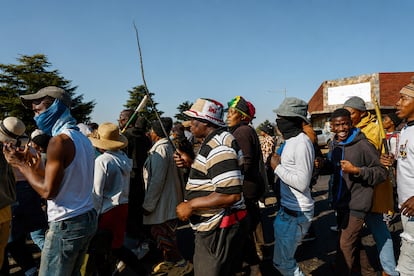
The chants are perceived as a distant murmur. They filter through the low-rise houses of Katlehong, a working-class neighborhood in eastern Johannesburg, South Africa. Gradually, a hundred or so people come into view, waving wooden sticks in the air. Brandishing South African flags, they dance and chant slogans in Zulu against illegal immigration.
A man with a megaphone rallies the crowd. Before they reach her, a young woman — with her hair gathered in a cascade of fine braids — hurriedly closes the door of her house, a humble, single-story structure protected by metal bars.
On the first Thursday of protests by South Africa’s anti-immigration groups, the demonstrators are scouring the neighborhood for undocumented immigrants. They’ve vowed to take to the streets every week to pressure President Cyril Ramaphosa’s administration to expel all undocumented immigrants from the country. This comes after months of marches, threats and attacks against foreigners. Similar demonstrations are taking place in neighborhoods and cities across the country, with Durban and Johannesburg as the main centers.
However, things are different compared to what happened on June 30, when thousands of people (according to estimates in the South African press) took to the streets. That was after their ultimatum — which these groups issued to the government — had expired. On Thursday, July 9, on the other hand, the day ended without major disturbances or large gatherings. Rather, the small, scattered demonstrations drew groups of around 50 to barely over 100 people.
The objective seems to have changed: it’s no longer simply about demonstrating, but rather about undertaking what have come to be known as “door-to-door” campaigns. That is, going house to house to find foreign citizens and urge them — sometimes politely, sometimes forcefully — to leave the country. And, unlike other episodes of racial tension in the country’s history, the protagonists of these protests are, for the most part, Black South African citizens who are targeting Black immigrants.
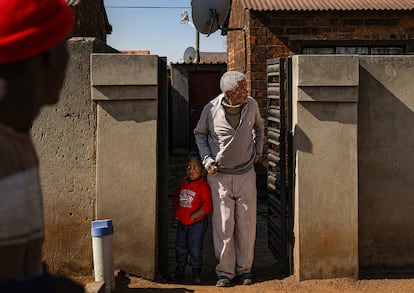
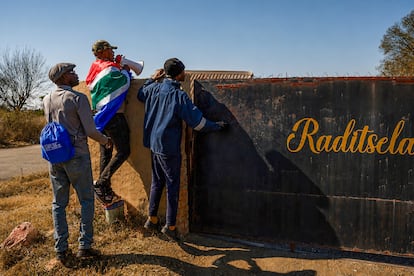
In the township of Katlehong, the march stops in front of a vacant lot surrounded by a concrete wall. Several old buses are barely visible. A neighbor warns: “Sothos from Lesotho live here!” Then, three men climb the low wall and peer over; others begin banging on the large metal gate with their sticks, while the rest chant slogans. No one responds from inside. After several tense minutes, the march continues. “There are definitely people inside,” a straggler protests, as the rest keep walking.
“The idea isn’t to hurt anyone,” insists Patrick Dube, a neighborhood representative, as he marches alongside the others. “We want them to go back to their country, get their papers in order and return legally.” Dube argues that the violence that occurred during other similar protests was due to people who “misinterpreted” the movement and took the law into their own hands.
However, there have been so many cases in which South African citizens have forced immigrants to show their papers — or have even evicted them from their homes under the pretext of their irregular status — that numerous public officials, including President Cyril Ramaphosa himself, have had to reiterate that, under South African law, immigration control duties are strictly to be carried out by the authorities.
Ramaphosa has acknowledged that there’s a problem with irregular immigration and has promised to tighten its enforcement. But, at the same time, he has condemned vigilantism and insisted that citizens cannot replace the state.
The main driving force behind the campaign is Jacinta Ngobese-Zuma. She’s the leader of a movement called March & March, which collaborates with other anti-immigration organizations. On social media, their message has spread like wildfire. They’re demanding that the government strengthen border controls, expedite the deportation of undocumented immigrants, and reserve access to employment and public services for South Africans. Ngobese-Zuma has managed to unite popular discontent over issues such as unemployment (exceeding 30%), corruption and high crime rates by blaming immigrants, even though they represent only 4% of the approximately 63 million people living in the country.
During a rally held on Thursday, July 9, in Durban, Ngobese-Zuma insisted that the demonstrations will continue every Thursday until the government takes action. “The government has been asleep on the job for too long. If we had a government that was responsive and listened to what the people want, then we wouldn’t have the problem of being on the streets today,” she says. The leader, moreover, rejects the notion that her movement is xenophobic.
While the marches continue to spread through different neighborhoods, the number of people choosing to leave South Africa is also increasing. The Malawian government reported this past Thursday that more than 38,000 of its citizens have returned from South Africa in recent weeks for safety reasons. Zimbabwean authorities, for their part, estimate that more than 60,000 people have returned since the start of the crisis.
Like in Katlehong, marches are taking place in other areas of Johannesburg, but these aren’t as peaceful. The tension has erupted into violence in Dunnottar, a town in the eastern part of the Johannesburg metropolitan area, home to a large community of Ethiopian, Somali, Pakistani and Bangladeshi immigrants, some of whom run small grocery stores selling imported goods
On July 9, the pavement of a central street was littered with broken glass after about 50 protesters attacked foreign-owned businesses with stones and bottles. The shopkeepers defended themselves, leading to a pitched battle that ended with police intervention. Among the migrants, three suffered minor injuries and went to the police station to file a report. This is according to Ali Hussein, a Bangladeshi who owns a neighborhood supermarket. He says he has lived in the country for almost 20 years: his wife and children are South African, while he himself holds a South African passport.
“They say we come to take their jobs, but we provide work for South Africans and offer a service to the community with our businesses,” he laments. A young South African man who was also present (and who preferred not to give his name) confirmed this: “I work for a foreigner and I think what’s happening is a disgrace.”
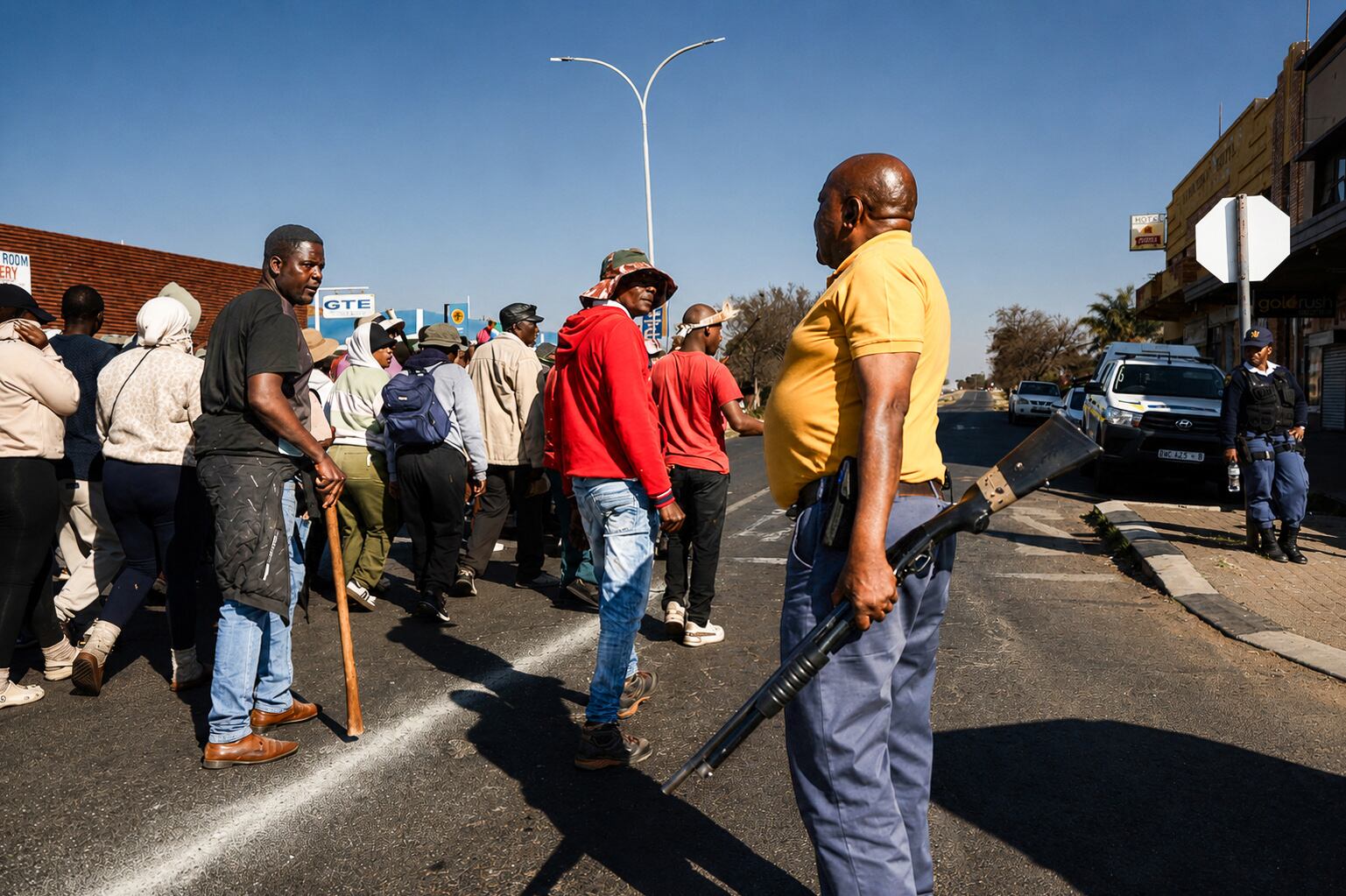
Meanwhile, the 50 or so enraged citizens eye the immigrants suspiciously from across the road, barely 70 feet away. Some are armed with sticks, broom handles and even leather whips. The police, positioned between the two groups, have deployed eight vehicles, a truck and a dozen officers. Still, the rioters are undeterred.
After a while, the group sets off again, shouting slogans in Zulu against the merchants, which Hussein understands. “They’re insulting our mothers,” he says. For a few minutes, it seems like the situation might spiral out of control again: the group advances toward the police cordon, continuing to chant slogans and dance. That is, until the head of the operation pulls out a shotgun from one of the vehicles, confronts several protesters and orders them to turn around. Finally, the march continues down the street.
Similar scenes unfolded this past Thursday in other parts of the country, such as in the townships of Soweto and Alexandra, where — according to Reuters — protesters dragged people from their homes, accused them of being undocumented and handed them over to the police.
Back in the township of Katlehong, many residents watched the march from behind their fences. Some filmed with their phones. Others applauded enthusiastically when the group stopped in front of another house where, they said, a foreigner lived. Behind the fence, a tiny barbershop made of corrugated metal sheets was also visible. “We neighbors know where the immigrants live; people warn us,” Dube explains.
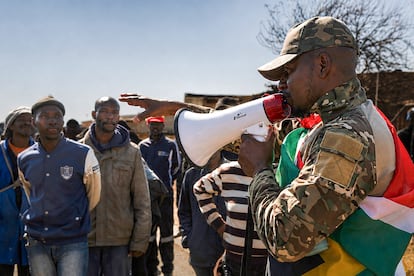
The ritual repeats itself. The man with the megaphone rallies the crowd. Several people bang on the fence with their sticks. No one comes out. Dube maintains that the problem isn’t just the immigrants, but also the companies that — according to him — hire them in order to get away with paying lower wages. “We’ll have to go and talk to them, too,” he says. “Maybe next Thursday, at the next demonstration.”
A few feet away, Dube and a neighbor knock on the door of another house. This time, a woman answers, claiming to be South African. They ask her to report any undocumented immigrants in the neighborhood if she knows of them. She nods silently and shuts the door.
“We just want the law to be enforced,” says Dube, at the end of the march. But in Dunnottar, Hussein points to the broken windows of his supermarket and responds: “I already obey the law.” Between these two statements lies one of the major tensions currently gripping South Africa — a tension that, for now, shows no sign of being resolved.
Sign up for our weekly newsletter to get more English-language news coverage from EL PAÍS USA Edition
British pensioner injured running with the bulls in Pamplona at the age of 86
Rush from Malaga: Driver clocked doing 242 km/h set off three fixed speed cameras in one journey
La Nucia’s ultimate amateur padel festival: A must-visit this July
Alhaurin el Grande and Coin launch historic 1.5 million kilo season for premium tomato

Los Aficionados Al Ciclismo En Barcelona: “Que Venga El Tour De Francia Es Como Ir Al Mundial De Fútbol”

Cheap Flights And Mass Tourism Are Adding €3,800 To The Cost Of The Average Spanish Home, New Report Warns


-
Alhaurin El Grande2 weeks ago
Alhaurin el Grande and Coin launch historic 1.5 million kilo season for premium tomato
-
 Antoni Gaudi2 weeks ago
Los Aficionados Al Ciclismo En Barcelona: “Que Venga El Tour De Francia Es Como Ir Al Mundial De Fútbol”
-
 Business & Finance2 weeks ago
Cheap Flights And Mass Tourism Are Adding €3,800 To The Cost Of The Average Spanish Home, New Report Warns
-
 Barcelona2 weeks ago
Spain Is Set To Be Swarming With Rock Legends This Weekend – Here’s What You Need To Know
-
 Dutch demand1 week ago
Dutch Demand For Spanish Property Keeps Rising As Others Cool
-
4 billion fine2 weeks ago
Google loses €4.1bn EU fight over the apps Android users see first
-
Latest2 weeks ago
Conservatives And Far Right To Govern Spain’s Andalusia Region
-

 New Developments2 weeks ago
🌅 Stunning Penthouse With Panoramic Sea & Mountain Views Benalmádena