
Barack Obama
Raúl Castro’s Confession That Could Lead To A Trial In The US: ‘Knock Them Down Into The Sea’


The confession came almost four months after the planes exploded over the Caribbean Sea: “I told them to try to knock them down over [Cuban] territory, but they would enter Havana and leave.” It was June 1996, and the 11-minute, 32-second statement was recorded and later transferred to an old compact disc. “Of course, with one of those missiles, air-to-air, what comes down is a ball of fire that will fall on the city.” The man speaking didn’t know then that he was revealing the crime that would haunt him for the rest of his life: the downing of two planes belonging to the Brothers to the Rescue non-profit organization. “Well, knock them down into the sea when they reappear; and don’t consult those who have the authority.” The speaker was Raúl Castro. The U.S. Department of Justice now intends to prosecute him for the deaths of the four crew members, more than three decades ago.
On May 20, an unprecedented event could take place in the mecca of Cuban exiles: the U.S. Attorney’s Office for the Southern District of Florida is set to formally present its indictment against Castro in a ceremony at the Freedom Tower in Miami. This initiative comes amid the Trump administration’s siege against the regime on the island. Since the Republican president announced in January that Cuba was “next,” following the incursion into Venezuela to arrest Nicolás Maduro, Cubans have been watching closely for any sign that might shed light on Trump’s uncertain plans.
It’s hard for people to imagine a figure like Castro, now 94, being transferred to a maximum-security prison in the United States so near the end of his life. He’s no longer the powerful man who can sit down and talk with the United States, as he did during Barack Obama’s presidency in 2016. Now he sends his grandson, Raúl Guillermo Rodríguez Castro, to carry on his legacy. Time, however, hasn’t lessened his debt, nor has old age granted him any special treatment among the exile community. “I don’t know if we’ll ever see Raúl Castro before a U.S. court,” says Arnaldo Iglesias, 88, in his Miami home. “But I would like the full recognition of the truth. I want it established that four men were murdered by a dictatorship during a humanitarian mission.”

Iglesias’ memory has not erased the events of that February 24, 1996, when the two Cessna C-337 planes carrying his Brothers to the Rescue comrades were shot down between 3:21 p.m. and 3:27 p.m. by Cuban Air Force MiG fighter jets. A third plane, carrying Iglesias, managed to escape. “I remember the voices on the radio, the uncertainty, and then the silence. A silence that defies explanation.”
A week earlier, Iglesias had seen his friends all smiles in Nassau, Bahamas, during a Brothers to the Rescue humanitarian mission. The group was conducting search and rescue operations in the Florida Straits, with exiles and the help of the U.S. Coast Guard, to assist those who took to the sea from Cuba, the so-called rafters. Iglesias never saw Armando Alejandre, 45, Carlos Costa, 29, Mario de la Peña, 24, or Pablo Morales, 29, again. He still remembers details about each of them, as if time hasn’t taken them away.
“Carlos Costa had a special calmness. Mario de la Peña was an enthusiastic young man and a consummate environmentalist. Pablo Morales was a rafter rescued by us, helping others to achieve the freedom he already enjoyed, and Armando Alejandre Jr., an exemplary Cuban,” he says. “Thirty years later, I still think about them almost every day.”
The survivors, the families of the victims, and the exile community that has for years mourned the four Brothers to the Rescue crew members have patiently waited for justice to be served against the Castro regime. Nothing, so far, has happened. Five administrations have come and gone in the White House without a response, despite the fact that it has been proven the planes were shot down over international waters, not Cuban airspace, and that the U.S. Congress condemned the events on March 12, 1996. That year, Judge James Lawrence King ruled that the Castro regime had murdered “four human beings in international airspace over the Florida Straits.” Cuba refused to compensate the victims’ families, but the United States did so with $93 million in frozen Cuban government assets.
After Trump’s first term, during which he barely paid any attention to Cuba, perhaps no one in Havana expected him to now dedicate so much time to the island. Events indicate that Washington is determined to fight back: a nearly five-month-long oil embargo has been compounded by threats, negotiations, visits from officials, $100 million in humanitarian aid, and the revelation that Castro could face prosecution in U.S. courts. There is one piece of evidence now available to federal judges that forms the cornerstone of the ongoing case: a voice recording in which Raúl Castro admits that he gave the order to shoot down the planes.

Brothers to the Rescue at the center of politics
That audio fell into the hands of Cuban journalist Wilfredo Cancio in 2006, based in Miami and at the time a reporter covering Cuban affairs for El Nuevo Herald. Castro had assumed the presidency of Cuba a few days earlier, due to Fidel’s illness. Ten years prior, as Cuba’s Minister of Defense and head of the Armed Forces, he had admitted his responsibility for the attack on the planes in a meeting with journalists from the island.
Cancio verified the recording with several specialists and with Alcibiades Hidalgo, who was Castro’s personal secretary. It was his voice. On August 20, 2006, he published an exclusive report that garnered worldwide media attention. “What changes with this recording is that there is now voice evidence of Raúl Castro assuming full responsibility,” the journalist told EL PAÍS, adding that he sees the planned indictment as “an act of historical justice.” When asked if the FBI had contacted him at any point regarding the investigation, he declined to comment.
The case of the downing of the planes has followed the course of events dictated by South Florida politics. “In the 1990s, there were formal charges and accusations that were dropped by the Bill Clinton administration, which was difficult for the families of the four men killed to accept,” Iglesias recounts. Two years after the recording was made public, it was once again put on hold with Barack Obama’s arrival at the White House and the diplomatic rapprochement between the two countries. Castro not only visited the United Nations headquarters in New York but also hosted the Democrat for a two-day stay in the Cuban capital. Former spy Gerardo Hernández, linked to the attack on the planes, was sentenced in the United States to life imprisonment and then sent to Cuba in 2014 as part of a prisoner exchange.

Republicans, for their part, have called for Castro’s head: Rick Scott, former governor of Florida, and the current governor, Ron DeSantis, are demanding that the Justice Department file charges. CBS News broke the news about Castro’s possible prosecution on the same day that the CIA director arrived in Havana last week. “Everything that is being done is a form of pressure on Cuba and a symbolic act of justice, albeit belated, but justice nonetheless. There is pressure in Congress and in the community to prosecute Raúl and Fidel as those responsible for the crime,” Cancio comments. “The fact that accountability is being discussed again today sends an important message: state crimes do not simply disappear with the passage of time.”
In 1996, Fidel himself said that he was the one who gave the order that small planes could no longer fly over Cuban airspace to drop leaflets, as they had done before. “They had a general order not to allow it… They acted with full awareness that they were following orders… I take responsibility for that,” the late leader said. However, the leaked audio shows that the order was actually given by his brother Raúl.
Sign up for our weekly newsletter to get more English-language news coverage from EL PAÍS USA Edition











Barack Obama
A Grammy Winner, A Journalist, A Firefighter: The Democrats’ Biggest Bets To Win The US Midterms

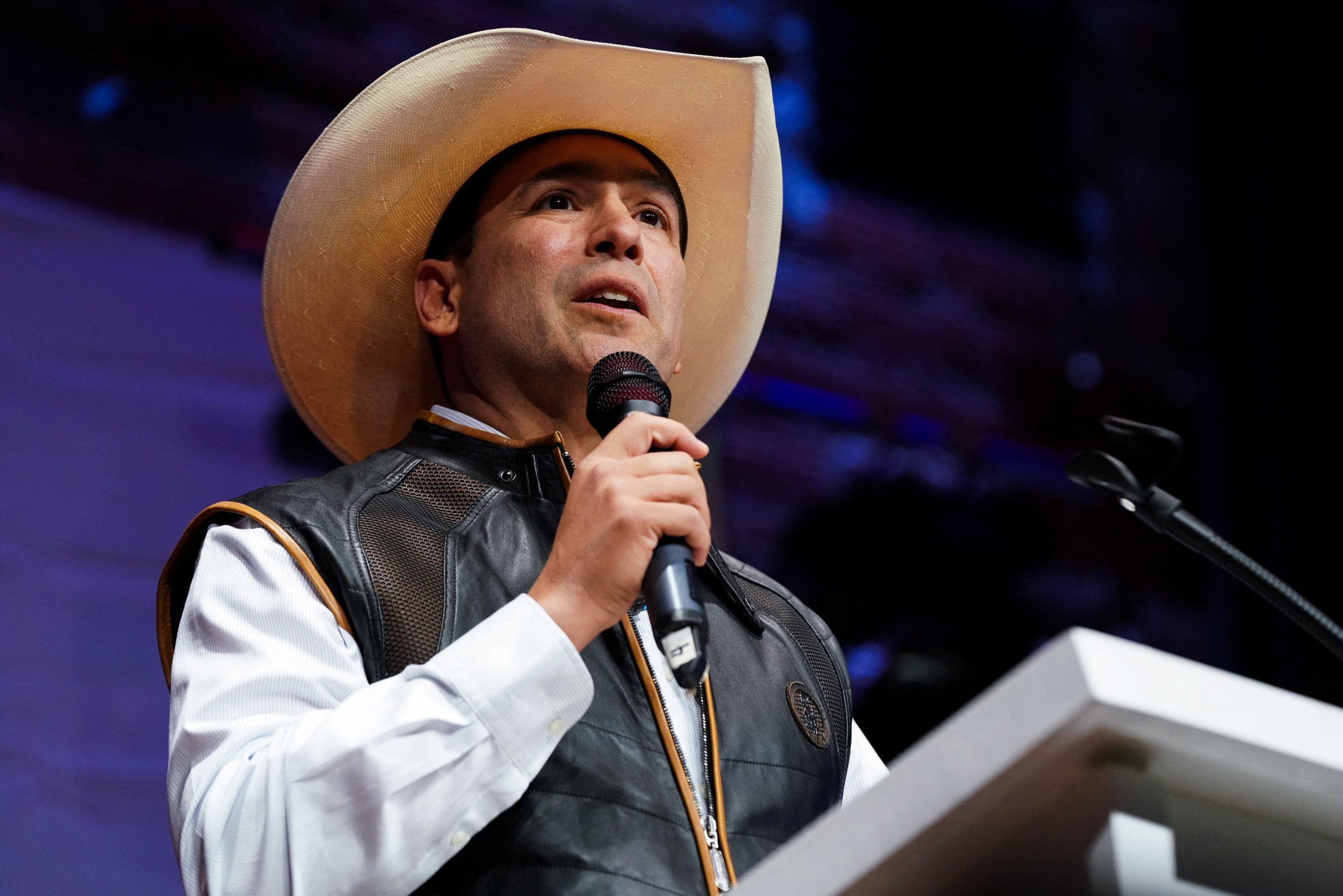
Bobby Pulido, 52, is a Tejano music star and two-time Latin Grammy winner. His songs are a staple at quinceañera celebrations, especially in South Texas. Now he’s entered politics: as a candidate for the U.S. House of Representatives, he’s one of the Democratic Party’s top contenders to win at the November midterm elections and wrest control of at least one chamber of Congress from the Republicans. This would allow them to block President Donald Trump’s policies or even impeach him. And it would serve as a springboard to the ultimate prize: winning the White House in 2028.
His popularity and his place in the local culture are his trump card. His Republican rival, Mónica de la Cruz, attacked him in March: “This isn’t about who’s going to sing at your niece’s quinceañera. It’s about who you’re putting your family’s future in the hands of.” Within days, Pulido announced he would perform at any quinceañera party he was invited to: he claims to have received more than 3,000 requests. And he spends his weekends at these celebrations in his region, the Rio Grande Valley—a predominantly Latino area near the Texas border—an ideal opportunity to cultivate voters. The campaign slogan that emerged from this episode, “Make Quinceañeras Great Again,” is a mockery of Donald Trump’s MAGA slogan, but also a vindication of local culture.
“I think the Democratic Party sometimes tends to be overly intellectual in its rhetoric. But people often don’t want you to use jargon they might not understand. They want you to speak simply. I feel that’s something we have to change so that people can understand exactly what we’re saying,” the musician said during a phone interview. He announced his jump into politics last year, convinced that “democracy is in danger.” The idea had crossed his mind before, but he had put it aside as his music career took off.

He says he wants to solve the problems of ordinary people: soaring prices, access to affordable health insurance. “Being famous helps in the sense that people know who you are. But that doesn’t mean they’re going to vote for you. What does help is that they’re interested in hearing answers to what they want to know, and we’re generating that interest,” he says, noting that he has already visited every county in a district spanning more than 500 kilometers from end to end.
It’s the 15th district, where Democrats were once the dominant party, but where Republican positions have been gaining strength. De la Cruz became the first Republican in over a century to win this district in 2022, and it’s now being contested by Pulido. In 2024, the current president, Donald Trump, won by 17 percentage points.
For the Democrats, the House until recently seemed within reach: they only need to gain three more seats to secure a majority out of the 435 available seats. The Senate is a more difficult task, since only a third of the seats are up for grabs, and most of those are already in the hands of the opposition, which needs to defend them.
But in the last couple of weeks, Democrats have suffered a series of setbacks that make those aspirations a bit more difficult. The Supreme Court issued a ruling last week that, for all intents and purposes, nullifies the 1965 law that protected minority representation in elections. Republican states in the South have rushed to implement—Tennessee being the first—new district boundaries that guarantee their candidates victories in perpetuity. This Friday, the Virginia Supreme Court struck down a local district reform, approved by voters last month, that would have guaranteed Democrats four more seats in Congress.
Despite the setbacks, Democrats are elated by their chances of success. In the Senate, where they need to gain four more seats, Democratic Minority Leader Chuck Schumer is optimistic about achieving this in New Hampshire, Alaska, North Carolina, and Ohio. Almost every primary election held in the last year has either favored the Democrats or improved upon the party’s 2024 results. Polls show a six-percentage-point lead in voter intention for Democrats, with 50% compared to 44% for Republicans. Even the online betting site Polymarket gives Democrats an 83% probability of winning a majority in the House of Representatives, compared to a 17% probability that Republicans will retain it.
Strategists point out that it is common for the ruling party to lose seats in midterm elections: in 2010, Barack Obama’s Democrats lost 63 in the House and six in the Senate; in 2018, Donald Trump gained two in the Senate, but lost 40 in the House.
The president’s unpopularity, stemming from immigration enforcement excesses earlier this year in Minnesota and other states, the war in Iran, and rising fuel prices, represents another favorable factor: a Pew Research Center poll indicates that only 34% of voters approve of the president’s performance, while 62% disapprove. An influential Republican political support and fundraising group, AFP Action, acknowledged last week in a memo, first reported by Politico, that “the Republican majority in the Senate is in danger.”
Democrats believe they’ve found a formula. Their Congressional Democratic Campaign Committee has expanded its “Red to Blue” program to support candidates with a chance of flipping districts currently held by their rivals. The original slate of 12 hopefuls in February has now grown to 18, in 12 different states, from California to Pennsylvania. Pulido is one of them.
The Democratic candidate model
The 18 candidates offer a clue as to the type of candidate the Democratic Party is considering for the upcoming elections, and possibly even beyond. They are a very diverse group. There are men and women, white and from minority groups. There are celebrities like Pulido; familiar faces in their states such as Marleen Galán-Woods, a former television journalist, mother of five and second-generation Cuban-American running for Arizona’s 1st district. There’s also physician and state representative Jasmeet Bains in California, and the firefighter and union leader Bob Brooks in Pennsylvania. What they mostly have in common is that they are relatively new to politics and moderate in their views, people with whom the party hopes voters can connect. The Republican Party, in a statement, describes them as “radical extremists, out of touch with reality, hate-mongers, and elitist.”
“We can’t lose again,” Galán-Woods declared in a phone interview, highlighting her “disciplined and competitive campaign and community support” as key strengths, given her more than 40 years of residence in her district. For the former television journalist, this is her second attempt to reach the Capitol in Washington, following a previous defeat. She still needs to win a primary before becoming the official candidate. Galán-Woods, whose husband is a former Republican mayor of her hometown, boasts of being “with the working people” and promises to collaborate with the opposing party to achieve common goals. “I want to work to lower the cost of gas, food, medicine… I’m interested in working with anyone in Congress, regardless of their ideology, on these issues that matter to all of us.”
“Democrats have the momentum to regain the majority,” said Suzan DelBene, chair of the Democratic Congressional Campaign Committee, in a statement: “These latest additions to our Red to Blue platform represent the strength of our people-first message and the charisma of our candidates.”
A preview of 2028?
Could these be a preview of the party’s strategy for 2028? Perhaps. Although the 2028 strategy “is a whole different ballgame,” a former high-ranking Democratic official joked in a recent conversation. His opinion echoed that of Michelle Obama, wife of former President Barack Obama, in controversial remarks earlier this year, following the defeats of Hillary Clinton in 2016 and Kamala Harris in 2024. The former first lady suggested that the United States is not yet ready for a female president. “As we saw in this past election, sadly, we ain’t ready,” she said. “Don’t even look at me about running ‘cause you all are lying. You’re not ready for a woman.”
The former Democratic official predicts that in the upcoming presidential election, “Democrats will play it safe” when choosing a candidate: “No innovative formulas that could alienate voters.” In his opinion, that means a white, Christian, heterosexual male candidate.
“Would I like to see a woman in the Oval Office? Of course. Would I want to see a Black president again, like Barack Obama, or one from another minority group? You bet I would. But in the upcoming election cycle, it doesn’t seem like that’s the right time,” he noted. “We don’t want to try to make history again. What we want is to win.”
Sign up for our weekly newsletter to get more English-language news coverage from EL PAÍS USA Edition

S

S
KEY POINTS: What Changes About Life In Spain In June 2026


-

 Competiciones3 weeks ago
E
-
Costa del Sol3 weeks ago
Why home care is the new gold standard for living well in Spain
-
blackout April 20252 weeks ago
Insurance company Mapfre decides to pay out €14 million compensation for 2025 blackout
-

 Foreign demand2 weeks ago
Who Bought Where In The Second Half Of 2025?
-
Bullfighter injured4 weeks ago
Second serious injury in Spain’s La Maestranza bullring reignites controversy
-

 %4 weeks ago
Gibraltar Sees Surge In Residency Applications After Border Agreement
-

 %4 weeks ago
Portugal Confirms High-Speed Rail Link
-
Animal protection law3 weeks ago
Spain moves to redefine legal pets as draft law raises wider welfare concerns