
CIA
‘El Cangrejo’, Raúl Castro’s ‘favorite’ Grandson In Talks With The United States

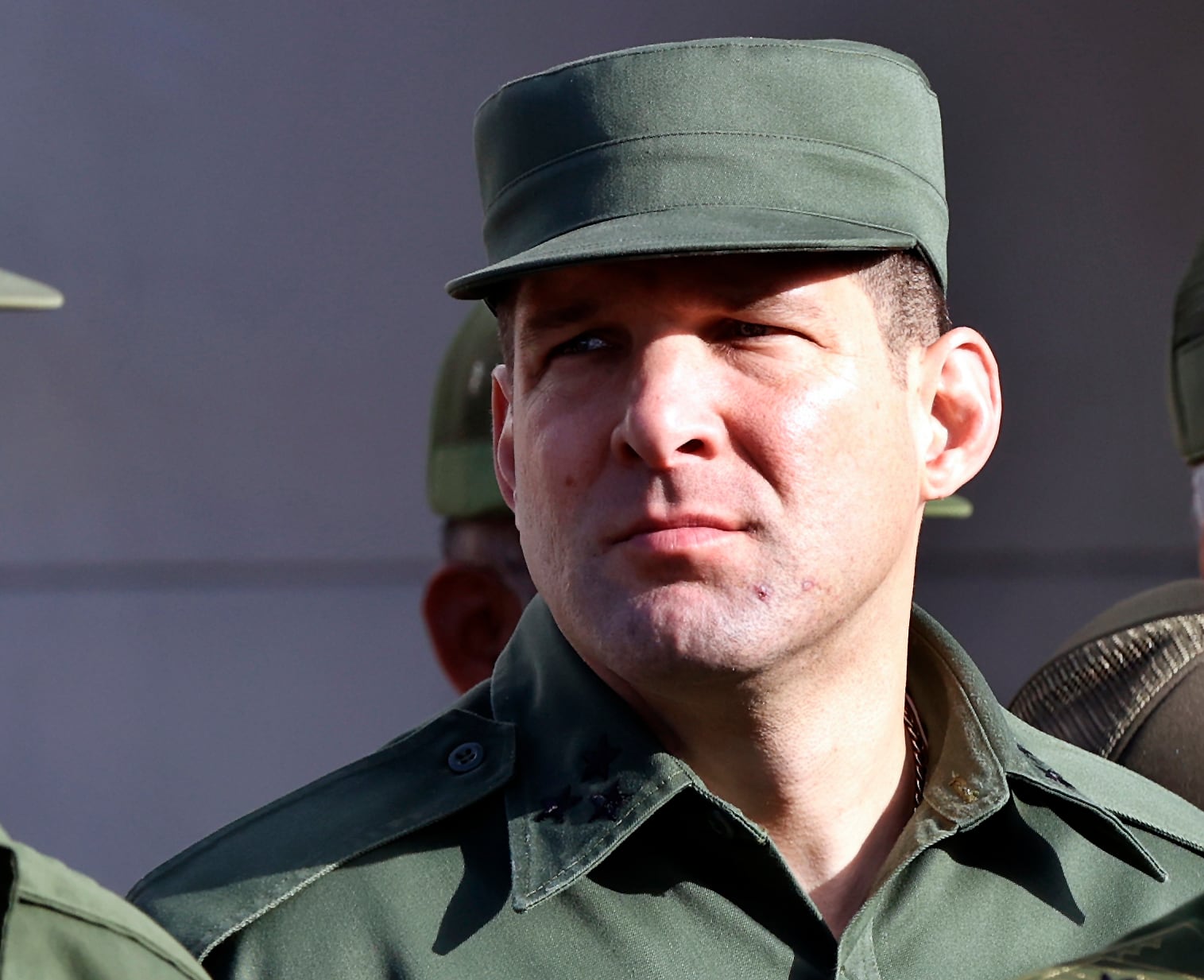
There is a man who whispers in Raúl Castro’s ear. He speaks to him during the May Day parade in Havana or puts his arm in the way if a woman tries to take the former president’s hand—as though she needs reassurance that he is still alive. When Castro delivered speeches in Revolution Square—always less fiery than his brother Fidel’s—this man stood behind him, steadfast in the scorching tropical heat. When Raúl received Pope Francis in the Cuban capital, the same man was there, watching his every move. Those who know him say he is Castro’s “darling.” They also say he has an extra finger due to a congenital condition, and that his inner circle has given him a nickname: El Cangrejo—The Crab. His name is Raúl Guillermo Rodríguez Castro; he is Raúl’s grandson and his bodyguard. For months now, however, he seems to be guarding something far larger: not just his grandfather’s back, but the fate of his country.
Rodríguez Castro has become the bodyguard not only of Castro but also of the negotiations between Cuba and the United States. El Cangrejo has been present at the talks that have been taking place since the start of the year—talks Cuba initially denied were happening. El Cangrejo traveled to the Caribbean Community (CARICOM) summit to meet with advisers to Secretary of State Marco Rubio. When President Miguel Díaz-Canel acknowledged for the first time in March that they were negotiating with the Trump administration, El Cangrejo was there. El Cangrejo was spotted in a solemn position at the farewell ceremony for the Cuban military personnel killed during the operation that captured Nicolás Maduro. El Cangrejo took part in the visit of U.S. officials to Havana on April 10, during which Cuba was presented with an ultimatum to release political prisoners—one it failed to meet. And this past Thursday, when the head of the CIA landed on the island to “seriously address economic and security issues,” El Cangrejo could not be absent.
Even so, almost no Cuban today can explain what role Rodríguez Castro plays at the moment of greatest tension in decades between Washington and Havana. People barely know how he speaks, what his voice sounds like, or what he thinks or believes. “El Cangrejo matters because he is family, not because he has any individual political capital of his own, beyond being a trusted member of a family clan,” says Cuban intellectual Alina Bárbara López.
Once, in 2017, a young man was spotted on a platform at Varadero beach, sweating, singing, and dancing to the reggaeton beat of the popular duo Gente de Zona. He would have gone unnoticed were it not for what was written on his shirt: he was wearing a New York Yankees jersey with the words “El Cangrejo” emblazoned across it in large letters. Other extravagances from those years also drew attention: yacht trips, lobster fishing, VIP parties, flights on private planes.
Yet people still know very little about Rodríguez Castro beyond what he and his family have chosen to reveal. Juan Almeida García, son of the late Cuban Vice President Juan Almeida Bosque, who grew up in Raúl’s household as a child, says that El Cangrejo is without question “his favorite grandson.” Being the firstborn grandson, combined with the insecurities he carried from being born with a sixth finger, led Castro to be fiercely overprotective. “Raúl Castro has always been very attached to him, and the boy grew up with a rather exaggerated degree of protection from his grandfather,” says Almeida, who was present on the day of his birth—March 24, 1984.

Now 41, Rodríguez Castro is the son of Raul’s daughter Deborah and the late General Luis Alberto Rodríguez López-Calleja, the man who built the GAESA military and economic conglomerate and who died suddenly in 2022. Rodríguez López-Calleja was a figure who was widely considered a potential future leader of Cuba. He studied at the Los Camilitos military academy, graduated with a degree in Accounting and Finance from the University of Havana, and in 2016 was appointed lieutenant colonel in the Ministry of the Interior and head of Castro’s Personal Security Directorate.
Although Castro made him his bodyguard, in reality, “the grandfather is the one who takes care of the grandson and not the grandson who takes care of the grandfather,” says Almeida, who assures that El Cangrejo cultivated a “quite egocentric” personality.
For a long time, people couldn’t guess who the young man who was always seen guarding Raúl was. Today, he is invisible to no one. Maidelys Solano, who is currently desperate because of the power outage in her Bayamo neighborhood, has heard a lot of talk lately about El Cangrejo. “People know who he is, and many say he’s the one who’s going to lead the transition in Cuba; that’s what everyone’s saying. But I think he has to go too, because he’s also benefited from all this,” she says.
Amidst negotiations that escalate and de-escalate each month, where Havana denies details that Washington asserts and where secrecy keeps Cubans on edge, many questions arise surrounding the figure of El Cangrejo: What is the role of someone who holds no institutional or political office, at least not publicly? Or why is he a constant presence in the dialogues with Washington, in which, for example, Díaz-Canel has never been seen, nor has his uncle, Alejandro Castro Espín?
For Cuban historian and writer Enrique del Risco, several possibilities exist: “The most obvious is that El Cangrejo is a frontman for Alejandro Castro Espín, until a few years ago Raúl’s clearest successor,” he maintains. Espín, Castro’s only son, mediated during the talks with the Barack Obama administration that led to the reestablishment of diplomatic relations, but disappeared from public view after the so-called Havana Syndrome affair.
The other possibility del Risco sees is that El Cangrejo “is being groomed as the true successor to the dynasty, and despite never having held any government position, they want to present him to society as a new figure of power.” “His presence in the dialogues would be justified by the need to invest him with an authority he hasn’t acquired until now as a member of the Castro regime. The fact that no one within the regime dares to question the decision to make him a representative of the Cuban government without ever having been part of it gives us an idea of the absolute lack of judgment of a regime that a family runs as if it were their own private business,” the historian asserts.
The hidden power in Cuba
The CIA arrived in Havana with a mission: to personally convey President Trump’s message that the United States is willing to seriously address economic and security issues, but only if Cuba makes fundamental changes, an agency official told Fox News, adding that El Cangrejo had participated in the meeting.
Although it has been confirmed that Castro’s grandson is part of the negotiation process, the image released by the CIA focuses on Ramón Romero Curbelo, the head of intelligence services in Cuba, a face that Cubans barely recognize or wouldn’t imagine could be the one calling the shots in the country. The image has brought to the forefront of public debate a question that remains unanswerable: Who really runs the island today, or is the power structure even identifiable?
The intellectual Alina Bárbara Rodríguez, who has directly faced repression, claims to have noticed what she calls “a formal and an informal power” on the island. The former is occupied by President Miguel Díaz-Canel, along with Prime Minister Manuel Marrero, and others who hold positions in the government or the Communist Party. The latter power is unnameable. “It’s that hidden, deep, informal state; it’s difficult to know because it’s not designed for us to know. But it’s clear that there’s a very close relationship between them, one that involves family, patronage, and a technocratic military structure. And Curbelo’s figure is fundamental to that apparatus. That’s why none of the people connected to the formal state are present at the most important meetings,” Rodríguez maintains.
Beyond the statement from the Communist Party of Cuba, which insists that the meeting with the CIA made it clear that Cuba does not represent a threat to U.S. national security, the encounter with the agency’s director, John Ratcliffe, leaves several implicit messages. “First, it confirms that there is an effort on the part of the U.S. government to produce some kind of change in Cuba, beyond what previous administrations have done,” asserts historian and political scientist Armando Chaguaceda. “Whether that change translates into an economic shift, a step toward capitalism, with a political realignment in favor of the U.S. without democratization—which is not the goal for which we Cubans have fought—remains to be seen.”










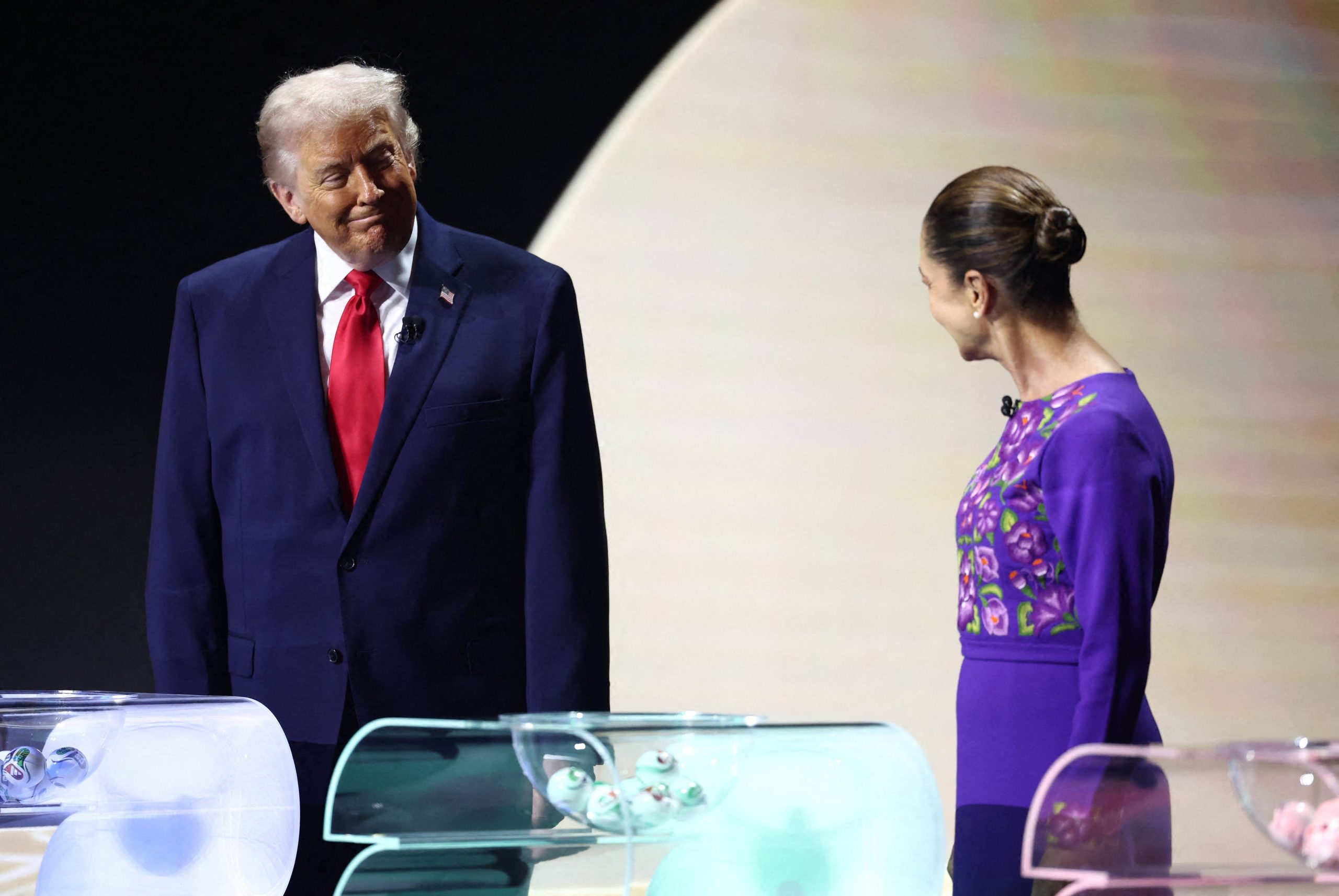
Bilateral relations between the U.S. and Mexico have entered a new phase — more critical, and with increasingly little room for manoeuvre for Mexico. After the U.S. Department of Justice indicted the governor of Sinaloa and nine other senior officials last week, everything suggests this is only the prelude to a more aggressive U.S. campaign against the links between politics and organised crime.
In recent days, the White House has rolled out new plans, the president and acting attorney general have issued forceful statements, and there have even been moves aimed at tightening the net around Mexico’s diplomatic apparatus north of the border. The pressure is mounting, not only because of the scale of the narcopolitics allegations. In just a few weeks, two key dates for the North American triangle — with Canada included — will begin: the World Cup and, above all, the negotiations to renew the USMCA trade pact, Mexico’s economic lifeline.
Faced with this pressure, Mexican President Claudia Sheinbaum’s response has so far been defensive, trying to carve out some space by insisting on Washington’s own obligations: arms trafficking, the drug market, and even the indifference shown toward a handful of extradition requests.
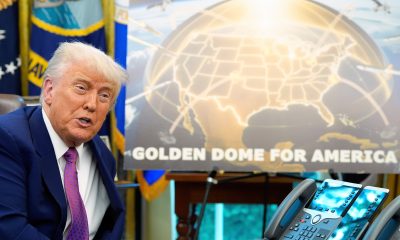
Since this new chapter in the fraught bilateral relationship began, Donald Trump had maintained an unusual silence. On Wednesday, he broke it with his characteristic bluntness: “If they’re [referring to Mexico] not going to do the job, we will.” The threat carries even more weight because it comes paired with the roadmap for his personal war on drugs. Both the Counterterrorism Strategy and the National Drug Strategy, presented this week, are the culmination of the White House’s military intervention campaign in Latin America.
In one of his first acts upon taking office, Trump designated drug cartels as terrorist organizations, a move that goes far beyond mere rhetoric, opening the door to military interventions in third countries. This has already happened in the Caribbean with the U.S. strikes on alleged drug boats. The documents released this week confirm and deepen this interventionist approach: “We will continue our military and law enforcement campaigns against all the cartels and gangs designated as terrorist organizations,” reads the 2026 Counterterrorism Strategy. “We will do so in concert with local governments when they are willing and able to work with us. If they cannot, or will not, we will still take whatever action is necessary to protect our country.”
For Mexico, the legal threat has already materialized with the indictment by a New York court against the governor of Sinalos Rubén Rocha Moya — now on leave — and nine other Sinaloa officials. The Department of Justice has requested their arrest and extradition on charges of working for the Sinaloa Cartel. And all signs suggest they will not be the last. On Wednesday, the acting U.S. attorney general, Todd Blanche, said — without offering details — that more charges are ready against Mexican politicians allegedly linked to drug trafficking. Sheinbaum has again insisted that Washington “send evidence,” while also opening the door to a Mexican judicial investigation into the accused.

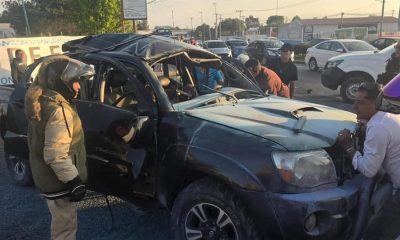
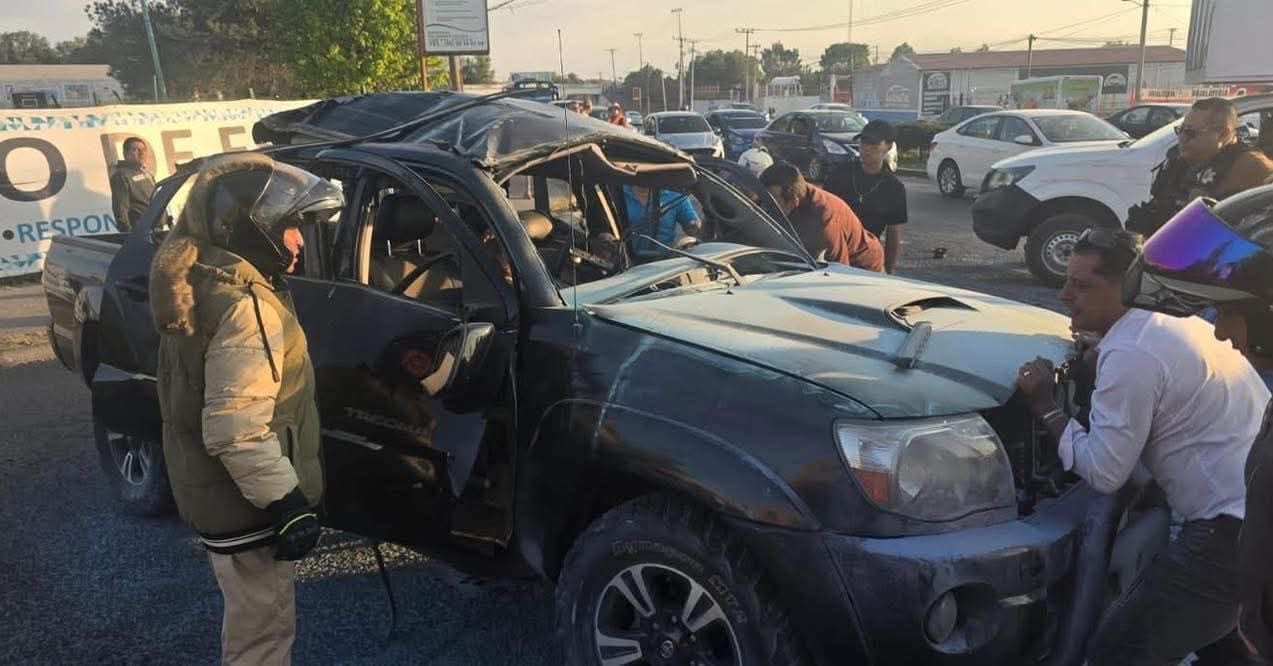
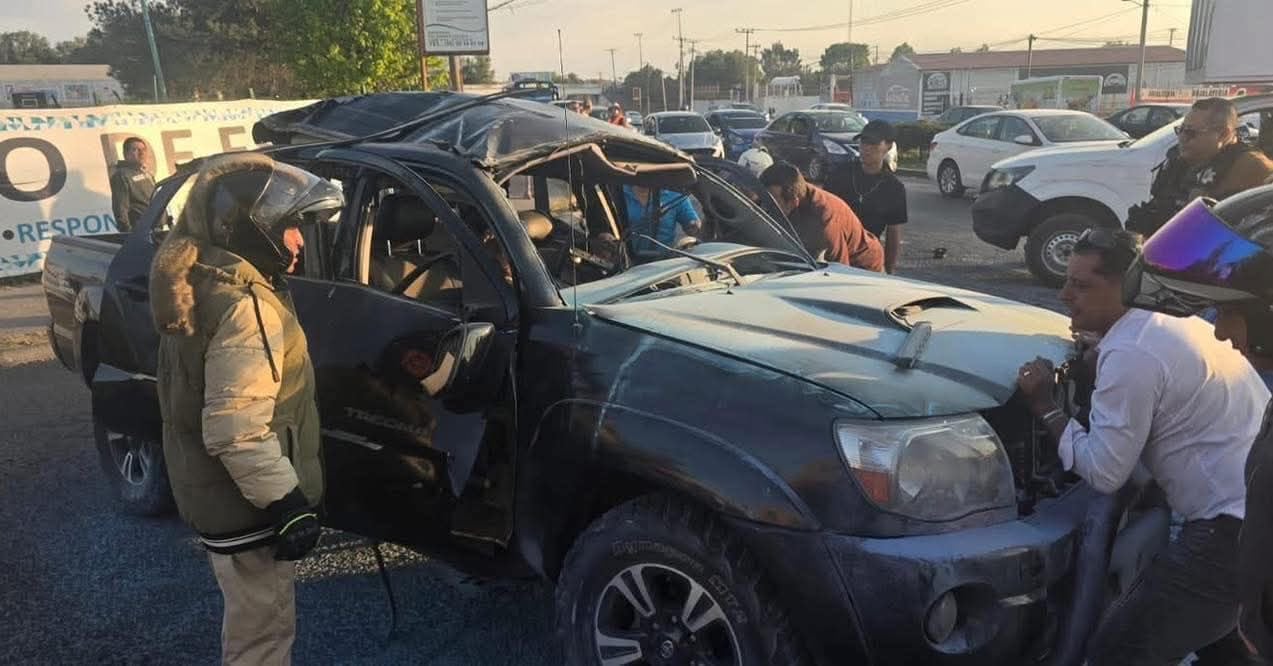
The escalation also has a significant prequel. An accident three weeks ago in the mountains of Chihuahua revealed that two CIA agents were conducting joint operations with the state attorney’s office. According to Raúl Benítez Manaut, a researcher at the Center for Research on North America, that controversy was the trigger for everything that has followed.
“The president’s response, wrapped in a very pronounced nationalism, did not sit well with the White House,” notes the academic, who does not believe there will be any developments in the short term: “The extradition treaty with the United States gives Mexico 60 days to proceed with the request. Given the Attorney General’s Office investigation, the accused will almost certainly file for legal protection, which will give them even more time.”
The timeline also coincides with the start of the World Cup, which Mexico and the United States are co-hosting with Canada. According to the academic, the soccer tournament will be “a buffer against tension” — a pause for which preparations are largely complete and that will now take priority.
“The U.S. security apparatus is already here — the FBI, the CIA — overseeing the security protocols. They are concerned, for example, about the Guadalajara venue,” says Manaut.
He predicts that, until after the World Cup, there will be “no movement, no arrests, no destruction of laboratories, for example.” Regarding what might happen afterward, everything will depend on the evolution of the Rocha case in Sinaloa. “If there are no credible advances in the Mexican investigation, a mini-Maduro operation involving a governor from one of the northern states cannot be ruled out,” the expert notes, referring to the U.S. capture of the Venezuelan president from the Presidential Palace in Caracas.
The pressure also has another crucial variable. The Mexican economy is going through a dangerous period of weakness, and, coupled with Trump’s trade war, the USMCA has become more important than ever. “If the U.S. decides to walk away from the negotiating table, Mexico will have no alternative but to make some concessions on security,” Manaut adds. The Mexican government has stepped up its displays of effectiveness in the fight against crime, with a sharp rise in arrests — including the killing of “El Mencho,” the most‑wanted drug lord, in an operation — as well as increased drug seizures and the transfer of nearly 100 jailed cartel bosses across the border.

Acting U.S. Attorney General Blanche alluded to these extraditions during his recent, controversial statements. “One consequence of having a lot of the leaders of some of these cartels brought here over the past year […] is some of them will likely want to cooperate, and that cooperation could lead to additional charges.”
For analyst David Pérez Esperanza, who served on the Executive Secretariat of the National Public Security System during the administration of Mexican president Andrés Manuel López Obrador, “The U.S. is making political use of the statements made by these detainees, increasing the pressure and leaving very few alternatives.”
Another twist in the pressure campaign emerged on Thursday. According to CBS, U.S. Secretary of State Marco Rubio is considering closing some Mexican consulates, accusing the diplomatic network of trying to influence the November midterm elections, where Trump’s control of Congress is at stake.
Analyst Esparza believes Sheinbaum is up against a dilemma that is increasingly hard to avoid: “Either maintain a defensive nationalist discourse as leader of the Morena party, or act pragmatically against corruption, as she has already done by removing Attorney General Gertz and Adán Augusto López from their posts.” The fight against corruption, the academic concludes, “is the great unfinished business of the Fourth Transformation [the political movement launched by López Obardor], which has so far only been a narrative.”
Sign up for our weekly newsletter to get more English-language news coverage from EL PAÍS USA Edition

‘El Cangrejo’, Raúl Castro’s ‘favorite’ Grandson In Talks With The United States

S

S


-

 New Developments4 weeks ago
How To Get A Tourist Rental Licence In Andalusia (Spain) – Step-By-Step Guide 2025
-
 Competiciones2 weeks ago
E
-

 Uncategorized4 weeks ago
Max Verstappen Nurburgring LIVE: NLS5 Schedule, start times and free live streams
-
Costa del Sol3 weeks ago
Why home care is the new gold standard for living well in Spain
-

 Antoine Griezmann4 weeks ago
Simeone Asume El Dolor De La Derrota: “Me Duele Lo De Hoy Mucho. Necesitábamos Ganar Y No Pudimos Hacerlo”
-
Bullfighter injured3 weeks ago
Second serious injury in Spain’s La Maestranza bullring reignites controversy
-
 %3 weeks ago
Portugal Confirms High-Speed Rail Link
-

 Uncategorized4 weeks ago
Martin Brundle tells all on how his famous F1 Grid Walk began