Connect with us

%

Renfe Opens All Trains To Dogs Weighing Up To 40 Kg

Published

on

renfe-opens-all-trains-to-dogs-weighing-up-to-40-kg

Dogs now welcome aboard Renfe trains. Credit: Renfe

Renfe has just introduced a major change for pet owners across Spain. From July 21, travellers can take dogs up to 40 kg on virtually every service, including AVE, Avlo, Alvia, Euromed, Intercity, Avant and Media-Distancia routes.

Dogs travel next to owners on special seats

Passengers have to book a ticket plus a supplement for their dog. The animal sits in the window seat beside its owner. Rules require a non-extendable lead of 1.5 metres and a muzzle in stations plus during boarding and alighting. Owners must bring vaccination records or a pet passport, plus, very importantly, a cleaning kit. These will be checked by ticket collectors before boarding.

Lo anuncié hace meses y hoy lo cumplimos. Las mascotas son familia, y ya pueden ocupar un hueco a nuestro lado en el tren.

En todos los trenes de @Renfe desde el 21 de julio y para perros de hasta 40kg. pic.twitter.com/ioUKHTJqJM

— Óscar Puente (@oscar_puente_) July 17, 2026

Staff hand out seat covers and mats on many services. Each train accepts a maximum of two large dogs in one specially signed carriage. Exclusions apply to dogs under one year old, females in season, or those from potentially dangerous breeds.

Expansion builds on earlier limited trials

This update extends a service that began in 2022 on selected high-speed routes only. Earlier coverage in Euro Weekly News explained initial options for large dogs on certain AVE trains.

Some passengers raise concerns over dogs in shared spaces

Not everyone welcomes extra animals in public transport or in many other public areas. Companies in Spain, such as El Corte Inglés, introduced a policy towards greater tolerance of dogs several years ago. Critics worry about allergies, pests, fear of larger dogs, or potential mess and noise during long journeys. Other travellers mention discomfort sharing confined train carriages with pets, especially on crowded services or hot summer days. Similar complaints have appeared in forums and social media whenever transport firms expand pet access.
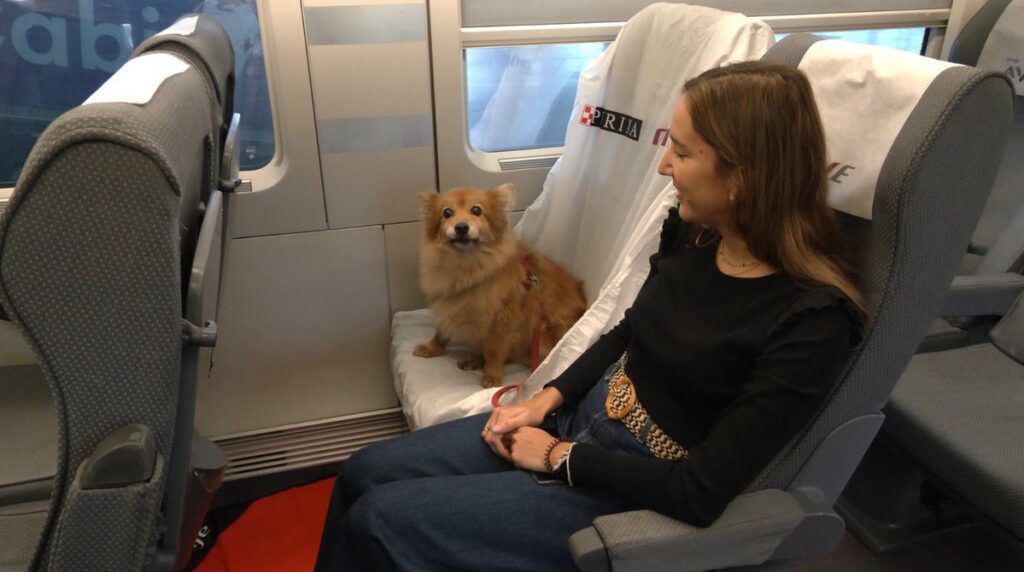
Dog aboard train
Dogs now on board.
Credit: @DelegGobMurcia X

Practical details for travellers

Bookings open via the Renfe website, app or agencies. A doggie footprint icon shows which services accept larger pets. Owners receive a reminder email 24 hours before departure. Supplements cost €40 on most long-distance trains, while regional services use standard fares.

Pet owners should arrive early at stations to complete checks. This change of policy makes Spain one of the most accommodating countries in Europe for travelling with bigger dogs by rail. Full rules appear on the official Renfe site.


%

Brit Tourist Arrested At Gran Canaria Airport For Not Paying Bill

Published

on

brit-tourist-arrested-at-gran-canaria-airport-for-not-paying-bill

Police in Gran Canaria nab Brit suspect. Credit: PN X

Police in Gran Canaria have arrested a British woman accused of fraud after she attempted to leave the island without settling an 11-night hotel stay valued at nearly €2,500. The Canaries cops acted rapidly following a complaint from staff at a resort in Maspalomas.

Incident in popular tourist area

A family group consisting of two adults and one child stayed at a hotel complex in San Bartolome de Tirajana for 11 nights on an all-inclusive basis. Staff discovered the unpaid bill only after the guests had checked out and left the premises. Hotel management reported the matter directly to police, starting off an immediate inquiry into possible deception over payment arrangements.

Reservation process raises questions

The fake tourists made the booking online through the hotel website and provided a bank card as security. Attempts to charge the full amount after departure failed completely. Employees made multiple efforts to reach the booking contact for resolution, to no avail. Initial responses from the woman indicated some sort of willingness to pay while citing difficulties accessing her card from the airport. But then, all contact stopped abruptly with no funds transferred at all.

Nabbed at airport departures

Police officers from the National Police set up targeted checks that located the suspect at the border control area of Gran Canaria Airport. Her detention occurred just before her scheduled departure from the island. Following standard procedures, authorities transferred her to the Maspalomas police station for processing. She now faces judicial proceedings as investigators examine evidence of intent.

Spanish law treats hotel fraud as serious crime

Non-payment of hotel bills in the Canary Islands falls under Spanish Criminal Code provisions when deception appears evident. Article 248 addresses fraud involving sufficient trickery that causes financial loss with a clear profit motive. Courts apply prison sentences ranging from six months to three years depending on factors such as the sum involved, harm caused, and methods employed. Amounts around €2,483 exceed Spanish legal thresholds for minor offences and attract standard penalties. Aggravating elements under related articles can lead to stricter outcomes in cases of broken trust or premeditated flight.

Simple oversights usually remain civil matters, allowing hotels to pursue recovery through courts with possible interest and costs added. However, criminal classification applies in situations featuring failed card payments, false assurances of settlement, and attempts to flee the country.

Similar incidents involving British visitors and others have resulted in arrests at transport centres across Spain. Limitation periods for civil claims often extend to five years, while criminal probes enable detention of foreigners at borders. Judges decide on bail conditions or other measures after initial appearances.

Tourism protection remains priority in Spain

National Police stress ongoing cooperation with Canary Islands hotels to safeguard this vital economic sector. Statements stress that deliberate avoidance of contracted service payments will face full investigation and potential criminal accountability. Visitors receive clear reminders about fulfilling obligations before departure. Hotels commonly request card guarantees during bookings, and unresolved charges combined with silence frequently lead to formal complaints to the police.

Foreign nationals risk travel restrictions across all the Schengen Zone following convictions, with courts sometimes mandating debt repayment as part of resolutions. Communication about any billing problems helps prevent escalation in most instances. Outcomes vary by individual details and judicial review, making professional legal consultation advisable for those involved.

Despite Brexit, communication between British and Spanish police authorities is still smooth-flowing, and certain treaties between the two countries would uncover if the person in question has previous convictions, either in the UK or elsewhere, which is likely to affect the final sentencing in Spain.

Continue Reading

%

New Spain Number Plates Explained

Published

on

new-spain-number-plates-explained

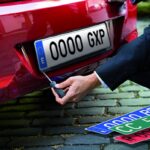
Spain’s latest vehicle registration letter series is now appearing on newly registered cars across the country. Credit : Dgt.es

If you’ve spotted a Spanish car with an unfamiliar combination of letters on its number plate recently, you’re not imagining things. Actually, since 1 July 2026, a new sequence of registration letters has started appearing on newly registered vehicles across the country.

The change has prompted plenty of questions online, with some drivers wondering whether the new plates signal a change in the law or whether existing vehicles will need to replace their registration plates.

The answer is much simpler.

Nothing is changing for the millions of cars already on Spain’s roads. The Directorate General of Traffic (DGT) has simply moved on to the next combination in its existing registration system, something that happens naturally as previous letter combinations are used up.

For most motorists, there’s nothing they need to do. But if you’re buying a new car or browsing the second hand market, understanding how Spain’s registration system works can still be useful.

Why Spain’s number plates are changing

Spain’s current registration system has been in place since 2000. Unlike the old provincial system, today’s number plates consist of four numbers followed by three letters, with combinations assigned in chronological order across the whole country.

That means a vehicle registered in Madrid follows exactly the same sequence as one registered in Seville, Valencia or Bilbao.

As registrations continue year after year, the available letter combinations gradually run out.

When one sequence is completed, the DGT simply starts the next one. That’s exactly what has happened this July.

Drivers will now begin seeing registrations that start with the new letter series, reflecting the next stage in Spain’s national numbering system.

The important point is that the format itself has not changed. There are still four numbers followed by three letters. There are no new symbols, colours or regional identifiers.

It’s simply the next available combination. Some motorists also wonder why certain letters never appear on Spanish number plates.

That’s intentional. The DGT excludes all vowels, along with characters such as Ñ and Q, to avoid accidentally creating offensive words or combinations that could cause confusion internationally.

Can you tell how old a car is from its number plate?

Many buyers use registration plates as a quick way to estimate a vehicle’s age. To some extent, that’s possible. Because registrations are issued in sequence, a newer letter combination usually means the vehicle was registered more recently than one displaying an earlier series.

However, the plate only provides an approximate indication. It does not reveal the exact date the vehicle first entered circulation.

For anyone considering a used car, relying solely on the registration can therefore be misleading.

The official registration date remains one of the most important details to check before buying.

Knowing when the vehicle was first registered helps buyers assess whether the mileage appears reasonable for its age. It also provides useful context when considering maintenance.

Components such as tyres, batteries, timing belts and fluids often need replacing after a certain number of years, regardless of how many kilometres the vehicle has covered.

That’s why experienced buyers usually compare the registration date with the service history and MOT records rather than relying only on the appearance of the number plate.

Who does the new registration series affect?

This is where many drivers can relax. If your vehicle was registered before 1 July 2026, nothing changes.

You do not need to replace your registration plate. You do not need to update any documents. And you do not need to contact the DGT.

The new letter series applies only to vehicles registered from the beginning of July onwards. That includes new cars, motorcycles and any other vehicles entering the registration system for the first time.

Everything else remains exactly as before. The arrival of a new letter combination is simply part of the normal life cycle of Spain’s registration system.

One thing every driver should remember

Although the new series does not create any new obligations, the DGT is reminding motorists of one rule that never changes.

Registration plates must always remain clean, clearly visible and fully legible.

Drivers are not allowed to cover, alter or modify them in any way that makes identification more difficult. Plates that have become damaged through age or wear should be replaced as soon as they become difficult to read.

Failing to do so can lead to an administrative fine. The consequences become much more serious if a plate has been deliberately altered to avoid detection by speed cameras or police controls.

For most drivers, though, July’s new registrations are simply another reminder of how Spain’s vehicle registration system quietly keeps moving forward.

As newer cars begin appearing with the latest letter combinations, there’s no need to worry that new rules are coming into force or that existing vehicles need updating.

The change is entirely administrative, affecting only vehicles entering the system from 1 July 2026 onwards.

So, if you notice an unfamiliar registration while driving this summer, you’re simply looking at one of Spain’s newest vehicles rather than the start of a new number plate system.

Continue Reading

%

Peterborough Utd Chooses Almuñecar For Pre-Season Training

Published

on

peterborough-utd-chooses-almunecar-for-pre-season-training

The hard life of Peterborough United in Spain. Credit: PU FB

Life as a football player is not a bad one, is it? This week, Almuñecar has welcomed the hard-working lads from Peterborough United in the UK for some pre-season training by the Med.

Local authorities welcome British visitors

Sports councillor Luis Aragon from Almuñecar council presented gifts and a commemorative plaque to players and coaching staff from the English team. The gesture recognised their decision to base three days of pre-season preparations in Almuñecar. Where else? Local politicians visited the squad at the local sports stadium Francisco Bonet, where the English club’s second team completed training sessions.

Officials highlight facilities and future opportunities

Luis Aragon confirmed that Almuñecar remains open for future training camps and sporting stays. He expressed hope that players and staff enjoy their time in the town. Local teams worked hard to ensure top-quality pitches and support services throughout the visit. Aragon stressed that everything possible was done to create ideal conditions for effective sessions.

Malaga City Academy praises growing sports tourism

Alejandro Garcia from FC Malaga City Academy thanked the council sports department for its support. This collaboration is helping attract professional teams from elsewhere and boosts sports tourism in the area It’s being used as an advertisement for others to follow suit. Such visits raise the profile of Almuñecar on the international stage. Garcia explained that bringing in professional squads forms a key part of Malaga City’s strategy to establish Almuñecar as a preferred destination for training camps and athletic residencies.

Numbers show a positive trend in visitor stays

García spoke of ongoing efforts to draw more sports teams to the town. During June, 271 people stayed in apartments near the Marina del Este harbour. Organisers hope to increase these figures year on year.

Peterborough United FC utilised excellent local resources during their short stay, as well as savouring the excellent sea cuisine. The experience combined focused football preparation with the attractions of the Almuñecar-La Herradura area. Merchandising items from the tourist destination formed part of the gifts handed over. This exchange strengthens ties between the British club and Spanish hosts.

Both sides look forward to potential repeat visits. Almuñecar continues to develop its reputation for supporting high-level sports teams. Peterborough United FC benefits from quality training grounds as it builds towards the upcoming campaign. Local representatives expressed satisfaction with the successful hosting of this professional outfit.

Continue Reading

Trending

Copyright © 2017 Spanish Property & News