
European News
Scientists say France and Spain face a tsunami risk many people ignore

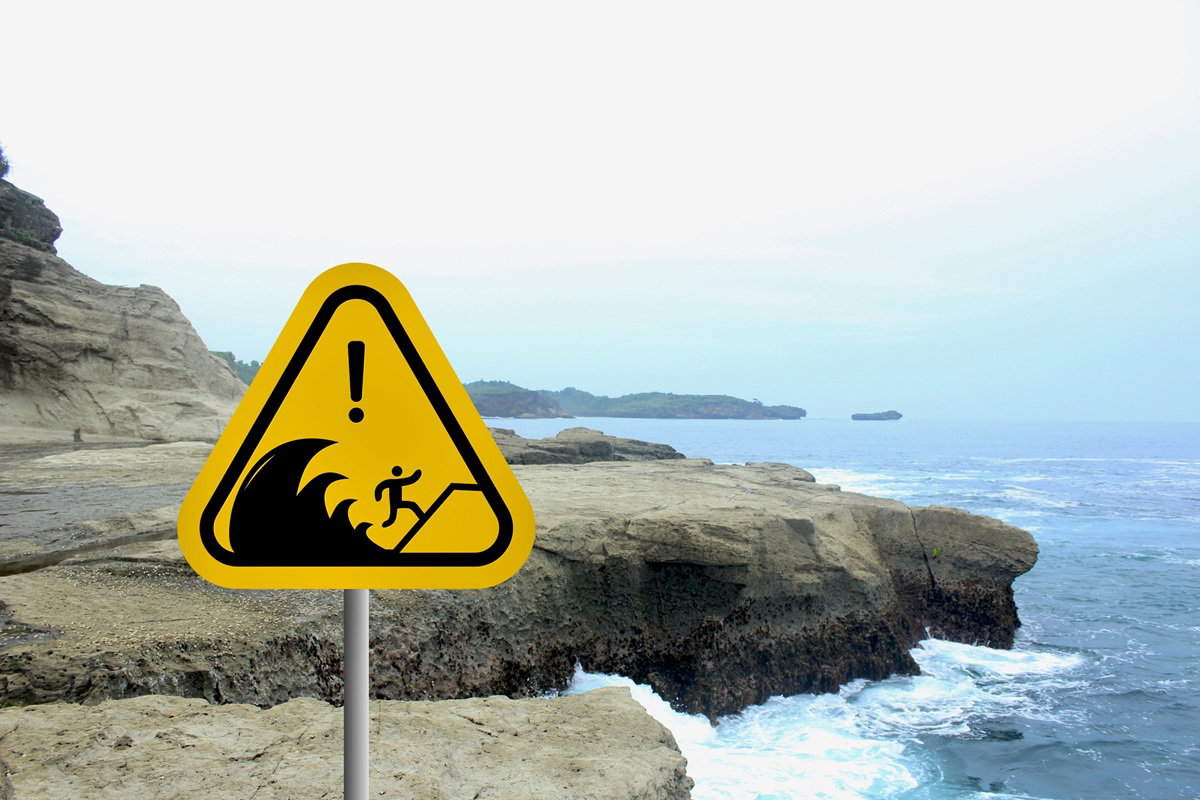
Scientists warn parts of France and Spain could face fast moving tsunami waves from the Mediterranean.
Credit : RaynDesign, Shutterstock
Most people sitting on a beach in the south of France probably never think about tsunamis.The Mediterranean simply does not feel dangerous in that way.
It feels calm and predictable, the kind of place people associate with holiday postcards, beach cafés and small boats drifting quietly near the shore.
That is partly why warnings from scientists keep catching attention whenever they resurface because the image most people have of the Mediterranean does not match the reality researchers are describing.
UNESCO has warned that there is effectively a 100 per cent probability of a tsunami of more than one metre hitting the Mediterranean within the next 30 years.
And while that does not mean a giant catastrophic wave is about to hit Europe tomorrow, scientists say many coastal communities still underestimate how exposed some parts of the region actually are.Especially along areas of southern France where certain tsunami scenarios could unfold frighteningly fast.
In some cases, researchers say waves could reach the coastline in under ten minutes.
That detail matters more than anything else because when reaction time becomes that short, traditional warning systems stop being enough on their own.
People often imagine tsunami alerts arriving hours in advance.
In the Mediterranean, it may not work like that.
The Mediterranean has already experienced destructive tsunamis before
Part of the problem is that many Europeans still associate tsunamis almost entirely with the Pacific.
Japan.
Indonesia.
Thailand.
Not Nice or Cannes.
But historically, the Mediterranean has experienced numerous tsunami events linked to underwater earthquakes, landslides and seismic activity.
Researchers studying the French Riviera coastline say historical records mention around twenty tsunami incidents affecting the area between the sixteenth century and the early 2000s.
Some produced waves exceeding two metres. One of the best known cases happened near Nice in 1979.
An underwater collapse linked to construction work near the airport triggered a tsunami that killed eight people and caused damage along parts of the Côte d’Azur including Nice, Cannes and Antibes.
Another event followed the 2003 earthquake in Boumerdès in Algeria.
Around an hour later, unusual sea movements and powerful currents were reported across parts of the French Mediterranean coast. Several marinas experienced sudden water level changes and damage linked to violent currents inside harbours.
There was also the earthquake in the Ligurian Sea in 1887, which historical accounts describe as causing the sea to suddenly retreat before waves flooded parts of the coast.
Scientists mention these examples constantly for one simple reason.
They want people to stop thinking of Mediterranean tsunamis as fantasy scenarios. Because they have already happened before.
Why scientists are especially worried about reaction times
One thing researchers repeat over and over is that Mediterranean tsunamis behave differently from the giant ocean crossing disasters people usually see in documentaries.
The Mediterranean is relatively enclosed. Distances are shorter. Which means waves can travel towards populated coastlines extremely quickly.
If the triggering event happens far enough away, emergency systems may still have time to send mobile alerts and warnings.
France already has a national tsunami warning system linked to UNESCO’s wider international monitoring network. But the real concern involves local tsunamis caused by underwater landslides or nearby earthquakes.
In those situations, waves may arrive before official alerts even reach people. That is why scientists increasingly focus on evacuation planning and public awareness rather than relying purely on warning technology. And many people still do not know the most basic natural warning signs.
For example, the sea suddenly pulling back unusually far from the shore.
Researchers say that abnormal retreat can happen shortly before a tsunami wave arrives, although not always. Strong unusual currents near ports and marinas can also signal danger.
The difficulty is that human beings naturally hesitate during unfamiliar situations.
People stop to film, watch and ask questions. They try to understand what they are seeing. And when timeframes are measured in minutes, hesitation becomes dangerous very quickly.
The French Riviera faces a particularly difficult challenge in summer
The situation becomes even more complicated on the Côte d’Azur during peak tourist season.
Researchers working on evacuation planning around Nice say tens of thousands of people can be present in vulnerable coastal areas depending on the time of year and time of day.
Beaches packed with tourists create obvious logistical problems if authorities suddenly need large numbers of people to move inland quickly.
That is why local researchers and emergency planners have spent years mapping evacuation routes, identifying refuge areas and studying how crowds might react in real conditions.
According to the studies, parts of the French Mediterranean coastline considered exposed include low lying coastal areas close to the sea and certain river mouth zones.
UNESCO has also been encouraging coastal territories, including Spain, to join its ‘Tsunami Ready‘ programme designed to improve preparedness through public information, evacuation planning and awareness campaigns.
Nice is among the areas working towards stronger preparation measures.
Scientists insist none of this is about creating panic.
The point is almost the opposite.
Preparation works best when people already know what to do before an emergency starts. Because when a coastline only has minutes to react, confusion becomes one of the biggest dangers of all, and that is exactly what researchers are trying to avoid.












“Someone’s in the Water” British tourist horror fall into Puerto Banus harbour
Clowning around in Nerja – Balcon de Europa’s Muestra de Teatro festival
Almería hosts Rubik’s Cube Speedcubing Championship


-

 Competiciones3 weeks ago
E
-
blackout April 20252 weeks ago
Insurance company Mapfre decides to pay out €14 million compensation for 2025 blackout
-
 Foreign demand3 weeks ago
Who Bought Where In The Second Half Of 2025?
-

 America3 weeks ago
E
-

 New Developments3 weeks ago
Stylish 3-Bedroom Apartment With Panoramic Sea Views – Benalmádena
-

 New Developments3 weeks ago
Luxury Villas For Sale, Estepona – ProjectL1
-

 New Developments2 weeks ago
Inside The Most LUXURIOUS Apartment Building In Spain!
-
Costa Blanca South2 weeks ago
Alicante police chief to retire after 17 years of service