Connect with us

%

Shocking Survey Exposes How Spain Is Failing Its Youngest And Oldest Generations

Published

on

shocking-survey-exposes-how-spain-is-failing-its-youngest-and-oldest-generations

The concern is particularly strong among people approaching later life themselves. Photo credit: sutulastock/Shutterstock

You might worry about your parents becoming isolated as they get older, while your children or younger relatives struggle to afford a home or build an independent life. For millions of people in Spain, those concerns now appear to have something in common: both generations are widely seen as being overlooked by society. Almost seven in 10 Spaniards believe society does not care enough about young people, while the figure rises to almost three quarters when it comes to older people.

A new survey has exposed a striking sense that people at opposite ends of the age spectrum are being left without enough support.  The figures come from the WIN World Survey 2026, with the Spanish study carried out by Instituto DYM among 1,000 people. 72.9 per cent said society does not pay enough attention to older people, while 68.8 per cent said the same about young people.

Older people feel forgotten

The concern is particularly strong among people approaching later life themselves. Among those aged between 46 and 65, 77.8 per cent believe society does not care enough about older people. Women were also more likely to express concern, with 74.6 per cent saying older people receive insufficient attention. Only 23.3 per cent of those surveyed disagreed with the overall assessment.

For families, the issue can be difficult to separate from everyday life. Older relatives may live alone after losing a partner, have fewer opportunities to socialise or find themselves increasingly dependent on family members for help. Being overlooked can also mean feeling disconnected from a society that is changing rapidly around them. The survey does not identify isolation as the specific reason behind the figures, but it shows how widespread the concern has become about the way older people are treated.

Young people face a different struggle

Young Spaniards are also seen as being let down, although their problems are very different. 68.8 per cent of respondents believe society does not care enough about young people. Among women, the figure rises to 70.3 per cent. For many younger adults, independence can be difficult to achieve when housing costs and employment conditions make it harder to establish a secure financial footing.

That can affect major decisions that were once considered normal milestones: leaving the family home, renting alone, buying a property or starting a family. A 2026 report by Fundación SM found that young Spaniards rated access to suitable housing as one of their biggest difficulties, scoring it 6.7 out of 10. Financial independence scored 6.2, while forming a family was rated 6.1. For someone trying to build a life, those pressures can make the future feel increasingly difficult to plan.

Two generations, one complaint

The survey’s most striking finding is that both generations are viewed as being overlooked. Older people and young adults are not facing the same problems. One generation may worry about loneliness, independence and access to support, while the other struggles with housing, employment and financial security.

Yet the public perception is similar: neither group is receiving enough attention. That matters for Spain because the country is also dealing with a changing population structure. As people live longer, the need for care and support for older residents will increase. At the same time, Spain needs younger generations to establish themselves, work and form families. If young adults cannot achieve financial independence while older people feel increasingly disconnected, the pressure affects families across generations.

Women express greater concern

Women were more likely than the overall Spanish sample to believe society is failing both groups. For older people, the difference was 74.6 per cent among women compared with 72.9 per cent overall. For young people, 70.3 per cent of women expressed concern compared with 68.8 per cent across the full sample.

The survey also found particularly high concern about older people among retired or incapacitated respondents, reaching 77.6 per cent. These differences suggest that perceptions vary depending on people’s own circumstances and their position within the family and wider society.

A concern beyond Spain

The Spanish results form part of a much larger international survey involving 44,000 people across 45 countries. Around two thirds of people worldwide consider age discrimination to be a serious problem, showing that concerns about how different generations are treated extend well beyond Spain.

But the Spanish figures stand out for the strength of the feeling at both ends of the age spectrum. This is not simply a case of young people believing they are being ignored while older generations receive greater attention. Large numbers of Spaniards believe both are being overlooked.

What happens next?

The survey does not claim that every young person feels abandoned or that every older person feels forgotten, it also does not establish a single reason for these opinions. What it does reveal is a clear public concern that spans generations. Almost three quarters of Spaniards believe society does not care enough about older people, while almost seven in 10 say the same about young people.

For families dealing with ageing parents, adult children unable to afford their own homes or young relatives struggling to find financial security, the figures may sound familiar. Spain’s youngest and oldest generations may be living through very different realities. But the message from this survey is the same from both ends of the age spectrum: they want to be seen, heard and valued.

%

Madrid Faces 30-Day Ultimatum As Ceuta Warns It Will Take Migration Crisis To Court

Published

on

madrid-faces-30-day-ultimatum-as-ceuta-warns-it-will-take-migration-crisis-to-court

The scale of the arrivals has placed pressure on accommodation and local services. Photo credit:@Anonymous_TA on X

Thousands of people remain in Ceuta after a mass influx from Morocco put unprecedented pressure on the small Spanish territory, and the city is now giving Madrid just 30 days to find a solution. If the situation is not brought under control, Ceuta’s president Juan Jesús Vivas says he will take the fight to Spain’s highest courts, a dramatic escalation in the growing dispute over what should happen to the people who remain in the city.

More than 8,000 migrants are still in Ceuta, according to figures from the autonomous city’s government, after more than 70,000 people entered irregularly from Morocco during the mass arrivals of July 30 and 31. The scale of the arrivals has placed pressure on accommodation and local services, with Ceuta arguing that its limited space and resources cannot sustain the situation indefinitely.

Vivas gives Madrid 30 days

Vivas has warned that the Spanish Government has 30 days to take effective action. His demands include greater resources for return and expulsion procedures, faster processing of immigration cases and measures to return people to Morocco where this is legally possible. The Ceuta president says Madrid has the resources and legal mechanisms needed to reduce the number of migrants remaining in the territory. If he believes the Government has failed to act, Vivas intends to escalate the dispute.

He has said he wants to meet the presidents of Spain’s Supreme Court and Constitutional Court to explain Ceuta’s position and explore the judicial avenues available to the autonomous city. The 30-day period is a political deadline set by Vivas, rather than a court order. No judicial proceedings automatically begin when it expires.

Public services facing pressure

The dispute is not limited to accommodation, healthcare has also become a point of tension, with the Spanish Government rejecting claims that Ceuta’s health system has collapsed. Health Minister Mónica García said the system remains operational, although services are under additional pressure. Hospital emergency attendances have reportedly increased by 50 per cent.

For a territory with limited space and a population of around 85,000, the arrival and continued presence of thousands of additional people creates challenges that extend across accommodation, healthcare and other public services. Ceuta’s government has argued that responsibility for managing the situation cannot fall primarily on the territory itself.

Madrid says it is responding

The central government has continued its response to the influx, rejecting accusations that it has simply stood by while Ceuta struggles. Inclusion Minister Elma Saiz travelled to Ceuta to meet local authorities and assess the humanitarian response, while Prime Minister Pedro Sánchez has held meetings with ministers over the situation.

Madrid’s approach has included providing additional resources and looking for suitable accommodation and spaces for those who arrived. The Government has also stressed the humanitarian dimension of the crisis. That differs from the position taken by Vivas, who has placed much greater emphasis on returns and reducing the number of migrants remaining in Ceuta.

The dispute over returns

One of the biggest disagreements concerns what happens to those who entered the territory. Vivas wants Madrid to make greater use of the legal mechanisms available for returns and expulsions, arguing that the current situation cannot continue. The Government, meanwhile, has to operate within immigration and international law while providing immediate assistance to people who have arrived.

That makes the situation more complicated than simply deciding how many people can remain in Ceuta. Any returns must follow the appropriate legal procedures, and the Government cannot simply remove people without meeting those requirements.

A battle that could reach Spain’s highest courts

Vivas’s threat to involve the judiciary represents a significant escalation. He has accused the central government of failing to respond adequately to the scale of the crisis and has made clear that he is prepared to move beyond political criticism. His proposed meetings with the presidents of the Supreme Court and Constitutional Court would be aimed at explaining Ceuta’s situation and determining what legal options may be available.

It remains unclear whether any eventual judicial action would result in the measures Vivas is demanding. for now, the immediate pressure remains on the city itself. More than 8,000 people are still in Ceuta, according to the local government’s figures, while the two sides continue to disagree over how the situation should be managed.

The clock is now running

The next 30 days could determine whether the confrontation between Ceuta and Madrid intensifies further. Vivas wants to see faster returns, more resources and a reduction in the number of migrants remaining in the territory. Madrid is continuing its humanitarian response while rejecting claims that local services have collapsed.

For people living in Ceuta, however, the argument between the two administrations has a very practical consequence: thousands of people remain in a territory with limited space and resources, while the authorities disagree over how to resolve the situation. Vivas has now set his deadline, if Madrid fails to satisfy his demands within 30 days, he says the next stage of the battle will be Spain’s judicial system.

Continue Reading

%

Why An Anchovy Shortage 8,000km Away Could Cost Spain’s Fish-Lovers More

Published

on

why-an-anchovy-shortage-8,000km-away-could-cost-spain’s-fish-lovers-more

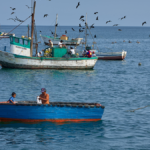
Fishing boats off the coast of Peru, where a shrinking anchovy catch is being felt worldwide. Credit: Beto Santillan / Shutterstock

The shortage of one particular small fish thousands of kilometres away is rippling through fish counters. Peru’s anchovy catch has collapsed under El Niño, sending the cost of farmed fish feed to record highs, and dorada, lubina and salmon raised on that feed could be the next to feel it.

Peru’s fleet has landed barely a quarter of its quota

Peru’s Production Ministry suspended anchovy fishing in the country’s main North-Central zone in May, then extended the ban into June as a coastal El Niño warmed the water and filled nets with juvenile fish instead of mature anchovy. By early June, boats had landed just 471,111 tonnes of the 1.9 million tonnes allowed for the season, only 24.6 per cent of the quota, according to official figures reported by SeafoodSource. More than half of that catch was juveniles, which is exactly what the suspension was meant to prevent.

This year’s quota was already the lowest in a decade, 36 per cent below the three million tonnes allowed in 2025. The fishery has been hit before as well: the entire first season of 2023 was cancelled outright, wiping out more than 1.4 billion dollars (1.2 billion euros) in fishmeal and fish oil export sales.

Why one small fish supplies a fifth of the world’s aquaculture feed

Most of Peru’s anchovy catch is too small to eat directly. Instead it is ground into fishmeal and pressed for fish oil, the two main ingredients in feed for farmed fish, prawns, pigs and chickens. Peru alone supplies about a fifth of the world’s fishmeal, according to the United Nations Food and Agriculture Organisation.

IFFO, the marine ingredients trade body, said global fishmeal production fell 21 per cent in April compared with a year earlier, with the year-to-date total down 26 per cent. Fish oil output dropped too, down 19 per cent in April and 14 per cent so far this year. Roughly two-thirds of the farmed fish sold worldwide, including salmon, is raised on feed containing fishmeal, according to food economist Mike von Massow of the University of Guelph. He said the ingredient is difficult to replace because swapping in cheaper plant proteins such as soy changes the fish’s nutritional profile, lowering the omega-3 levels that make salmon and similar fish popular in the first place.

Fishmeal prices have already hit record highs this year

A tonne of Peruvian fishmeal cost 2,389 dollars (2,069 euros) at the end of May, up 13 per cent on a month earlier. Prices for top-grade Peruvian fishmeal climbed even higher in April, reaching what traders described as a historical high. Feed already makes up 40 to 50 per cent of a fish farm’s running costs, so when the price of its main ingredient jumps this fast, that cost has to go somewhere, and it’s either into thinner margins for producers or higher prices further down the chain.

Spain’s dorada, lubina and salmon share the same feed market

Lubina, or sea bass, is Spain’s most valuable farmed fish, with 27,376 tonnes harvested in 2024 worth 123.7 million euros, according to industry body APROMAR. Dorada, or sea bream, followed with 10,765 tonnes worth 72 million euros. Spain is also one of Europe’s biggest markets for imported Norwegian salmon. All three of these depend on feed made largely from the same global pool of fishmeal and fish oil that Peru’s crisis has squeezed, meaning Spanish producers face the same cost pressure as farms in Norway, Greece or Turkey. Add to this that fish is already getting more expensive at Spanish counters. Consumption fell 2.7 per cent and prices rose 3.5 per cent over the past year, according to the Ministry of Agriculture, Fisheries and Food, with dorada among the hardest hit as consumption of sea bream dropped 23.5 per cent. A separate study by consumer group OCU found pre-packaged, filleted fish in supermarkets already costs up to 30 per cent more than the same fish bought whole from a fishmonger.

Whether Peru’s shortage adds directly to that trend depends on how quickly its anchovy fleet recovers. Peruvian authorities have said the ban could be lifted fully, partially or gradually, but have not set a date, leaving fish farmers, and the shoppers who buy from them, waiting to see how long the squeeze lasts.

Continue Reading

%

Family Barred From Jet2 Flight From Greece

Published

on

family-barred-from-jet2-flight-from-greece

A brief moment at the departure gate ended a family’s holiday in upset, and raised questions about What actually happens if you, or your child, falls ill just before boarding.

Sickness incident in Greece

Hayley Waters, 37, from Horsforth, was waiting with husband Jason, 40, and children Addyson, six, and Xander, three, to board their delayed Jet2 flight home from Rhodes on July 31. Addyson was sick once at the gate as their group of nine waited for the 11.15pm departure, which eventually left at around 12.05am.

Cleaning it up immediately, Hayley insists her daughter had shown no signs of illness throughout the holiday. Speaking to reporters, she said: “She’d had no illness all holiday, she was simply exhausted after the delay, it was around midnight, and over 30C in the airport.” Staff barred the family from boarding shortly after, telling them they could not fly with Jet2 for at least 24 hours, they eventually spent around £1,000 booking their own accommodation, transport and an easyJet flight home via Newcastle.

Jet2’s rules on illness and fitness to fly

From a regulatory standpoint, airlines are legally permitted to refuse boarding on health and safety grounds without requiring an on-the-spot formal medical diagnosis. Under its published terms and conditions, Jet2 can request a fitness to fly certificate, and more complicated medical cases may require a completed medical information form through its Assisted Travel Team.

Crew also hold authority to act mid-flight: should a passenger fall seriously ill once airborne and genuine concerns arise over their welfare, the aircraft can be diverted to the nearest airport so that passenger receives treatment. Given the enclosed cabin and shared air conditioning, airlines including Jet2 generally treat vomiting or contagious symptoms as a potential risk to everyone on board, not just the individual affected.

Why Jet2 says it acted correctly

According to Jet2, staff in Rhodes followed standard health protocol to prevent in-flight contagion, helped the family find overnight accommodation, and advised keeping receipts for an insurance claim. A spokesperson said: “The safety and wellbeing of our customers is our absolute priority, and our teams have processes in place to help prevent the spread of illness onboard our aircraft.”

However, the family strongly disputes the level of customer support provided at the gate and afterwards. Hayley disputes the airline’s claim that it has provided adequate follow-up contact, though Jet2 stated it acknowledged her complaint on August 6 and promised a full response by August 20.

How passengers reacted online

Public reaction beneath reports of the story split firmly along safety lines. One social media commenter defended the airline’s caution: “Could have been a bug — they have to take that precaution for the health of the rest of passengers and staff. Being sick starts off only once, but if it’s a bug it can continue later, so well done to Jet2 for caring about others. If the little girl had had diarrhoea, she wouldn’t have been able to fly for at least 48 hours.”

Another reader pointed to the difficulty of judging illness in the moment: “You have no proof that’s what it was, hence the 48-hour delay — same rules apply with school and sickness. How many parents would say she’s fine just to get on the plane, given the nightmare of rebooking hotels and flights?”

Concerns about a possible diversion mid-air featured too, with one online post noting: “Correct decision by Jet2, sympathy for the family, but if the child’s condition had become more acute during the flight, then it’s a return or diversion at considerable cost to the company and more stress for other passengers.”

Not every online reaction backed the airline, however. Questioning whether heat and tiredness explained the whole picture, one person commented: “So you booked a midnight flight and were in the heat all day — of course she was tired,” while another asked bluntly whether staff had “over-reacted.”

What passengers need to know if someone falls ill at the airport

Anyone caught out by sickness in the departure lounge should expect airline staff to act quickly and cautiously, often before a flight has even boarded. Since crew are not medically trained to diagnose the cause of vomiting or other symptoms on the spot, decisions to refuse boarding are typically made as a precaution rather than following any assessment, which can catch passengers off guard.

Holding onto every receipt from the moment boarding is refused matters most of all. Costs for emergency accommodation, meals, taxis and any replacement flights should all be kept on file, as travel insurance policies often cover expenses incurred when boarding is denied on medical grounds, but only where proof of spending can be shown.

Asking staff directly for a written explanation of the decision, and for details of what “policy” is being applied, gives passengers something concrete to refer back to when submitting an insurance claim or a formal complaint. Requesting contact details for the airline’s medical or assisted travel team at the airport itself, rather than waiting until arriving home, may also allow a case to be reviewed before alternative travel needs booking. Noting the names of staff involved and the time of the incident can strengthen a complaint further down the line, particularly where a passenger disputes how the situation was handled.

Continue Reading
Advertisement
Advertisement

Spanish Real Estate Agents

Tags

Trending

Copyright © 2017 Spanish Property & News