
23-F
Siri Hustvedt, Writer: ‘I’d Like To Go To My Grave With A Little Whiff Of Paul Auster’s Smoke’

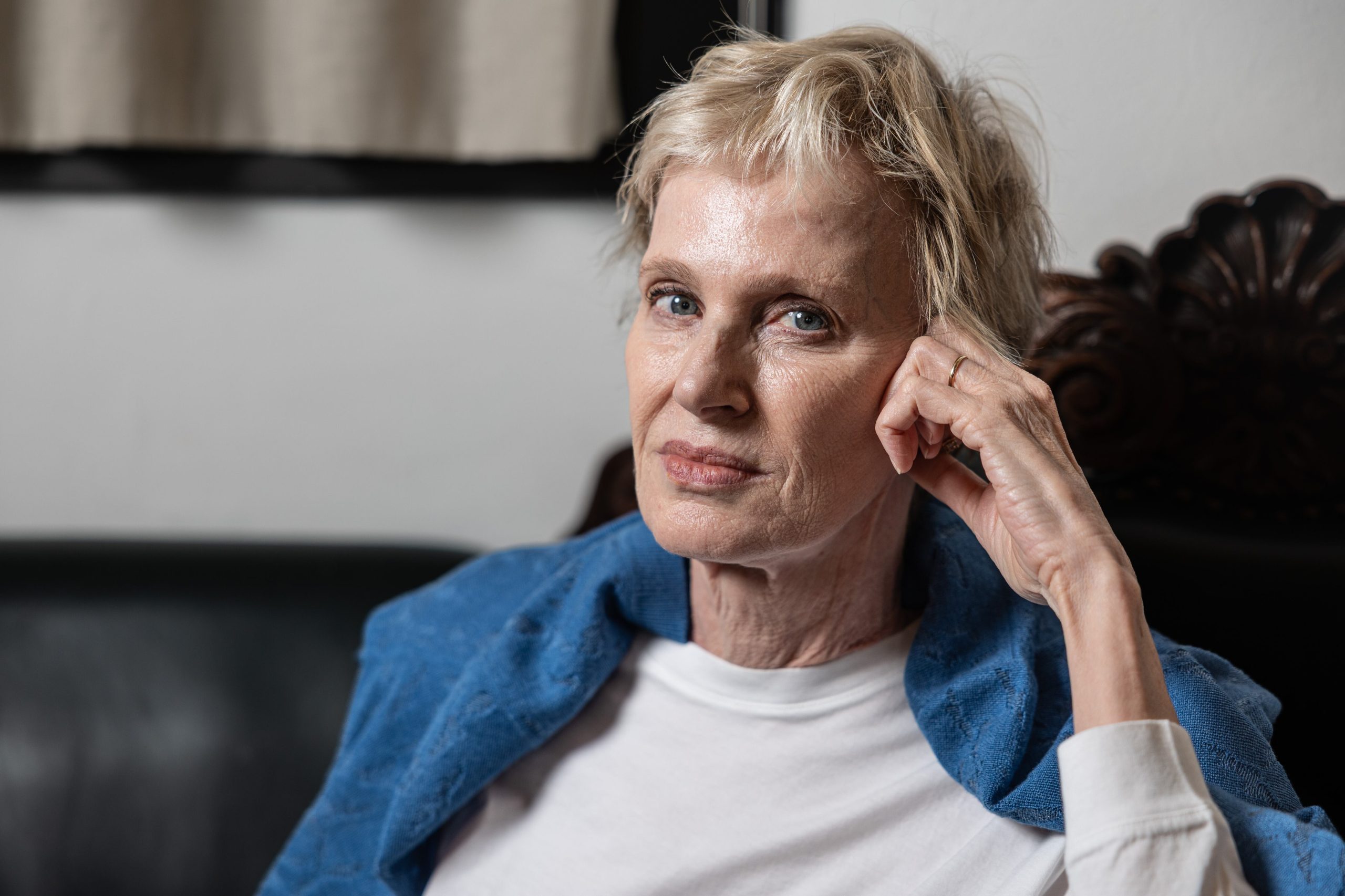
Fate, that force that so suffuses the fiction of Paul Auster (Newark, New Jersey, 1947 – Brooklyn, New York, 2024) resulted in a strange journey back to where she started for writer Siri Hustvedt (Northfield, Minnesota, 1955) on this hot Wednesday morning. She is seated in a room at Madrid’s Círculo de Bellas Artes cultural center, speaking with EL PAÍS about her latest book Ghost Stories, a moving text dedicated to the memory of her husband and to the mourning that followed his loss when he fell victim to cancer.
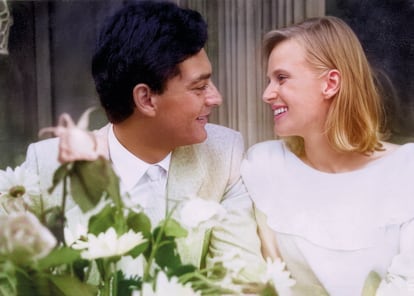
The two met shortly after Hustvedt turned 26 years old. She attended a poetry reading with a friend in Manhattan and as they left, they saw “a beautiful man in a black leather jacket, his shoulders hunched, his expression inward, standing near the exit to the street.” It was the poet Paul Auster, her friend told her. “My attraction to him felt like a blow to the back of my neck,” Hustvedt remembers. She asked her friend to introduce them. He did. The three went to a party. It was there that she first smelled the smoke of his Schimmelpenninck cigarillos, whose odor she swears still lingers in the home in Brooklyn they shared, as if Auster’s ghost were there, taking drags every once in a while. That fateful night, the friend disappeared without saying goodbye. Austen and Hustvedt stayed on. He walks her to a taxi. He kisses her. One aspiring poet kisses another on West Broadway. They go to her home. They sleep together. It is the night of February 23, 1981.
Question. Do you know of the attempted Francoist coup that took place a block away from here, at the Congress of Deputies in Madrid, the night the two of you first slept together?
Answer. Yes I do, because we woke up to it! I could have put it in the book. The king of Spain [who denounced and rejected the coup in a TV broadcast] became a hero to both of us, because it made us get up. It was incredibly impactful. And we were happy that it meant we had the day. I’m now remembering things that I didn’t exactly forget, but they weren’t coming to mind. In the book, I ask myself what we did that morning, and that is one of the things we did. Surely, Paul would remember it.
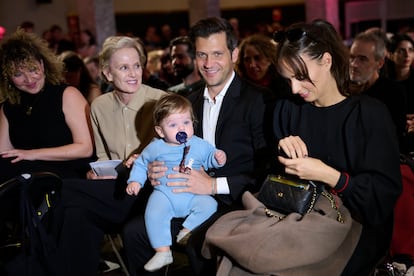
Memories of a shared life in Ghost Stories pass through the filters of neuroscience and philosophy, fields in which Hustvedt has developed a literary body of work that earned her the Princess of Asturias Award in 2019 (Auster won the prize 13 years prior), but it is also sifted through the intimate experience of a woman in love. Two months after that first night in February, Auster said goodbye. He told her he had to return to the woman from whom he was separated, and their baby. Hustvedt waited, Auster returned, and they would never be apart again until his death, 43 years later. Together, they experienced success and failure, the ascendency of both their careers, the tragic 2022 death of young Ruby, Auster’s granddaughter, who was poisoned at 10 months of age by ingesting her addict father’s opioids. Her dad died from an overdose soon after being released on bail, accused of negligent homicide. They experienced the birth of Sophie, Hustvedt and Auster’s daughter, over whose successes in the world of music and acting Hustvedt gushes. And finally, the arrival of Miles, Sophie’s son, who was born two years after Auster’s lung cancer diagnosis, and to whom he dedicated his final literary efforts: heartwarming letters in which he speaks to Miles of their family, which his grandmother included in her most recent book.
Q. Two weeks after Paul’s death, you sat down and wrote, “I am alive. My husband, Paul Auster, is dead.” What made you understand that you needed to put the novel you had been working on aside to write about him?
A. I think he thought I’d simply go back to the novel. It was a novel that he really liked, of course, he had heard half of it. But when he died, I knew that the only thing I could write at that time was about him, his death, us. The end.
Q. You said that after his death, you lived in a house that was haunted by a ghost. Not the ghost of Paul, but rather a ghost of what the two of you had created together. That the mourning was not exactly for Paul, but for Paul and Siri. Specifically, for that conjunction “and”.
A. I have been working on that philosophical position for many years. So when I hit on the “and,” I thought, this is a very good and simple way for many people to understand what I am talking about. The antecedents of that are, for example, Martin Buber, who spoke of the “between” (“Zwischen”) as an ontological reality: a literal third thing created between two people. In psychoanalysis, there is the idea of transference. In phenomenology, Edmund Husserl and Maurice Merleau-Ponty speak of an intersubjectivity created between people. I wanted this book to be simple and emphatic, not to weigh it down with theoretical material. But I felt that almost anyone who is mourning understands that it’s not simply about a person who has been eliminated from the world. It’s about the intersubjective relationship that the two of them created.
Q. The idea of being a ghost was also expressed by him. He said that he would like to go home and see how you were doing.
A. Paul and I had thought of and used the metaphor of ghosts many times before. Long before getting sick, he often said that the older he got, the more in tune he was with the ghosts of his life. And that is true for all older people. People die and you wind up having an entire group of loved ones who are no longer in the world.
Q. I don’t expect you to reveal the secret of a successful marriage, but when he died you said to Paul, “We had fun, didn’t we?” You say you were never bored together. You got mad, but never bored. Is that true?
A. We never got bored. I think that could be part of the secret. What is boredom in a married couple? I suppose it is when you feel like you can predict what the other person is going to do. And if the other is always fulfilling those predictions, that’s when boredom appears. Paul and I surprised each other all the time. And I don’t mean to present it like a utopic relationship: we did have conflicts and we argued. But we never got bored.
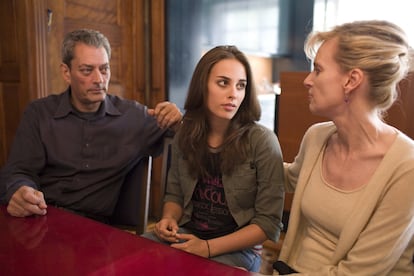
Q. The book also offers a window onto the intimacy of a literary marriage that fascinated the world. Two great, attractive writers in New York… were you aware of that when you were with Paul, and as you wrote the book?
A. Life in third-person and life in first and second-person are different things. Fame, by definition, is a third-person phenomenon. It is the person as object, as merchandise. The culture in which we live takes us away from valuing the first and second-person. Even people who are not famous project personas to the world, like on social media. “Here I am in my kitchen with my perfect baby,” that kind of thing. And the selfie, that is also interesting.
Q. You always use first-person.
A. Yes, I even write my scientific articles in first-person. The third-person voice is a voice of authority. You read a scientific article with seven authors and everything is set up like, “The experiment was carried out.” Not, “We carried out an experiment.”
Q. Being two writers might imply a risk of competition between you, particularly at a certain point, when Paul’s career took off…
A. He became famous very quickly.
Q. You were even asked in interviews about what it was like to live with a literary genius. How did you take that?
A. They always asked me that. Then there came a moment in which they stopped doing it as much and I spent the interview waiting for it to show up. And Paul used to say something very funny, though I never repeated it except in this book. He’d say, “You have to tell them how incredible I am in bed.” And I would answer, “Yes of course, surely that will help, Paul.” Returning to the point: that was the man I lived with and who I was in love with, but it wasn’t Paul Auster turned third-person merchandise.
Q. This is your first text that he didn’t read before it was published.
A. Yes. I miss him a lot. We read all of each other’s work. People forget that practically all of Paul’s literary career in prose coincided with our marriage. I also edited all those books, from City of Glass on. We moved together.
Q. The book is not only about your relationship, but also its mourning. Did it help you to make it through?
A. I have always believed that writing has a therapeutic value, though we wouldn’t want to reduce literature to therapy alone. This book in particular helped me to move forward. One of the reasons for that is that writing is active, not passive. Mourning is a passive state: you suffer the absence. Turning that into something, creating something through it, helped me.
Q. You describe your state at that moment as “cognitive fragmentation”. Elaborate on that.
A. I felt like my perception of time was broken. It was difficult to follow myself. My memory is not what it had been. I read a lot about neuroscience. There are studies that show that a part of the brain linked to memory, the hippocampus, atrophies in mourning. The positive is that, in contrast to other memory illnesses, those neurons regenerate with time. Now, I can remember better than I did at the time. We don’t talk enough about the fact that mourning is a physiological, corporal experience.
Q. The book itself is composed of different pieces: letters, notes. Is that a way of representing that fragmentation?
A. Exactly. But I didn’t want it to be incomprehensible. I didn’t want a text in which things suddenly appeared without context. I wanted the reader to get used to the book’s rhythm. That rhythm was perhaps the most important thing. And it reflects one of the book’s themes: we organize our lives through corporal rhythms. In mourning, at least for me, that rhythm breaks due to the absence of the other person. When you live with someone for so long, that person becomes part of your perceptive reality. And when they disappear one day to the next, even if you know that they are going to die and you are there when they die, the “lived body” — as Merleau-Ponty would call it — enters into shock. You can have perfectly rational thoughts, but the body doesn’t know how to carry on living. You have to find another way to live.
Q. In the book, you write for the first time about the tragedy of Daniel and Ruby. You say that their lives and deaths were a crucial part of your family history and that in a certain way, you wanted to bring them to light.
A. That which Paul called “the horrible things,” what we lived through, was nearly impossible for me to express. Of course, I could speak about it with Paul, with Sophie, with Spencer [Sophie’s husband], with my sisters and people who are close to me. Past that intimate circle, I found saying those things impossible. But I understood that writing about Paul without writing about Daniel would have been a fraud. I wanted to stick to my personal stories about Daniel. Ruby’s death will always be horrible. There is no possible excuse, Paul was destroyed by and furious with the negligence. I wanted to tell it, but I also didn’t want it to become the primary story of the book, which could have easily happened. I wanted to show how much Paul suffered, for so long. And then the horror of losing our granddaughter. And not even knowing how she had died until Daniel was arrested. All that was truly frightening. And yes, I also talk about how that could have influenced Paul’s cancer. He believed that. Science has no clear consensus, but the immunological system is very vulnerable to stress, and he was under tremendous stress.
Q. After all the suffering and everything the two of you went through, dying of cancer seems like a bad story. He hated bad stories, the predictable ones.
A. He didn’t like this idea of “and then the old guy dies of cancer.” He saw it as a boring and predictable plot. But the real world is not always as ingenious as the narrative poles. [laughs] My god, how can I laugh about this?.
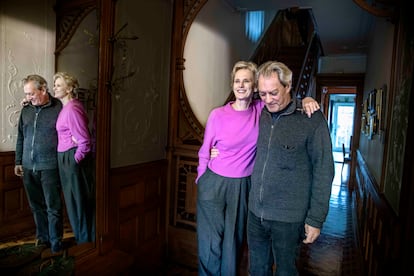
Q. How are things now? Do you still smell his tobacco smoke?
A. I still smell the smoke, but much less. And that is also interesting. It’s as if there were an arc to those olfactory hallucinations. I hope they don’t disappear altogether. I would like to go to my grave with a little whiff of his smoke. I don’t literally believe that the ghost of Paul is blowing smoke into my nose. But it’s a form of consolation. A kind of immediate return to the death of the body. Whatever causes it, that little failing of the nervous system, is still comforting. Since I published the book, so many people have told me about similar experiences. Statistics say that between 30% and 60% of people in mourning experience some kind of presence.
Q. Have you gone back to the novel you were writing? Is it true that it’s about someone who ends a book that a death left half-finished?
A. Yes, more or less. Some journalists find humor in that. One wrote to me saying, “So the new novel is about a wife finishing her husband’s book.” And I was like, “No, no, no.” It’s about a father who dies before finishing a book about the history of eugenics. The son, who is a novelist, promises to finish it. So the book is as much an emotional problem as a text full of eugenics history. And now, with the new Trump administration and the return of certain eugenics ideals to the United States, that also comes into the novel. Since I have lived to see the second coming of Trumpism, that reality will also become part of the second half of the book. Besides, I am not exactly the same person, so I am rewriting the book, starting with its first page.
Q. Before Biden’s victory, you were both very politically active against Trump. How do you think he would have experienced the current situation, after the Republican’s return to the White House?
A. Paul died before Biden quit the campaign, so he didn’t see Kamala Harris as a candidate, nor the subsequent result. Months later, the new proto fascist regime was installed. There is a brilliant metaphor of Paul’s in which he says something like, “And what if institutions were made of soap and not granite? All we’d have to do is turn on the hoses and everything would disappear.” And that is exactly what has happened. The institutions have been toppled. The law has been toppled. There is a certain amount of resistance, yes, but the image that Paul saw is what is happening now.
Q. One of the most emotional parts in the book are the letters Paul wrote to his grandson Miles. How do you think you will talk to Miles about his grandfather?
A. Paul wanted to publish those letters as a short book. What exists are 35 pages of an interrupted project. Paul knew that one day, he would read them, perhaps when he was 15 or 16 years old [he is currently two], depending on who he will be and what he will become. His parents will decide when it happens. Right now, those letters are in my book, so Miles will read them when the moment comes. But I think that there is no doubt in this family that Miles’ grandfather was a deeply beloved person.
Sign up for our weekly newsletter to get more English-language news coverage from EL PAÍS USA Edition











Brasil – Marruecos: Mundial 2026, En Directo | Comienza El Primer Gran Partido Del Torneo
The Mercadona Shopping Trap That Could Be Making Your Food Bill Higher Without You Realising

Histórico Empate Del Qatar De Lopetegui Ante Suiza


-

 %2 weeks ago
Fake Hacienda Text Targets Taxpayers
-

 Uncategorized2 weeks ago
Montoya vs Brundle BEEF, Newey
-

 Africa1 week ago
Europe Enters The ‘era Of Deportations’
-

 Foreign demand2 weeks ago
German Demand For Spanish Property Cools After A Strong Run
-

 Alberto Fujimori6 days ago
Peru’s Roberto Sánchez And Keiko Fujimori Urge Caution As Vote Count Continues In Very Tight Presidential Election
-

 Uncategorized1 week ago
Max Verstappen F1 future hangs in the balance as three teams block 2027 rule changes
-

 %2 weeks ago
Major Strike In Portugal To Cause Widespread Disruption To Air And Rail Travel
-

 Barcelona1 week ago
Spain, A Country Of 50 Million People With Infrastructure For 40 Million: ‘The Cracks Are Starting To Show’