
News from Spain
Spain is about to get a rare six planet show and most people won’t even know it’s happening

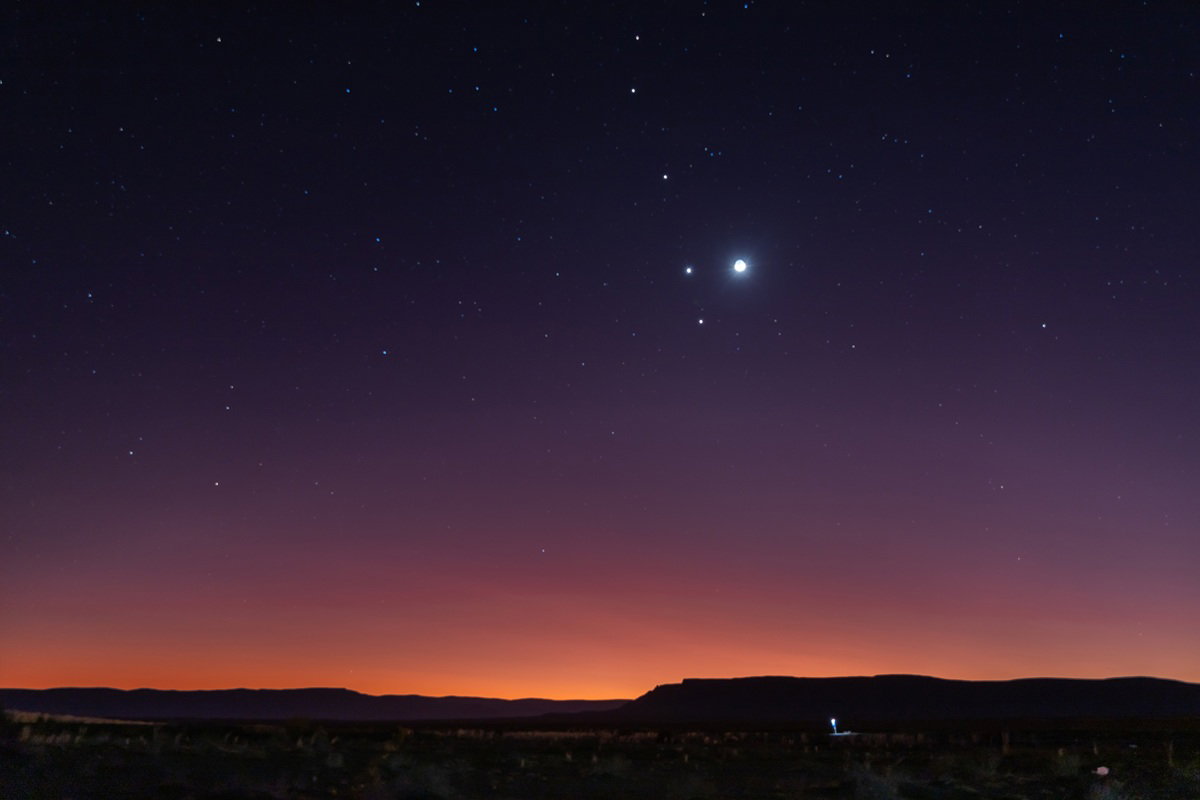
A rare six planet alignment will be visible from Spain on 12 August, alongside the peak of the Perseid meteor shower.
Credit : Kim Steinberg, Shutterstock
Most people already know that 12 August is the night to watch the Perseid meteor shower, but that’s only half the story. If the skies stay clear, anyone looking up from Spain could also catch a rare six planet alignment, with Jupiter, Mercury, Mars, Saturn, Uranus and Neptune appearing across the same stretch of sky. Astronomers say alignments involving this many planets don’t happen very often, making it one of the standout nights for skywatchers this summer.
You don’t need to be an expert to enjoy it. In fact, for most people the appeal is simply being outside on a warm August evening and seeing more planets than you would normally expect in a single night. If you’re lucky enough to be away from city lights, you could have a front row seat to one of the year’s most striking celestial displays.
Why this planetary alignment is attracting so much attention
The phrase ‘planetary alignment‘ often sounds more dramatic than the reality, and it’s easy to see why there’s confusion.
The planets are not actually lining up in space one behind another. What happens is that, from our point of view on Earth, several planets appear to gather along the same path across the sky. Astronomers call this path the ecliptic, which is also the route followed by the Sun and the Moon throughout the year.
Small alignments happen fairly regularly. Spotting two or three planets close together is nothing unusual. Seeing six planets appearing in the same part of the sky, however, is much less common.
That’s why 12 August has already been highlighted by astronomy platform Star Walk as one of the key dates of the year for anyone who enjoys watching the night sky.
Adding to the excitement, the alignment arrives on exactly the same night that the Perseid meteor shower is expected to reach its peak. It’s unusual to have two headline astronomical events sharing the same evening, which is why many amateur astronomers have already circled the date on their calendars.
Which planets will you actually be able to see?
This is where expectations need a little reality check.
Although six planets are taking part in the alignment, not all of them will be equally easy to spot.
If you’ve never looked for planets before, Jupiter will probably catch your eye first. It is one of the brightest objects in the night sky and is difficult to miss when conditions are good.
Saturn should also stand out, while Mars will be recognisable thanks to its familiar orange red colour.
The remaining planets are more challenging.
Mercury spends most of its time close to the Sun from our perspective, so it only appears for short periods around sunrise or sunset. Finding it usually requires good timing and an unobstructed horizon.
Then there are Uranus and Neptune. They are simply too faint for most people to see with the naked eye, so binoculars or a telescope will be needed if you want to add them to your list.
Even if you only manage to spot three planets, it’s still an impressive evening. Most of us go through daily life without noticing what’s happening above our heads, and events like this offer a reminder that the night sky is constantly changing.
Where should you go to get the best view in Spain?
The best viewing tip has nothing to do with buying expensive equipment. Your location matters much more than your telescope.
If you’re surrounded by street lights, apartment blocks and illuminated roads, you’ll lose much of the detail. A short drive into the countryside can make a remarkable difference.
Spain has no shortage of places with excellent dark skies. Rural inland areas, mountain viewpoints, national parks and quiet stretches of coastline often provide ideal conditions for stargazing.
Weather is just as important. A perfectly timed astronomical event can disappear behind cloud in seconds, so it’s worth checking the forecast before heading out.
If you’re planning to use binoculars or a telescope, try to arrive before it gets fully dark. Give your eyes around 20 to 30 minutes to adjust naturally, and avoid looking at your phone too often, as bright screens quickly reduce your night vision.
Many local astronomy groups across Spain also organise public observing sessions whenever major celestial events take place. They’re a great option if you’re unsure where to look or simply want someone to point out the planets for you.
A reminder that some of the best summer experiences are completely free
There is something refreshing about an event like this. No tickets, no queues and no booking required.
All you really need is a clear sky and a little patience.
Planetary alignments have fascinated people for thousands of years. Ancient civilisations carefully followed the movements of the planets to create calendars and better understand the changing seasons. Today we know these alignments are simply the result of the planets following their own orbits around the Sun, but that doesn’t make them any less captivating.
For many families, 12 August could become one of those evenings that is remembered long after summer ends. Children might see Saturn for the first time. Someone else may finally understand why Jupiter shines so brightly compared with the surrounding stars. Others may simply enjoy sitting outside while the Perseids streak overhead.
Whether you’re a keen astronomer or someone who rarely looks up after dark, this is one of those occasions that rewards curiosity. Six planets, one of the year’s biggest meteor showers and, hopefully, clear summer skies make for a combination that doesn’t come along very often.
So if the forecast looks promising, it might be worth swapping an evening in front of the television for one under the stars. On 12 August, Spain’s night sky could put on one of its finest displays of the year.






Alicante
Spain’s first West Nile virus case confirmed in Alicante as high-risk areas come into focus
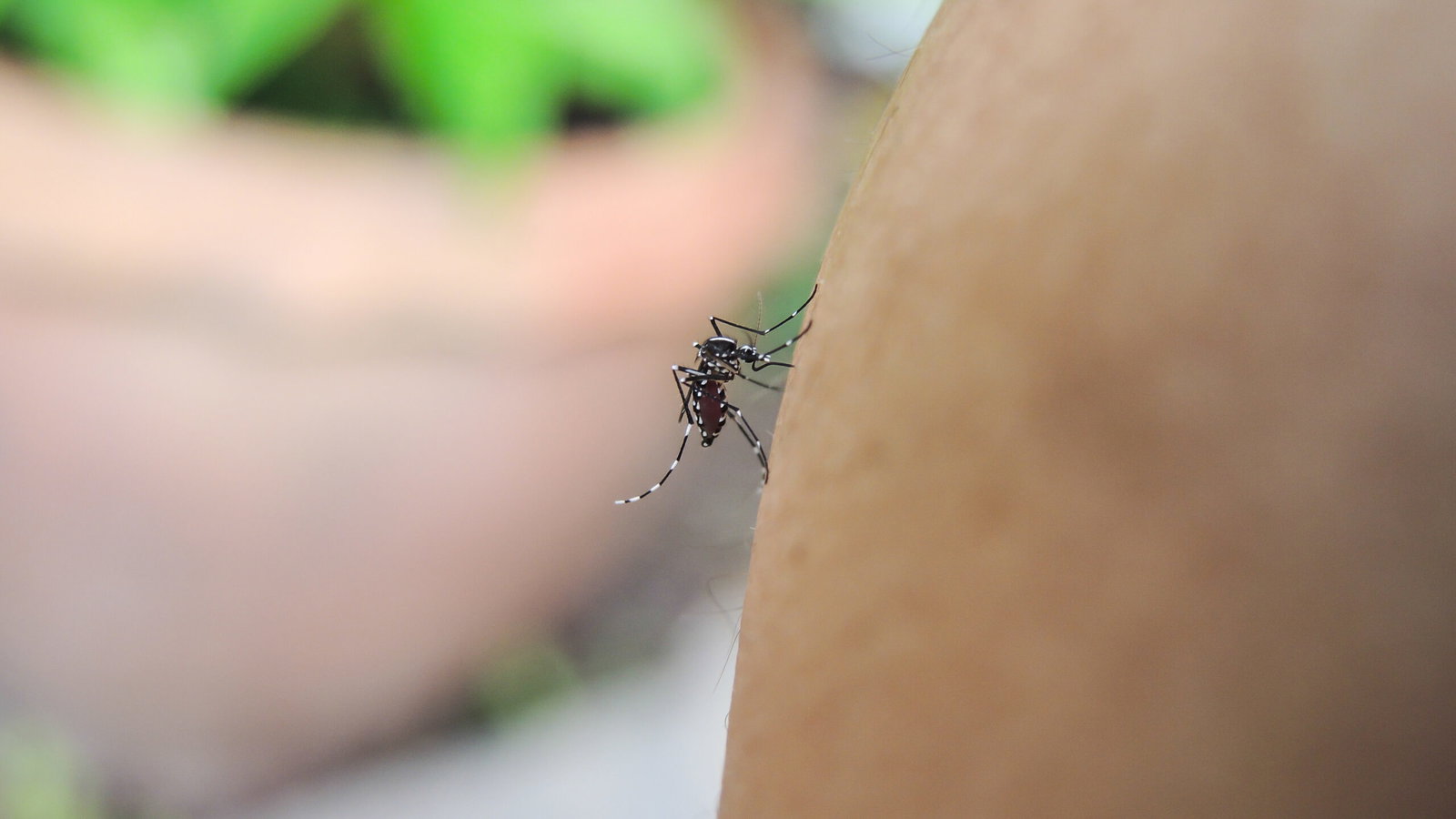
chances of becoming seriously ill remain low. Photo credit: Creative Stock Studio/Shutterstock
After months of warnings about mosquitoes returning with the warmer weather, Spain has now recorded its first confirmed human case of West Nile virus this summer. The patient, a 53-year-old man from Alicante province, was admitted to hospital after becoming infected but has since been discharged, marking the country’s first confirmed human case of the 2026 mosquito season. For many people, a mosquito bite is nothing more than an itchy annoyance.
But this latest case reminds us that, while uncommon, some mosquitoes in Spain can carry illnesses capable of causing serious infection. The good news is that health experts stress there is no reason for panic. Most people who catch West Nile virus never realise they’ve been infected. Even so, the first confirmed case of the summer is likely to focus attention on the parts of Spain where the virus is most commonly found and the simple steps people can take to reduce their risk.
Where is West Nile virus most likely to be found?
West Nile virus is spread through the bite of infected mosquitoes, which become carriers after feeding on infected birds. The virus is not spread from person to person, and humans do not pass it on to others. The highest risk is generally found in areas where mosquito populations thrive, particularly around wetlands, marshes, rivers and rice-growing regions.
Historically, Andalucía has recorded the highest number of human cases, especially around the Guadalquivir marshes and parts of Sevilla, Huelva and Cádiz, where environmental conditions are ideal for mosquitoes.
Other areas monitored closely include Almeria, Extremadura and the Comunitat Valenciana, with Alicante now recording Spain’s first confirmed human case of the summer. Health authorities also keep a close watch on other regions where infected mosquitoes or birds have previously been detected. The risk does not mean people should avoid visiting these areas. Instead, experts say awareness and simple precautions remain the best protection.
Most people never develop symptoms
One of the reasons West Nile virus often goes unnoticed is that around 80 per cent of people infected never develop any symptoms at all. Those who do become unwell usually experience a mild illness that can include fever, headache, muscle aches, tiredness, nausea or a skin rash. These symptoms often improve without the need for hospital treatment.
However, a small number of people can develop more serious complications affecting the brain or nervous system, including meningitis or encephalitis. Older adults, people with weakened immune systems and those with underlying health conditions are considered more vulnerable to severe illness, although serious cases remain uncommon.
Why mosquito season is a concern
Spain’s warmer months provide ideal conditions for mosquito activity, particularly during the evenings and around areas of standing water. The first confirmed case of the summer does not necessarily mean more infections will follow although it is likely to happen, it does, however, signal that the seasonal period when West Nile virus can circulate is now underway.
Health authorities continue monitoring mosquito populations and infected birds throughout the summer to identify areas where the risk may increase. Surveillance programmes also help detect the virus early so that mosquito control measures can be introduced where needed.
Simple steps to reduce your risk
While the chances of becoming seriously ill remain low, avoiding mosquito bites is still the best form of protection. Using insect repellent, wearing long sleeves and trousers during the evening, fitting mosquito screens where possible and removing standing water from gardens or terraces can all help reduce mosquito breeding.
People spending time near wetlands, rivers or other mosquito-prone areas should be particularly mindful during dawn and dusk, when mosquitoes are usually most active. Spain’s first confirmed West Nile virus case of the summer is an important reminder that mosquito season has arrived. For most people, the risk of serious illness remains very low, but knowing where the virus is most likely to be found and taking a few sensible precautions can help ensure that an ordinary mosquito bite stays exactly that.
several serious wildfires have already broken out across Spain this summer. Photo credit: Cavan-Images/shutterstock
Nobody wants to think their afternoon walk, Barbecue or even a discarded cigarette could be the spark that starts Spain’s next major wildfire. But with the country already battling devastating blazes this summer, it’s worth knowing whether your area is now among those facing the highest risk.
Spain’s State Meteorological Agency (AEMET) has identified several parts of the country as facing a high, very high or extreme risk of forest fires, with the danger changing daily depending on temperatures, humidity, wind and how dry the vegetation has become. For anyone planning a countryside walk, a weekend getaway, a camping trip or simply travelling through rural areas, the latest wildfire risk map is becoming just as important as checking the weather forecast.
Why the fire risk is climbing
Hot weather alone does not start wildfires, but it creates the perfect conditions for them to spread. After weeks of high temperatures and little rainfall in many parts of Spain, grassland, woodland and scrub have become increasingly dry. Add strong winds into the mix and even a small spark can quickly develop into a fast-moving blaze.
AEMET updates its forest fire danger map every day using weather forecasts together with information on vegetation, soil moisture and land conditions. The map identifies areas ranging from very low risk through to extreme danger, giving people an idea of where fires are most likely to start and spread. While the map is aimed at helping emergency services prepare, it also gives residents and visitors a chance to understand the level of risk where they are.
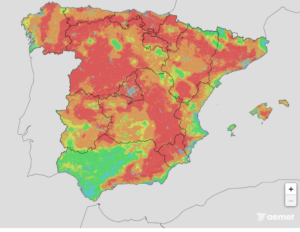
Recent fires show how quickly situations can change
The warnings come after several serious wildfires have already broken out across Spain this summer. In recent days, fires have forced road closures, disrupted train services and led to evacuations as firefighters battled to stop the flames reaching homes and communities.
Some blazes have spread across thousands of hectares in a matter of hours, fuelled by dry vegetation, difficult terrain and changing winds. For many people, these fires are a reminder that conditions can change rapidly. A quiet afternoon in the countryside can quickly turn into an emergency if a fire takes hold.
Everyday mistakes can have devastating consequences
During periods of high or extreme fire risk, authorities regularly remind people that many wildfires are caused by human activity. Throwing a cigarette from a car window, lighting a barbecue in an unsuitable location, using machinery that creates sparks or leaving glass bottles in dry vegetation can all increase the risk.
Even parking a vehicle on long, dry grass can create enough heat underneath the car to start a fire in the right conditions. Most people would never deliberately start a wildfire, but small mistakes during hot weather can have devastating consequences.
Check before you travel
If you’re planning to spend time outdoors, it’s worth checking AEMET’s latest wildfire danger map before setting off. The level of risk changes from day to day, meaning an area that was considered safe earlier in the week may face a much higher danger after temperatures rise or winds strengthen.
Knowing the conditions can also help people avoid activities that may increase the risk, particularly in wooded or rural areas. It is also worth paying attention to any local restrictions that may be introduced, including bans on lighting fires or limits on access to certain natural areas when the danger becomes particularly high.
A map that could make a real difference
Wildfires are becoming an increasingly familiar part of Spanish summers, and firefighters face a race against time every time the alarm is raised. While emergency crews continue preparing for another challenging season, there is something the public can do as well.
Checking the wildfire danger map before heading outdoors takes only a few moments, but it could help prevent the next major blaze. With several parts of Spain already classed as facing a high, very high or extreme risk of forest fires, knowing the conditions in your area is no longer just useful information. This summer, it could make all the difference.

Newey admits Aston Martin neglected Alonso as nightmare season continues

Fire That Gutted Malaga’s Two-Star Hotel Ibis Finally Declared Over – 47 Days After Flames First Broke Out
Marbella reinvented: Costa del Sol City heading for image change

When is the next F1 race? British Grand Prix schedule and details for 2026

Los Aficionados Al Ciclismo En Barcelona: “Que Venga El Tour De Francia Es Como Ir Al Mundial De Fútbol”
Lorry snags power cable on A-7 in Mijas, creating danger for drivers and residents


-
 Uncategorized2 weeks ago
When is the next F1 race? British Grand Prix schedule and details for 2026
-
 Antoni Gaudi1 week ago
Los Aficionados Al Ciclismo En Barcelona: “Que Venga El Tour De Francia Es Como Ir Al Mundial De Fútbol”
-
Calahonda2 weeks ago
Lorry snags power cable on A-7 in Mijas, creating danger for drivers and residents
-
Alhaurin El Grande1 week ago
Alhaurin el Grande and Coin launch historic 1.5 million kilo season for premium tomato
-
 Business & Finance1 week ago
Cheap Flights And Mass Tourism Are Adding €3,800 To The Cost Of The Average Spanish Home, New Report Warns
-
Latest1 week ago
Conservatives And Far Right To Govern Spain’s Andalusia Region
-
 Aleksandar Pavlovic2 weeks ago
Paraguay Elimina A La Apagada Alemania En Los Penaltis Para Firmar La Primera Gran Hazaña En Las Eliminatorias Del Mundial
-
 Donald Trump2 weeks ago
US Supreme Court Is Set To Rule On Cases That Will Define The Limits Of Presidential Power