Connect with us

%

Spain Offers Up To €800 A Month For Households To Take In Elderly Residents

Published

on

spain-offers-up-to-e800-a-month-for-households-to-take-in-elderly-residents

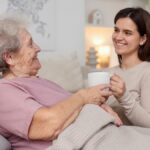
Spain is offering financial support to households that take in elderly residents as an alternative to care homes Credit: Shutterstock/New Africa

The Asturian Government has officially launched its 2026 “Acogimiento Familiar” campaign, offering approved households a monthly subsidy of up to €800 to host elderly residents. Aimed at slowing the rush toward institutionalized care homes, the initiative pays local families to provide a stable, home-based environment for those over 65 who can no longer live alone but don’t require 24-hour nursing.

Under the April 2026 BOE (BOPA) update, participants must meet strict suitability standards and lack a direct family connection to the guest. This model, part of the wider CuidAS Strategy, addresses Asturias’ status as one of Europe’s oldest regions by transforming private homes into vital links in the state’s care infrastructure.

How the scheme works in practice

The initiative allows approved households to host older individuals who are unable to live independently but do not require full-time medical care. In return, participants receive a monthly payment that can reach €800, depending on the level of support required.

The goal is to create a more personal and stable environment for elderly people, while easing pressure on public care services. Local authorities oversee the process, including matching individuals with suitable households and monitoring conditions.

Why Spain is turning to this model

Spain is facing a steady increase in its ageing population, with longer life expectancy and lower birth rates placing growing demand on healthcare and social services. In regions such as Asturias, this trend is more pronounced. Smaller populations and rural settings often mean fewer care facilities and longer waiting lists.

This type of programme is designed to address both issues at once. It provides support for elderly residents while also offering financial assistance to households willing to take on a caregiving role.

What this means for residents 

For those living in Spain, the initiative highlights a wider reality. Access to elderly care is becoming a more visible issue, particularly in areas with older populations or limited infrastructure. Programmes like this may expand if demand continues to grow.

For expats, especially those planning long-term residency or retirement in Spain, this signals how care systems are evolving. It may influence future options around elderly support, both for themselves and for family members. There is also a social dimension. The scheme encourages integration between generations and offers an alternative to institutional care, which some families prefer to avoid.

Could this expand to other parts of Spain?

While the programme is currently focused on Asturias, similar approaches have been discussed in other regions. Spain’s decentralised system means each autonomous community manages its own social care policies, but successful pilot programmes often influence wider adoption. If this model proves effective, it could be replicated in areas facing similar demographic pressures, particularly in rural regions.

Common question: Is this open to everyone?

No. Participation is subject to strict conditions. Households must meet requirements related to living space, availability and ability to provide appropriate care. The elderly individuals involved are also assessed to ensure they are suitable for this type of arrangement. The programme is designed as a controlled system rather than an open application scheme.

%

Spain’s 018 Accident Helpline Is Now Live. Here’s What Happens When You Call

Published

on

spain’s-018-accident-helpline-is-now-live.-here’s-what-happens-when-you-call

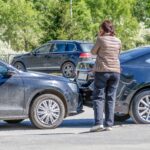
Being involved in a road collision abroad can be more difficult than at home. Photo credit: vladimir subbotin/Shutterstock

Starting today, April 23, the 018 road accident helpline is active in Spain as a national support service for people affected by road traffic accidents. Operated by the Dirección General de Tráfico (DGT), it provides assistance across the country to anyone involved in or impacted by a road incident.

Unlike emergency services number 112, 018 is not designed for reporting an accident as it happens. It is intended for use afterwards, when immediate danger has passed and people may need help understanding what to do next. The service is available 365 days a year, from 08:00 am to 09:00 pm, giving callers access to support throughout the day, including weekends and public holidays.

What happens when you call 018

When you dial 018, you are connected to a trained support operator rather than emergency responders. The call is handled by staff who guide the caller through the situation step by step. The conversation usually begins with basic details about the accident. This may include when and where it happened, whether emergency services were involved, and whether medical attention has already been received. 

From there, the focus shifts to the caller’s current needs. This can include emotional support if the person is distressed, disoriented or dealing with shock after the incident. The final part of the call is practical guidance. Call handlers explain what typically needs to be done after a road accident in Spain, such as how to obtain reports, what steps may be required with insurance providers, and where to seek follow-up support.

The service is also designed to be accessible to international users, with assistance available in up to 50 languages, helping non-Spanish speakers communicate their situation and understand the guidance provided. The aim is to help the caller leave the conversation with a clearer understanding of what to do next.

Who the service is for

The 018 helpline is available to anyone affected by a road traffic accident in Spain, regardless of nationality or residency status.

This includes:

  • Residents living in Spain, including foreign nationals 
  • Tourists involved in road traffic accidents 
  • Family members of injured or deceased individuals 
  • Witnesses directly affected by a serious incident 

For expats and tourists, the service can be particularly helpful when dealing with unfamiliar procedures or language barriers after an accident.

The helpline is available nationwide and can be accessed from anywhere in Spain.

What kind of help you can expect

The support offered through 018 covers several types of assistance that are commonly needed after a road accident. Callers may receive psychological support if they are dealing with shock, anxiety or emotional distress following the incident.

They may also be given basic legal orientation, helping them understand general next steps after a collision, including documentation and reporting processes.

In addition, the service can provide information on accessing medical care and rehabilitation services, as well as guidance on relevant public support options. In more serious situations, such as major injury or bereavement, family members can also be supported and directed towards appropriate services.

For foreign residents and visitors, this can help reduce uncertainty when dealing with processes they may not be familiar with.

A support service, not an emergency line

The 018 number is not an emergency service. It does not replace 112, which remains the number for urgent medical assistance, police response or fire services. If an accident is happening or there is immediate danger, 112 should always be called first.

018 is intended for use after the emergency has been resolved, when people need help understanding and managing what comes next. It is also not a substitute for formal legal advice, insurance handling or medical diagnosis. Instead, it provides general guidance and helps direct people towards the appropriate services.

People can contact the service in several ways:

  • Telephone: 018
  • WhatsApp: 645 713 823
  • Email: victimastrafico@dgt.es
  • Online contact options through official DGT channels

This range of contact methods may help travellers who do not have immediate access to a local phone line but can use mobile data or messaging apps.

Part of the accident aftermath support process

The introduction of 018 provides a single national contact point for people dealing with the aftermath of road traffic accidents in Spain. For many people, especially those unfamiliar with the system, the period after an accident can involve uncertainty around documentation, medical follow-up and administrative steps.

This service brings those queries into one place, offering structured support at a time when individuals may be under stress. In simple terms, the distinction is clear: 112 is for emergencies, while 018 is for guidance once the immediate situation has passed.

Continue Reading

%

Does St George’s Day Make You Feel Patriotic?

Published

on

does-st-george’s-day-make-you-feel-patriotic?

For many English expatriates living abroad, national celebrations can take on a different meaning. St George’s Day, England’s national day, often passes with relatively little fanfare compared to other countries’ patriotic events. A recent Euro Weekly News poll asked if St George’s Day inspired a sense of patriotism. While some see it as an opportunity to reconnect with their roots, others question whether a single day should carry the weight of national identity.

Some respondents expressed a strong and enduring connection to their English identity, regardless of where they now live. Alison Clarke Allen reflected this sentiment clearly: “Yes, I do! I may not live in Shepperton Surrey anymore, but it is still my home town. I moved abroad, I didn’t stop being English/British!” Similarly, David Egner shared a straightforward affirmation: “As an English immigrant, yes I do.” These perspectives suggest that distance can sometimes strengthen rather than weaken a sense of national belonging.

Others, however, take a more critical view. Marian Morgan Visockis questioned the premise altogether: “No. Should there be one day a year when you “feel patriotic”?” Caz Burnett echoed this scepticism from a broader perspective: “I’m an immigrant and I consider myself European. Never understood the “pride” of just happening to be born in a country”. Stephen Chatt Milne also emphasised the importance of adapting to life abroad: “No. I left UK over 40 years ago, still love having a British passport but have always classed whatever Country I was living in as my home. Cheers and on with the show”.

A few responses focused less on personal identity and more on how the day is marked. Stephen Cowdell commented: “St George’s day is St George’s day, I don’t need it to feel patriotic or proud of my country, it would just be nice to celebrate it better than we do, unfortunately lots of people (not POC, but other whites) appear to not like their own flag and feel that it’s somehow racist.” Mike Smith added a lighter observation: “To be fair the English seem more intent on celebrating St Patricks day than they do St Georges Day. May be that has something to do with being intent on quaffing large amounts of Guinness.”

While some expats feel a clear sense of patriotism linked to St George’s Day, many do not see it as particularly significant.

Continue Reading

%

Women’s Warrior Walk: Costa Del Sol Women To Trek 63km For Ultra-Rare Disease Research

Published

on

women’s-warrior-walk:-costa-del-sol-women-to-trek-63km-for-ultra-rare-disease-research

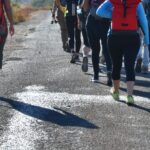
Warrior Women’s Walk. Credit: Iris Levyathan – Shutterstock

Inspirational local ladies are lacing up their walking boots this May for the Women’s Warrior Walk, a monumental two-day challenge covering the distance from El Paraiso (between Marbella and Estepona) to Gibraltar. Starting on May 9, a group of over 30 determined women will embark on a 63km journey to raise essential funds for Cure DHDDS. This UK-registered charity (number 1202643) works tirelessly to fund life-changing research for a condition that currently has no known cure.

Understanding DHDDS: A battle for a brighter future

DHDDS gene mutations represent an ultra-rare neurological condition. Patients typically face a range of progressive symptoms similar to Parkinson’s disease, such as tremors, balance issues, and seizures. Cognitive impairment and physical challenges can start from birth, making early medical intervention a top priority for families.

Local resident Zoe and her family launched the charity three years ago after two of her grandchildren received this diagnosis. Faced with a lack of available hospital treatments due to the extreme rarity of the disease, the family took matters into their own hands to drive and promote scientific progress.

Join the Warrior Walk from El Paraíso to Gibraltar

Participation and sponsorship from the Costa del Sol community remain vital for the success of this mission. Every Euro donated travels directly to scientific laboratories to power medical breakthroughs. Local businesses, including Organic Cold Pressed Juicery and Da Grappa Restaurante, have already stepped up to provide support.

Community members can get involved by sponsoring the walkers or providing practical assistance during the trek on 9 and 10 May. Business sponsors gain visibility through logo placement on official event T-shirts and across social media platforms.

Hope is on the horizon for children living with DHDDS. Interested parties should visit curedhdds.org or contact Zoe directly at +34 670 069 623 to donate or learn how to join the ranks of these local warriors.

Continue Reading
Advertisement
Advertisement

Spanish Real Estate Agents

Tags

Trending

Copyright © 2017 Spanish Property & News