Connect with us

%

Spain Warns Over Fake Social Security Scams

Published

on

spain-warns-over-fake-social-security-scams

Spain warns residents over fake Social Security messages targeting bank details Credit : Mer_Studio, Shutterstock

People across Spain are being warned to think twice before replying to any message that claims to come from Social Security. Fresh alerts have highlighted a rise in scams where fraudsters pretend to be official bodies in order to get hold of bank details, passwords and personal information.

For many people, the message looks routine. It may mention a pension payment, a problem with contributions, missing documents or money supposedly waiting to be paid back. Some arrive by text, others by email, letter or phone call. At first glance, it can seem like the sort of thing you deal with every day.

That is exactly why people get caught. The scam works because it sounds ordinary.

Why these messages are convincing

Most people in Spain have some contact with Social Security at some stage of life.

It may be through work contributions, self employed payments, sick leave, retirement, maternity support or other paperwork. Because of that, receiving communication linked to Social Security does not feel unusual.

Scammers know this. They use familiar names and formal language because they want people to lower their guard.

A message saying you have won a mystery prize might be ignored.

A message saying there is an issue with your pension or your monthly contributions is far more likely to be opened. Sometimes they promise money. Sometimes they threaten delays or suspension.

Either way, the aim is the same. They want a quick reaction before you stop and think.

How people are being approached

There is no single format. Some people receive a text message with a link and a short warning that urgent action is needed. Others get emails with official looking logos and serious wording.

Phone calls are also common. The caller may sound polite and professional. They might say they need to confirm your identity or update your banking details for an incoming payment.

Letters can also be used because many people still trust paper more than digital contact.

That trust is what criminals are trying to use. They do not need everyone to believe them. They only need a small number of people to respond.

The small clues that often reveal a scam

Not every scam message is badly written now. Some are polished and carefully prepared, so spelling mistakes alone are no longer enough to judge them.

A better sign is pressure. If you are told to act immediately, click now, confirm now or lose access today, that should make you cautious.

Another warning sign is being asked for sensitive details.

Unexpected requests for passwords, card numbers or security codes sent to your mobile should raise concerns straight away.

Links are another issue. A fake website can look surprisingly real. It may copy colours, logos and wording from genuine pages.

That is why it is safer to open official websites yourself rather than use a link sent in a message. And if the story feels strange, trust that instinct.

Many victims later say they felt something was off, but responded anyway because they were rushed.

What to do if you receive one

The best move is often the simplest one. Do nothing for a moment. Do not click the link. Do not reply. Do not call the number in the message.

Instead, check through official channels you already know. Visit the real website yourself or use a verified phone number.

If you are still unsure, ask someone you trust to look at it with you. A second opinion often spots what stress misses. If you have already shared information, contact your bank immediately and change any relevant passwords. The sooner you react, the better your chances of limiting the damage.

Why so many people still get caught

It is easy to assume only careless people fall for scams. That is not true. People are busy, tired, distracted and juggling everyday life. They open messages while working, travelling, cooking or dealing with family matters.

That is when mistakes happen. Fraudsters understand human behaviour better than many people realise. They choose moments of pressure because pressure creates rushed decisions.

A useful habit to keep

When money, identity or urgent deadlines appear in an unexpected message, slow down. Real institutions will still be there in ten minutes. Scammers hope you react in ten seconds. That small pause can make all the difference.

%

Does St George’s Day Make You Feel Patriotic?

Published

on

does-st-george’s-day-make-you-feel-patriotic?

For many English expatriates living abroad, national celebrations can take on a different meaning. St George’s Day, England’s national day, often passes with relatively little fanfare compared to other countries’ patriotic events. A recent Euro Weekly News poll asked if St George’s Day inspired a sense of patriotism. While some see it as an opportunity to reconnect with their roots, others question whether a single day should carry the weight of national identity.

Some respondents expressed a strong and enduring connection to their English identity, regardless of where they now live. Alison Clarke Allen reflected this sentiment clearly: “Yes, I do! I may not live in Shepperton Surrey anymore, but it is still my home town. I moved abroad, I didn’t stop being English/British!” Similarly, David Egner shared a straightforward affirmation: “As an English immigrant, yes I do.” These perspectives suggest that distance can sometimes strengthen rather than weaken a sense of national belonging.

Others, however, take a more critical view. Marian Morgan Visockis questioned the premise altogether: “No. Should there be one day a year when you “feel patriotic”?” Caz Burnett echoed this scepticism from a broader perspective: “I’m an immigrant and I consider myself European. Never understood the “pride” of just happening to be born in a country”. Stephen Chatt Milne also emphasised the importance of adapting to life abroad: “No. I left UK over 40 years ago, still love having a British passport but have always classed whatever Country I was living in as my home. Cheers and on with the show”.

A few responses focused less on personal identity and more on how the day is marked. Stephen Cowdell commented: “St George’s day is St George’s day, I don’t need it to feel patriotic or proud of my country, it would just be nice to celebrate it better than we do, unfortunately lots of people (not POC, but other whites) appear to not like their own flag and feel that it’s somehow racist.” Mike Smith added a lighter observation: “To be fair the English seem more intent on celebrating St Patricks day than they do St Georges Day. May be that has something to do with being intent on quaffing large amounts of Guinness.”

While some expats feel a clear sense of patriotism linked to St George’s Day, many do not see it as particularly significant.

Continue Reading

%

UK Cigarette Ban Creates Spain Loophole For British Teens

Published

on

uk-cigarette-ban-creates-spain-loophole-for-british-teens

Spain continues to use a standard minimum-age approach. Photo credit: Christian Bertrand

The United Kingdom’s planned lifetime tobacco sales ban for people born on or after January 1 2009 could create a loophole for young British teens travelling to Spain and other countries, as they may still be able to purchase cigarettes and vaping products where standard age-based rules remain in place.

The policy restricts tobacco sales based on year of birth, meaning those affected would never be eligible to buy cigarettes from UK retailers. Outside the UK, however, access is determined by national age limits rather than generational rules, creating a clear contrast for those travelling abroad.

Different rules in Spain

In Spain, tobacco sales are regulated through a standard minimum-age system, with purchase generally permitted from 18 years old. Eligibility is based solely on age at the point of sale, rather than year of birth or membership of a specific generation.

Tobacco products are widely available through regulated retail outlets across the country, including supermarkets, kiosks and licensed shops. Sales are subject to identity checks where age is unclear, particularly in urban and tourist-heavy areas where enforcement is more visible.

Travel-related differences

Spain is one of the most frequently visited destinations for UK travellers, with millions of trips each year for tourism, work and study. This makes it a common setting where differences in national consumer rules become visible in practice. For those affected by the UK policy, experiences abroad would depend on local regulations.

In Spain, access to regulated products would be governed by local age verification at the point of purchase. This means availability is shaped by Spanish law rather than any UK restriction, and enforcement is handled entirely by Spanish authorities and retailers. In practice, this creates situations where legal access to tobacco products may differ depending on location, particularly in busy tourist areas where international visitors form a significant proportion of customers.

Could the policy lead to tobacco tourism

The difference between UK and overseas rules has raised the possibility of a form of “tobacco tourism”, where individuals affected by the ban access products while travelling rather than at home. Because the UK restriction is based on year of birth, those in the affected group would never be able to legally buy tobacco domestically, even as adults.

In countries such as Spain, where access is determined by a standard minimum age of 18, the same individuals could legally purchase tobacco once they meet local age requirements. This creates a situation where availability depends entirely on location.

In practice, any such behaviour is likely to be limited and linked to existing travel rather than people making dedicated trips solely to buy tobacco. However, the contrast may be more visible in popular holiday destinations and border regions, where differences in national rules are easier to navigate.

Gibraltar border factor

The issue may also be particularly relevant in Gibraltar, where residents can cross directly into Spain within minutes. If Gibraltar applies UK-aligned restrictions, individuals affected by the 2009 cohort rule could potentially be unable to purchase tobacco locally while still being able to do so across the border in Spain, subject to Spanish law.

That would not change domestic restrictions in either territory, but it could create a practical cross-border difference for residents living near the frontier. Vaping regulations may also differ depending on how each jurisdiction chooses to regulate nicotine products, as tobacco and vape policies are not always aligned across borders. This means access to different products could vary even within short travel distances.

Cross-border policy contrast

The UK and Spain operate different tobacco regulatory systems, with the UK moving towards a generational restriction based on date of birth, while Spain continues to use a standard minimum-age approach.

This creates a policy divergence between a cohort-based restriction and an age-based system. It also means that eligibility rules are structured differently depending on whether the focus is long-term population prevention or immediate age compliance at point of sale. As a result, the experience of future adults affected by the UK measure may differ depending on whether they remain in the UK or travel abroad, particularly within Europe where cross-border movement is relatively straightforward.

Broader implications

The contrast has prompted discussion about how national public health policies interact with international mobility. While domestic restrictions apply within a country’s borders, access to tobacco remains dependent on local law.

This raises questions about consistency in regulation when citizens move between jurisdictions with different frameworks for controlling the same products. Critics point to inconsistencies that arise when individuals face different legal conditions depending solely on geography.

At the same time, supporters argue that national governments retain the right to set domestic health policy independently, even if outcomes differ abroad.

Outlook

As implementation of the UK policy progresses, attention is likely to focus on how the affected generation experiences differences in access during travel.

In Spain, where tobacco remains widely available under conventional age rules, the contrast with UK restrictions is expected to be most visible among young British adults once they reach legal purchasing age abroad. Over time, the practical effect of these differences may become clearer as the first cohort impacted by the UK measure begins travelling internationally as adults.

Continue Reading

%

Bendinat Veterinary Clinic

Published

on

By

bendinat-veterinary-clinic

A veterinary clinic that combines cutting-edge medical technology with genuine compassion. Credit: Bendinat

For pet owners in Mallorca, finding a veterinary clinic that combines cutting-edge medical technology with genuine compassion is the ultimate priority. Since 2003, Clinica Veterinaria Bendinat has been providing exactly that, becoming a trusted pillar of the community for those who consider their pets true members of the family.

Founded by Nick Murgatroyd (BVSc MRCVS), a highly experienced vet with over a decade of practice in the UK before moving to the island, the clinic was born from a clear vision: to create a space where the highest level of veterinary skill meets an unparalleled standard of comfort and care.

Comprehensive services for every stage of life at Bendinat

The philosophy is simple: prevention is better than a cure. The team offers thorough health checks and up-to-date advice on local Mediterranean health challenges, such as Leishmania and Pine Processionary caterpillars.

The facility is equipped to handle everything from routine vaccinations to complex internal medicine and advanced surgery. With a purpose-designed operating theatre, digital X-rays, and state-of-the-art laboratory analysis – providing results in just 15 minutes – diagnoses are swift and accurate. For more specialized needs, the clinic offers diagnostic imaging (ultrasound) and works closely with top physiotherapy specialists for post-surgical recovery.

Global expertise, local feel

One of the clinic’s standout features is its multi-lingual team. Understanding that medical discussions can be stressful, the staff provides clear communication in several languages. Furthermore, Bendinat is a specialist in international pet travel; they have helped more pets relocate to different corners of the world almost than any other practice in Mallorca, ensuring all passports and microchips are perfectly in order.

A stress-free environment

The clinic is designed with the animal’s comfort in mind. The reception area is cleverly arranged so that cats in baskets don’t have to face waiting dogs, reducing anxiety for feline patients.

Whether it is a routine check-up or a 24-hour emergency, the dedicated team at Clinica Veterinaria Bendinat treats every patient with the same love and devotion they give their own pets.
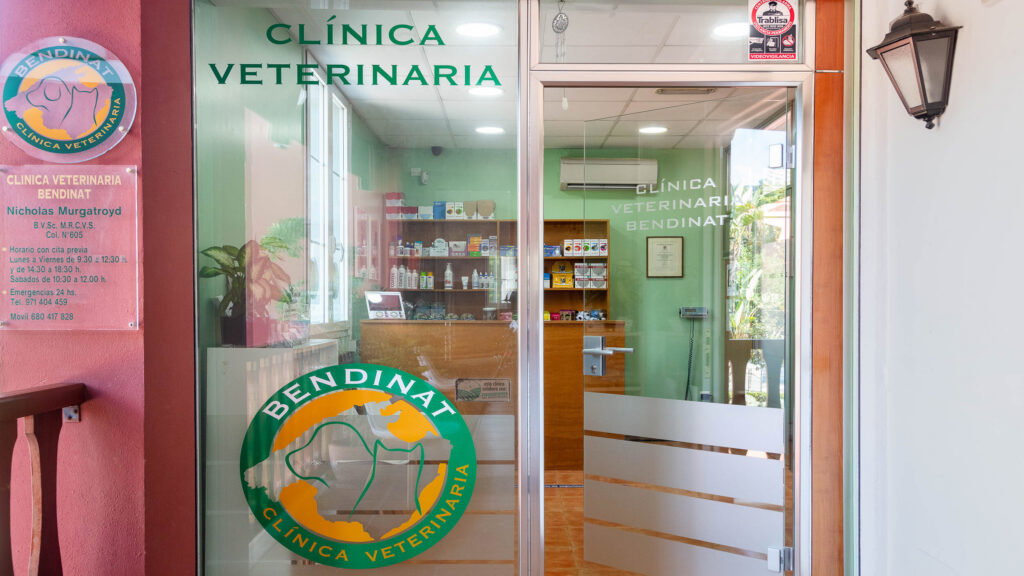
The clinic is designed with the animal's comfort in mind.

Contact details:

Address: C/ Architect Francisco Casas 17, Bendinat.

Phone: 971 40 44 59 (Including 24hr emergency advice)

Web: www.vet-bendinat.com

Continue Reading
Advertisement
Advertisement

Spanish Real Estate Agents

Tags

Trending

Copyright © 2017 Spanish Property & News