Connect with us

%

Spain’s Christmas Shoppers Are Turning To AI To Find Gifts And Hunt Down Bargains

Published

on

spain’s-christmas-shoppers-are-turning-to-ai-to-find-gifts-and-hunt-down-bargains

Shoppers want help comparing prices and promotions. Photo credit:Iryna Imago/Shutterstock

Choosing Christmas presents has not always been an easy thing, but now it could soon involve asking ChatGPT for help rather than a friend or family member. Four in ten consumers in Spain say they expect to use artificial intelligence (AI) to help decide what to buy during the coming shopping season, with many turning to it to compare prices, check products and find gift ideas.

With Black Friday just days away and Christmas shopping already getting underway, AI assistants are becoming another tool for people trying to find the best deals without spending more than they can afford. The figure comes from the latest Golden Quarter consumer report by KPMG and Appinio, based on a survey of 1,200 people across Spain. It found that 40 per cent expect to use AI assistants for purchases or leisure plans over the next three months, compared with 29 per cent last year. 

Comparing prices and finding presents

The most common reasons for using AI are practical ones. Shoppers want help comparing prices and promotions, finding information about products and getting recommendations for Christmas gifts. Rather than scrolling through dozens of websites, consumers can ask an assistant to narrow down the options.

There is also growing confidence in the technology. Almost half of those surveyed, 47 per cent, said they have high or very high confidence in AI-generated recommendations. That rises to 62 per cent among people aged 25 to 34. AI is not the only online influence on shopping decisions. Social media is expected to affect the choices of 32 per cent of consumers, while the influence of influencers has fallen from 46 per cent to 38 per cent, according to the report.

Christmas shopping will cost more

The growing interest in AI comes as Spanish consumers prepare to spend more during the busiest shopping period of the year. KPMG and Appinio estimate average spending on shopping and leisure, excluding food, will reach €1,067 between November and January. That is an increase of 10.1 per cent compared with last year. The rise does not necessarily mean people will be buying more. The report points to prices having increased by 24 per cent over the past five years, meaning some of the extra money will simply go towards paying more for the same purchases.

More than half of consumers who expect to spend more blame higher prices, while others point to wanting to enjoy the festive period or having higher incomes.  Black Friday remains a major part of the spending plans, with 65 per cent saying they intend to shop during the sales period. January discounts are also attracting attention, with 48 per cent planning to take advantage of the winter sales. 

AI is becoming part of the Christmas shopping routine

A separate study by Sensormatic Solutions found that 31 per cent of Spanish consumers expect to use AI specifically for their Christmas shopping. That puts Spain ahead of the other European markets included in its survey, with Italy at 29 per cent, the UK at 24 per cent, Germany at 22 per cent and France at 21 per cent.

Younger shoppers are leading the change. The figure rises to 53 per cent among Generation Z and 40 per cent among millennials.  For consumers facing another expensive Christmas, asking AI to compare a few products or suggest a present within a set budget may become as ordinary as checking reviews or hunting for discount codes.

%

Mallorca Prepares For One Of Its Biggest Fairs

Published

on

mallorca-prepares-for-one-of-its-biggest-fairs

Forget the usual tourist attractions for a moment. If you’ve ever wanted to experience the Mallorca that exists beyond its beaches and holiday resorts, this is one event worth adding to your calendar.

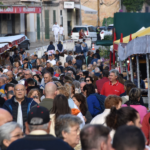
For one extraordinary day each November, the island’s famous leather-making town transforms into a bustling celebration of Mallorcan life, with streets filled with market stalls, agricultural displays, local produce and visitors from across the island.

And the celebrations don’t begin on the main fair day. The festivities get underway the evening before, when Dimecres Bo brings its own lively atmosphere to Inca.

Whether you’re a long-term resident, a newcomer to Mallorca or simply visiting in November, here’s what to know before heading along.

A celebration of Mallorca’s agricultural heritage

Dijous Bo, which translates roughly as “Good Thursday”, has its roots in Inca’s long history as a centre of farming, trade and commerce.

Traditionally, farmers and traders travelled to the town to sell livestock, exchange goods and meet customers from across Mallorca.

Today, the event retains much of that agricultural character while incorporating entertainment, shopping, music and activities for the whole family.

The official Dijous Bo website confirmed this year’s programme following a presentation by Inca mayor Virgilio Moreno on November 10.

Dimecres Bo: The party starts on Wednesday

Although Thursday is the main attraction, Wednesday, November 18, promises plenty of excitement.

Known as Dimecres Bo, the evening before the fair is traditionally one of Inca’s liveliest nights, with residents gathering for music, food and celebrations.

The traditional farmers’ market will operate from 10am until 10pm, while displays of agricultural machinery, historic farming equipment and traditional carts will offer visitors a glimpse into Mallorca’s rural past.

At 1pm, the Mallorcan black pig competition will take place in Plaça del Bestiar, celebrating one of the island’s best-known native livestock breeds.

The official opening ceremony begins at 5.30pm, accompanied by traditional Mallorcan musicians.

Horse-riding demonstrations will follow in Plaça de la Font Vella, while the evening’s celebrations include a proclamation and ceremonial rocket launch at 7.30pm in Carrer del Born.

For those who fancy a late night, music events at venues including Sa Lluna, Aqua Pub and Pub Nits are scheduled to continue into the early hours.

Thursday’s main fair: What can visitors expect?

On Thursday, November 19, Inca’s streets and squares will become a sprawling open-air fairground.

The traditional farmers’ market will run from 10am until 8pm, offering an opportunity to browse local products, crafts and regional specialities.

Agricultural displays will remain a major attraction, with livestock exhibitions taking place in Plaça del Bestiar from 9.30am until 5.30pm.

Visitors can expect displays featuring native livestock, poultry and birds of prey, alongside demonstrations celebrating the island’s farming traditions.

There will also be cultural performances and activities for younger visitors, including a dedicated children’s area on Avinguda dels Reis Catòlics.

The main festivities are scheduled to conclude at 8.30pm with a fire-themed procession and percussion performance.

A family-friendly day out with something for everyone

For families living in Mallorca, Dijous Bo offers an opportunity to introduce children to traditional island culture.

From seeing farm animals to watching horses and exploring market stalls, there is plenty to discover beyond the usual weekend activities.

The fairground attractions at General Luque are also scheduled to operate during the wider celebrations, with designated music-free periods intended to make the experience more accessible for visitors with sensory sensitivities.

And for anyone who enjoys discovering Mallorca through its food, the markets provide an opportunity to explore local produce and traditional specialities.

How to get to Dijous Bo 2026

The fair takes place throughout central Inca, approximately 30 kilometres northeast of Palma.

Organisers recommend travelling by train, as Inca’s railway station is within walking distance of the town centre.

Visitors driving from Palma can use the Ma-13 motorway, although heavy traffic, parking restrictions and crowded streets should be expected during the celebrations.

The main event is free to attend, although individual attractions, food and purchases may involve additional costs.

With Wednesday’s festivities continuing late into the night and Thursday offering a full day of traditional entertainment, visitors can choose between a lively evening out or a more relaxed family visit.

For British residents hoping to experience a different side of Mallorca, Dijous Bo offers something that no beach resort can replicate: a chance to celebrate the island’s traditions alongside the people who keep them alive.

Continue Reading

%

Hackers Find Backdoor Into World’s Biggest Websites

Published

on

hackers-find-backdoor-into-world’s-biggest-websites

Security warning about latest hack. Credit: Prostock-studio – Shutterstock

New global cyberattack finds its way into some of the World’s biggest websites, exposing users’ private details.

Hackers have found a way to inject malicious software into websites used by some of the world’s best-known companies, including IKEA, the BBC and Zoom, in a cyberattack that could have exposed visitors’ payment details and personal information.

The incident, discovered on Monday November 16, involved Optimizely, a technology company whose tools are used by organisations to test and personalise their websites. Rather than attacking each business separately, criminals exploited a weakness in the service used to run parts of their websites.

Cybersecurity researchers found malicious code on websites belonging to at least 178 organisations. The list includes major names in retail, banking, technology, travel and news, according to the investigation by security researcher Scott Helme at Report URI.

How hackers got into trusted websites

Optimizely’s Web Experimentation service allows businesses to change and test website content. Customers add a small piece of JavaScript code to their pages, which is normally delivered from Optimizely’s own servers.

Attackers found a way to alter code stored in some customer projects. This meant visitors’ browsers could load the malicious software from a source they would normally trust.

Security researcher Scott Helme found 188 infected scripts after examining 1,611 Optimizely files. Those scripts belonged to 178 organisations.

Among the affected websites were IKEA, the BBC, Zoom, CNN, Salesforce, GitLab, HSBC and Equifax. The list also included airlines and other major retailers.

Importantly, this does not mean those companies’ own computer networks were necessarily breached. The malicious code was delivered through the third-party service, and a website appearing on the list does not prove that every visitor suffered a loss.

The incident has similarities to other attacks involving outside technology providers. In 2025, Iberia customers had personal information exposed through a third-party system connected to the airline’s booking platform.

What information could have been stolen?

Researchers found that the malicious software was designed to carry out several different types of theft. It could capture payment-card details entered into website forms, replace cryptocurrency wallet addresses with those belonging to the criminals, and collect browser cookies and screenshots.

On Apple iPhones and iPads, the code also attempted to load tools designed to exploit weaknesses in the devices’ operating systems.

Report URI said it had identified cryptocurrency transactions linked to the attackers, suggesting that at least some theft had taken place. However, the full number of affected visitors and whether payment-card details were successfully stolen have not been established.

Reuters reported on November 17 that it could not independently confirm whether the attacks had succeeded or determine their overall impact.

Optimizely says the security flaw has been fixed

Optimizely confirmed that an unauthorised party had exploited a vulnerability in its Experimentation service to add malicious JavaScript to some customer projects. The company said it had fixed the vulnerability, removed the injected code and taken additional steps to protect affected accounts.

Cybersecurity publication BleepingComputer reported further details of the incident, including Optimizely’s confirmation that the attackers had exploited a weakness in its account signup process. Most of the infected scripts had been cleaned up by late on Monday, according to Report URI’s investigation.

The incident is a reminder that visiting a familiar website does not necessarily mean every piece of technology running behind the scenes is safe. Businesses often rely on outside providers for website features, payment services, analytics and customer tools.

A weakness in one supplier can therefore affect many organisations at once, even when their own systems have not been directly attacked.

EWN has previously reported on cybercrime affecting Spain, including the case of a young hacker who breached systems belonging to the country’s traffic authority, the DGT, and other public bodies. Read more about the 19-year-old hacker who breached Spain’s DGT, CNMC and other institutions.

Other threats can also put personal information at risk. The Guardia Civil recently warned iPhone users in Spain about hackers taking control of WhatsApp accounts without suspicious links or calls.

For Internet users, the practical advice is to keep phones, computers and browsers updated, use two-factor authentication where available, and check bank and card statements for unfamiliar transactions. Anyone who entered payment details on an affected website during the incident should pay particular attention to unusual activity.

Continue Reading

%

Dia Del Choto Mareno Maro

Published

on

dia-del-choto-mareno-maro

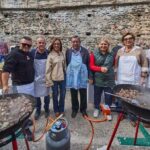
Saturday, November 21 is the day to head to Maro and go hungry. The village is holding its second Dia del Choto Mareno (Maro Kid Goat Day), an afternoon of delicious traditional local food and live music that also raises money for people with learning difficulties.

When and where to go

Lunch gets going at midday and the day runs until 8pm in the car park of the Plaza de Maro. Maro, the beautitful small village a few kilometres east of Nerja is an easy trip for anyone living in or visiting the area and well worth a little explore.

The dish behind the day

“Choto” is the Spanish word for a young goat. Choto a la marena, Maro’s own way of cooking it, is a recipe handed down through families and usually saved for special occasions. Local officials have described it as an inheritance from the village’s grandparents. It is served in a sauce, and bread for mopping it up is a local tradition, and is the main attraction of the day.

Live music will play throughout to keep your ears fed as well as your stomachs, a perfect afternoon for sharing a special occasion with neighbours. Last year’s day was a huge success with organiser hoping it grows year on year in popularity.

Where the money goes

Takings from the charity plate will go to Taller de la Amistad (Friendship Workshop), an organisation that does incredible work daily to improve quality of life for people with special learning needs. Choosing that plate is an easy and kind way to turn lunch into a donation.

Getting from Nerja to Maro

A shuttle bus will run between Nerja and Maro, so you can leave the car at home and enjoy a drink or 2. Check times with the Nerja town hall Facebook page before you travel.

Anyone curious about Maro’s cooking, fancying trying something truly traditional or just looking for a Saturday out near Nerja, now has a date for the diary.

Continue Reading

Trending

Copyright © 2017 Spanish Property & News