Connect with us

Barcelona

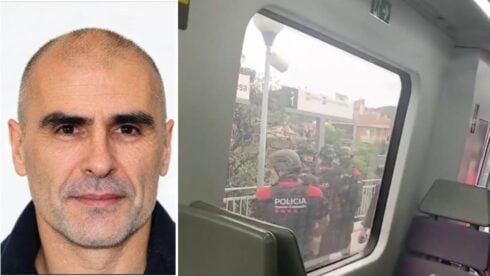
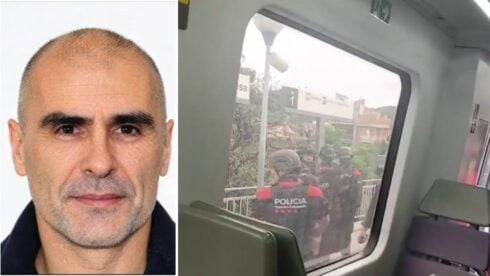
Police Storm Barcelona Train In Manhunt For Oviedo Cop Killer ‘the Russian’

Published

on

police-storm-barcelona-train-in-manhunt-for-oviedo-cop-killer-‘the-russian’

Adamuz train crash

Spain train driver sparks outrage with ‘let’s pray nothing happens’ announcement

Published

on

By

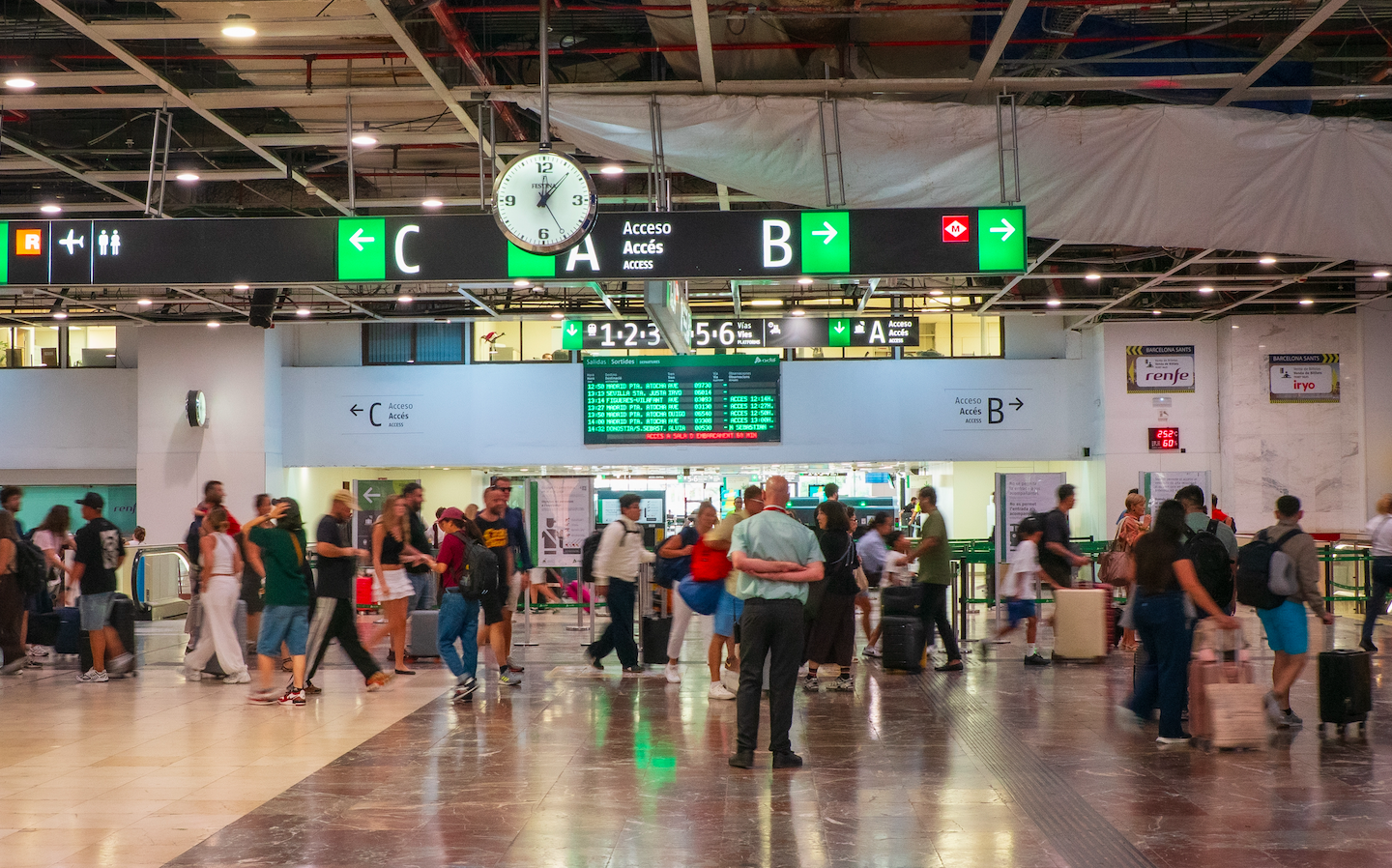
The problems began before passengers even boarded. Photo credit:John New/Shutterstock

Imagine being squeezed into an overcrowded train, knowing the service before yours had already been cancelled, when the driver comes over the loudspeaker and tells everyone: ‘Let’s pray nothing happens.’ That was the message passengers on a Rodalies service in Cataluña heard after being warned that their train was carrying too many people to continue safely. The remark has caused controversy, particularly in a country where confidence in rail travel has been badly shaken by a succession of serious accidents.

With memories of the deadly Adamuz and other recent train crashes still fresh, passengers could hardly be expected to find the driver’s words reassuring.  Renfe has now opened an internal investigation into the incident, which happened on Saturday, November 14, aboard an R11 service travelling from Barcelona-Sants towards Figueres in Girona. The company is looking into what happened and whether the correct procedures were followed.

Passengers left packed into an overcrowded train

The problems began before passengers even boarded. The 19:16 service had been cancelled, leaving people to squeeze onto the next train, scheduled to depart at 20:16. The resulting overcrowding became so severe that the driver stopped at Sant Andreu station in Barcelona and told passengers the train could not continue with so many people on board.

He asked those travelling to certain stops to get off and wait for an alternative R2 Nord service. However, almost nobody took up the suggestion, leaving the driver with a difficult situation and passengers still waiting to reach their destinations. 

Why the comment has caused such anger

The driver’s final announcement was particularly ill-judged given the atmosphere surrounding rail travel in Spain. He had just told passengers that the train was too full to continue, then decided to set off again and effectively left them wondering whether they were travelling safely.

The words might have been intended ironically, or as an expression of frustration, but that is unlikely to make them sound any better to passengers who had no choice but to rely on the train. Telling people to pray that nothing happens after warning them about overcrowding is hardly the reassurance anyone wants to hear from the person responsible for their journey.

And the timing could scarcely have been worse. Spain is still dealing with the aftermath of two devastating high-speed rail disasters this year. The January 18 collision at Adamuz, Córdoba, killed 46 people, while the October 28 crash near Urda, Toledo, claimed 69 lives. Both accidents left many more people injured. With 115 people killed in those two disasters alone, public confidence has been badly shaken. For passengers who have lost relatives, know someone affected or are simply nervous about getting on a train, the driver’s remark was hardly a throwaway joke.

Renfe wants to establish what happened

Renfe has confirmed that its investigation is intended to establish exactly what happened and whether the driver followed the correct procedures. The company has not confirmed that he will face disciplinary action, nor has it publicly established whether the train was operating in breach of a specific safety limit.

The incident also comes during a difficult period for Cataluña’s Rodalies network, where widespread disruption and cancellations have left passengers facing packed services, delays and uncertainty over their journeys.  The driver may have been trying to make light of an impossible situation, but passengers who had already been forced onto an overcrowded service were entitled to expect reassurance, not a public announcement suggesting they should hope for the best.

Continue Reading

%

Spain Train Driver Sparks Outrage With ‘let’s Pray Nothing Happens’ Announcement

Published

on

spain-train-driver-sparks-outrage-with-‘let’s-pray-nothing-happens’-announcement

The problems began before passengers even boarded. Photo credit:John New/Shutterstock

Imagine being squeezed into an overcrowded train, knowing the service before yours had already been cancelled, when the driver comes over the loudspeaker and tells everyone: ‘Let’s pray nothing happens.’ That was the message passengers on a Rodalies service in Cataluña heard after being warned that their train was carrying too many people to continue safely. The remark has caused controversy, particularly in a country where confidence in rail travel has been badly shaken by a succession of serious accidents.

With memories of the deadly Adamuz and other recent train crashes still fresh, passengers could hardly be expected to find the driver’s words reassuring.  Renfe has now opened an internal investigation into the incident, which happened on Saturday, November 14, aboard an R11 service travelling from Barcelona-Sants towards Figueres in Girona. The company is looking into what happened and whether the correct procedures were followed.

Passengers left packed into an overcrowded train

The problems began before passengers even boarded. The 19:16 service had been cancelled, leaving people to squeeze onto the next train, scheduled to depart at 20:16. The resulting overcrowding became so severe that the driver stopped at Sant Andreu station in Barcelona and told passengers the train could not continue with so many people on board.

He asked those travelling to certain stops to get off and wait for an alternative R2 Nord service. However, almost nobody took up the suggestion, leaving the driver with a difficult situation and passengers still waiting to reach their destinations. 

Why the comment has caused such anger

The driver’s final announcement was particularly ill-judged given the atmosphere surrounding rail travel in Spain. He had just told passengers that the train was too full to continue, then decided to set off again and effectively left them wondering whether they were travelling safely.

The words might have been intended ironically, or as an expression of frustration, but that is unlikely to make them sound any better to passengers who had no choice but to rely on the train. Telling people to pray that nothing happens after warning them about overcrowding is hardly the reassurance anyone wants to hear from the person responsible for their journey.

And the timing could scarcely have been worse. Spain is still dealing with the aftermath of two devastating high-speed rail disasters this year. The January 18 collision at Adamuz, Córdoba, killed 46 people, while the October 28 crash near Urda, Toledo, claimed 69 lives. Both accidents left many more people injured. With 115 people killed in those two disasters alone, public confidence has been badly shaken. For passengers who have lost relatives, know someone affected or are simply nervous about getting on a train, the driver’s remark was hardly a throwaway joke.

Renfe wants to establish what happened

Renfe has confirmed that its investigation is intended to establish exactly what happened and whether the driver followed the correct procedures. The company has not confirmed that he will face disciplinary action, nor has it publicly established whether the train was operating in breach of a specific safety limit.

The incident also comes during a difficult period for Cataluña’s Rodalies network, where widespread disruption and cancellations have left passengers facing packed services, delays and uncertainty over their journeys.  The driver may have been trying to make light of an impossible situation, but passengers who had already been forced onto an overcrowded service were entitled to expect reassurance, not a public announcement suggesting they should hope for the best.

Continue Reading

Barcelona

Patrick Radden Keefe, Journalist: ‘We Live In Very Mercenary Times. Have Money? Welcome’

Published

on

patrick-radden-keefe,-journalist:-‘we-live-in-very-mercenary-times.-have-money?-welcome’

Patrick Radden Keefe is worried about the future of a free press in the United States. A renowned investigative journalist, he is widely regarded as one of the most accomplished nonfiction writers of his generation. The first time he left the country during Donald Trump’s first term, he says, he did not dare take his laptop with him for fear it might be seized when he returned through New York airport, the city where he lives.

“For me, as an American who hasn’t broken the law, to be scared to pass through my own airport because I’m worried about a secret police, a modern-day equivalent of the Stasi, is very worrisome,” he says over coffee at a restaurant in Barcelona. At The New Yorker, the prestigious magazine where he has worked for the past 20 years, they are already thinking about what to do if the Department of Justice comes through the door with a search warrant.

Radden Keefe, 50, a master of telling stories that read like novels but are in fact true accounts with meticulously verified details, made a major impact in 2019 with Say Nothing, a book that recounted the entire IRA conflict through the story of one family. He was in Barcelona to take part in the Biennial of Thought and to present his new book, London Falling: A Mysterious Death in a Gilded City and a Family’s Search for Truth, the story of a young impostor, dazzled by the power of money, who becomes trapped in a spiral of lies and finds himself surrounded by mobsters in a London steeped in corruption.

Question. Your new book explores a London shaped by offshore wealth and opaque corporate structures that are difficult to trace. What did you discover about the city during your research, and to what extent are politicians and public institutions responsible for allowing all of this to flourish?

Answer. In the book, there is a quote from Boris Johnson, from when he was the mayor of London, saying London is to the billionaire as the jungles of Sumatra are to the orangutan. There were schools actively recruiting the children of Russian oligarchs, cultural institutions happy to take their money, and real-estate agents eager to cater to them. We live in very mercenary times. Have money? Welcome. Are you a criminal? We won’t ask questions. And I think, in a way, this is the story of our century: if you have enough money, it can be used to justify a multitude of sins.

Q. We are facing a severe housing crisis. Your book mentions the luxurious apartments that stand empty. What are the social consequences of a real-estate market increasingly shaped by global wealth and less responsive to the needs of local residents?

A. There used to be the idea that if you put in the work, you would eventually be able to buy a home. Many young people today are thinking about the short term; life is like a casino, I have to get rich quick. The person who spends years working honestly and saving a bit each month is a sucker, because they no longer receive the reward they once expected at the end of the road. And what happens then? That is one reason for the rise of cryptocurrencies and gambling among young people. They look for shortcuts to get rich quick. And all of this has to do with housing. This is the downstream consequence of a housing market in which the next generation is frozen out.

Q. In an essay you wrote for the Centre de Cultura Contemporània de Barcelona (CCCB), Fragile Truths, you said that you wanted to work for The New Yorker because it was a place where “objective truth was a thing, it existed and it could be discovered through rigorous reporting, and explained through artful prose.” Do we need truth?

A. Yes. I think truth exists, science exists, facts exist. We live in an era in which everybody’s kind of living in their own little virtual reality, with social media and algorithms — there’s no longer a monoculture. That makes it difficult for many people to see that truth exists. It is essential that we acknowledge truth as a philosophical matter. And for journalists, truth is a process: you work toward an objective and must impose a rigorous method on yourself. For the last 20 years, we have heard that the big legacy media are in decline. I think there is now an opportunity for them, because we live in a time when people don’t trust what they see on their screens. We are swimming in an informational sewer. Having a place to turn to when you want to know what is true and what is not is essential for democracy. And for our sanity.

Q. In many countries, including Spain, studies show trust in legacy media has fallen. What mistakes were made that led people to lose confidence in the press?

A. I wouldn’t lay too much blame on the legacy media. Some opportunistic politicians found that it’s helpful to demonize the press. Donald Trump is a historically consequential figure. He is incredibly influential. He does certain things and their effects spread first through my country and then around the world. And when you have a phrase like “fake news…” —

Q. Or alternative facts…

A. Exactly. He says: don’t trust the press. And once you introduce that little drop of poison, that small dose of cyanide into the system, you break people’s trust. Social media accelerates that process. I think there is now an opportunity because most people, when they look at their phones, trust nothing they see. We have come to accept the idea that there are no experts, there is no science, you can’t trust anything. There is a kind of madness in that. I don’t think any of us want to live in a world like that.

Q. What do you make of the growing use of artificial intelligence by writers? The issue raises a host of debates, one of them being where the line lies between assistance and authorship…

A. I’m not a Luddite; I am not anti-AI. I think all technology is a tool —it’s a question of how you use it. I use it for very specific things. It is very helpful for translation. But you must be very careful when using it for research, because it hallucinates and makes things up. For me, the issue is simple: I don’t let it touch my writing. Any writer who does is a fool. The best way to become obsolete because of AI is to let AI write for you. What I say to young journalists is that if you’re doing your job in a way that AI could replace you, then you’re doing it badly and you probably will be replaced.

Sign up for our weekly newsletter to get more English-language news coverage from EL PAÍS USA Edition

Continue Reading

Trending

Copyright © 2017 Spanish Property & News