Connect with us

%

Spain’s €17bn Electricity Grid Overhaul Aims To Unblock Housing, Factories And Major Investment

Published

on

spain’s-e17bn-electricity-grid-overhaul-aims-to-unblock-housing,-factories-and-major-investment

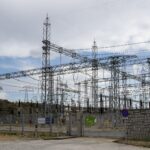
The proposal includes 19 new electricity substation sites. Photo credit: DFLC – Multmedia Designer/Shutterstock

The shortage of electricity connections has become another obstacle for Spain’s housing market, with new developments, factories and major investment projects competing for space on an already overstretched network. Now the Government is increasing the capacity it plans to make available to the autonomous communities, adding almost 20 gigawatts to its original proposal in a move that could unlock projects worth billions of euros.

The revised plan will make 47.3 gigawatts of additional connection capacity available for new demand by 2030, compared with the original 27.7 GW proposal presented in September 2025. The increase follows demands from regional governments, which have warned that insufficient access to the electricity network is holding back housing construction, industrial expansion and economic development.

Madrid, Aragón and Andalucía receive the biggest allocations

The investment required to deliver the expansion has also risen to more than €17 billion, €3.4 billion above the initial proposal. The number of connection points is set to increase by 52 per cent to 300, giving major electricity users more opportunities to connect to the national transmission network.

The distribution gives Madrid the largest additional allocation, with 6.5 GW, followed by Aragón with 6 GW and Andalucía with 5 GW. Castilla-La Mancha will receive 4.1 GW, while the Comunitat Valenciana has been allocated 3.8 GW. The increases reflect the different projects each region wants to attract. Madrid has pressed for more capacity to supply new housing developments in the north and south of the region, as well as planned data centres.

Andalucía, meanwhile, has asked the ministry to address what it considers a shortfall in its electricity network. La Rioja and the Balearic Islands will not receive additional demand connection capacity under the revised allocation, although their networks will still benefit from improvements to electricity transmission.

New homes, factories and green hydrogen projects

Access to electricity has become a major consideration for developers planning new housing, particularly in areas where existing networks cannot accommodate additional demand. Without an available connection, projects can struggle to progress even when land and planning permissions are in place. The revised plan identifies housing as a priority in Madrid, Andalucía, Catalonia, the Canary Islands, the Balearic Islands, Murcia, the Comunitat Valenciana and Castilla y León. More capacity is also earmarked for industrial development in the Basque Country, Cataluña, Galicia, Extremadura, Navarra, Murcia and the Comunitat Valenciana.

Data centres are included in the plans for Aragón and Madrid, while the availability of electricity for green hydrogen production is a priority in Andalucía, Castilla y León, Murcia, Cantabria, the Basque Country and Galicia. Rail electrification and cleaner port operations also feature in the proposals for several regions.

Andalucía provides an example of how the additional capacity could be used. Its allocation includes 5 GW for new electricity demand, with the regional proposal prioritising industry, including hydrogen production. According to the ministry, 70 per cent of the demand covered by its revised proposal relates to industrial projects, with the remainder covering housing, port decarbonisation and railway electrification.

A €17 billion investment with a long way to go

The infrastructure needed to support that expansion is substantial. In Andalucía alone, the proposal includes 19 new electricity substation sites, 1,283 kilometres of new power lines and improvements to another 651 kilometres of existing lines. The region is also expected to receive more than 8 GW of additional access capacity for renewable generation, alongside 1 GW for energy storage. Across Spain, the revised programme includes 193 electricity substations, 6,706 kilometres of new transmission lines and the upgrading of 8,164 kilometres of existing network.

The number of connection positions available to serve new demand through distribution networks will rise to 300, while positions for direct industrial consumption on the transmission network will reach 162. The plan follows an examination of 2,566 objections submitted by regional governments, businesses and other interested parties. The changes have increased the proposed investment from €13.6 billion to more than €17 billion, making it the largest electricity network planning programme in Spain’s history, according to the ministry.

When will the new electricity capacity become available?

However, announcing additional capacity does not mean every proposed home, factory or data centre will automatically receive an electricity connection. Red Eléctrica must still deliver the infrastructure, and developers must secure the necessary access permissions. Some projects have already experienced delays lasting up to 20 years, a problem the Government has previously criticised the network operator over.

The regional governments have also questioned the speed of the latest consultation process, with several councillors expressing concerns about the rushed meetings used to finalise the allocations. The ministry now wants to complete the remaining parliamentary step before taking the plan to the Council of Ministers.

Environment Minister Sara Aagesen is due to present the revised proposals to the Congressional Permanent Deputation on November 12. This will allow the Government to proceed with approval before the November 29 general election, after which it will enter caretaker status. For communities waiting for new homes, industrial investment and employment opportunities, the additional capacity could remove one of the obstacles holding projects back. But the real test will be whether the promised investment translates into functioning infrastructure and connections on the ground, rather than another round of plans waiting to be delivered.

%

Torremolinos At Major Annual Dog Event

Published

on

torremolinos-at-major-annual-dog-event

Dogs of all shapes and sizes will be fulfilling dog lovers’ dreams on the Costa del Sol this Saturday and Sunday, with the return of the National and International Dog Show in Torremolinos. If last year is anything to go by, well over a thousand beautifully groomed canines will head to the town for one of Spain’s most respected dog shows, and to make it even better, it’s absolutely free.

When and where to go

Organised by the Costa del Sol Canine Society (Sociedad Canina Costa del Sol), the 57th National Dog Show and 39th International Dog Show takes place on November 14 and 15 at the Palacio de Congresos de Torremolinos. Doors open bright and early, from 8am to 6.30pm on both days, and admission costs nothing. Families, first-time visitors and seasoned dog show fans are all welcome.

Big crowds expected again

Last year’s event counted 1,300 dogs of more than 200 breeds, and the 2024 edition pulled in more than 12,000 visitors, so arriving early is sensible if you want a good spot by the rings.

Judges will weigh up how closely each dog matches its breed standard, as well as how well it can do the job it was bred for. Every breed has top honours on offer: the CAC and CACIB, two certificates that count towards Spanish and international championship titles. Those titles are recognised by the Real Sociedad Canina de Espana (Spain’s Royal Canine Society) and the FCI, the world canine federation that oversees pedigree dog shows.

Special breed contests will be held for Poodles and Dobermans. The Huella de Oro, or Golden Paw Print, will crown a champion of champions. Grand Finals and Best in Show come with specialist commentators on hand, so the action is easy to follow even if you have never watched a dog show before.

Young handlers and star performers

Youngsters get their moment too. The Junior Handler contest, where young people present their dogs in the ring, doubles as a qualifier for the Spanish national league.

Live demonstrations will fill the gaps between judging sessions in the central ring, so you will never be bored. Spain’s state security forces will bring their K-9 unit to demonstrate obedience and detection skills, and visitors will see a guide dog for blind people at work. A water rescue display with Spanish Water Dogs will take place in an outdoor pool.

Last year, police dogs including German Shepherds and Rottweilers drew some of the biggest applause. Torremolinos police officer Alvaro Diaz told reporters that the town’s canine unit is the oldest in any local police force in Spain, which makes it a source of real local pride.

Grooming, glamour and a famous winner

Behind the scenes, the grooming area is a treat in itself. In 2025, groomers explained how vital regular brushing is for long-haired breeds such as the Afghan Hound, while Poodles were being primped for the ring. Society president Manuel Ramirez said the show celebrates the deep bond between owners and their pets, and the top prize last year went to an Irish Wolfhound called Keith, who was guided by handler David Osorio.

A diploma for your own pet

Anyone who brings a four-legged friend can try the Social Dog test at no charge. Dogs that take part receive a diploma and a tag, which makes a lovely souvenir for proud owners.

Check the Sociedad Canina Costa del Sol website or social media pages for the latest timetable, and make sure your phone is fully charged so you can photograph plenty of gorgeous fluffy faces.

Continue Reading

%

Storm Warning: Red Alerts, Torrential Rain

Published

on

storm-warning:-red-alerts,-torrential-rain

Red alerts for rain followed by strongest storm of year. Credit: Rahul D’silva – Shutterstock

Western Spain is bracing for several days of potentially dangerous weather, with the State Meteorological Agency (AEMET) warning of torrential rainfall, powerful winds and dangerous sea conditions as two major Atlantic weather systems affect the country.

A rare red weather alert has been issued for northern Caceres and southern Avila on Tuesday, November 10, with rainfall of up to 120mm possible in just 12 hours. The warning comes as Storm Bruna continues to affect the Iberian Peninsula and a second powerful system, subtropical Storm Charles, approaches from the Atlantic.

⚠️ Tiempo adverso por la borrasca Bruna el martes.

Norte de Cáceres y sur de Ávila: lluvias muy abundantes. Posibles inundaciones y aumento de caudales en ríos.

Islas canarias más montañosas, rachas de viento muy fuertes que pueden derribar árboles y objetos en zonas elevadas. https://t.co/q7SQjetbC4

— AEMET (@AEMET_Esp) November 9, 2026

Tuesday’s most severe rainfall is expected to affect northern Caceres and southern Avila, but attention is increasingly turning to Wednesday, November 11. This is when Storm Charles is forecast to bring a much wider spell of heavy rain and powerful winds across western and southern Spain.

Red alert as Extremadura faces exceptional rainfall

Última HORA!!
La Agencia Estatal de Meteorología emite un AVISO ESPECIAL debido al impacto que va a generar la Borrasca CHARLES durante el miércoles.
El aviso es tan largo que voy a destacaros lo que pone de nuestra comunidad. 🌀🌀🌀🌀🌀🌀🌧️🌧️🌧️🌧️☔☔🌬️🌬️🌬️🍃😱😱 https://t.co/aS1z53o0Dw

— Meteo Málaga (@ivan_chamizo) November 9, 2026

Northern Caceres is expected to experience some of the heaviest rainfall on Tuesday, with AEMET warning that as much as 120mm could fall in 12 hours. Rainfall rates could reach 30mm in a single hour. The red alert, which indicates extreme danger, runs from 9am until 11.59pm. Southern Avila faces a similar warning.

The regional government of Extremadura has already announced that schools across northern Caceres will close on Tuesday and activated its special flood emergency plan. Residents are being warned about the possibility of flash flooding and rapidly rising rivers and streams.

The western half of the Sistema Central mountain range is particularly vulnerable, with rainfall totals potentially exceeding 120-150mm in some locations on Tuesday. Over the full weather episode, some areas could receive more than 300mm.

Storm Charles brings another wave of severe weather

Conditions could become even more unsettled on Wednesday, November 11, when Storm Charles is expected to reach the Iberian Peninsula, probably entering through Portugal.

It’s official. Our unpredictable storm has been named “Charles” by the IPMA, and despite lingering uncertainty on the extent of impacts across the country, the overall risk of significant rainfall and strong winds is increasing. https://t.co/uEdXfMGvlr

— Weather Watcher (@WXWatcher07) November 9, 2026

The subtropical-origin depression is carrying a mass of warm, moisture-laden air from tropical latitudes. Its interaction with the existing weather system is expected to produce widespread rainfall, with particularly heavy and persistent downpours across western and southern Spain.

AEMET forecasts that 40 to 60mm of rain could fall across parts of western, southern and central Spain on Wednesday. Some mountainous areas could receive considerably more. Particular concern surrounds the Serrania de Ronda, Grazalema, Sierra Nevada and other mountain ranges in Malaga Province, where rainfall could approach 100mm during the day. The precise distribution of the heaviest downpours remains uncertain as Charles approaches.

Western Andalucia, Extremadura and parts of Castilla y Leon are also expected to experience difficult conditions. The developing situation follows earlier warnings of heavy rain across Spain, when Storm Bruna began bringing persistent rainfall to western parts of the country.

Winds of more than 100km/h and dangerous seas

AEMET warns that winds will strengthen considerably as Charles approaches, with gusts exceeding 90-100km/h possible across exposed areas of western and southwestern Spain. Lower-lying parts of Andalucia, particularly close to the coast, could also experience exceptionally strong gusts. The Canary Islands face an even greater threat in exposed mountainous locations, where gusts could exceed 130km/h, particularly in La Palma and Tenerife.

Some lower-lying areas of Andalucia, particularly close to the coast, could also experience exceptionally strong gusts. The Gulf of Cadiz is expected to experience increasingly dangerous sea conditions, with combined waves potentially reaching five metres by Wednesday evening. Western Galicia could also experience waves of four to five metres.

The Canary Islands will feel the effects earlier, with particularly strong winds expected in exposed areas of La Palma and Tenerife. Gusts could exceed 130km/h in some mountainous locations.

Spain’s Civil Protection authorities have issued a wider warning about the combined effects of Storms Bruna and Charles, including flooding, rising rivers, landslides and damage caused by powerful winds.

Conditions are hoped to gradually improve on Thursday

The weather picture will be different further east. Much of eastern Spain and the Balearic Islands are expected to escape the heaviest rainfall on Tuesday and Wednesday, although strong winds could affect eastern parts of the country and the islands on Thursday as the weather system moves away.

AEMET expects the worst of the weather to begin easing on Thursday as Charles moves northeastwards and gradually loses intensity. However, locally heavy and persistent showers could continue in parts of northern Spain, while powerful gusts may shift towards central and eastern areas.

The agency stresses that the precise route of Charles remains uncertain. Even relatively small changes in its trajectory could alter which areas receive the heaviest rainfall and strongest winds.

Residents, holidaymakers and anyone planning to travel through western Spain are being advised to follow AEMET’s latest weather warnings and instructions from local authorities.

With the ground already receiving substantial rainfall from Bruna, the arrival of Charles raises further concerns about flooding, rising rivers, landslides and damage caused by powerful winds.

Continue Reading

%

Estepona Padron Drive: Saturday Opening Hours Help Expats

Published

on

estepona-padron-drive:-saturday-opening-hours-help-expats

Estepona town hall. Credit: Ayto

Estepona Town Hall has launched a campaign to encourage residents to register on the municipal padrón if they live in the area but are not officially registered (and there are quite a few), warning that being on the register can also be an important step towards voting in next May’s local elections.

The council estimates that around 20,000 people living in Estepona are missing from its municipal register, compared with approximately 85,000 residents who are registered there at present.

Easier access to officially register

To make registration easier, the town hall will open on three Saturdays in November (November 14, 21 and 28) between 10am and 2pm. Residents will be able to complete the process without making an appointment.

Appointments will no longer be compulsory on weekdays. People can either book a time or attend during public opening hours and wait to be seen. Registration is also available through the council’s online electronic office.

Get your vote registered for the local elections

The campaign has particular relevance for foreign residents ahead of the local elections on May 23, 2027. However, being on the padrón does not automatically give non-Spanish nationals the right to vote: eligible residents must also complete the relevant electoral registration procedure.

Citizens of other EU countries who have not previously declared their intention to vote in Spanish local elections must do so by December 30, 2026. British residents can vote under the reciprocal agreement between Spain and the UK, provided they meet the conditions, including at least three years of uninterrupted legal residence in Spain before applying. EWN previously explained how British expats can register to vote in Spain’s 2027 local elections.

Time is running out to register to vote

The application period for British nationals and other eligible citizens from countries with reciprocal agreements runs from December 1, 2026, to January 15, 2027. The Spanish National Statistics Institute’s official voting guidance explains the different requirements and registration deadlines.

Estepona Town Hall says its campaign is providing information to foreign residents about the requirements and deadlines for exercising their voting rights. The issue has also been covered in EWN’s report on foreign residents being encouraged to register for the 2027 elections.

Residents can find registration forms and voting information on the council’s website or contact the town hall on 952 809 000.

Continue Reading

Trending

Copyright © 2017 Spanish Property & News