Connect with us

%

Spain’s Wildfire Toll Revealed As Almost 300,000 Hectares Go Up In Flames

Published

on

spain’s-wildfire-toll-revealed-as-almost-300,000-hectares-go-up-in-flames

Among the tragedies was the fire at Los Gallardos in Almería. Photo credit: ataurrahmanstudio/Shutterstock

As the danger from wildfires begins to wane in Spain, I think it’s safe to say that, looking back, this has been a particularly horrid year for fires. From the devastating blazes that tore through huge areas of the country during the summer to the tragic loss of life, the scale of what has happened is only becoming clearer as the figures come in. Spain has now recorded 296,815 hectares of land burned between January 1 and September 16, according to the European Forest Fire Information System (EFFIS), part of the EU’s Copernicus programme.

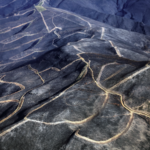
That means Spain accounts for 44.4 per cent of all the land burned by wildfires across the European Union this year.  For people living in Spain, the number is difficult to picture. Nearly 300,000 hectares is an area so vast that it goes well beyond individual fires or isolated rural communities. It represents forests, scrubland, farmland and countryside that have been transformed by flames in a single year.

Almost half of the EU total

Spain is not actually the country that has recorded the most individual fires. Italy has had 605, compared with Spain’s 446, while France has recorded 364. What sets Spain apart is the sheer amount of land those fires have destroyed.  Across the EU, 668,035 hectares had burned by September 16. Spain’s 296,815 hectares therefore account for almost half of the European total.The figures also show just how concentrated some of this year’s destruction has been.

The worst period came during July, when huge fires swept through several parts of Spain. By July 5, the country had already recorded 50,750 hectares burned, more than twice the area recorded by the same date in 2025. Among the tragedies was the fire at Los Gallardos in Almería, which claimed 15 lives in total. Later that month, fires affecting Madrid, Ávila and Toledo burned more than 77,000 hectares between them. 

A terrible year, but not worse than 2025

There is an important comparison to make when looking at this year’s numbers. Spain has actually burned less land so far in 2026 than it had at the same point last year. On September 2, Copernicus recorded 295,720 hectares burned in Spain, compared with 380,877 hectares on the same date in 2025.  That difference continued to show in the latest figures. Only 973 hectares were added to Spain’s total between September 2 and September 16, with 313 of those hectares recorded since September 9.  

But that does little to make this year’s figure look reassuring, the 296,815 hectares already burned are more than three times Spain’s 2006-2025 annual average of 87,212.8 hectares. And 2025 itself ended with 393,079 hectares burned, making it the worst year for burned land in Spain since 1994.  So while 2026 is currently below last year’s extraordinary total, it has still been an exceptionally destructive fire season.

The damage will last far longer than the fires

For residents in areas affected by the blazes, the end of the immediate danger does not mean everything simply goes back to normal. People who were evacuated have had to return to homes surrounded by burned countryside. Rural businesses have faced disruption, while farmers have lost land, crops, grazing areas and, in some cases, livestock. Roads and access routes can also be affected by fires, while landscapes that residents and visitors know well can be changed almost overnight. There is also the longer process of dealing with the land left behind.

A blackened hillside may look empty immediately after a fire, but what happens next depends on the severity of the blaze, the vegetation that was there before and the weather that follows. Heavy rain can create another problem on burned slopes, where vegetation that would normally help hold the soil in place has disappeared. That makes the aftermath particularly important for rural parts of Spain, where residents can spend months or years living alongside the consequences of a major fire.

Spain still has fires to watch

The latest Copernicus figures show that the pace of new land being burned has slowed considerably, but the wildfire season is not something that can simply be written off as soon as the worst summer temperatures pass. There were still fires being dealt with in Spain this week. In Valencia, the Tuéjar fire was stabilised after burning around 835 hectares, while authorities were investigating its origin. 

In Huelva, the Alcolea de Alosno fire was brought under control on September 16, with firefighters and other emergency personnel remaining in the area to deal with the aftermath.  For now, though, the headline figure remains 296,815 hectares. Spain has suffered fewer fires than Italy this year, and less burned land than it had at the same point in 2025. Even so, almost three hundred thousand hectares have already gone up in flames, accounting for 44.4 per cent of all the land burned across the EU.

%

The Strange New Safety System That Could Change The Way Passenger Planes Survive Crashes

Published

on

the-strange-new-safety-system-that-could-change-the-way-passenger-planes-survive-crashes

The project was developed following renewed attention to aircraft crash survivability. Photo credit: AI Generated

If you are sitting on a plane thousands of metres above the ground, there are probably a few things you would rather not think about. Engine failure is one. A crash is another. And the idea of your entire aircraft suddenly being wrapped in a gigantic inflatable cushion probably belongs somewhere near the bottom of the list. But two engineers in Dubai have been thinking about exactly that.

Their idea, called Project REBIRTH, would surround an aircraft with enormous external airbags if an onboard system decided a crash was unavoidable. It sounds like something from a very strange aviation-themed cartoon, but the concept tackles a serious question: if a crash cannot be prevented, could technology give passengers a better chance of surviving it?

A giant airbag for an entire aircraft

Project REBIRTH was developed by Eshel Wasim and Dharsan Srinivasan at BITS Pilani’s Dubai campus and submitted to the 2025 James Dyson Award. It is an AI-powered crash-survival concept rather than a system currently being installed on passenger aircraft. The proposed system would monitor information including an aircraft’s speed, altitude, direction, engine condition and other flight data.  If it determined that a crash was unavoidable while the aircraft was below around 3,000 feet, the airbags would be triggered automatically. And these are not the little airbags found in a car.

The design places huge inflatable structures around the front, underside and rear of the aircraft. The team proposes that they could deploy in less than two seconds, creating a protective cushion around the fuselage before impact. The system would also attempt to slow the aircraft before it reaches the ground. Reverse thrust could be used where possible, while gas thrusters are proposed as an alternative if the engines are no longer functioning.

There is even a clever liquid involved

The giant airbags are only one part of the proposal, project REBIRTH also includes non-Newtonian fluids around the cabin and seats. These unusual materials can change their behaviour when force is applied, with the designers proposing them as another way of absorbing energy during a crash. Then there is the rescue side.

The proposed aircraft would have a bright orange exterior, GPS equipment, infrared beacons and emergency lighting to make it easier for rescuers to locate after an accident. So, essentially, the plan is to make the aircraft inflatable, impact-resistant and considerably easier to find afterwards.

Could this actually work?

This is where the headline needs a little reality check. Project REBIRTH is not currently protecting passengers on commercial flights. It remains a concept requiring extensive development and testing before anything resembling it could be considered for real-world aviation. The designers have used computer simulations and developed a small-scale prototype. Their plans include larger prototypes, wind-tunnel testing and crash-sled experiments to see whether the proposed technology can cope with the forces involved. There are also some enormous practical problems.

Any system carried aboard a commercial aircraft has to justify its weight, space and complexity. A giant airbag system would need to be extremely reliable, deploy at exactly the right moment and avoid creating new dangers during an emergency. Then there is the question of whether the airbags could actually cushion an aircraft travelling at high speed without simply becoming another part of the wreckage. Those are questions that computer simulations alone cannot answer.

An idea born from a real tragedy

The project was developed following renewed attention to aircraft crash survivability after the 2025 Air India crash in Ahmedabad, which killed 260 people. The designers have said the tragedy prompted them to look at whether aircraft could be designed to offer passengers additional protection when an accident could no longer be avoided and that is the interesting part of the idea. Modern aviation puts enormous effort into preventing accidents, detecting mechanical problems and keeping aircraft in the air.

Project REBIRTH approaches the problem from another direction: what if everything has already gone wrong? For now, your next flight from Spain will still involve a perfectly ordinary aircraft, conventional safety systems and a rather less exciting-looking fuselage. There will be no enormous inflatable cushion waiting underneath it. But if the Dubai engineers can turn their bizarre-sounding idea into something that survives serious testing, the humble aircraft airbag could one day become a very different kind of aviation safety device.

Continue Reading

%

Cocaine Bricks Stamped With Luxury Watch Logo Expose €50m Costa Del Sol Empire

Published

on

cocaine-bricks-stamped-with-luxury-watch-logo-expose-e50m-costa-del-sol-empire

Cocaine packages stacked inside a seized vehicle during the Costa del Sol raids. Credit: Policía Nacional / X

Police cutting open the cocaine found it stamped with a Swiss watchmaker’s logo, one flourish in a network that had been hiding behind Marbella’s showroom cars and hillside mansions. The €50 million operation then used those same cars to run convoys all over Spain.

Cocaine bricks stamped with a luxury watch logo

Officers cutting into the seized packages found a stamp pressed into the cocaine itself: the logo of Vacheron Constantin, the Swiss watchmaker whose timepieces sell for tens of thousands of euros. Police said it was a branding trick used by producers to mark which shipment a batch belonged to. It fit a network that dealt almost entirely in appearances. The Policía Nacional has dismantled a family-run cocaine operation that used the Costa del Sol’s luxury car trade, and the image that comes with it, to move drugs worth an estimated €50 million. 

Fifteen arrested and 2,700 kilos of cocaine seized

Fifteen people have been detained and 12 have been sent to prison while the case continues, according to the Policía Nacional. Officers seized more than 2,700 kilos of cocaine in total, alongside 800 grams of tusi, a pink synthetic drug mixture increasingly common on the Spanish party scene.

The arrests came in two main waves. Four simultaneous raids on April 10 targeted three homes and a workshop around Málaga, recovering 1,434 kilos of cocaine, while a separate raid on a villa in Sant Just Desvern, near Barcelona, turned up a further 1,351 kilos that had been stored there. A second wave of raids in June, focused on Marbella and Estepona, picked up more suspects working further down the chain, with additional arrests made over the summer through European arrest warrants.

How the Costa del Sol became a hidden ‘nursery’ for the drugs

Investigators said the cocaine arrived in Spain from Colombia through the port of Algeciras. From there it was driven to safe houses and workshops around Málaga, Estepona, Marbella and Churriana, which the organisation used purely to store the drugs before moving them on.

Investigators have described the role played by these Costa del Sol properties as a ‘guardería’ (Spanish for nursery), reflecting how the drugs were minded and kept safe rather than sold locally. The towns used, Estepona, Marbella and Churriana among them, are some of the most popular on the coast with British and other foreign residents, though nothing in the investigation suggests the drugs were intended for local distribution. 

Barcelona worked the same way. The villa in Sant Just Desvern held more than a tonne of cocaine and nothing else, investigators found, its sole function to keep the shipment out of sight until it was ready to travel again, onward through Madrid and the Levante towards France and the rest of the European Union.

How a family network ran like a military unit

The organisation, described by investigators as Albanian in origin, had operated since at least 2016 and relied on family ties to keep outsiders out. Police said its leaders lived in mansions around Marbella, avoided phones and other traceable communication, and only ever discussed business face to face.

Some of those lower down the organisation were recruited specifically to rent flats and garages in their own names, according to investigators, giving the leadership an important amount of distance from the properties used to store the drugs. Carlos Prieto, the Spanish government’s delegate in Cataluña, said after the Barcelona arrests that organised crime would find no refuge in the region.

The investigation opened last year after Colombian authorities warned Spanish police about a shipment heading their way. What followed was months of surveillance before the raids in April finally moved in.

Showroom cars, fake jobs and 200km/h convoys

The group’s cover came from a network of businesses in the car trade, which supplied high-end vehicles registered to front men and handed out employment contracts that let members appear to hold down ordinary jobs. Police seized 29 luxury vehicles this way, with a further eight embargoed, alongside two motorcycles, two handguns, more than €13,800 in cash, jewellery, watches and frozen cryptocurrency and bank accounts. 

The fleet included high-performance Audi models used instead of trucks to move the cocaine itself, with four or five lookout vehicles escorting each convoy to watch for police. Investigators believed the organisation acted as a logistics contractor in its own right, moving shipments on behalf of other criminal groups rather than only trafficking on its own account.

Convoys like these covered vast distances, and fast. Investigators tracked one that travelled more than 2,000 kilometres in a single day, at speeds above 200 kilometres an hour, running on provisional number plates that never showed up in police databases.

The case is the latest in a summer of heavy anti-trafficking activity along the coast, after Guardia Civil raids on Gibraltar border towns and a Policía Nacional operation against a ‘go fast’ cocaine run through Mijas.

A separate summer operation across Spain saw 78 people arrested and €24 million worth of drugs seized in a combined smuggling and migrant-trafficking case. All those detained retain the presumption of innocence while the case continues through the instrucción (the pre-trial phase in which Spanish investigating judges gather evidence before deciding whether it goes to trial).

Continue Reading

%

Beluga Dies After Move To Spain

Published

on

beluga-dies-after-move-to-spain

Tragedy as third Marineland beluga dies after move to Spain

By Lottie Verrier • Published: 18 Sep 2026 • 19:48 • 2 minutes read

Beluga dies suddenly at Spain aquarium after Canada relocation

Third Marineland beluga dies weeks after move to Spain Credit: Oceanografic of Valencia

Google News

Follow Euro Weekly News on Google News

Get breaking news from Spain, travel updates, and expat stories directly on your Google News feed.

Follow on Google News

Sign up for personalised news

Subscribe to our Euro Weekly News alerts to get the latest stories into your inbox!

By signing up, you will create a Euro Weekly News account if you don’t already have one. Review our Privacy Policy for more information about our privacy practices.

Continue Reading
Advertisement
Advertisement

Spanish Real Estate Agents

Tags

Trending

Copyright © 2017 Spanish Property & News