
air travel
Plane ceiling collapses mid-flight: Are recent incidents making flying less safe?

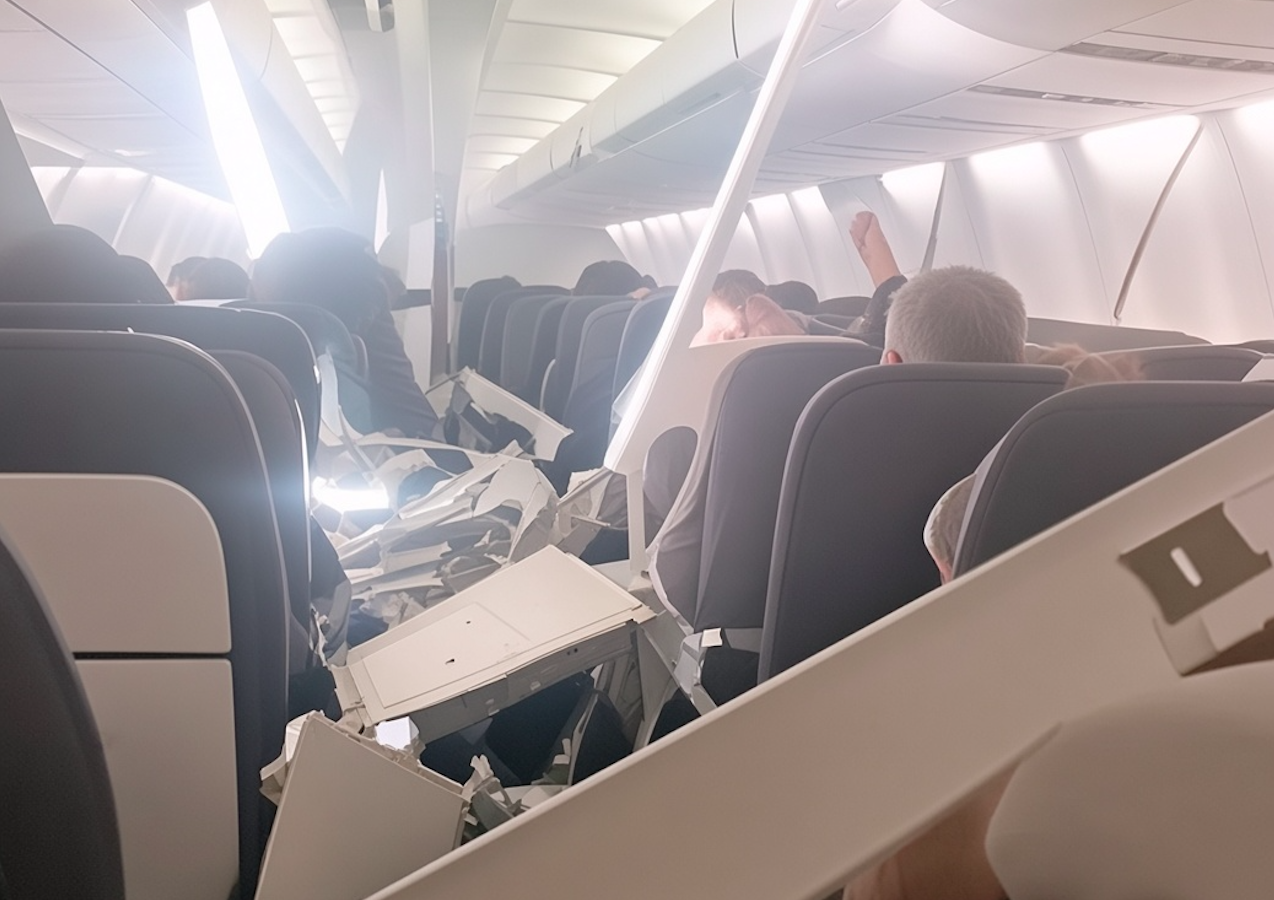
The Sepehran Airlines Boeing 737 was travelling from Mashhad to Kermanshah. Photo credit: AirportHaber on X
If you regularly fly between Spain and the UK, or rely on a plane to get you home for a few days, you probably don’t give much thought to what could go wrong once you take your seat. Most flights are so uneventful that you barely notice them: you put your bag away, fasten your seatbelt, settle in and wait for the drinks trolley.
That is why the latest footage from inside a Boeing 737 is so unsettling. Passengers have been left terrified after part of the cabin ceiling came down during a flight in Iran, forcing the aircraft to return to the airport. It is also the latest in a series of alarming aviation incidents to make headlines, from smoke-filled cabins to a passenger being pulled towards a shattered aircraft window.
Cabin ceiling collapses during flight
The Sepehran Airlines Boeing 737 was travelling from Mashhad to Kermanshah (Iran) on Tuesday, September 15, when problems developed shortly after take-off. Initial reports suggested turbulence had caused part of the cabin ceiling to collapse, although subsequent reports said the aircraft had lost a tyre and suffered severe vibrations, with possible engine damage also reported. The pilot turned the aircraft around and returned to Mashhad, where the Boeing landed safely. Footage reportedly filmed inside the cabin shows ceiling panels and fittings hanging down while passengers look on in alarm.
No injuries have been reported, and passengers were reportedly transferred to another aircraft to continue their journey. The incident is certainly frightening, but it also comes at a time when several other aviation incidents have caught the public’s attention. For anyone who spends a lot of time flying, that inevitably raises the question of whether these events are becoming more common.
Yolcu uçağında türbülans paniği: Kabin tavanı çöktü!
İran’da Meşhed–Kirmanşah seferini yapan Sepehran Airlines’a ait Boeing 737’de, türbülans sırasında kabin tavanının bir bölümünün çöktüğü ve yolcular arasında büyük panik yaşandığı bildirildi. Uçak, Meşhed’e dönerek emniyetli… pic.twitter.com/MNY36vTX45
— AirportHaber (@AirportHaber) September 15, 2026
Are more flights going wrong?
The reassuring answer is that there is currently no evidence of a general deterioration in airline safety. More than five billion passengers travelled on commercial flights during 2025, with around 35.2 million flights operated, while global safety figures show that commercial airliner accidents actually fell compared with the previous year. That does not make individual incidents any less frightening, particularly now that passengers can record what is happening and footage can be shared around the world almost immediately. A frightening event that might once have been reported briefly can now become an international news story within hours.
One of the most alarming recent examples involved a Ryanair flight travelling from Greece to Germany. An engine failure shortly after take-off caused debris to hit the aircraft and shatter a passenger window, with the man sitting beside it pulled towards the opening. His family said he was partially sucked out of the aircraft and had to be pulled back by his wife and other passengers, although Ryanair has disputed that account, saying he was pulled towards the window but did not actually leave the aircraft. The incident remains under investigation by the US National Transportation Safety Board.
Smoke and fumes force flights to divert
Smoke and fumes have also featured in several recent incidents . Two Delta flights in the United States were affected by fumes or unusual smells within days of one another, with one returning safely after fumes were detected and another diverting after passengers reported an unusual odour. Another Delta Boeing 757 had to be evacuated using emergency slides after smoke and fumes entered the aircraft, while an IndiGo flight travelling from Agartala to Delhi was diverted to Lucknow after a smoke warning in the cargo area.
All 109 people on board the IndiGo flight were reported safe, but for passengers, seeing smoke inside an aircraft or being told that a flight needs to turn around is understandably alarming. For pilots and cabin crew, however, returning to the departure airport or diverting to another airport is an important safety measure when a potential problem develops.
What should passengers do?
There is one simple precaution that passengers can take on every flight: keep the seatbelt fastened whenever you are sitting down. Turbulence remains a significant cause of injuries in commercial aviation, and someone who is unrestrained can be thrown from their seat during a sudden change in altitude or unexpected turbulence.
Passengers do not need to remain rigidly strapped into their seats throughout a flight, but keeping the belt loosely fastened while sleeping, reading or watching a film provides an extra layer of protection if the aircraft suddenly encounters turbulence.
If smoke, unusual fumes, mechanical problems or severe turbulence occur, passengers should follow the instructions of the cabin crew. A diversion or emergency landing can look frightening from inside the aircraft, but getting the plane safely onto the ground is precisely what those procedures are designed to achieve.
No need to worry…yet!
So while the latest videos may give the impression that something is constantly going wrong in the skies, the wider safety statistics tell a different story. Millions of flights operate safely every month, and the overwhelming majority of passengers reach their destinations without anything more dramatic happening than a delayed drinks trolley.
For British expats living in Spain and travelling regularly between countries, the recent incidents are therefore less a reason to fear flying and more a reminder of why basic precautions such as wearing your seatbelt and listening to the crew still matter.










Plane ceiling collapses mid-flight: Are recent incidents making flying less safe?

How To Get A Tourist Rental Licence In Andalusia (Spain) – Step-By-Step Guide 2025

Maduro Ally Alex Saab Pleads Guilty In US Money-Laundering Case

Max Verstappen works with new race engineer at Italian Grand Prix

One Critically Injured And Nine Others Hurt After Carbon Monoxide Leak Aboard Ship Docked In Barcelona Port

Prisión Sin Fianza Para La Mujer Que Apuñaló Mortalmente A Un Hombre En Un Bar De Valencia


-
 Uncategorized1 week ago
Max Verstappen works with new race engineer at Italian Grand Prix
-
 Barcelona1 week ago
One Critically Injured And Nine Others Hurt After Carbon Monoxide Leak Aboard Ship Docked In Barcelona Port
-
 Asesinatos2 weeks ago
Prisión Sin Fianza Para La Mujer Que Apuñaló Mortalmente A Un Hombre En Un Bar De Valencia
-
bravery1 week ago
10-year-old jumps from burning French farmhouse, saves two dogs and teddy
-

 Chamberi1 week ago
EXPLAINER: Inside The Row Over The Right-Wing Mayor Of Madrid’s €6m Penthouse – And Why It Could Offer A Lifeline To Pedro Sanchez
-

 ElPais2 weeks ago
A Traveling Circus For The Horror Of Gaza
-

 New Developments1 week ago
Luxury Villas For Sale, Estepona – ProjectL1
-
Latest1 week ago
Moroccan Media Slam Spanish Police Report On Ceuta Migrant Influx