Connect with us

%

The Strange New Safety System That Could Change The Way Passenger Planes Survive Crashes

Published

on

the-strange-new-safety-system-that-could-change-the-way-passenger-planes-survive-crashes

The project was developed following renewed attention to aircraft crash survivability. Photo credit: AI Generated

If you are sitting on a plane thousands of metres above the ground, there are probably a few things you would rather not think about. Engine failure is one. A crash is another. And the idea of your entire aircraft suddenly being wrapped in a gigantic inflatable cushion probably belongs somewhere near the bottom of the list. But two engineers in Dubai have been thinking about exactly that.

Their idea, called Project REBIRTH, would surround an aircraft with enormous external airbags if an onboard system decided a crash was unavoidable. It sounds like something from a very strange aviation-themed cartoon, but the concept tackles a serious question: if a crash cannot be prevented, could technology give passengers a better chance of surviving it?

A giant airbag for an entire aircraft

Project REBIRTH was developed by Eshel Wasim and Dharsan Srinivasan at BITS Pilani’s Dubai campus and submitted to the 2025 James Dyson Award. It is an AI-powered crash-survival concept rather than a system currently being installed on passenger aircraft. The proposed system would monitor information including an aircraft’s speed, altitude, direction, engine condition and other flight data.  If it determined that a crash was unavoidable while the aircraft was below around 3,000 feet, the airbags would be triggered automatically. And these are not the little airbags found in a car.

The design places huge inflatable structures around the front, underside and rear of the aircraft. The team proposes that they could deploy in less than two seconds, creating a protective cushion around the fuselage before impact. The system would also attempt to slow the aircraft before it reaches the ground. Reverse thrust could be used where possible, while gas thrusters are proposed as an alternative if the engines are no longer functioning.

There is even a clever liquid involved

The giant airbags are only one part of the proposal, project REBIRTH also includes non-Newtonian fluids around the cabin and seats. These unusual materials can change their behaviour when force is applied, with the designers proposing them as another way of absorbing energy during a crash. Then there is the rescue side.

The proposed aircraft would have a bright orange exterior, GPS equipment, infrared beacons and emergency lighting to make it easier for rescuers to locate after an accident. So, essentially, the plan is to make the aircraft inflatable, impact-resistant and considerably easier to find afterwards.

Could this actually work?

This is where the headline needs a little reality check. Project REBIRTH is not currently protecting passengers on commercial flights. It remains a concept requiring extensive development and testing before anything resembling it could be considered for real-world aviation. The designers have used computer simulations and developed a small-scale prototype. Their plans include larger prototypes, wind-tunnel testing and crash-sled experiments to see whether the proposed technology can cope with the forces involved. There are also some enormous practical problems.

Any system carried aboard a commercial aircraft has to justify its weight, space and complexity. A giant airbag system would need to be extremely reliable, deploy at exactly the right moment and avoid creating new dangers during an emergency. Then there is the question of whether the airbags could actually cushion an aircraft travelling at high speed without simply becoming another part of the wreckage. Those are questions that computer simulations alone cannot answer.

An idea born from a real tragedy

The project was developed following renewed attention to aircraft crash survivability after the 2025 Air India crash in Ahmedabad, which killed 260 people. The designers have said the tragedy prompted them to look at whether aircraft could be designed to offer passengers additional protection when an accident could no longer be avoided and that is the interesting part of the idea. Modern aviation puts enormous effort into preventing accidents, detecting mechanical problems and keeping aircraft in the air.

Project REBIRTH approaches the problem from another direction: what if everything has already gone wrong? For now, your next flight from Spain will still involve a perfectly ordinary aircraft, conventional safety systems and a rather less exciting-looking fuselage. There will be no enormous inflatable cushion waiting underneath it. But if the Dubai engineers can turn their bizarre-sounding idea into something that survives serious testing, the humble aircraft airbag could one day become a very different kind of aviation safety device.

%

Calahonda’s Footballers Fight Against Cancer

Published

on

calahonda’s-footballers-fight-against-cancer

The local community are coming together in force in Calahonda this September for a really great cause. Real Calahonda Walking Football Club have joined up with Millenium Cocktail Bar to host their annual fundraising event. Scheduled for Saturday, September 26 at 6:30pm, this wonderful gathering brings together live music and community action all in aid of the Spanish Association Against Cancer (AECC) in Malaga.

An evening full of music and taking to the microphone

Entertainment seekers and music lovers can look forward to a wide range of local vocal talent throughout the evening. Popular favourites from along the coast such as performers Mark F, Soul Survivor, and Tony Capo will take to the stage to keep the crowds singing and dancing into the night. Anyone brave enough can take the microphone during the evening for a charity karaoke session, become a star for the night for a great charity. Entry cost is just a €5 donation, not much for an evening line up of such talent.

Supporting the cause further through auctions and raffles

Organisers are requesting contributions from local businesses and individuals to maximize fundraising totals. Anything donated is gratefully recieved and will be drawn during the grand prize raffle, along with other items set to be auctioned off to the highest bidder on the night. Anyone wishing to donate items can send a message directly to the Real Calahonda Walking Football Club via their Facebook page.

Tickets can be booked online via the football club’s official social channels or purchased directly at Millenium Cocktail Bar in Calahonda. Gathering with friends for great live entertainment is a fun and easy to back life-saving medical research. All proceeds gathered through ticket sales, prize draws, and bidding wars will fund cancer research, patient care assistance, and regional prevention programs managed by the AECC.

Head along to Millenuim Cocktail bar on Saturday, September 26 and make a difference.

Continue Reading

%

Explore Spain’s 4,200-Year-Old ‘Troy Of The West’ During La Bastida’s Open Days

Published

on

explore-spain’s-4,200-year-old-‘troy-of-the-west’-during-la-bastida’s-open-days

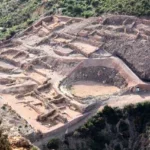
Totana’s ancient La Bastida site hosts open days this October. Photo Credit: National Geographic

History enthusiasts, local residents, and curious visitors have the extraordinary opportunity to step back in time at the beginning of October: the ancient archaeological site of La Bastida, just outside the Murcian town of Totana, is opening its gates to the public for its highly anticipated annual open days on Saturday, October 3 and Sunday, October 4.

Uncovering Europe’s ‘Troy of the West’: a weekend of history in the interior of Murcia

Dating back more than 4,200 years, La Bastida was once a dominant urban centre of the Bronze Age El Argar culture. The site is often referred to as “The Troy of the West” and is renowned among international historians and archaeologists for its remarkably advanced engineering and sophisticated fortresses. Its massive stone walls, defensive towers, and intricate town planning continue to fascinate researchers even in the modern day, especially due to the precise origins of the Argaric civilisation’s building techniques, which remain one of Europe’s greatest ancient mysteries.

Interactive workshops and guided tours

The scheduled open days will provide a rare and immersive glimpse into this fascinating prehistoric society. The mornings will feature guided walking tours that bring the ancient ruins and original stone structures to life. Visitors can discover how early inhabitants lived, farmed, and crafted tools thousands of years ago. The programme will include hands-on pottery workshops, engaging activities for children, and public access to the active archaeological laboratory where specialists analyse excavated artifacts.

Visitor information and booking details: how to register for guided tours and exploration of the site

The site will welcome visitors on both Saturday and Sunday morning from 9:00am to 12:00pm. Tour groups will be capped at 30 participants each, so interested visitors and history buffs are recommended to book their day in advance.

Booking is open through the Totana Tourist Office via telephone at T. 968 41 81 53, or by email at turismo@totana.es. Whether you are a devoted history enthusiast or simply seeking an enriching weekend excursion, La Bastida will offer an unforgettable journey into Iberian history.

Continue Reading

%

Mallorca Property Overrun By Wild Goats

Published

on

mallorca-property-overrun-by-wild-goats

Feral goats move in. Credit: @metheridge X

A Mallorca homeowner says his private estate has been invaded by a herd of wild goats which regularly drink from his swimming pool, fight with his dogs and even climb onto the roof of his house.

German property owner Alexander H., says the curious problem has been going on for at least three years at his 30,000-square-metre finca in Es Capdella, in the area of Calvia. He told Mallorca Magazin that the animals arrive almost every day, throughout both summer and winter.

Footage from cameras installed around the property has given him an idea of just how large the visiting herd can be. On one recording, he counted 44 goats at the same time.

Some of the animals have apparently become regular visitors to the swimming pool, where they drink the water and, according to the homeowner, occasionally jump in for a swim.

Roof access has also become part of their routine, with the owner joking that the goats now hold their own parties on top of his house.

Garden stripped bare by hungry herd

Damage to the property has become another headache. Alexander says the goats eat their way through vegetation and leave large amounts of droppings behind. His description of the garden is particularly striking, with the once-maintained area now described as an arid patch covered in goat excrement.

Encounters with the family’s dogs have also caused problems, while fencing the entire 30,000-square-metre property is difficult because of its size and terrain. A response from the local authorities is still awaited, according to the report published by Mallorca Magazin.

Wild goats are a Mallorca-wide problem

Residents elsewhere on the island have faced similar problems for years. In Camp de Mar and the Port d’Andratx area, herds have repeatedly come down from the hills and entered residential areas. Residents have reported goats destroying gardens, drinking from swimming pools and even getting inside properties. One report from 2021 said some homeowners had resorted to feeding the animals carrots to keep them away from their plants.

Andratx Town Hall took further action in 2023, hiring a specialist company to capture goats around Camp de Mar and other parts of the municipality. More than 100 animals were estimated to be in the Camp de Mar area at the time.

EWN has also previously reported on residents in Cala Llamp installing low-voltage electric fencing after goats caused damage to gardens and crops.

Why are so many goats roaming Mallorca?

Mallorca’s authorities distinguish between the native Mallorcan wild goat and domestic goats which have become feral. The Consell de Mallorca says feral goats account for around 80 to 90 per cent of the goat population in the island’s mountain ranges. Their high numbers can damage vegetation and threaten the native Mallorcan goat through crossbreeding.

Hot weather can also drive the animals towards populated areas in search of food and water. Mallorca introduced a ban in 2025 on feeding or deliberately attracting wild and feral goats in busy public areas, with the authorities warning that feeding can alter their behaviour and encourage them to approach people.

For the homeowner in Es Capdella, however, the issue is much closer to home. With 44 goats turning up in a single camera recording, his garden, swimming pool and roof have effectively become part of the herd’s daily territory.

Continue Reading
Advertisement
Advertisement

Spanish Real Estate Agents

Tags

Trending

Copyright © 2017 Spanish Property & News