
EES
S

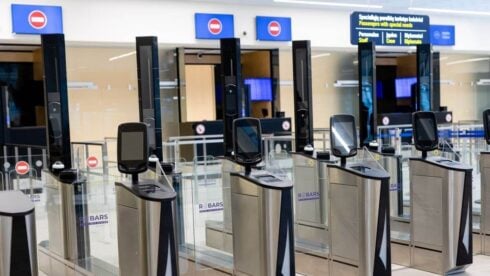












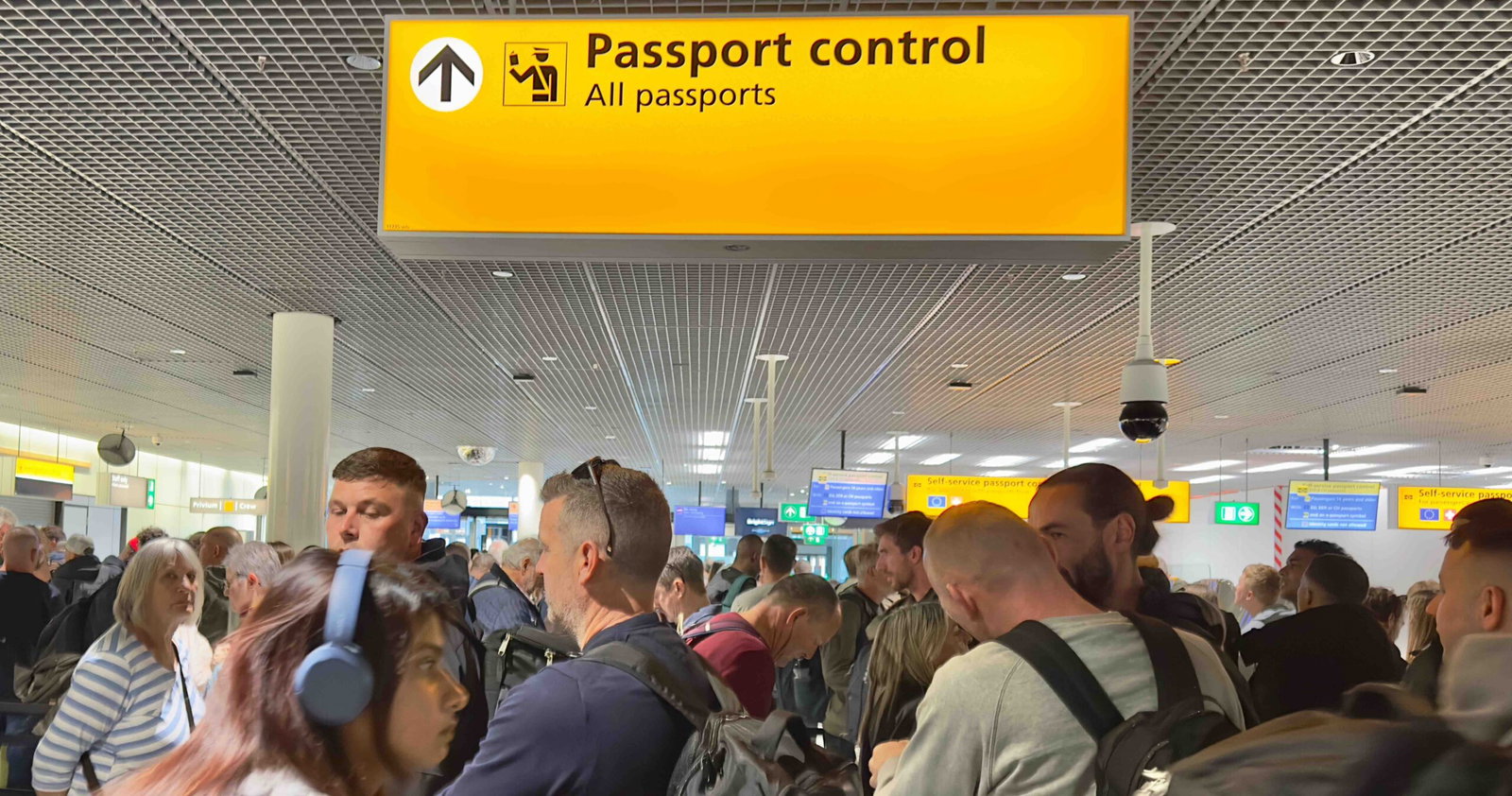
Passengers wait at passport control as Europe begins using the new EES system, replacing passport stamps with digital checks Photo Credit: Shutterstock / Nigel J Harris
Travellers arriving in Spain and across the Schengen Area will face a different experience at passport control from today.
A new system called EES is now being introduced across the European Union, replacing passport stamps with a digital record of every arrival and departure.
For visitors flying in from countries such as the United States, the United Kingdom, India, and Canada, the change will be immediate the moment they land.
What changes when you arrive in Spain
The most visible difference is the end of routine passport stamping.
Instead of receiving a stamp, your entry into Spain will be recorded electronically. Border officials will log your details into a shared system used across Schengen countries.
For first time travellers under the new system, this may also include biometric checks. You could be asked to provide fingerprints and have your photo taken at passport control.
What travellers will actually notice at the airport
For many arrivals, the process will feel slightly different from the start.
Some travellers may move through quickly, but others could experience longer waits, especially in the early stages of the rollout, with earlier reports warning of possible delays as airports adapt to the new system.
There may be new scanning points or additional instructions at border control, depending on the airport and how quickly systems are operating.
In practical terms, it is worth allowing extra time after landing, particularly during the first weeks.
Where the impact will be strongest in Spain
The busiest airports are expected to feel the change first.
Madrid, Barcelona, Malaga, Alicante, and Palma de Mallorca handle large numbers of international arrivals, making them key locations where delays or adjustments are most likely.
As staff and travellers get used to the system, processing times are expected to improve.
Does this affect travellers from the US, UK and India
If you can travel to Europe for short stays without a visa, this applies to you.
That includes visitors from the United States and the United Kingdom. Travellers from India who enter with a Schengen visa will also pass through the new system at the border.
In all cases, entries and exits will now be recorded digitally rather than stamped in a passport.
Why Europe is changing border control
The aim is to create a single, consistent system across all participating countries, as part of a wider move to modernise border control across Europe, according to the European Commission.
By recording entries and exits electronically, authorities can track how long visitors stay and identify overstays more easily.
It also removes the need for manual passport stamping and brings border checks into a more standardised system.
Is ETIAS required now
No. There is no new pre travel application required today.
A separate system called ETIAS will be introduced later, with timelines still subject to change. This will require visa exempt travellers to apply online before travelling, but it is not part of the current rollout.
For now, the only change is what happens when you arrive at the border.
What travellers should do before flying
There is nothing new to complete before your trip.
However, you should be prepared for a different arrival process.
Allow extra time at passport control
Be ready for possible fingerprint and photo checks
Follow instructions from border staff on arrival
The key change is already in place. From today, entering Spain and the rest of the Schengen area is no longer about a passport stamp. Your journey is now recorded digitally from the moment you reach the border.

S

Tourist Overcrowding Spurs New Measures In Spanish Cities

F1 star claims Lando Norris interview was designed to catch McLaren champion out

Luxury Villas For Sale, Estepona – ProjectL1

Stylish 3-Bedroom Apartment With Panoramic Sea Views – Benalmádena
Brussels warns Spain that migrants regularised under controversial scheme will be deported back to Spain if they try to move to other EU countries


-
 New Developments4 weeks ago
Luxury Villas For Sale, Estepona – ProjectL1
-
 New Developments4 weeks ago
Stylish 3-Bedroom Apartment With Panoramic Sea Views – Benalmádena
-
eu response to spain migration policy3 weeks ago
Brussels warns Spain that migrants regularised under controversial scheme will be deported back to Spain if they try to move to other EU countries
-

 %4 weeks ago
Poland Disconnects Utilities At Russian Consulate That Moscow Refuses To Hand Over
-
Costa Calida3 weeks ago
Murcia unveils monument marking 175th anniversary of Burial of the Sardine
-
Costa del Sol3 weeks ago
Easter on the Costa del Sol: a time of renewal
-
ChatGPT4 weeks ago
He used ChatGPT to sell his home – and walked away with €100,000 more than expected
-

 Uncategorized4 weeks ago
Kelly Piquet