Connect with us

%

Spanish Authorities Recall Agrado Sunscreen Over Banned Ingredient

Published

on

spanish-authorities-recall-agrado-sunscreen-over-banned-ingredient

The recall concerns batch 41997300 of Agrado crema solar SPF 50 in 100 ml tubes. Phoot credit: AEMPS

Spanish health authorities have recalled a batch of Agrado sunscreen after detecting a substance prohibited in cosmetics. The Agencia Española de Medicamentos y Productos Sanitarios (AEMPS) instructed retailers to remove the affected products and advised consumers not to use them.

The recall concerns batch 41997300 of Agrado crema solar SPF50 in 100ml tubes. Laboratory tests identified benzophenone, a chemical banned under European Union law. The AEMPS said the compound was present as an impurity rather than a deliberate additive, but at levels that could not be considered technically unavoidable. The agency emphasised that the recall is a preventive measure aimed at ensuring consumer safety, even though no adverse health incidents have been reported so far.

Detection and European context

The substance was detected through testing coordinated with other EU member states, as part of European market surveillance under the EU Cosmetic Regulation (EC) No1223/2009. This regulation prohibits certain chemicals in cosmetic products to protect users from potential health risks. Authorities confirmed that only the specified batch is affected and that other Agrado products remain on the market and have not been subject to recall.

Monitoring of cosmetic products is conducted continuously across the EU to detect prohibited substances, prevent unsafe products from reaching consumers, and ensure compliance with manufacturing standards. Benzophenone and similar compounds are specifically controlled due to concerns over potential hormonal and skin-related effects if they are absorbed in unsafe quantities.

Manufacturer and retailer response

The company responsible for marketing the product, Agrado Cosmetic Care 3000, S.L.U., has begun withdrawing remaining stock of the affected batch. Consumers who have purchased it are advised to return it to the point of sale for a refund or exchange. Retailers have also been instructed to remove the recalled products from their shelves to prevent further distribution.

Regional health authorities have been informed to ensure that local pharmacies, shops, and consumers receive guidance. The AEMPS has stressed that the recall is strictly limited to batch 41997300 and that no other batches are involved. Authorities have also asked retailers to display notices in stores to alert customers about the recalled product.

Consumer safety and guidance

Consumers in possession of the recalled sunscreen should stop using it immediately. Returning the product to the place of purchase is recommended. The AEMPS confirmed that the withdrawal is a precautionary action and that no adverse effects have been reported to date.

Authorities emphasised that the recall is part of ongoing European surveillance to ensure that cosmetic products comply with safety standards. Adherence to EU legislation prevents the presence of harmful or prohibited chemicals in everyday personal care items. Consumers are encouraged to check the lot numbers on their sunscreen and to follow official guidance when recalls are announced.

Public and regulatory context

This recall follows similar actions in Spain when cosmetic products failed to meet EU safety requirements. Authorities continue to monitor products to remove items containing prohibited substances promptly. The coordination with European partners ensures that unsafe products can be identified quickly and withdrawn from the market.

Officials reiterated that adherence to safety standards in cosmetics is mandatory, and companies found in breach of regulations may face legal and financial penalties. These measures aim to maintain public confidence in personal care products while ensuring user protection. Public information campaigns are often used to educate consumers about checking products and understanding official recall notices.

%

Spain’s 018 Accident Helpline Is Now Live. Here’s What Happens When You Call

Published

on

spain’s-018-accident-helpline-is-now-live.-here’s-what-happens-when-you-call

Being involved in a road collision abroad can be more difficult than at home. Photo credit: vladimir subbotin/Shutterstock

Starting today, April 23, the 018 road accident helpline is active in Spain as a national support service for people affected by road traffic accidents. Operated by the Dirección General de Tráfico (DGT), it provides assistance across the country to anyone involved in or impacted by a road incident.

Unlike emergency services number 112, 018 is not designed for reporting an accident as it happens. It is intended for use afterwards, when immediate danger has passed and people may need help understanding what to do next. The service is available 365 days a year, from 08:00 am to 09:00 pm, giving callers access to support throughout the day, including weekends and public holidays.

What happens when you call 018

When you dial 018, you are connected to a trained support operator rather than emergency responders. The call is handled by staff who guide the caller through the situation step by step. The conversation usually begins with basic details about the accident. This may include when and where it happened, whether emergency services were involved, and whether medical attention has already been received. 

From there, the focus shifts to the caller’s current needs. This can include emotional support if the person is distressed, disoriented or dealing with shock after the incident. The final part of the call is practical guidance. Call handlers explain what typically needs to be done after a road accident in Spain, such as how to obtain reports, what steps may be required with insurance providers, and where to seek follow-up support.

The service is also designed to be accessible to international users, with assistance available in up to 50 languages, helping non-Spanish speakers communicate their situation and understand the guidance provided. The aim is to help the caller leave the conversation with a clearer understanding of what to do next.

Who the service is for

The 018 helpline is available to anyone affected by a road traffic accident in Spain, regardless of nationality or residency status.

This includes:

  • Residents living in Spain, including foreign nationals 
  • Tourists involved in road traffic accidents 
  • Family members of injured or deceased individuals 
  • Witnesses directly affected by a serious incident 

For expats and tourists, the service can be particularly helpful when dealing with unfamiliar procedures or language barriers after an accident.

The helpline is available nationwide and can be accessed from anywhere in Spain.

What kind of help you can expect

The support offered through 018 covers several types of assistance that are commonly needed after a road accident. Callers may receive psychological support if they are dealing with shock, anxiety or emotional distress following the incident.

They may also be given basic legal orientation, helping them understand general next steps after a collision, including documentation and reporting processes.

In addition, the service can provide information on accessing medical care and rehabilitation services, as well as guidance on relevant public support options. In more serious situations, such as major injury or bereavement, family members can also be supported and directed towards appropriate services.

For foreign residents and visitors, this can help reduce uncertainty when dealing with processes they may not be familiar with.

A support service, not an emergency line

The 018 number is not an emergency service. It does not replace 112, which remains the number for urgent medical assistance, police response or fire services. If an accident is happening or there is immediate danger, 112 should always be called first.

018 is intended for use after the emergency has been resolved, when people need help understanding and managing what comes next. It is also not a substitute for formal legal advice, insurance handling or medical diagnosis. Instead, it provides general guidance and helps direct people towards the appropriate services.

People can contact the service in several ways:

  • Telephone: 018
  • WhatsApp: 645 713 823
  • Email: victimastrafico@dgt.es
  • Online contact options through official DGT channels

This range of contact methods may help travellers who do not have immediate access to a local phone line but can use mobile data or messaging apps.

Part of the accident aftermath support process

The introduction of 018 provides a single national contact point for people dealing with the aftermath of road traffic accidents in Spain. For many people, especially those unfamiliar with the system, the period after an accident can involve uncertainty around documentation, medical follow-up and administrative steps.

This service brings those queries into one place, offering structured support at a time when individuals may be under stress. In simple terms, the distinction is clear: 112 is for emergencies, while 018 is for guidance once the immediate situation has passed.

Continue Reading

%

British Woman Honoured 42 Years Later For Life-Saving Bridge

Published

on

british-woman-honoured-42-years-later-for-life-saving-bridge

The Benavista community safe due to one woman’s determination. Credit: EWN

Heroes often come in the form of people who simply refuse to look the other way. Stella Bosworth returned to Estepona on Thursday, April 23, to receive a silver plaque in honour of her unwavering determination in 1984. That year, she witnessed the lethal nature of the coastal road, the A340, now the A-7, and delivered a stern ultimatum to her boss: build a bridge or lose a manager.

Stella told her boss, developer Alan James, in no uncertain terms, “I’m going to have to resign, because I don’t want any more people being killed on that road. We’ve got to build a bridge.” Her stance provoked a movement that transformed safety on what was then one of Europe’s most dangerous stretches of tarmac. Alan James, founder of The Experience Group, took the extraordinary step of privately funding the crossing after official channels failed to act.
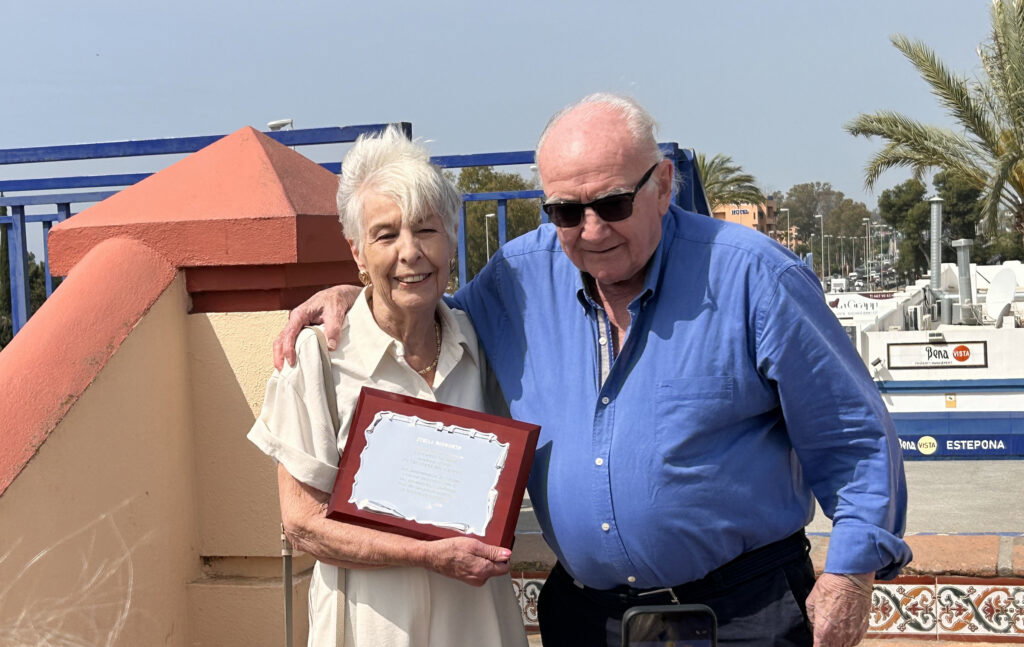
Alan James thanks Stella Bosworth.
Credit: EWN

Private funding for public safety

Alan recalled the frustration of the era during the presentation at the Benavista footbridge. “I went to Estepona town hall, but nothing. I went to the Malaga town hall, but nothing,” he explained. He decided the community could not wait any longer for bureaucrats to move, as the delays were impacting essential services and safety in the area. “We decided that it had to be done, so we paid for it and built the bridge. So, it was the determination from this lady, when she was still a slip of a lass, that saved hundreds of lives.”

Dangers are still there on the A-7

Danger remains a constant on the A-7, as evidenced by a three-car pile-up that occurred just 30 metres away, only five minutes before the ceremony started. This accident served as a grim reminder of why Bosworth’s intervention was so vital. Without her tenacity, Alan believes a footbridge “probably wouldn’t have even been thought of for another 10 years”. Scores of similar crossings now line the coast, yet this original structure remains a symbol of individual initiative and life-saving determination.

Council confirms long-awaited upgrades

Estepona councillors attended the ceremony to officially announce that extended works have been approved. Funding for ramp access is now budgeted, making sure that people with disabilities, the elderly, and parents with prams will be able to access the crossing safely. Stella Bosworth and Alan James remain an inspiration, proving that taking the first step can create a lasting, life-saving legacy for the community.

Continue Reading

%

Does St George’s Day Make You Feel Patriotic?

Published

on

does-st-george’s-day-make-you-feel-patriotic?

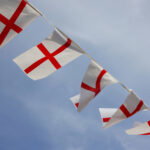
For many English expatriates living abroad, national celebrations can take on a different meaning. St George’s Day, England’s national day, often passes with relatively little fanfare compared to other countries’ patriotic events. A recent Euro Weekly News poll asked if St George’s Day inspired a sense of patriotism. While some see it as an opportunity to reconnect with their roots, others question whether a single day should carry the weight of national identity.

Some respondents expressed a strong and enduring connection to their English identity, regardless of where they now live. Alison Clarke Allen reflected this sentiment clearly: “Yes, I do! I may not live in Shepperton Surrey anymore, but it is still my home town. I moved abroad, I didn’t stop being English/British!” Similarly, David Egner shared a straightforward affirmation: “As an English immigrant, yes I do.” These perspectives suggest that distance can sometimes strengthen rather than weaken a sense of national belonging.

Others, however, take a more critical view. Marian Morgan Visockis questioned the premise altogether: “No. Should there be one day a year when you “feel patriotic”?” Caz Burnett echoed this scepticism from a broader perspective: “I’m an immigrant and I consider myself European. Never understood the “pride” of just happening to be born in a country”. Stephen Chatt Milne also emphasised the importance of adapting to life abroad: “No. I left UK over 40 years ago, still love having a British passport but have always classed whatever Country I was living in as my home. Cheers and on with the show”.

A few responses focused less on personal identity and more on how the day is marked. Stephen Cowdell commented: “St George’s day is St George’s day, I don’t need it to feel patriotic or proud of my country, it would just be nice to celebrate it better than we do, unfortunately lots of people (not POC, but other whites) appear to not like their own flag and feel that it’s somehow racist.” Mike Smith added a lighter observation: “To be fair the English seem more intent on celebrating St Patricks day than they do St Georges Day. May be that has something to do with being intent on quaffing large amounts of Guinness.”

While some expats feel a clear sense of patriotism linked to St George’s Day, many do not see it as particularly significant.

Continue Reading
Advertisement
Advertisement

Spanish Real Estate Agents

Tags

Trending

Copyright © 2017 Spanish Property & News