
European News
Sweden records one of Europe’s lowest smoking rates amid policy debate

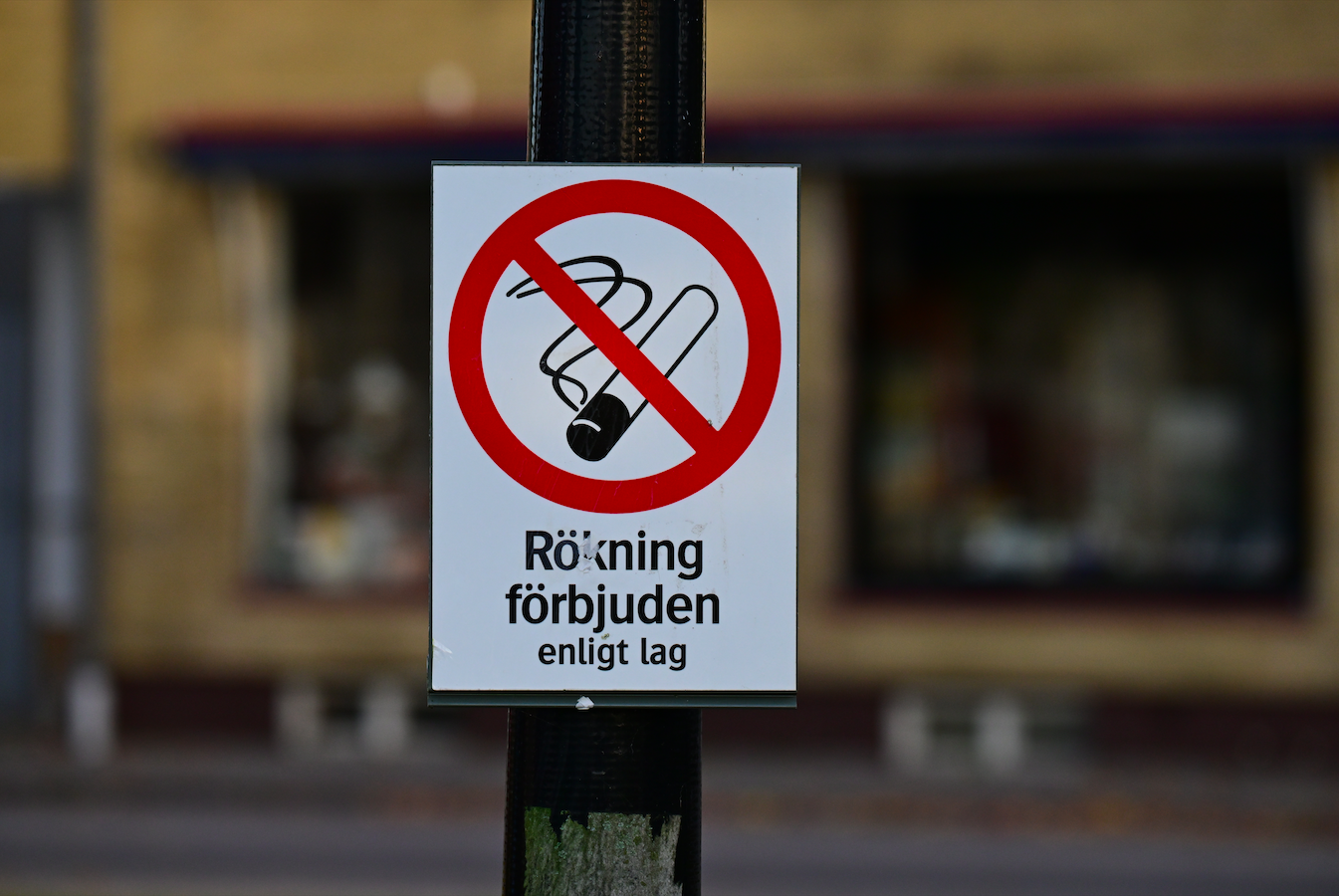
Sweden’s low smoking rate has placed it at the centre of a wider global debate. Photo credit: Woodan/Shutterstock
Sweden has reached one of the lowest smoking rates in Europe, with recent estimates placing daily cigarette use at around or below 5% of the adult population. This threshold is widely used by public health researchers to define a “smoke-free” society.
The decline has taken place over several decades and is attributed to a combination of high taxation on cigarettes, public health campaigns, and the widespread use of alternative nicotine products. Unlike many countries, Sweden has long permitted the use of oral smokeless tobacco known as snus, which has been legally available for years and is often cited as a contributing factor to lower cigarette consumption.
More recently, nicotine pouches and vaping products have also become part of the landscape. These products do not involve combustion and therefore avoid the inhalation of smoke, which is the primary source of harm in cigarette use. Public health discussions in Sweden have increasingly focused on whether these alternatives have accelerated the decline in smoking rates.
Advocacy groups highlight harm reduction approach
A number of Swedish and international tobacco harm reduction advocates have pointed to Sweden as evidence that alternative nicotine products may play a role in reducing smoking-related disease. Organisations involved in this area argue that shifting smokers away from combustible cigarettes, rather than insisting on complete nicotine abstinence, has been central to the country’s progress.
One group, Smoke Free Sweden, has been particularly vocal in promoting this interpretation. In reporting on Sweden’s smoking decline, it has criticised what it sees as cautious messaging from global health institutions. The group has argued that authorities should avoid “creating fear around what works”, referring to the use of safer nicotine alternatives as part of the country’s transition away from cigarettes.
This position reflects a broader debate within public health policy about harm reduction. Proponents argue that while nicotine is addictive, the primary health risks associated with smoking come from burning tobacco, which produces harmful chemicals inhaled into the lungs.
The World Health Organisation maintains a cautious stance
The World Health Organisation continues to recommend strong regulation of all nicotine and tobacco products. It has repeatedly emphasised that, although some alternatives may expose users to fewer toxic substances than cigarettes, they are not risk-free and may still sustain nicotine addiction.
The WHO has also expressed concern about the rapid rise in vaping and nicotine pouch use, particularly among younger people. It has called for tighter restrictions on flavours, marketing, and accessibility of these products, arguing that they may act as a gateway to nicotine dependence rather than a replacement for smoking.
In this context, Sweden’s experience has been closely observed but not formally endorsed as a model by the organisation. The WHO’s position remains focused on reducing overall nicotine use and preventing uptake among non-smokers.
A policy divide emerging in global tobacco control
Sweden’s low smoking rate has become part of a wider international discussion about the most effective way to reduce tobacco-related harm. On one side are harm reduction advocates who argue that replacing cigarettes with less harmful nicotine products should be central to policy. On the other are public health authorities who prioritise minimising all forms of nicotine consumption.
The Swedish case is frequently cited in this debate because of its unusually high adoption of smokeless nicotine products and its comparatively low smoking prevalence. However, researchers continue to caution that long-term health outcomes, particularly relating to newer products such as nicotine pouches, are still being studied.
For now, Sweden stands out in Europe as one of the countries closest to achieving a smoke-free status, while simultaneously remaining at the centre of an ongoing global disagreement about how that milestone should be defined and achieved.





In some cases, flights have been retimed rather than cancelled entirely. Photo credit: Dawid K Photography/Shutterstock
Aer Lingus has announced cancellations and timetable changes as part of its summer 2026 flight programme, affecting services between Ireland and the United Kingdom. The adjustments involve the removal and rescheduling of a number of flights across the season rather than a single fixed date of disruption.
The airline has indicated that the changes form part of planned schedule management for the summer period. This includes operational adjustments linked to fleet planning, maintenance requirements and capacity allocation. Reports indicate that more than 500 flights are affected across the airline’s summer schedule, although the exact number varies depending on whether retimed services are counted alongside cancellations.
UK airports affected by the changes
The schedule reductions affect several major UK airports that form part of Aer Lingus’s short-haul network:
- London Heathrow Airport
- Manchester Airport
- Birmingham Airport
- Edinburgh Airport
- Newcastle Airport
These airports operate regular services to Dublin and Cork, which are among Aer Lingus’s most frequently served short-haul routes. Heathrow and Manchester handle the highest volume of flights, while Birmingham, Edinburgh and Newcastle operate fewer daily departures.
As a result, passengers are being affected differently depending on route frequency, with some services being retimed and others removed from the schedule entirely.
Timing and implementation of the cuts
The changes apply across the summer 2026 operating season and are being introduced on a rolling basis. This means affected flights are being removed, rescheduled or adjusted across different dates within the summer timetable rather than from a single start point.
Passengers may see changes appear gradually in booking systems as the airline updates its schedule. Some flights remain unaffected, while others on the same route may be adjusted depending on operational requirements.
Nature of the schedule adjustments
Aer Lingus has not attributed the changes to a single disruption. Instead, the airline appears to be managing its summer network through standard operational planning. This includes aircraft rotation, maintenance scheduling, crew allocation and balancing capacity with demand.
The airline operates both short-haul European routes and long-haul transatlantic services. UK routes, particularly London Heathrow to Dublin, operate multiple times daily and form a key part of its network.
Where cancellations occur, passengers are typically rebooked onto alternative services or offered refunds in line with passenger rights regulations. Aer Lingus has stated that it aims to minimise disruption by reallocating passengers within its network where possible.
Passenger impact across UK routes
At Heathrow and Manchester, higher-frequency services provide more rebooking options for affected passengers. However, at Birmingham, Edinburgh and Newcastle, fewer daily flights can result in longer delays or alternative routing.
In some cases, flights have been retimed rather than cancelled entirely, while others have been removed from the schedule altogether. This has affected both business and leisure travellers, particularly those relying on fixed short-haul connections.
Wider aviation context
European airlines continue to manage high demand alongside operational constraints such as fleet availability and maintenance cycles. Summer schedules are particularly sensitive to these pressures due to increased passenger volumes and tight aircraft rotation planning.
Industry analysts note that even relatively small changes in fleet or crew availability can lead to knock-on cancellations across multiple airports within a network, especially on high-frequency short-haul routes such as those between the UK and Ireland.
Current situation
Aer Lingus continues to operate the majority of its UK and Ireland services during the summer 2026 period. Core routes between London Heathrow, Manchester and Dublin remain in operation, along with regional services from Birmingham, Edinburgh and Newcastle.
Passengers affected by schedule changes are being advised to check their bookings directly with the airline, as further timetable updates may continue to appear throughout the summer season.
The disruption reflects planned summer network adjustments rather than a structural reduction in UK connectivity, although short-term impacts are being felt across several airports.

El PP Propone Bajar De 1.800 A 900 Euros La Renta Para Declarar A Una Familia Vulnerable

Kevin Warsh Asegura Que No Será “un Títere” En Manos De Trump Y Defiende La Independencia De La Reserva Federal

La Cobardía De Dos Policías Durante Un Tiroteo Desata La Indignación En Ucrania


-

 New Developments3 weeks ago
Luxury Villas For Sale, Estepona – ProjectL1
-

 New Developments2 weeks ago
Stylish 3-Bedroom Apartment With Panoramic Sea Views – Benalmádena
-

 %2 weeks ago
Poland Disconnects Utilities At Russian Consulate That Moscow Refuses To Hand Over
-
eu response to spain migration policy2 weeks ago
Brussels warns Spain that migrants regularised under controversial scheme will be deported back to Spain if they try to move to other EU countries
-

 Uncategorized3 weeks ago
Lewis Hamilton goes from Karate Kid to Samurai Warrior with Kill Bill guru
-
AER Lingus3 weeks ago
High-speed internet at 35,000 feet: Aer Lingus launches Starlink Wi‑Fi
-

 Uncategorized4 weeks ago
F1 legend Martin Brundle reveals the thing he hates about living in London
-

 Uncategorized3 weeks ago
How Lewis Hamilton spent break with A-list star