Connect with us

Argentina

The 140 Minutes Of Horror In The Murder Of A Mexican Musician And His Family

Published

on

the-140-minutes-of-horror-in-the-murder-of-a-mexican-musician-and-his-family

On the way back home, Jonathan Meléndez began to feel nervous. He called home and nobody answered. Uneasy, he called the security booth at the housing complex where he lived, and asked them to buzz the apartment through the intercom to see if anyone picked up. On his phone he opened the app that gave access to his Alexa, a smart-home device that allowed him to view the camera feed, speak through his phone and have his voice play on the device’s speaker… But there was nothing. It was after 7 pm. The friend riding with Meléndez in the car says he became concerned by then. Something happened in the following minutes, something Jonathan saw on the Alexa footage, or perhaps someone finally answered the phone, because at 7.20 pm he called the building security supervisor and asked him to call the police: “He told me his business partner was armed.”

The partner in question, Diego Sebastián, had arrived at the family home at 5.23 pm. The unit is a two-story penthouse in a residential complex building in Atizapán, north of Mexico City. The guards at the gate knew the partner because he had visited Meléndez and his family on several occasions. Even so, the guard on duty wrote down his personal information and called the apartment to alert the owners about the presence of the visitor. The guard says that “the resident, named Ana Paula” allowed Sebastián to enter. However, Ana Paula González, Meléndez’s wife and four months pregnant, was not there. She arrived 19 minutes later with her two children, ages three and five. Only Aleyda Romero, the 21-year-old woman who helped them with household work and took care of the kids, was home at the time. The visitor went in.

The next 140 minutes contain one of the greatest horrors Mexico has suffered in recent times: the massacre of the Meléndez González family and their employee. The only survivor was the eldest son, aged five.

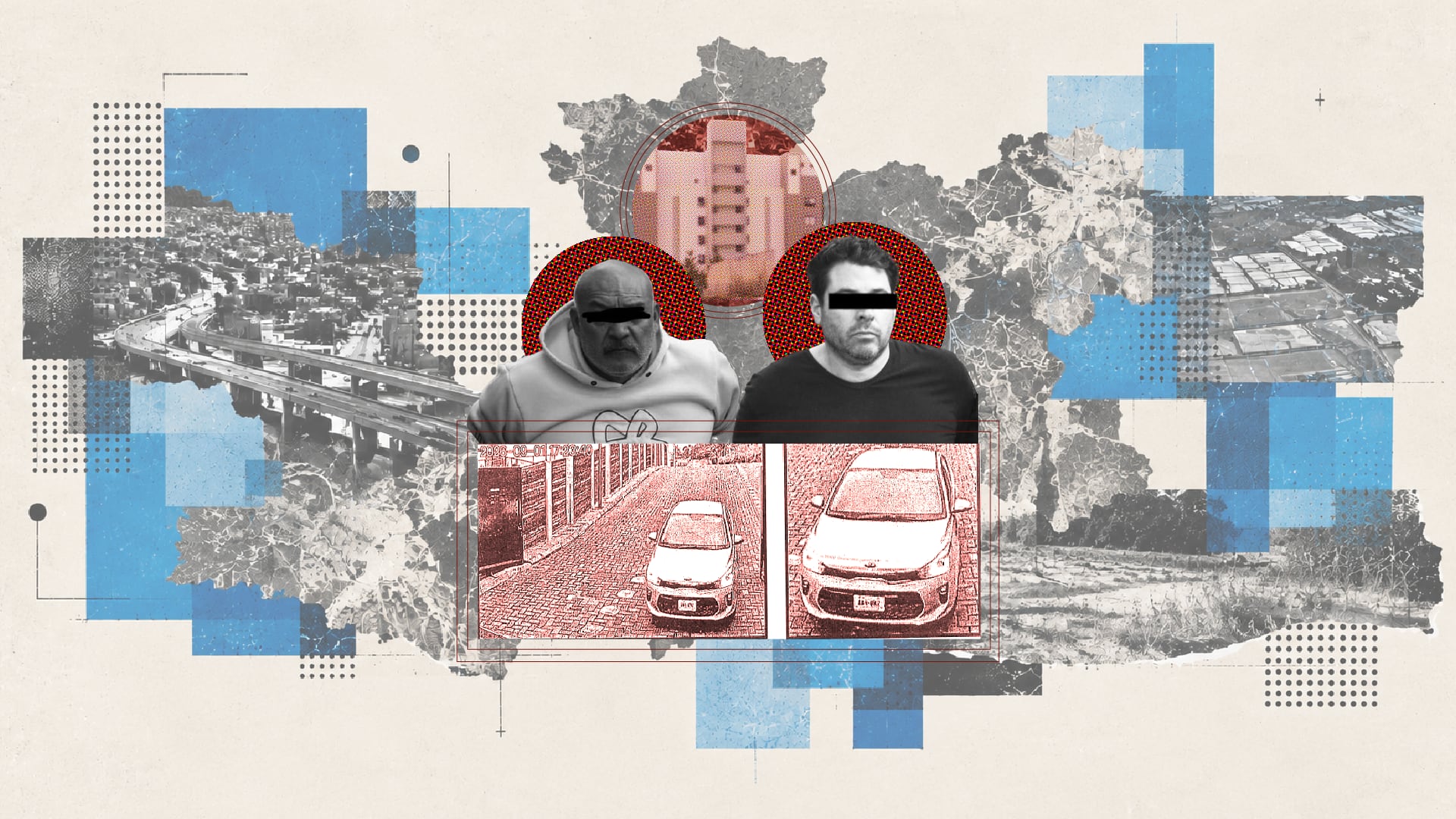
At some point that afternoon on September 1, the business partner, Diego Sebastián N, now arrested and facing charges, shot Ana Paula in the head, killed their three-year-old daughter, shot the nanny, later killed Meléndez himself, and finally shot one of the dogs. It is unclear exactly how it happened, in what order, or why both women and the child were targeted—all questions that have fuelled the family’s torment. From statements by witnesses, relatives and acquaintances that are part of the investigation and that EL PAÍS reviewed, it emerges that it all began with an attempted robbery by Diego Sebastián against Meléndez—an attempt to get hold of his cryptocurrency wallet.

One other detail: the attack began after 6.25 pm. At that time, Aleyda Romero went down to walk two of the family’s small dogs. The walk lasted 38 minutes. At 7.03 pm the 21-year-old, who worked there Tuesday through Friday, returned to the house with the animals. There is no record in the judicial file that Aleyda was aware anything was wrong. She did not say anything to the guard at the gate, nor did she call her father or mother by phone, judging by the statements they later gave to authorities. The young woman returned with the dogs, took the building elevator, went up four floors, arrived at the brown door, opened it and went in…

A case of “disturbance of the peace”

It was a routine alert, something apparently minor—a case of “disturbance of the peace” in a gated community. The Atizapán police officer heard the call over the radio and headed there. He was nearby; he only had to cross the La Venta–Lechería highway and he would arrive. At that time, 8.20 pm, it would not take him more than 15 minutes. When he arrived, the security supervisor let him in. Both went up to the apartment in question, the penthouse in building four. The officer knocked on the brown door several times, but no one answered. There was not a sound, not even the dogs barking—a fact the supervisor would later recall when he testified to the prosecutor’s office. “It was known that inside that penthouse there were dogs, and they were noisy,” he would say.

But no noise came from the apartment because everyone inside was dead. Everyone except a five-year-old boy who ignored the knocks—a child who at that moment was sitting among the bodies of his sister, his nanny, his father, his mother and one of the dogs. He ignored the calls, or maybe he did not hear them: two days later his grandmother told an officer of the Prosecutor’s Office that the boy was still in shock and that the only thing he said was that it had been “Sebas the bad guy.” If two days later the child was in shock, it is reasonable to think he was in shock that afternoon as well. That is why he did not open the door—or out of fear that it might be “Sebas the bad guy”—and the officer, unaware of his presence, thought it best to leave.

The officer did not have much additional information about what had happened in the apartment, according to the report he would file hours later with the Prosecutor’s Office, a document that forms part of the case file. The person who might have had some idea was the building’s security supervisor, who, at least one hour and ten minutes earlier, at 7.20 pm, had received a call from one of the future victims—an alarmed Jonathan Meléndez—asking him to call the municipal police because his business partner was inside his house carrying weapons. At 7.20 pm Meléndez, a popular musician on the national indie scene and keyboardist for the band Camilo Séptimo, was on his way home with his friend after playing a game of padel. But the supervisor did not tell the police officer, or if he did, the officer took no notice.

It is strange to think of those two and all the things they supposedly did not say to one another. Because by then Diego Sebastián had already left. At the security booth, the guard, who answered to the supervisor, had seen him leave. In fact, Diego Sebastián had threatened the woman with his gun, pushing her to raise the exit barrier. “Come on, you bitch, open the barrier, I have to go!” she says the alleged killer shouted. Moreover, according to statements EL PAÍS reviewed, the friend from the padel game was beside her at that moment. The alleged killer, who knew him, also shouted at him: “You, fucking little dark guy, if you even think about saying you saw me, I’ll kill you like your fucking friends!” according to the file EL PAÍS accessed. It is odd that the guard did not tell her supervisor any of this, and that the supervisor, who an hour earlier had received Meléndez’s call asking him to call the police, did not tell the police officer anything.

The friend

That September 1, “we were out in the street most of the day,” says the padel friend. He went to the penthouse in the morning, left with Meléndez for breakfast, they came back, attended a meeting in the Polanco neighborhood in the capital. “At all times I noticed Jonathan was unsettled, like he was distracted,” he adds. They had known each other for four years, and they spent a lot of time together. They had met at a Camilo Séptimo concert. Jonathan (Honas to his friends) had asked him to work closely with him. The friend began to help with a few songs. Later he met his wife and his children… Many times, he said in his statement, he would stay overnight to keep working.

The two ate together that day at the house. In the afternoon they set off for a game of padel. If Honas felt any particular worry about his business dealings with Diego Sebastián, he did not say so. Or at least the friend did not tell authorities. A relative would later say that for a month Meléndez had been having problems with Diego Sebastián, an Argentine by birth and naturalized Mexican. “Diego Sebastián asked him for a loan of 300,000 pesos, but he refused to lend it. It was from that time that the problems with this person began,” the relative says. The relative adds that the two had met six months earlier and that they had a business project together. Diego Sebastián rented luxury homes, Honas did the advertising and in return got discounts on some rentals.

The relative also says Meléndez told his partner about an investment in cryptocurrencies he had made years earlier, though he did not provide further details. It is not known how much Diego Sebastián knew about cryptocurrencies, whether he knew where Honas stored his account keys, or how much money was involved. The relative testified that Honas’s initial investment had been three million pesos, according to what he was told, but that he did not know how much it was worth now. He also said the victim kept his keys on a black USB flash drive. He added that when he and other relatives entered the house after the murders to take the victims’ identification to the Prosecutor’s Office, the USB drive was nowhere to be found.

While they were playing padel, the friend received a message from Meléndez’s wife. It was 5.54 pm. She said Diego Sebastián was at the house and had been waiting for some time, and that she was texting the friend because her husband was not seeing his messages. The friend told Honas and he immediately called his partner. He said he was playing padel, but Diego Sebastián told him he was waiting. It is unlikely Meléndez felt extreme alarm over that exchange. Otherwise he would have returned to the house immediately. Or perhaps he did feel it but kept it to himself so as not to seem paranoid. Or maybe the exertion on the court released a torrent of endorphins that kept worry at bay for a while. In any case, the match lasted another hour and the two friends did not leave until 7 pm.

But on the way back all the good feelings vanished quickly. At 7.28 pm they pulled into the housing premises, drove to the building’s parking lot and Meléndez dashed for the elevator. The friend followed—he wanted to go up with him; after all, Honas already knew in some way that his partner was armed, as he had told the supervisor about it. But Meléndez stopped him. “He told me, ‘wait for me down here; if I don’t answer, ask for help,’” the friend explains. “When I messaged him and he didn’t respond, I decided to ask for help at the security booth,” he adds. According to the guard, the friend arrived at the booth around 7.38 pm. The guard called the supervisor and the property manager. While they were doing that, Diego Sebastián’s vehicle arrived at the booth and he stuck his torso out the window, shouting, holding a pistol in his hands.

The battering ram

The police officer saw Honas’s friend in the parking lot after 8.30 pm when he came down from the Meléndez apartment after his unsuccessful knocks at the door. Seventy minutes had passed since the first call to the police, 62 since his friend had gone up to the penthouse, 52 since he had gone to the security booth, 50 since Diego Sebastián had fled in a gray Kia, and just over ten since the first policeman had arrived. The friend told him, word for word, what had happened. The officer then decided they should go back up. He knocked on the door again, but nothing. The friend insisted: they were a family with two small children and several dogs—three at least—so it was impossible that no noise was coming from inside.

The officer agreed it was strange. But he did not have tools to open the door, so he called for backup. At 9.15 pm a second officer arrived equipped with a metal battering ram. Within seconds they forced the lock and entered. The officers asked the friend to wait outside. Then they saw the horror. First they found a dog—a golden retriever—dead on the floor of the bathroom by the entrance. It had a gunshot wound to the head and its muzzle had been tied with gray industrial tape. The officers moved on. There was a living room with some musical instruments and beyond that the dining room and kitchen. On the other side of the kitchen there was a laundry area and next to it a service room. The officers entered and saw a woman on the bed, face down, hands tied behind her back, a gunshot wound to the head and her mouth taped. It was Aleyda Romero.

The officers continued and went upstairs. As they climbed the stairs they saw red stains on the floor and steps. Forensics later confirmed nine meters of footsteps—specifically, barefoot tracks coming from the dining room and kitchen. On the wall by the staircase, 87 centimeters above the floor, officers saw a hand-shaped bloodstain—or part of a palm. Forensics later certified it measured ten by seven centimeters. Upstairs there was a sitting room and three bedrooms. The officers did not find any trace of the other dogs, or they omitted mentioning them in their reports. In the master bedroom, up on the right, they found Honas Meléndez’s body on a brown sofa. Like Aleyda, his mouth was taped, his hands tied behind his back and his feet bound.

Finally, the officers went to the bathroom. In the shower they found the bodies of Ana Paula and her daughter, the mother barefoot, seated and leaning against the wall. The killer had bound her neck with tape, as well as her right arm and her feet, which had also been secured with a white cable tie. The little girl was kneeling on top of her mother, lying across her lap, wearing her princess shirt. Both had a gunshot wound to the head. When they left there, the officers entered the opposite room and saw a boy slightly older than the little girl they had found in the bathroom. “At first glance,” one of the officers later wrote in the report he filed with the Prosecutor’s Office, “he showed no visible injury.”

The car’s plates

Ten hours after that, the authorities found the car in which Diego Sebastián had fled with his driver, Gerardo N. Investigators already knew then that the plates on the vehicle belonged to another car. Someone had stolen them from a car on August 29 in the Benito Juárez borough of Mexico City, very near, incidentally, to where Diego Sebastián lived in the Del Valle neighborhood. That fact made two things clear. One, that Diego Sebastián had decided to kill the Meléndez family—or at least Honas—days earlier. And two, that the driver, Gerardo N, owner of the Kia, knew that the visit to the Meléndez family was anything but friendly.

The car was found at the intersection of Bosque de los Cipreses and Avenida Bosques del Estado de México, in the municipality of Tecámac, on the other side of the metropolitan area of the capital, shortly before 8 am on September 2. Gerardo N lived near there, as an investigator confirmed when he asked neighbors. “He’s an Uber or Didi driver,” they told him. Diego Sebastián was captured soon after in a forested area known as La Marquesa. After separating from Gerardo N, he had gone to fetch a white BMW X1, apparently belonging to his sister. With that car he headed into the woods. That is where his flight ended.

Sign up for our weekly newsletter to get more English-language news coverage from EL PAÍS USA Edition

America

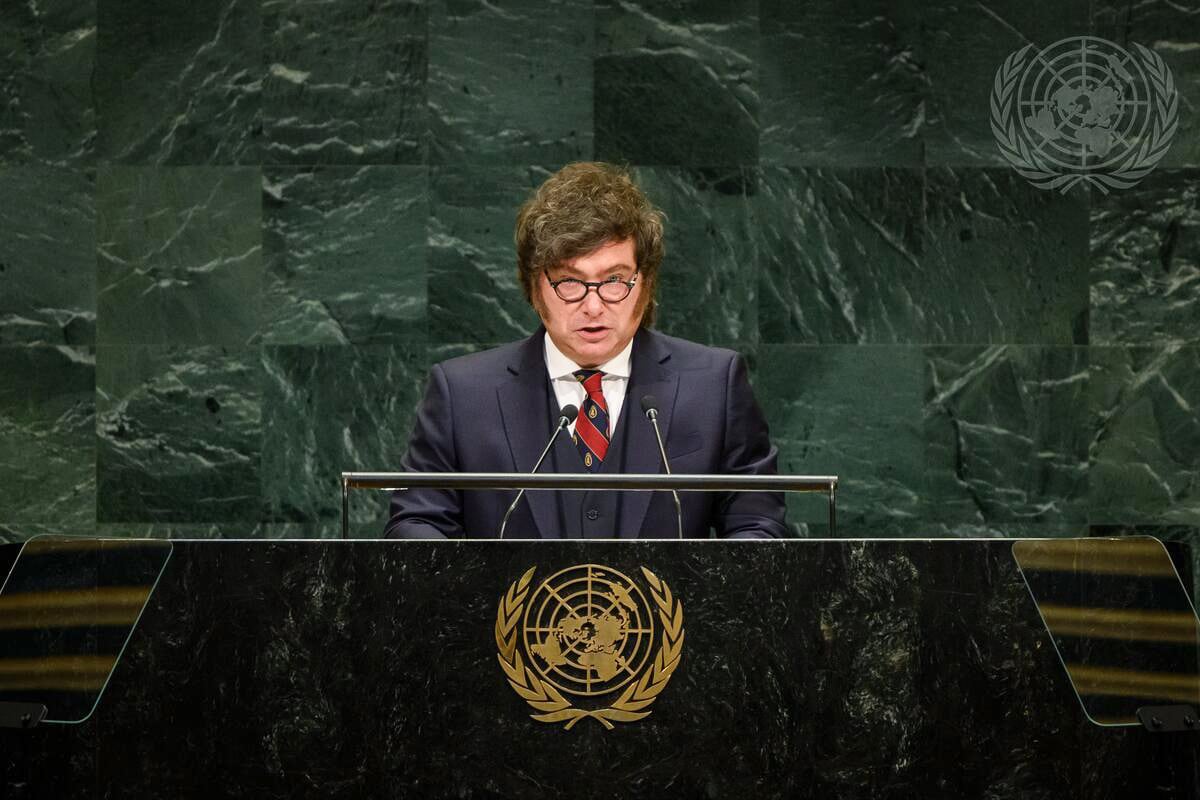
Últimas Noticias De La Asamblea General De La ONU, En Directo | Volodímir Zelenski: “Esta Guerra Ridícula Con Ucrania Debe Acabar”

Published

on

By

ultimas-noticias-de-la-asamblea-general-de-la-onu,-en-directo-|-volodimir-zelenski:-“esta-guerra-ridicula-con-ucrania-debe-acabar”

Continue Reading

Argentina

Mexico Joins Latin American Crackdown On Cellphones In Schools

Published

on

mexico-joins-latin-american-crackdown-on-cellphones-in-schools

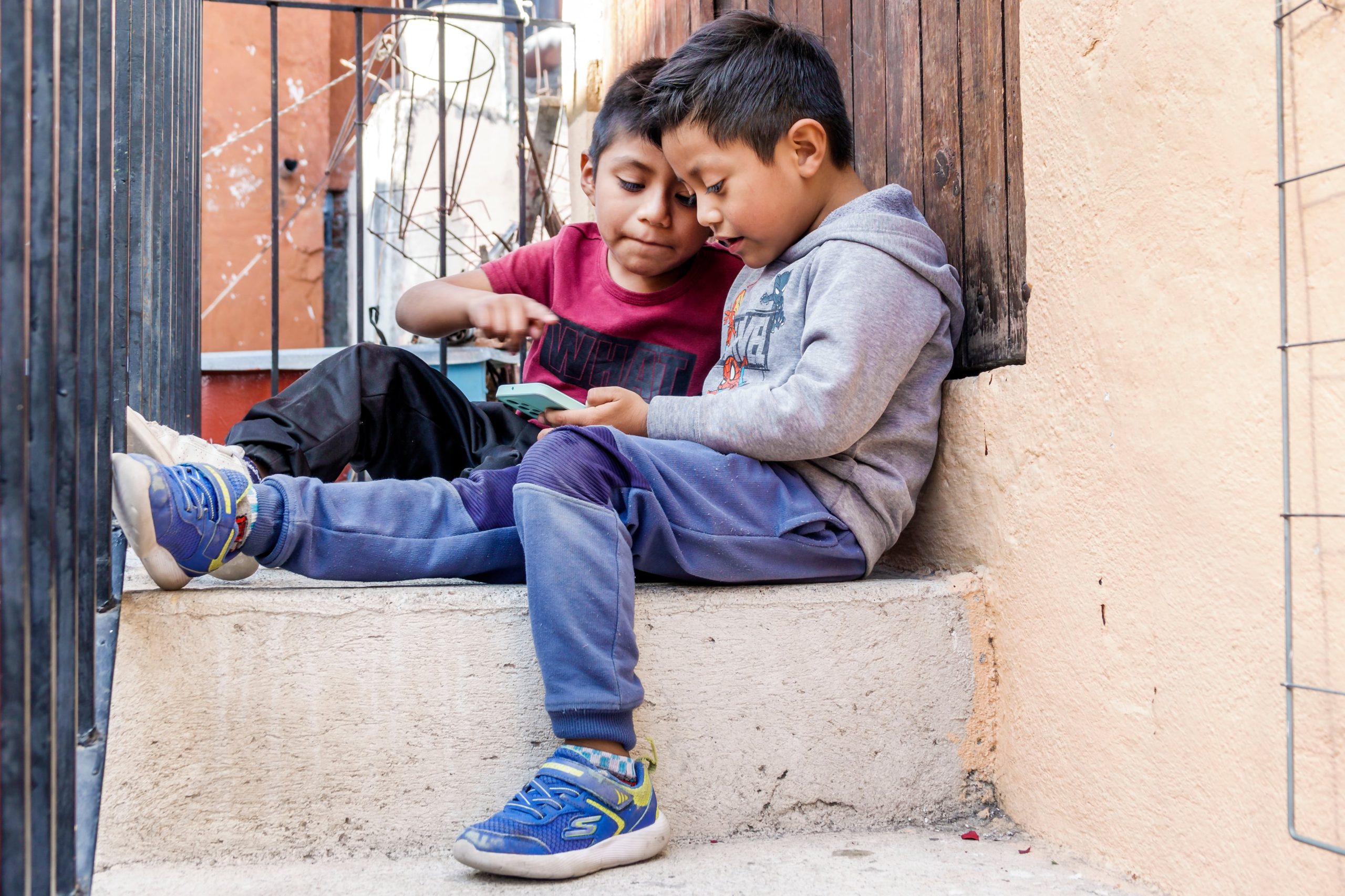
Children in Mexico spend up to seven hours a day in front of a screen. In light of this reality, the government has decided to completely restrict the use of cellphones in elementary and middle schools. President Claudia Sheinbaum, who has avoided calling the initiative a “ban,” says she wants to fight phone addiction among young people to “protect their development and creativity.” The country thus joins Brazil and Chile among regional states with stricter rules on cellphone use in classrooms and moves ahead of others, such as Argentina and Colombia, where regulation is still underway.

As of November 3, elementary and middle school classrooms and playgrounds in Mexico will be screen-free. Sheinbaum and Education Secretary Mario Delgado have spent weeks presenting data, backed by experts, that outline the problem: more than 83% of parents are worried about their children’s device time and more than 70% of household heads support regulating use. It is not only an adult perception: four in 10 Mexican students say their classmates are distracted by digital devices in most or all classes. In addition, a survey of over 565,000 teachers found that 81% support the measure. Delgado also highlighted the impact of social networks on children and adolescents, noting that U.S. courts have ruled that these platforms are designed to be addictive and cause harm to mental health.

The PISA 2025 report, in which Mexico slipped in mathematics, revealed that almost half of the time students spend on screens at school (2.7 hours) is for leisure. Devices have shortened the attention span readers use to comprehend a text. Following the government forums and the release of the results of the international study, Mexico has joined more than half of the world’s countries that already have restrictions on the use of devices in schools. Depending on the region, the measures range from banning cellphones during the school day to total restrictions on certain social media platforms.

In Latin America, Brazil removed cellphones from schools at the start of the last school year in January 2025. The Lula government decided to ban them both in classrooms and during recess, in public and private schools, to protect students’ mental and physical health and to improve academic performance. The debate was intense, but the overall assessment is positive. On the first anniversary of phone-free schools, eight in 10 Brazilian students reported “paying more attention” in class and 65% of teachers said incidents of online bullying had fallen, according to an evaluation of the law commissioned by the parliamentary education bloc. Even students unhappy with the new rule acknowledged the benefits. Lívia de Souza Xavier, 14, said she concentrates more and her grades have improved significantly, according to testimony collected by the NGO Alana, which focuses on children. Another student said she now talks more with classmates and, if she cannot find them, she goes to look for them, as reported by Naiara Galarraga Gortázar.

Chile has moved in the same direction since February, when Law 21.801 came into force, restricting the use of phones and any other internet-enabled device in preschool, elementary, and high school education. The prohibition, however, is not absolute: the law exempts pedagogical use, meaning cases in which a teaching activity requires a device. The legislation also allows other exceptions that must be justified by parents or guardians and generally require authorization from the school administration. These include special educational needs, emergencies or disasters, the student’s health conditions, and personal safety. So far, enforcement and monitoring of the regulation have been left to Chilean educational institutions. With reporting from Ana María Sanhueza.

In Argentina, regulation is advancing at the provincial level. Most provinces have passed laws banning cellphone use at all levels and allowing it only exceptionally, generally in high schools, and always for pedagogical purposes and at the express request of educational authorities. That group includes, among others, three of the country’s four most populous districts: the City of Buenos Aires and the provinces of Buenos Aires and Santa Fe. Other important jurisdictions, such as Córdoba and Tucumán, have left each school to set its own phone-use rules. Finally, provinces like Mendoza have authorized cellphone use “to improve the teaching-learning process” but have faced growing resistance within schools. With reporting from Javier Lorca.

The Lula government, which welcomed the PISA results optimistically, noted that 81% of Brazilian students examined attended schools that restrict cellphone use.

The debate has recently begun in Colombia, where the decision is left to each institution. The exception is Bogotá: on September 7 it launched the policy “(Re)connect to learn,” which requires public and private schools at all levels to implement a ban on cellphone use throughout the school day, including breaks, for both students and teachers. It only relaxes the restriction for health, inclusion, or emergency reasons, and allows pedagogical use from eighth grade. Schools now have six months to adjust their rules and define how the restriction will be applied, while the Health Secretariat will assess results after one year. Reported by Juan Esteban Lewin.

Mexico’s PISA 2025 results, even with phones present in schools, show indicators below the OECD average in all areas, although the country outperforms almost all the mentioned Latin American countries in mathematics. For example, it scores higher than Colombia, Brazil and Argentina, though it is surpassed by Chile, as in science and reading.

Mexico is thus undertaking the experiment of removing phones from schools to try to restore space for concentration, coexistence, and learning. From November 3, the country will be able to measure whether limiting screens also translates into better learning outcomes.

Créditos:

Gráficos: Mónica Juárez Martín

Sign up for our weekly newsletter to get more English-language news coverage from EL PAÍS USA Edition

Continue Reading

Argentina

Dinosaur Fossils, The Latest Obsession Of The Ultra-Rich: ‘Some Enjoy Knowing Only They Can Admire It’

Published

on

dinosaur-fossils,-the-latest-obsession-of-the-ultra-rich:-‘some-enjoy-knowing-only-they-can-admire-it’

“Look, with this I can solve the origin of vipers,” a European collector snapped at Argentine paleontologist Federico Agnolín a few years ago. Then he shut the drawer, consigning the fossil to darkness. “It was like a little blind viper, a creature that never saw the light of science. It’s a very complicated issue. I can’t say much more,” the scientist admits today.

This summer, The Guardian revealed that one of the most spectacular collections of Jurassic fossils in the United Kingdom had been sold to a museum in Abu Dhabi, a move British experts described as an irreparable loss for a country more used to seeing prized collections arrive on its shores than leave them. The 318 specimens assembled by a private fossil collector fetched “an eight-figure sum.”

Public fossil auctions, such as those regularly organized by Sotheby’s, are becoming increasingly common and lucrative. Prices have soared from the more than $8 million paid for Sue, the Tyrannosaurus Rex, in 1997 to the more than $50.1 million spent this year on Gus, another specimen of the species, in a bidding war that lasted barely 10 minutes. High-profile actors have bought dinosaurs of their own, including Leonardo DiCaprio, Russell Crowe and Nicolas Cage. Cage was forced to return a Tarbosaurus skull for which he had paid $276,000 after it emerged that it had been looted from Mongolia. The fossil craze can lead to dubious acquisitions, even when everything initially appears legal.

“A fossil is priceless because it is a unique item created by nature. Its value is exclusively scientific,” Agnolín argues. “There are collectors, people with a lot of money who don’t know what to do with it and devote themselves to collecting fossils. We cannot allow humanity to be deprived of knowledge simply because someone likes a piece and wants it on their windowsill. And that happens a lot.”

Agnolín has come across scenes like the one with the blind viper many times and is convinced that fossils have become the latest trophy for the wealthy. “Collectors seek out the unusual. I know that world very well. There’s the guy who has the Tyrannosaurus rex, who wants to show it off to his friends, and there’s the guy who has a new species — one not yet classified by science — who takes pleasure in knowing that only he can admire it, even though that specimen might solve an important scientific problem.”
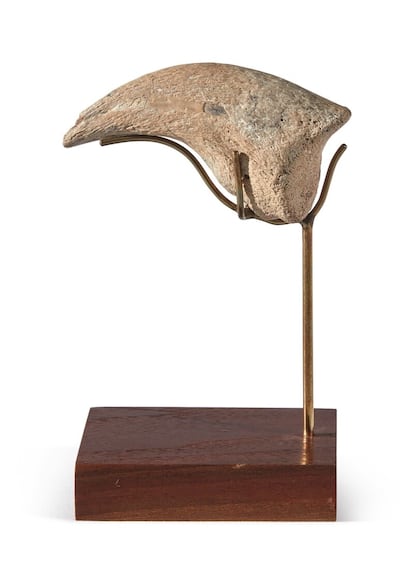
That lies at the heart of the controversy. As multimillionaires pour money into fossils, scientists worry that the trend could hinder research.

Legal grey areas

In many places where the fossil trade is legal, owners are under no obligation to inform scientific institutions about specimens they acquire, even though it is their scientific value that makes them important in the first place. Without the technical knowledge attached to them, any fossil would be little more than a bone or an oddly shaped rock.

The fossil market is legal in the United States and in parts of Europe, although regulations vary considerably depending on the jurisdiction and the type of land where a specimen was found. In Spain and Latin America, by contrast, such transactions are generally prohibited, and fossil discoveries are considered part of the national heritage. With no international framework establishing even minimum rules for the trade, collectors can exploit legal grey areas while traffickers take advantage of the differences between national laws.

“Often those legal gray areas are used to carry out what is known as huaquerismo, which is the extraction of archaeological or paleontological remains to take them out of the country,” warns paleontologist Horacio Padula, deputy manager in the Buenos Aires City Heritage Directorate and one of the architects of Argentina’s 2003 reform of its Archaeological and Paleontological Heritage Protection Law. “I have seen it, as many people have; there used to be a market selling fossils at the door of the Natural Sciences Museum,” Padula recalls.

Selling an Argentine fossil abroad is illegal, but selling a U.S. one is not. “These countries — where the fossil trade is lawful — have a different policy. What the state cannot or does not want to protect becomes appropriable,” says María Luz Endere, a PhD in archaeology and researcher specializing in cultural heritage law and management. “That is where speculation comes in, because it’s a form of investment, like buying art. You can buy a dinosaur as an investment,” she compares.

“How do you legislate to decide that fossils can be bought, but only those irrelevant to science? How do you know which one won’t solve a scientific puzzle?” Agnolín asks. “Once we went to study material in Germany, which is the great repository for fossils from the rest of the world, and there was a feathered dinosaur from China that had a sternum like a chicken’s. It’s the bone that allows birds to open their wings to fly. It was the perfect transition between a dinosaur and a bird. It had been bought illegally,” he remembers, still outraged.

The long tradition of trading prehistory

In the English-speaking world, the buying and selling of prehistoric specimens is not only legal but an old tradition. The Tucson Gem and Mineral Show in Arizona has been running for more than 70 years and is the world’s most important event of its kind. Thousands of exhibitors offer minerals, gemstones and fossils.

Fossil trading has always been legal in the United Kingdom. It was in this context that pioneers such as Mary Anning emerged, making a living and earning fame by selling the fossils she discovered along the coast of Lyme Regis. Today, there are numerous fossil shops and preparation workshops, where specimens are meticulously cleaned and restored.

On sites such as Dorset’s Jurassic Coast, collectors follow a general code of conduct that distinguishes between two categories of fossils: those of high scientific importance and those of more limited significance. Only the former, including potentially new species, rare finds or exceptionally well-preserved specimens, must be formally reported and recorded.

But even Britain can no longer keep such treasures at home: the fossils that ended up in Abu Dhabi made that journey because no British museum could afford to buy them. Hundreds of marine creatures, including ichthyosaurs and species that may yet prove new to science, were shipped to another continent.

For paleontologist Sebastián Apesteguía, the growing appetite of the wealthy for fossils reflects the return of a kind of imperial inequality. “It’s like a return to the Roman world, when the power gap between the rich and the plebeians was so great that they could afford to own impossible objects.”

The Inca Empire did something similar, he argues. “When Túpac Yupanqui sailed to Polynesia, he brought whale remains to keep in the palace, a brass chair and very dark-skinned slaves. He brought them as trophies to display objects from other parts of the world,” says Apesteguía, who also studies the Indigenous peoples of the Americas.

In Agnolín’s view, permissive legislation is perfect for plundering nations. “They’re tailor-made for them, because they need to allow the entry of fossils from other countries,” he argues.

What underlies the trend, the Argentine scientist believes, is a troubling idea: that money can buy anything and satisfy every whim. “Increasingly, real-world villains resemble those from comic books, who think they can achieve eternal life,” he says. “This madness happening with fossils is part of that — it’s the work of villains who seem straight out of Batman. States should put a stop to it. This is about understanding the history of life on Earth, and that belongs to humanity.”

The price of history

  • Gus, the T. rex. Sold in July of this year by auction house Sotheby’s in New York for $50.1 million in 10 minutes. It is one of the most complete Tyrannosaurus rex skeletons.
  • Ceratosaurus nasicornis. Sold in 2025 for $30.5 million by Sotheby’s. It is 150 million years old. Only four exist in the world. The one sold is the only juvenile specimen. It belonged to the Museum of Ancient Life in Utah, United States. The anonymous buyer promised to loan it to another institution for continued display, but its whereabouts remain undisclosed. A meteorite was also sold at the same auction.
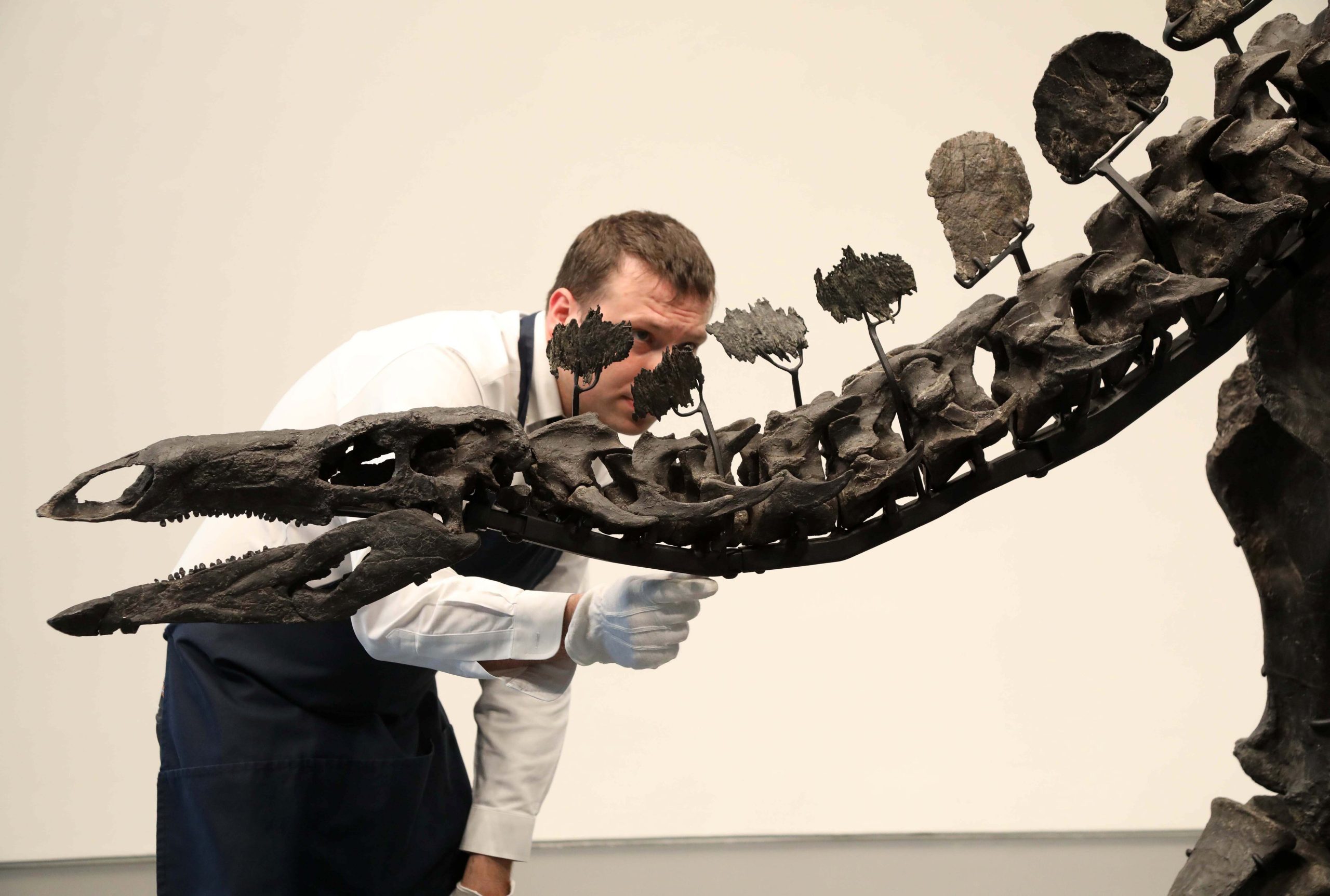
  • Apex, the stegosaurus. Sold in 2024 for $44.6 million to financier Ken Griffin. The magnate loaned it to the American Museum of Natural History, where it can be seen through 2028. It was discovered in 2022, and there are 80 specimens worldwide. Apex is one of the most complete skeletons. Griffin pledged to fund research that could yield more details about its species, growth, metabolism and skeletal development.
  • Stan, the T. rex. Sold in 2020 for $31,847,500 to an anonymous buyer in a virtual auction alongside works of art in the U.S. It was missing for two years until the Abu Dhabi Natural History Museum, which opened in late 2025, announced it would be exhibited there. The 67‑million‑year‑old specimen was discovered in 1987 in South Dakota’s Hell Creek Formation and is one of the most complete T. rex skeletons ever found. It is, to date, the most expensive fossil in history.
  • Allosaurus and Diplodocus skeletons. Sold in 2018 by Binoche et Giquello in Paris for €1.15 million ($1.33 million) and €1.18 million ($1.36 million), respectively.
  • Triceratops skull, sold in 2017 (also in Paris) for €177,800 ($205,000) to a Chinese multimillionaire who owns a hotel chain.
  • Allosaurus and a Siberian mammoth. Sold in 2016 and 2017 by auction house Aguttes for more than €1.1 million ($1.27 million) and €548,000 ($632,000), respectively.
  • Tarbosaurus skull. The 67‑million‑year‑old fossil, from a close relative of T. rex, was purchased by Nicolas Cage in 2007 for $276,000. He was later forced to return it after investigators determined it had been illegally smuggled out of Mongolia, highlighting the risks and legal ambiguities that can accompany the booming fossil trade.
  • Sue, the T. rex. Sold in 1997 for $8.3 million to the Field Museum in Chicago.

Sign up for our weekly newsletter to get more English-language news coverage from EL PAÍS USA Edition

Continue Reading

Trending

Copyright © 2017 Spanish Property & News