
court ruling
The court ruling that has plunged Pedro Sánchez into a new crisis

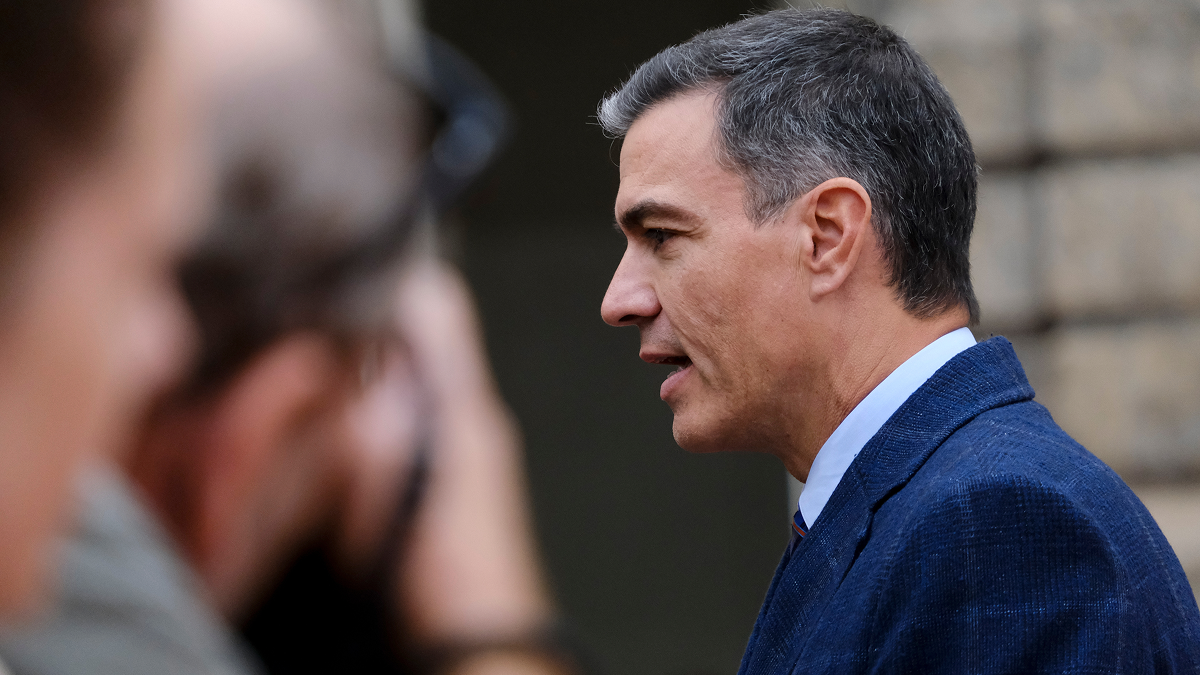
Pedro Sánchez faces fresh pressure after his brother’s conviction. Credit: Alexandros Michailidis / Shutterstock
A public job created in Badajoz nearly ten years ago has returned to haunt Spain’s Prime Minister. Judges have sentenced Pedro Sánchez’s brother David to nine years’ disqualification after finding that the position and its later changes were designed around him, intensifying pressure on an already embattled government.
How a public job in Badajoz became Pedro Sánchez’s latest crisis
For Spain’s Prime Minister Pedro Sánchez, the most politically damaging part of the ruling is not just that his younger brother has been convicted. It is that three judges have now placed into a formal court judgment what his opponents have alleged for years: that a taxpayer-funded role was created without a genuine public need and designed to benefit David Sánchez.
The position was first created by the Provincial Council of Badajoz in 2016, before Pedro Sánchez became Prime Minister. Almost ten years later, that decision is dominating Spain’s political conversation and adding another layer of pressure around the Socialist-led government.
The 377-page judgment was published on July 14 and sentenced David Sánchez to nine years’ special disqualification for his role in the later modification of the post. The ruling remains open to appeal and does not yet find that Pedro Sánchez ordered the appointment or pressured officials to create it.
What judges said about the role created for David Sánchez
David Sánchez, a musician and cultural manager, secured a position coordinating conservatory activities at the Provincial Council of Badajoz in 2017. A provincial council, known in Spanish as a diputación, supports smaller municipalities and manages services across the province.
The court found that the original position was unnecessary and had been created as part of a plan to benefit him. Judges also concluded that the job was later transformed so its responsibilities more closely matched his operatic projects and preferred way of working.
The ruling does not say Pedro Sánchez ordered the appointment
The political damage falls directly on the Prime Minister, but the judgment does not accuse Pedro Sánchez of arranging the job or pressuring officials. Judges acquitted all defendants of influence peddling because they could not identify a specific person who applied pressure or prove how that influence was exercised. The court’s finding of favouritism is therefore not the same as a finding that the Prime Minister intervened.
The Government and the Spanish Socialist Workers’ Party (PSOE) have rejected the verdict and expressed confidence that it will be overturned on appeal. The conservative Partido Popular (PP) and Vox have presented it as further evidence of misconduct around the Prime Minister’s political and family circle.
For Sánchez, the legal nuance must compete with a much more scrutinising public image: a taxpayer-funded position, his brother as its beneficiary and a court declaring the process arbitrary.
Why nine years of disqualification does not mean prison
David Sánchez has not been sentenced to nine years in jail. Spain’s Criminal Code punishes administrative prevarication with disqualification from public employment or office and from standing for election for between nine and 15 years.
The court imposed the minimum nine-year term. If upheld, special disqualification would bar him from the public employment or office covered by the ruling and from obtaining the same or an analogous position during that period.
The judgment is not final. The convicted defendants can appeal within ten days to the High Court of Justice of Extremadura.
Public job fairness is why the case reaches people so fiercely
For ordinary applicants, the case touches on a basic expectation: that a publicly advertised job is real, necessary and open to competition rather than built around nepotism.
People spend weeks preparing applications, collecting qualifications and attending interviews for public-sector positions. When a court finds that a role was created for one beneficiary, the damage is not limited to one salary or politician, it feeds suspicion that access depends on connections rather than merit.
The appeal will decide whether pressure fades or deepens
Attention now moves to the appeal, the response of the High Court of Justice of Extremadura and whether Pedro Sánchez addresses the judgment personally.
Political attention will also focus on whether government allies continue to treat the case as an attack on the Prime Minister’s family, and whether opposition parties demand another parliamentary explanation. The conviction remains a first-instance judgment, but its political fallout has already reached Madrid.









Could Spain scrap food expiry labels? The supermarket change that could save tonnes of food
Santíssima Sang closes after unforgettable Dénia celebrations
The court ruling that has plunged Pedro Sánchez into a new crisis
Alhaurin el Grande and Coin launch historic 1.5 million kilo season for premium tomato

Los Aficionados Al Ciclismo En Barcelona: “Que Venga El Tour De Francia Es Como Ir Al Mundial De Fútbol”

Spain Is Set To Be Swarming With Rock Legends This Weekend – Here’s What You Need To Know


-
Alhaurin El Grande2 weeks ago
Alhaurin el Grande and Coin launch historic 1.5 million kilo season for premium tomato
-
 Antoni Gaudi2 weeks ago
Los Aficionados Al Ciclismo En Barcelona: “Que Venga El Tour De Francia Es Como Ir Al Mundial De Fútbol”
-
 Barcelona2 weeks ago
Spain Is Set To Be Swarming With Rock Legends This Weekend – Here’s What You Need To Know
-

 Business & Finance2 weeks ago
Cheap Flights And Mass Tourism Are Adding €3,800 To The Cost Of The Average Spanish Home, New Report Warns
-
 Dutch demand1 week ago
Dutch Demand For Spanish Property Keeps Rising As Others Cool
-
Latest2 weeks ago
Conservatives And Far Right To Govern Spain’s Andalusia Region
-

 Ahmed al Shara2 weeks ago
Al Menos Seis Muertos En Un Atentado En Un Céntrico Café De Damasco
-

 New Developments2 weeks ago
🌅 Stunning Penthouse With Panoramic Sea & Mountain Views Benalmádena