Connect with us

%

EU To Make Online Purchases Easier To Cancel

Published

on

eu-to-make-online-purchases-easier-to-cancel

New EU rules will make it easier for shoppers to cancel eligible online purchases and contracts. Credit : Bhutinat65, Shutterstock

Buying something online is usually the easy part. A few taps on a phone, a quick payment and an order confirmation lands in your inbox before you’ve even had time to think twice about the purchase.

Cancelling it can be a very different experience.

The cancellation option is buried somewhere in your account settings. The website sends you in circles. A chatbot appears. An email form follows. Before long, a process that should take seconds can end up taking far longer than the original purchase itself.

That is exactly the kind of situation the European Union wants to address.

From 19 June 2026, online retailers and apps operating in the EU will be required to offer consumers a clear electronic way to withdraw from eligible online purchases and contracts. The change forms part of new consumer protection rules designed to make cancelling an online purchase much more straightforward when the law already gives customers the right to do so.

For millions of people who regularly shop online, it could remove one of the most frustrating parts of internet shopping.

Why the EU wants cancelling to be as easy as buying

Most people have experienced buyer’s remorse. Sometimes a product arrives and simply isn’t what you expected. Sometimes a subscription looked useful at the time but quickly loses its appeal. Sometimes an accidental purchase slips through because a payment card is already saved in an account.

European consumer law already gives shoppers important protections in these situations.

In most cases involving distance sales, consumers have a legal right to withdraw from a purchase within 14 days.

The problem is not the existence of the right. The problem is finding a simple way to use it.

Consumer organisations across Europe have long criticised online businesses for making cancellation procedures harder to locate than purchase options. While some companies already offer simple solutions, others require customers to navigate several pages before finding the correct option.

The new rules aim to create a more consistent experience.

If a contract was entered into through a website or app, consumers should be able to locate the withdrawal function without having to hunt through complicated menus or download additional software.

What online shoppers will notice from June 2026

The most visible change will be a dedicated cancellation feature on websites and apps.

Businesses covered by the rules will need to provide a clearly identifiable option allowing consumers to withdraw from a contract during the legal withdrawal period.

The wording may differ between companies, but the function must be clear, prominent and easy to access.Once a customer decides to cancel, they will be able to submit an online declaration confirming that decision.

The process will require basic information allowing the business to identify the contract correctly.

After that, a second confirmation step must be provided before the request is finalised.

Importantly, consumers will then receive confirmation that their request has been received, together with details such as the date and time of submission.

That confirmation could prove particularly useful if a dispute later arises about whether the cancellation was made within the legal deadline.

For shoppers, it means having a clearer digital trail showing exactly when the request was submitted.

The new button will not mean every purchase can be cancelled

The upcoming changes do not create new cancellation rights for every product or service sold online. Instead, they simplify access to rights that already exist under European consumer law.

The standard withdrawal period remains 14 calendar days for most distance contracts.

There are still important exceptions.

Custom made products produced according to a customer’s specifications generally cannot be cancelled in the same way as standard purchases. Certain perishable goods are also excluded.

The same applies to some sealed products that cannot be returned for health or hygiene reasons once opened.

Certain forms of digital content may also fall outside the withdrawal rules when specific legal conditions have been met.

The new cancellation function therefore does not change what consumers are allowed to cancel.What changes is how easily they can exercise those rights when they exist.

For businesses, the next year will involve updating websites and apps before the new requirements take effect across the European Union.

For consumers, the practical benefit is easier to understand.

The next time an online purchase starts to feel like a mistake, finding a way out may finally become as simple as finding the buy button in the first place.

%

Ryanair Hints At Dramatic Return To Spanish Regional Airports If Fees Fall

Published

on

ryanair-hints-at-dramatic-return-to-spanish-regional-airports-if-fees-fall

The potential return of capacity could have direct implications for connectivity. Photo credit: Markus Mainka/shutterstock

Ryanair has indicated it could restore capacity at Spanish regional airports if the national airport operator Aena implements tariff recommendations issued by Spain’s competition authority, the National Commission for Markets and Competition (CNMC). The airline links its future regional operations to the outcome of a broader regulatory dispute over airport charges under Aena’s next five-year pricing framework, known as DORA III.

The position comes amid ongoing disagreement over how Spanish airport charges should evolve during the 2027–2031 regulatory period, with airlines and regulators taking contrasting views on pricing levels and their impact on connectivity.

CNMC proposal at the centre of dispute

At the heart of the disagreement is the CNMC’s recommendation that Aena reduce airport charges over the 2027–2031 regulatory period. The proposal suggests an average annual reduction of approximately 0.59 per cent in charges, a position that contrasts with Aena’s own proposal, which points towards increases in airport fees over the same period.

The CNMC argues that a more restrained pricing path would better reflect demand conditions and maintain competitiveness across Spain’s airport network. Aena, which manages the majority of Spanish airports, has defended the need for higher charges to support infrastructure investment and operational costs.

This divergence has created a policy gap that airlines are closely watching, particularly low-cost carriers with significant exposure to regional routes.

Ryanair ties capacity to lower airport fees

Ryanair has stated it would restore capacity previously withdrawn from Spanish regional airports if Aena follows the CNMC’s recommended tariff trajectory. The airline has consistently linked its network decisions in Spain to airport fee levels, arguing that cost reductions are necessary to sustain or expand regional operations.

Ryanair has repeatedly maintained in its public communications that higher airport charges undermine the viability of smaller Spanish airports, which tend to generate thinner margins and rely more heavily on low-cost carriers to maintain connectivity.

While the airline has not published a formal route reinstatement plan, its position suggests that pricing outcomes under DORA III will be a determining factor in whether previously reduced or suspended services are reinstated.

Which regional airports could see Ryanair return

Although Ryanair has not released a definitive list tied to this specific statement, the airline’s recent capacity reductions in Spain have largely affected smaller and mid-sized regional airports rather than major hubs. Airports that have historically seen Ryanair route reductions or capacity trimming include:

  • Jerez Airport 
  • Valladolid Airport 
  • Santiago de Compostela Airport (partial reductions in certain periods) 
  • Zaragoza Airport 
  • Santander Airport 
  • Asturias Airport 
  • Girona Airport (fluctuating capacity depending on season and base strategy) 

Any recovery of capacity would likely focus on airports where Ryanair previously maintained strong seasonal or base operations but scaled back due to cost and demand considerations.

Impact for residents and tourism

For residents in regional areas, the potential return of capacity could have direct implications for connectivity. Reduced services in recent years have limited direct international links from smaller airports, often requiring passengers to travel to Madrid, Barcelona or other larger hubs.

A restoration of routes could:

  • Improve access to European destinations from regional Spain 
  • Reduce reliance on connecting flights through major airports 
  • Support inbound tourism outside of major cities 
  • Increase competition on certain leisure routes, potentially affecting fares 

Tourism operators in coastal and secondary destinations would also likely benefit, particularly in regions where air access is a key driver of seasonal visitor numbers.

However, the outcome remains contingent on regulatory and commercial conditions. Ryanair’s position suggests that any expansion would be conditional rather than guaranteed, depending on whether airport charges move in line with CNMC recommendations or remain closer to Aena’s proposed structure.

Wider significance for Spain’s aviation market

The dispute over DORA III reflects a broader tension in Spain’s aviation sector between cost control, infrastructure funding and airline competitiveness. Aena’s pricing strategy affects not only airline network planning but also regional economic development, particularly in areas heavily dependent on tourism.

The CNMC’s intervention highlights the regulator’s role in balancing these interests, while airlines such as Ryanair continue to emphasise cost sensitivity in their operational decisions.

As the regulatory framework for 2027–2031 is finalised, the outcome is expected to shape airline strategy across Spain’s regional airport network for years to come, influencing both route availability and passenger choice.

Continue Reading

%

OCU Report Reveals Hidden Concerns In Ice Creams Sold Across Spain’s Supermarkets

Published

on

ocu-report-reveals-hidden-concerns-in-ice-creams-sold-across-spain’s-supermarkets

Many items contained reduced quantities of milk or cream. Photo credit: StockBook/Shutterstock

The Spanish consumer organisation OCU has warned that many supermarket “helado bombón” (Chocolate coated ice creams) sold across Spain are highly processed products with lower-than-expected ingredient quality, following an analysis of 24 items commonly available in major retail chains. The study examined 12 chocolate-covered vanilla ice creams and 12 almond-coated chocolate varieties. It found that most products rely heavily on vegetable fats such as coconut, palm and sunflower oil instead of traditional dairy fats. 

They also contain multiple additives and flavourings used to replicate the texture and taste of conventional ice cream and instead of going by ”Cream Ice-cream” or ”Vanilla Ice-cream” they will use names such as ”Vanilla flavoured” or ”Cream flavoured”. In several cases, OCU identified up to eight additives per product, including emulsifiers such as E-471, E-442 and E-476, which were among the most frequently used ingredients across the samples. The organisation classified many of the products as ultra-processed foods due to the combination of refined ingredients, additives and industrial formulation methods. It also noted that packaging and marketing can sometimes suggest a more traditional dairy-based product than the ingredients actually reflect.

What supermarkets in Spain sell these products

”Helado bombón” ice creams are widely available across Spain and are stocked in most major supermarket chains, particularly during the warmer months when demand increases.

They are commonly found in:

  • Mercadona (Hacendado range) 
  • Carrefour (including Carrefour and Carrefour Extra lines) 
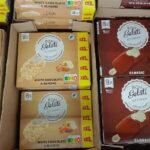
  • Lidl (Gelatelli brand) 
  • Aldi (own-label frozen desserts) 
  • Dia (Alteza and Temptation ranges) 
  • Alcampo (Auchan products) 
  • El Corte Inglés supermarkets 

These products are typically positioned as affordable frozen treats and are frequently included in seasonal promotions or multipack deals.

OCU’s findings indicate that many supermarket versions focus on cost efficiency, using vegetable fats in place of dairy ingredients and relying on emulsifiers and stabilisers to maintain structure, creaminess and shelf stability. This approach reduces production costs but also alters the traditional composition of ice cream. 

Ingredient profile and nutritional considerations

Across the 24 products analysed, OCU observed a consistent pattern in formulation. Many items contained reduced quantities of milk or cream, with fats often replaced by coconut, palm or sunflower oils. Cocoa content also varied significantly, particularly in coated chocolate varieties. In addition to fat substitution, the study highlighted the use of sweeteners, flavourings and emulsifiers designed to replicate traditional taste and texture. These additives help maintain stability and prevent separation during freezing and storage, but contribute to a more industrial composition.

OCU noted that while additives used in the products are authorised under EU food regulations, their presence reflects a higher degree of processing compared with traditional ice cream recipes. The organisation also pointed out that consumers may not always be aware of these differences, as branding and presentation can suggest higher-quality ingredients than those actually included.

Healthier alternatives and where to find them

OCU does not recommend eliminating ice cream from the diet but advises consumers to pay attention to ingredient lists and choose products with simpler formulations where possible. Within supermarkets, comparatively better options tend to include premium ice cream ranges or products labelled explicitly as “helado de crema”, which generally contain a higher proportion of dairy ingredients and fewer additives. Some premium private-label lines also use shorter ingredient lists and reduced emulsifier content.

Outside supermarkets, residents in Spain can find alternatives in artisan ice cream shops (heladerías and gelaterías), which are widely available in cities such throughout Spain and especially along the Mediterranean coast. These establishments often sell up to 1 litre options and produce ice cream on-site using fresh milk, cream, fruit and natural flavourings, with fewer stabilisers or artificial additives. Another alternative highlighted by nutrition experts is homemade ice cream, particularly fruit-based versions using frozen banana, natural yoghurt or cocoa. These options avoid industrial emulsifiers entirely and allow full control over sugar and fat content.

Advice for those living in Spain

Chocolate covered ice-cream products are widely consumed in Spanish household, especially during the summer season when frozen desserts are a regular purchase in supermarkets. For many households, these products are chosen due to affordability and convenience. However, OCU’s analysis suggests that lower prices often correspond with increased use of vegetable fats and additives rather than traditional dairy ingredients.

This has implications for everyday consumption habits, particularly among families purchasing multipacks or budget-friendly frozen desserts. The report encourages consumers to check ingredient labels more closely, especially for references to vegetable oils, emulsifiers and flavourings. More broadly, the findings reflect a wider trend in the Spanish food market, where ultra-processed products are increasingly common in everyday shopping baskets. While OCU does not classify these ice creams as unsafe for consumption, it emphasises that they are best considered occasional treats rather than staple foods.

For residents, the issue is less about food safety and more about transparency, consumer awareness and understanding what is actually contained in widely marketed supermarket products.

Continue Reading

%

Jazz Artist Dean DeMerritt Concert Malaga

Published

on

jazz-artist-dean-demerritt-concert-malaga

Eddy’s Music Factory in Malaga is treating jazz lovers to an evening of world-class music this Friday, as acclaimed American bassist Dean DeMerritt makes a special appearance for a free, one-night-only performance on Friday, June 5.

A lifetime of jazz pedigree and a country Grammy

DeMerritt’s musical career spans more than four decades, covering jazz, country, and classical music. Born and raised in Tulsa, Oklahoma, DeMerritt grew up performing in his father’s jazz band before formalizing his education at the University of Tulsa, where he studied classical and jazz bass.

While in college and throughout his early career, he shared the stage with jazz heavyweights including Stanley Clarke, Max Roach, Billy Cobham, Thad Jones, and Mel Lewis.

Following his graduation, DeMerritt joined the celebrated western swing band Asleep at the Wheel. During his four-year tenure with the group, he recorded multiple albums, won a Grammy Award for Best Country Instrumental Performance, and toured alongside country icons Willie Nelson, Waylon Jennings, and George Strait.

High-energy improvisation all in one evening

Joining DeMerritt on stage Friday to form a classic jazz trio are talented local pianist Carlos Gonzalez and drummer Johnny Bebop.

The trio’s performance will be an interesting mix of traditional jazz standards and contemporary interpretations, prioritizing the live improvisation and spontaneous musical interaction that defines the style. The vibe at Eddy’s Music Factory allows the audience to experience the performance perfect for jazz, up close and personal.

Open jam session to follow the main event

Following the main concert, the venue will host an open jam session. Local musicians are invited to bring their instruments to collaborate on stage and connect with the visiting artists, a rare, exciting and great opportunity for any lover of the genre.

Eddy’s Music Factory, located in Malaga’s Churriana area near IKEA hosts live concerts, rehearsals, and workshops throughout the year.

Admission to the event is free of charge, with no advance ticketing required.

Event details

Date: Friday, June 5
Time: 9pm
Venue:Eddy’s Music Factory, Calle Pascal 2, Churriana
Admission:Free entry
Telephone:+34 639 93 00 10

Continue Reading

Trending

Copyright © 2017 Spanish Property & News