Extraditions between Mexico and the United States have dominated the agenda in recent weeks. The Mexican government of Claudia Sheinbaum has lodged a complaint with Washington over its lack of “reciprocity” on the matter. There is a longer story behind the dispute.
Since October 2024, the Sheinbaum administration has summarily handed over to the United States 92 individuals of interest to the U.S. government of Donald Trump, mostly drug traffickers. To achieve this, Mexican authorities have bypassed the cumbersome extradition process, resorting to an elusive legal category that has yet to be clearly named: expulsion, handover, sending, transfer, banishment. By contrast, according to the Mexican government, Washington has refused to extradite 269 alleged criminals that Mexico has requested since 2018.
This does not mean the U.S. has made no transfers in that period. In 2022, for instance, former Chihuahua governor César Duarte — accused of corruption — was extradited to Mexico. In 2025, Miguel Ángel Berraza Villa, alias “La Troca,” a leader of La Familia Michoacana, was handed over. The problem, according to the Mexican government, is the imbalance. Mexico’s complaint follows the explosive U.S. indictment alleging that Sinaloa governor Rubén Rocha was connected to drug‑trafficking networks, a claim that led Washington to request his arrest and extradition.
Mexico has avoided processing that request on a formal legal ground: that Washington did not present sufficient evidence against a sitting governor (who is also a member of the ruling party, Morena). Inside and outside the governing coalition, some argued that the country requesting the extradition did not need to provide such evidence upfront for an arrest to proceed — it could be submitted later. To counter that criticism, the Sheinbaum government made a bold move: it publicly listed all the cases in which the U.S. has refused to hand over Mexico’s priority targets on the basis of procedural technicalities.
U.S. obstacles have been constant and have taken place not only under Trump but also under his predecessor, Joe Biden. Washington has continued to demand action from its southern neighbor, while not reciprocating with its requests.
In 2022, this newspaper published security documents showing that the U.S. was concerned about the decline in extraditions from Mexico and demanded measures to return to an average of 60 transfers per year. The papers, which came from the massive hack of the Mexican Army that year, included Washington’s list of priorities: Rafael Caro Quintero, accused of the murder of DEA agent Enrique Camarena; Abigael “El Cuini“ González Valencia, one of the leaders of the Jalisco New Generation Cartel (CJNG); the brothers Miguel Ángel, ”Z-40,″ and Omar Treviño Morales, “Z-42,” founders of Los Zetas… Over time, all those kingpins would be handed over.
The wish list
Last week, Mexico’s foreign minister, Roberto Velasco, revealed several names of individuals eligible for extradition and the dates on which Mexico formally submitted its handover requests to Washington. The profile of these targets outlines the cases Mexico is seeking to fast‑track — either because the individual is central to a criminal scheme or at least a key piece of the puzzle.
Although limited, the information Velasco presented makes clear that the government has its sights on the Ayotzinapa casepolitical asylum over the disappearance of 43 students in 2014. Former president Andrés Manuel López Obrador pledged to secure justice for these victims, but did not achieve this during his six-year term, and the task has now fallen to Sheinbaum.
Also prominent are the schemes involving fraudulent invoicing companies, known as factureras — which enable the diversion of millions in public funds — and embezzlement at Infonavit, the workers’ housing fund. Both corruption cases point back to the administration of Enrique Peña Nieto from the Institutional Revolutionary Party (PRI).
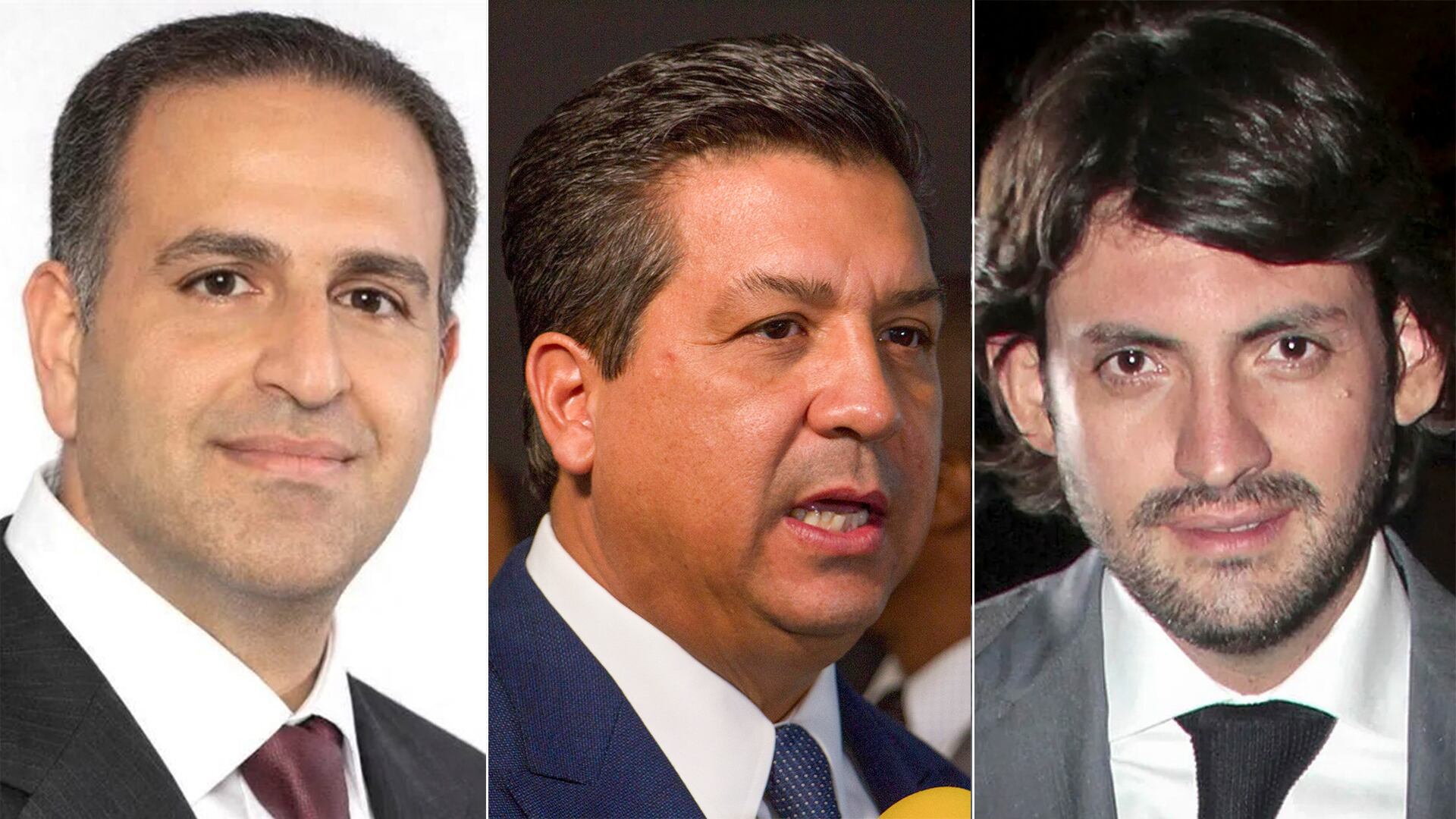
And perhaps the most emblematic case on the list is that of Francisco Cabeza de Vaca, former governor of Tamaulipas, whom the government accuses of organized crime and whom the opposition has tried to portray as a political target.
It is striking that Mexico’s priority list excludes the major fuel‑smuggling scheme at the customs service — the so‑called huachicol — which implicated senior Navy officials, businessmen, front men, and organized‑crime figures. Despite the fact that the case shook Morena governments (it occurred under López Obrador and was exposed under Sheinbaum), and despite the president’s repeated claims that her administration has requested the extradition of those involved, none of them appeared in Velasco’s presentation. What’s more, this newspaper has confirmed that the Jensen family —U.S. magnates accused of trafficking thousands of shipments of stolen Pemex fuel into Texas— is not among the 269 extradition requests.
It is striking that Mexico’s priorities left out the vast fuel smuggling network at the customs known as the fiscal huachicol, which involved senior Navy officials, businesspeople, front men and members of organized crime. Although it was a case that shook the Morena governments (it occurred during López Obrador’s term and came to light under Sheinbaum), and although Sheinbaum said at several press conferences that her government had requested the extradition of those implicated, none of them were mentioned in Velasco’s list. Moreover, this newspaper has confirmed that among the 269 extradition requests the Jensen family, U.S. magnates accused of trafficking thousands of shipments of oil stolen from Pemex into Texas, is not included.
Case by case
The cases Mexico has prioritized were formalized with Washington between 2024 and 2025, in the final year of López Obrador’s term and the first of Sheinbaum’s. Some of those requests arrived too late. One such case is that of Víctor Manuel Álvarez Puga, a tax attorney accused by Mexico of organized crime, money laundering, and tax evasion tied to the diversion of 3 billion pesos from the Interior Ministry during Peña Nieto’s presidency. Part of that money — meant for prison improvements— ended up in Álvarez Puga’s accounts, and was also received by politicians, businesspeople, judges, and celebrities, as revealed by an EL PAÍS investigation.
Beyond this specific case, Álvarez Puga is considered the chief architect of the fraud using invoicing companies — shell firms that pretend to provide services and issue false tax receipts — through which millions were drained from the public coffers. Although the arrest warrant for Álvarez Puga was issued in 2021, Mexico did not request his extradition from Washington until December last year, taking advantage of ICE having detained him for irregularities in his immigration status. According to Velasco, the U.S. denied the request, arguing that the organized crime charge Mexico brings against the lawyer is not considered violent.
Another case tied to Peña Nieto’s administration is the Infonavit embezzlement, involving businessman Rafael Zaga Tawil, his brother Teófilo, and his son Elías Zaga Hanono, all accused by Mexico of organized crime. The scheme centers on Telra Realty, a company linked to the family, and a contract awarded by Infonavit in 2014. Three years later, the agency terminated the contract early, triggering an exorbitant compensation payment to Telra. According to prosecutors, the payment was illegal and allegedly planned by Infonavit officials in collusion with the Zaga family. Mexico requested the extradition of Rafael and Elías Zaga in October 2025. Once again, the U.S. argued that the alleged offense was non‑violent and that the accused did not pose “a danger to society.”
The Ayotzinapa case has become increasingly difficult to unravel due to the number of actors involved and the manipulation of the investigation by authorities. López Obrador pledged to uncover the truth and revived the families’ hopes, but in their view, little progress was made. On the contrary, the president obstructed the case when the trail pointed toward the military.
Even so, shortly before leaving office, his administration requested the extradition of two key figures in the investigation, accused of organized crime, through petitions submitted in June and July 2024. One is former Iguala judge José Ulises Bernabé, who oversaw a police facility where gunmen allegedly took some of the 43 students. Bernabé lives in the United States under political asylum protection. Washington also halted his extradition, requesting additional information and evidence.
The other figure sought by Mexico is Pablo Vega Cuevas, “El Transformer,” a top leader of Guerreros Unidos. Based in Chicago, he coordinated heroin and cocaine shipments from Guerrero to the U.S. using commercial passenger buses. His role is central to the “fifth bus” theory in the Ayotzinapa, which suggests that one of the buses commandeered by the students for their trip to Mexico City was carrying drugs — a detail that may have triggered the cartel’s violent response.
At the top of Mexico’s priority list is the case of former governor Francisco García Cabeza de Vaca, a member of the opposition National Action Party (PAN). In 2020, while still governor of Tamaulipas, prosecutors opened an investigation into alleged money laundering tied to the Gulf Cartel, based on wiretaps provided by the U.S. Drug Enforcement Administration. Mexico’s Financial Intelligence Unit also supplied evidence of alleged illicit enrichment — the PAN politician built a real‑estate empire in the U.S. — as well as diversion of public funds and tax fraud. The investigation extended to his family circle and possible front men.
After leaving office, Cabeza de Vaca immediately moved to the United States — he holds U.S. citizenship — and obtained a court injunction shielding him from arrest in Mexico. However, the Supreme Court later overturned the injunction, leaving him once again exposed to prosecution. Mexico requested his extradition in August 2025. In this case, the U.S. asked Mexico for additional information.
Sign up for our weekly newsletter to get more English-language news coverage from EL PAÍS USA Edition
















 Competiciones3 weeks ago
 Foreign demand3 weeks ago
 New Developments3 weeks ago
 New Developments3 weeks ago
 America3 weeks ago
 New Developments3 weeks ago