
Chicago
The Ghostwriter Of Chapo Guzmán’s Letters: A Mystery In The New York Court

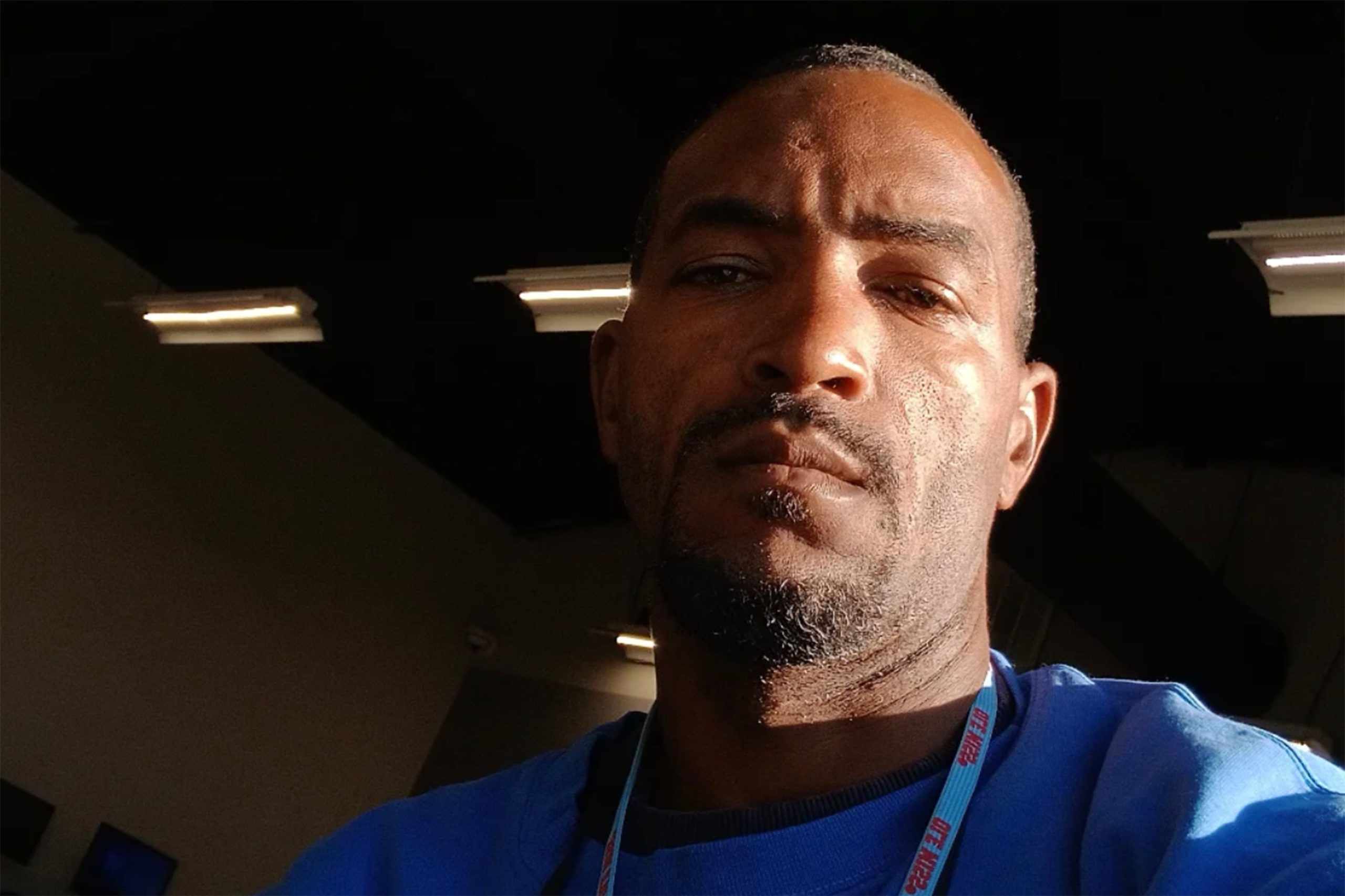
Joaquín Guzmán Loera is distressed. Or at least that is what he has told Judge Brian Cogan in the 23 letters he sent between April 10 and July 13. “El Chapo,” as the former leader of the Sinaloa Cartel is nicknamed, has been serving a life sentence in the United States since 2019 for multiple drug trafficking–related offenses. In each letter he has insisted on the “unfair treatment” he receives in prison and expressed a desire to be extradited. Despite his repeated requests, all were denied by the magistrate. However, the correspondence has raised questions about whether it is really the drug lord who is exploring a new literary side or whether someone else is impersonating him. Documentation and evidence obtained by EL PAÍS reveal that the author of at least two of the letters is a U.S. citizen named Aubrey Gideon, who posed as the Mexican capo in his pleas for mercy from the courts.
Each of the letters, ostensibly written by El Chapo, emphasized the “unfair treatment” he receives in prison, his wish to serve his sentence in Mexico or, in some instances, claimed that President Claudia Sheinbaum has a “safe place” for his incarceration south of the border. In one, Chapo argues that “the Mexican government was responsible for all the violent crimes; They blamed me for things I didn’t do, all because of who I am […] I was known in my country not for bad things. The good things I have done in Mexico are wanting family to eat together and have a great life.” Despite his repeated handwritten requests — composed in halting English with some grammatical errors even as they display an understanding of legal jargon — Cogan replied to a string of five letters with the following message: “Some of these letters are unintelligible and none have legal merit. Therefore, these petitions have been denied.”
Nevertheless, with each letter, very obvious details cast doubt on the sender’s authenticity. Each envelope, recorded in his court file, lists the sender’s address as ADX Florence, the maximum-security federal prison where he has been held since 2019 in Colorado, United States. Yet the mail containers bear postmarks from Jackson, Mississippi — nearly 1,250 miles from the location where Guzmán Loera is incarcerated.
The letters began being signed “Joaquín Guzmán,” then “Joaquín El Chapo Guzmán,” until the most recent listed the sender as “Joaquín El Chapo Loera Guzmán,” with his surnames inverted, even though the capo’s legal family names are Guzmán Loera, in that order. The name Aubrey Gideon, 46, a resident of Greenwood, Mississippi — based on available records — first appears in a letter sent from Jackson on June 10. In that missive, in which he impersonates the former Sinaloa Cartel leader, he complains about his “health situation” in jail and criticizes confinement policies that deny him the “privilege” of family visits. “The letters being received in the courts are my legal petition of Aubrey Gideon in Greenwood, MS 38930 [Mississippi], about his rights and the connection with my lawyer in the fight for my freedom in the United States,” reads a handwritten paragraph in English in which Gideon identifies himself.
Gideon also posted a video on June 27 to one of his three Instagram accounts showing a hand — presumed to be his — dropping two envelopes into a blue mailbox on a public street, the type used for outgoing mail. One envelope shown in the video lists the sender as “Joaquin El Chapo Loera Guzmán”. It includes his inmate number, 89914053, and ADX Florence’s prison address. Comparing the handwriting and ink color with the letters recorded in the court file, it matches one written on June 12, whose receipt and entry in the docket were recorded six days later by the U.S. District Court for the Eastern District of New York.
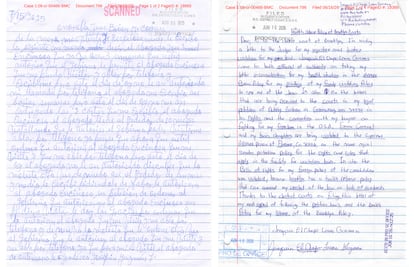
The other envelope seen in the same video lists the sender as Larry Hoover, alias “King Larry,” a former Chicago gang leader serving a 200-year sentence since the 1970s for the murder of a rival gang member.
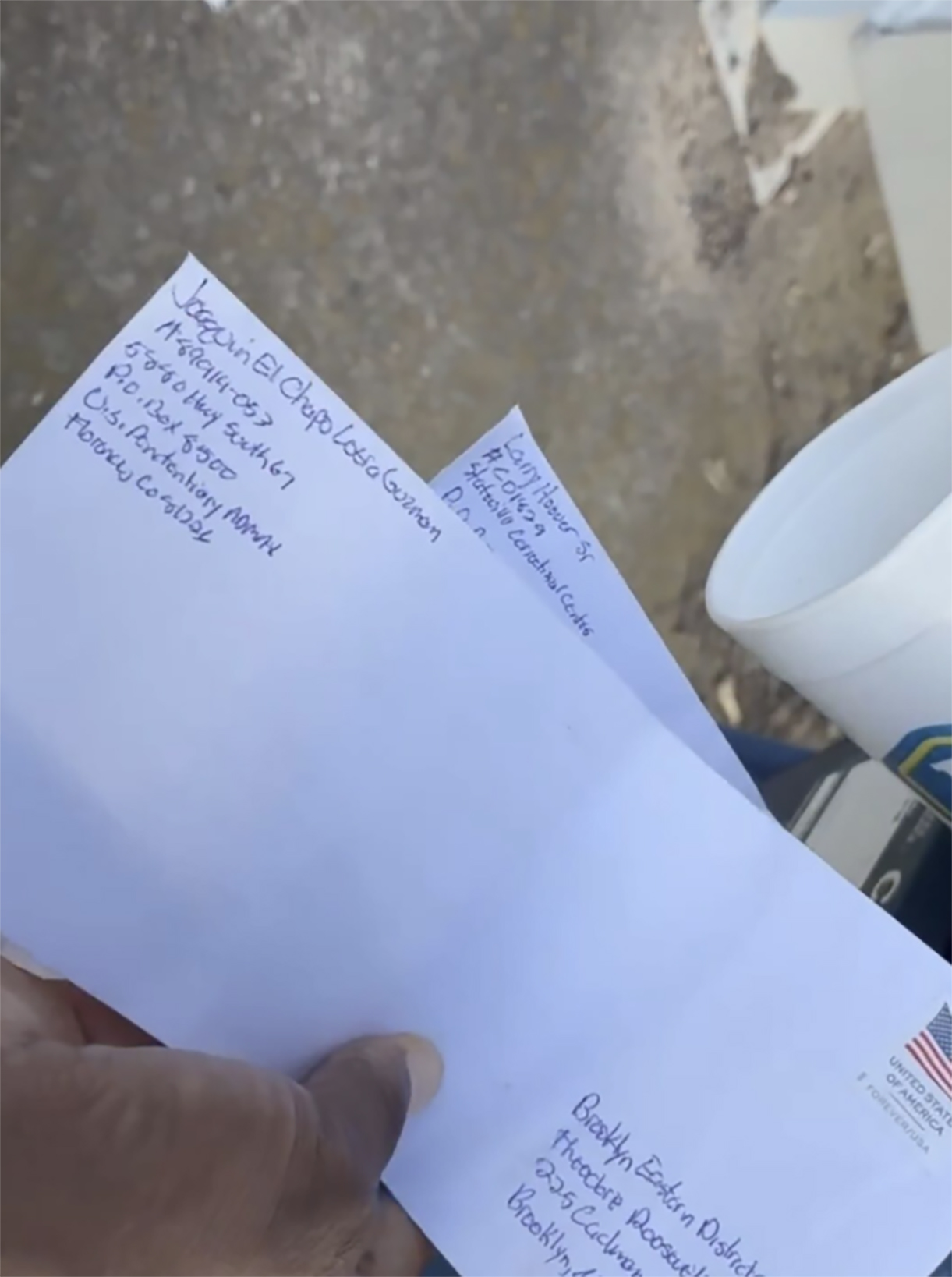
The Instagram account, which had only three posts, was deleted in recent days, but it included an image that revealed another Gideon account on the same social network. On that second profile, the man posted more selfies and videos of himself set to songs by various U.S. rappers. What stands out among the content on his main page are photos of three letters sent on June 16, 2025, and on October 7 and 9 of last year, addressed to Kathy Hochul, governor of New York (though Gideon writes “governor of Brooklyn”), in which he asks that Chapo’s rights be “respected.”
“This letter seeks justice for Mr. Guzmán for his confinement in a maximum-security prison, where his family is not allowed to visit him under United States laws. This letter seeks to denounce the grave injustice committed against Mr. Guzmán by the violation of his rights and also requests the governor of Mexico his release and return to his country, under the law of illegal action against the United States,” reads a continuous fragment of the letter, written in uppercase English with almost no punctuation. The image shows the letter was apparently notarized by Greenwood County circuit clerk Johnny Gary Jr., whose seal and signature appear in the photo.
This newspaper attempted to contact Gideon through his various social networks, both on Instagram and Facebook, but had received no response by the time of publication.
The differences between the letters attributable to Gideon and one in Guzmán Loera’s own hand are notable. For one, Guzmán writes in Spanish — also with spelling errors — but his script is cursive, characterized by slanted, continuous strokes, as shown in a note addressed to Cogan dated July 15, 2025. The capo does not use envelopes or postal service, unlike the other letters, which display block print handwriting — a style in which characters are separate and not connected. Additionally, among Chapo’s longstanding complaints is that he has not been given English classes.
“They’re not him,” Mariel Colón, a member of Chapo’s legal team, told The Los Angeles Times. “We have an investigation into who is sending them.” The lawyer emphasized that neither she nor the other attorneys representing the capo were involved in sending the messages. “It’s somebody crazy,” she said.
The last time Chapo’s inner circle publicly raised concerns about his conditions was in February. On that date, Colón told the Mexican newspaper Reforma that her client had lost a great deal of weight and suffered episodes of tachycardia in recent months. “He is under extremely harsh conditions of confinement; in my opinion they are inhumane and violate the U.S. Constitution. They are cruel,” she said.
Another factor that rules out a direct communication or relationship between Gideon and Guzmán is the strict rules governing ADX Florence for convicted terrorists, known as SAM, which almost completely restrict inmates’ communications with the outside. They may have the right to a handful of family visits, make a few calls and write letters, but always under close supervision by authorities. Nevertheless, according to a U.S. Bureau of Prisons report, El Chapo managed to circumvent the security placed around him. In February 2025, U.S. authorities discovered that the impenetrable walls of the facility — also known as the Alcatraz of the Rockies — had not deterred the capo, famed for his Hollywood-style escapes from two Mexican prisons. Guzmán had managed to send messages, but to his children, through his lawyers.
Despite all the denials he has received from Cogan, Chapo’s ghostwriter has not given up. In a new letter filed in his court folder on July 17, also bearing a Jackson, Mississippi postmark, the writer again insists on his “extradition” and appeals for the “reopening of his case.” Like the other missives, it presents unintelligible English handwriting, shifting between third and first person, with incoherences and in block print. “Today, being extradited to the United States as El Chapo Guzmán, I exercise my constitutional right to freedom of religion and expression, as well as protection against cruel and unusual punishments before the courts and the laws of penitentiary administration.” Signature: “Joaquin El Chapo Loera Guzman.”
Sign up for our weekly newsletter to get more English-language news coverage from EL PAÍS USA Edition






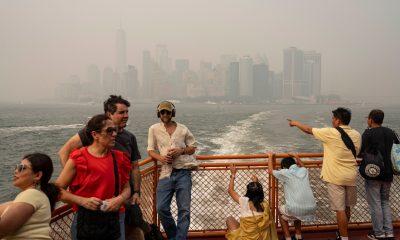




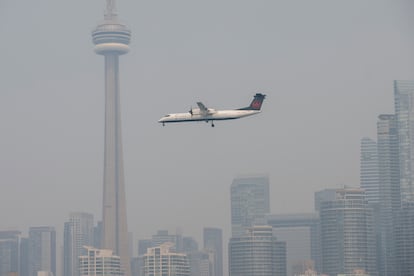
A dark cloud of smoke blanketed New York on Thursday, casting the city in an ashen hue and filling the air with the smell of burning. On the streets of Manhattan, many people wore face masks in the afternoon. In Central Park, Parks Department employees urged the few brave souls who ventured out for a walk to head back home. Those same workers, meanwhile, were instructed by their supervisors to finish their duties as quickly as possible and leave.
These scenes, worthy of the opening of a disaster movie, have their origins hundreds of miles away: in the hundreds of wildfires that have been ravaging the Canadian province of Ontario for days, blanketing the entire northeastern United States and southern Canada in smoke. All of this comes just three days before the World Cup final between Spain and Argentina is set to be played at MetLife Stadium in New Jersey.
Health authorities in both countries have warned of a sharp deterioration in air quality across several communities. After air pollution levels in New York reached the “very unhealthy” category, the city’s Office of Emergency Management urged residents to avoid spending more than an hour outdoors.
Health authorities in both countries warned that air quality has collapsed in several communities. After reaching levels described as “very unhealthy” in New York, the city’s Office of Emergency Management urged all residents to avoid being outdoors for more than an hour. “Listen to your body,” the department wrote in a post on X. “If you have watery eyes, a scratchy throat or difficulty breathing, reduce physical activity and go indoors.”
NYC air quality has reached ‘Very Unhealthy’ levels (AQI 201+). At this level, everyone, not just sensitive groups, may experience serious health effects.
What to do:
✅ Reschedule or move all unnecessary activities indoors
✅ All New Yorkers should avoid strenuous and… https://t.co/3vxjqzL3Fg— NYC Emergency Management (@nycemergencymgt) July 16, 2026
But New York is not the worst of it. Other major U.S. cities, including Chicago, Cleveland, Detroit and Minneapolis, have urged residents to stay indoors as much as possible. Milwaukee has recorded the worst air quality in its history. And in Toronto, Canada, two hospitals reported an 80% increase in visits that may have been linked to the smoke, including respiratory ailments and chest pain.
Chicago records highest pollution index
IQAir, a website that monitors air quality in major cities, reported on Thursday afternoon that Chicago had the highest pollution index in the world, closely followed by Detroit, with both cities registering levels classified as “hazardous.” Next came New York, in the “very unhealthy” category, and Toronto, one step lower, merely “unhealthy.” Only then came the usual fixtures on such lists, including Kinshasa in the Democratic Republic of the Congo, Lahore in Pakistan and New Delhi in India.
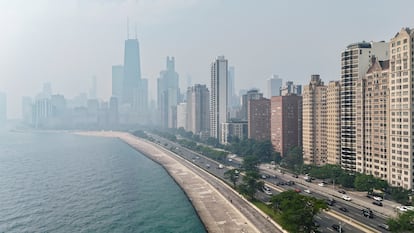
Meteorologists at the National Weather Service say the worst of the Canadian fires has passed and that the smoke covering the entire U.S. northeast should start to clear during Friday. But they warned that new plumes of smoke could return over the weekend (when the World Cup final will be played) and again next week. The smoke may also mix with rainfall on Saturday, leaving an unpleasant layer of soot on streets and cars. It is hardly the image the United States would want to project when the eyes of the world turn to the New York-New Jersey stadium to watch Spain and Argentina contest the FIFA World Cup final.
Unsurprisingly, the problems caused by the multiple wildfires, which are being linked ever more clearly to climate change, have already affected the strained relationship between the United States and Canada. Several Republican politicians have accused their northern neighbour of mishandling the fires. Senator Bernie Moreno, a Republican from Ohio, another state heavily affected by the smoke cloud, said he would introduce legislation to punish Canada for what he described as “an atrocity.”
“This is the third consecutive year we have had to write to Canadian officials about a crisis that Canada has the tools to prevent and has chosen not to,” four Republican members of Congress — John James, Jack Bergman, John Moolenaar and Lisa McClain — wrote on Wednesday in a letter. “Our hospitals are once again treating children, dialysis patients and older residents for the effects of smoke that did not originate anywhere near them.”
“We are asking for specifics, not sentiment,” the four Republicans wrote, adding that the United States might take responsibility itself for preventing cross-border wildfires.
Sign up for our weekly newsletter to get more English-language news coverage from EL PAÍS USA Edition



Beach Panic In La Manga As Mysterious Package Sparks Major Police Response

Palma Prepares For Atlàntida Film Festival

Special Summer Evening In Palma


-

 New Developments1 week ago
Luxury Villas For Sale, Estepona – ProjectL1
-

 New Developments2 weeks ago
How To Get A Tourist Rental Licence In Andalusia (Spain) – Step-By-Step Guide 2025
-

 New Developments1 week ago
Stylish 3-Bedroom Apartment With Panoramic Sea Views – Benalmádena
-
Cataluña wildfire2 weeks ago
Spain travel chaos as Cataluña wildfires close major roads and suspend trains
-
Cheap food options2 weeks ago
Public supermarkets could be coming to Spain. Could they make food cheaper?
-
calpe2 weeks ago
Calpe seafront makeover backed by €278,000 in EU funding
-

 Uncategorized1 week ago
F1 season ticket announced for 2027 and it
-
 Bélgica1 week ago
Bélgica No Logra Repetir La Gesta De 1986: “Pero Hemos Jugado Bien”