
Benjamin Netanyahu
The ICC Stands Firm Against US Pressure: ‘We Are Taking Blows Aimed At International Law’


A phone call from Washington on July 23 was enough for Chad, a Central African country that has been a member of the International Criminal Court (ICC) since 2007, to announce four days later that it was withdrawing from the institution. Chad’s government, led by politician and military officer Mahamat Déby, now argued the court showed “undeniable selectivity” in its focus on the Global South.
On July 24, Venezuela, which was the first Latin American country to join the ICC when it opened its doors in 2002, followed suit. Caracas argued that it “perpetuates the persecution of the Venezuelan people.” Both decisions were welcomed by the United States, which has launched a campaign to dismantle an institution it considers harmful to its national interests, and to those of its key ally Israel, despite not being a member of the ICC itself.
On Tuesday, U.S. authorities imposed sanctions on Tomoko Akane, the president of the ICC. She joins eight judges and four prosecutors who have already been sanctioned by Washington. Those sanctioned are effectively excluded from the U.S. financial system, on which most international banks rely. The sanctions also affect any companies, institutions, or individuals who cooperate with them and directly hamper support for victims of the crimes prosecuted by the ICC: genocide, war crimes, crimes against humanity, and the crime of aggression.
Nevertheless, the ICC continues its work to protect justice and the international rule of law, although it now depends more than ever on its member states to defend its mission and independence.
After Frank García, the U.S. assistant secretary for African affairs, urged Chad to “review its accession to the Rome Statute,” the ICC’s founding treaty, the Chadian government argued that the court’s effectiveness had been “limited and inconsistent” since its creation and that it displayed “an undeniable selectivity” in its treatment of the Global South.
For its part, Venezuela, under U.S. tutelage following the arrest of Nicolás Maduro last January, maintains that the ICC, in addition to “perpetuating the persecution” of Venezuelans, “deepens the inequalities that international justice should be correcting.”
In a statement issued on Wednesday, the ICC described the latest round of sanctions as a “flagrant attack against the independence of an impartial judicial institution which operates pursuant to the mandate conferred by its States Parties from across regions.”
“When judicial actors are threatened for applying the law, it is the international legal order itself that is placed at risk,” it said. “The ICC values the consistent demonstrations of solidarity of States Parties, civil society and all those who support the rule of law and justice for the victims of international crimes.”
European Council President António Costa also weighed in on Wednesday. “President von der Leyen and I stand firmly with the International Criminal Court President Tomoko Akane and the officials who uphold its mission,” he wrote on X. “The ICC helps deliver justice to the victims of some of the world’s most horrific crimes. To carry out this essential work, its judges and officials must be able to act independently and without external pressure.
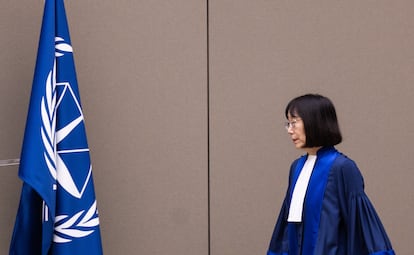
In his first interview since Chad and Venezuela announced their withdrawals, and since the United States began its campaign against the ICC, Osvaldo Zavala, the Court’s registrar, told EL PAÍS that the institution believes that “defending justice is even more important when doing so is difficult.” “We feel that we are taking blows that are fundamentally aimed at multilateralism and the international rule of law,” he added.
The Ecuadorian lawyer put it this way: “The attacks we are facing from major powers at different levels reflect not only the ICC’s relevance, but also the independence and impartiality with which it operates.”
To make his point clear, Zavala stressed that the Court’s work “will always be seen from a political perspective, but it is a judicial organization.”
García’s call was preceded by remarks from U.S. Secretary of State Marco Rubio, who described the ICC as a threat to national sovereignty and later argued: “We will dismantle the ICC—brick by brick, if necessary.”
The current tensions with the United States, Zavala added, “come on top of the difficulties of the past three and a half years, beginning with Russia, which launched criminal proceedings against ICC judges and ultimately, [in 2025], secured prison sentences of up to 15 years against nine of them.” In 2023, the ICC issued an arrest warrant for Russian President Vladimir Putin for the war crime of unlawfully deporting Ukrainian children to Russia.
“In 2023 we suffered a cyberattack, and then came the whole debate over sanctions,” recalled the head of the Hague-based institution. He was referring to the nine judges and four prosecutors currently sanctioned by Donald Trump, as well as anyone who collaborates with the ICC.
At the same time, Zavala emphasized: “There is a great deal of support from member states, and that can also be read as a political message. The court’s budget is today 95% funded; and it is very rare for an international organization to have that degree of liquidity.”
The ICC is therefore pressing ahead. Indeed, Zavala stressed that the court “is working on technical solutions to remain operational, because sanctions have extraterritorial effects even within Europe by targeting any entity that provides material support to the court.”
Burkina Faso, Niger and Mali, three countries in Africa’s Sahel region, as well as Burundi and the Philippines, had previously expressed their intention to leave the ICC, although those decisions were unrelated to U.S. pressure. Withdrawals take effect one year after notification and do not affect investigations already underway, which continue regardless.
The announcements by Chad and Venezuela coincided with the dismissal of Karim Khan as ICC chief prosecutor over inappropriate sexual conduct.
“Not all of these withdrawals are the same,” war-crimes lawyer Reed Brody said in a telephone interview. “Burundi and the Philippines tried to evade investigations into their own crimes, but they did not succeed.”
As evidence, he pointed to the fact that former Philippine president Rodrigo Duterte is due to appear before the ICC from November over killings committed during his country’s war on drugs.
Reed believes that the three Sahel states, all governed by military juntas, “are withdrawing as a sign of rupture with the West.” As for Venezuela and Chad, there, “Washington’s hand is visible.” “The Chadian statement itself acknowledges that the United States asked it to ‘reconsider’ its accession, and Venezuela’s government is now operating under Washington’s direction,” Brody said.
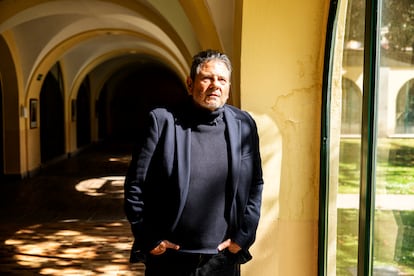
For Alette Smeulers, professor of international crimes at the University of Groningen, the United States is seeking to advance a new world order “in which the strongest decide without any limitations.” She said the Trump administration “is trying to tear down the international legal order by dismantling the ICC.” In her view, this approach “gives others the opportunity to do the same and gain more power for themselves.”
Both experts agree on the dangers of a world order “where the ‘good guys’ would be the countries loyal to Trump,” as Smeulers put it. Contrary to Washington’s claims, she argues, the ICC does not limit state sovereignty: “It only limits states’ actions by preventing them from committing serious human-rights violations and the gravest crimes the court prosecutes, within the territory of the court’s member states.”
On January 8, Trump made clear what he sees as the only check on his authority as commander in chief: “My own morality. My own mind. It’s the only thing that can stop me.”
For the University of Groningen professor, such rhetoric “is almost a form of psychological manipulation.” Trump, she says, claims that his opposition to the ICC “is about protecting freedom and democracy, when in reality he is trying to dismantle all the checks and balances that ensure governments cannot rule without restraint.”
Brody argues that the European Union should activate its Blocking Statute as soon as possible to neutralize U.S. sanctions against ICC officials. He also proposes that “the U.N. General Assembly condemn these sanctions and request an advisory opinion from the International Court of Justice on their legality.”
For her part, Smeulers advocates “forming a common front of all ICC member states to see how they will protect it.” “European countries, Western countries and many African and Latin American countries support it,” she says.
The ICC has no police force of its own to enforce arrest warrants, whether against a seemingly less powerful African suspect, Russian President Vladimir Putin, or Israeli Prime Minister Benjamin Netanyahu.
“There is unequal commitment to the court, but even countries most indulgent toward Israel for historical reasons, such as Germany, have defence of international law in their DNA,” said Brody.
Sign up for our weekly newsletter to get more English-language news coverage from EL PAÍS USA Edition








Baltasar Garzón
Fergie Chambers, The US Millionaire Activist Detained In Ibiza: ‘I Am A Human Rights Defender’


July 10. A foreign couple planning to settle in Ibiza are driving along a rural road in the north of the Spanish island. They are looking for a school for their son and are headed to visit one of their options. He is James “Fergie” Chambers, heir to the fortune of one of the wealthiest families in the United States, the telecommunications giant with annual revenues of $20 billion. He is 41 years old, a pro-Palestine activist, and identifies as Marxist-Leninist and a revolutionary. She is Stella Schnabel, an actress, producer and daughter of the filmmaker who directed, among other titles, Before Night Falls, the movie that earned Javier Bardem an Oscar nomination in 2001.
“All of a sudden,” says Schnabel to EL PAÍS in a Madrid hotel, “there are five cars. There’s three in the front, two in the back, and they’re unmarked. There are three women and three men. They said they were civil police and that they had to take in Fergie immediately on charges of money laundering. I was totally shocked, although I’m always thinking that something could happen with the present situation in America.”
The charges were indeed stemming from the U.S. government. The Interpol Red Notice, to which EL PAÍS had access, states that Chambers is accused of three offenses: money laundering, rioting, and conspiracy to riot (a charge that does not exist in the Spanish legal system), carrying a combined maximum sentence of up to 30 years in prison in the United States. The order briefly mentions his alleged financial support to organizations in Gaza that could be tied to Hamas.
EL PAÍS asked Chambers, via his spouse, about the groups he has supported in Palestine. From prison, the activist sent the following response: “I am not Palestinian and have no control over who they vote for. I am a human rights defender, and that is why I will always offer my moral support to people who are fighting for their lives, for the lives of their children and for freedom. Whether it’s the CNA [the historic party of Nelson Mandela] in South Africa; the FNL [the party that won the country’s independence] in Algeria; the Allies against Hitler in the 1940s or any other anti-colonial struggle. I will always support these people and their rights.”
According to Spanish law, the United States has until approximately August 26 (from 40 to 45 days, depending on whether the applicable framework is the extradition treaty or Spain’s extradition law) to submit the documentation supporting its request for Spain to hand Chambers over to stand trial in a U.S. court.
And that is the limbo in which the activist and his family now find themselves: waiting for the formal extradition request to arrive and hoping that, once Spanish authorities review it, they will conclude that the charges are politically motivated, one of the grounds on which extradition can be blocked, and bring the proceedings to a halt.
Once the request has passed review by Spain’s high court, the Audiencia Nacional, and if the court approves it, the final decision rests with Spain’s Cabinet, according to Spanish extradition law. The Cabinet is next scheduled to meet on September 25. The Spanish government, led by Prime Minister Pedro Sánchez, will have to decide whether to grant the U.S. extradition request at a time when its relations with the Trump administration are particularly tense.
The White House has openly criticized Spain over the immigration crisis in Ceuta after 70,000 entered the Spanish exclave city. Trump recently described Spaniards as “a lost cause” and said he had no interest in a trade deal with the country due to its delay in raising its military spending and refusal to allow the U.S. to use the military bases at Rota and Morón to refuel aircraft involved in the war with Iran. Trump later said, however, that the Spanish government had “redeemed itself” by committing to “an important payment.”
Meanwhile, Sánchez’s firm stance on the Gaza massacre and Spain’s leadership in recognizing Palestine as a state have provoked angry reactions from Israel’s chief ally, the United States, as well as from Israeli Prime Minister Benjamin Netanyahu.
For Chambers’s wife and his legal team, led by former high court judge Baltasar Garzón, there is no doubt that the international arrest warrant is the result of “political persecution” by the United States because of his support for the Palestinian cause and his activism against what he describes as Israel’s “genocide” in Gaza. “They can make up anything they want. Right now, there’s a new witch hunt under way in the United States. It’s very frightening,” says Schnabel.
Trump has sanctioned eight judges and three prosecutors from the International Criminal Court for carrying out investigations related to the United States and Israel. One of those sanctioned, Ugandan appeals judge Solomy Balungi Bossa, told EL PAÍS in a recent interview: “Trump views us the same way as terrorists and drug peddlers.” She added that the sanctions were an attempt at “coercion” aimed at obstructing investigations into war crimes and crimes against humanity.
Baltasar Garzón’s law firm places the warrant for Chambers’s arrest within that broader context and notes that the United States has also sanctioned Francesca Albanese, the U.N. special rapporteur on the Occupied Palestinian Territories. The U.S. State Department has accused her of “antisemitism” and of supporting “terrorism.”
Once it receives the extradition request for Chambers, the Spanish government will have to decide whether one of the world’s leading democracies is engaging in “political persecution” serious enough to prevent one of its citizens, currently being held in Aranjuez prison, from being tried with full due process guarantees.
Pending the more detailed account that must be included in the extradition request once it is formally submitted, Interpol’s notice states that Chambers is accused of “money laundering” in connection with a transfer that U.S. authorities regard as suspicious, totaling $7.5 million to Tunisia, where the activist had been living before deciding to move to Ibiza with his wife.
“I have family in Spain,” Schnabel explains. “I’ve been coming here my whole life; my middle name is Madrid. My father named me after a racehorse who won the Kentucky Derby.”
Chambers’ wife explains that the transfers were “not an investment.” “He gave this money away to pay the debts and salaries of the players of a football team, the Club Africain, which is the team the country’s working class follows, like the Rayo Vallecano in Spain,” she says.
“In Tunisia, we rented the house of a man who used to be the president of the team, and I became friends with his daughter,” she continues. “When we went to one of their matches, Fergie saw the rigor and excitement of the fans, as well as their total devotion and support for Palestine, and he kind of fell in love. There were these incredible banners and artwork 65 feet tall [in support of Gaza]. Fergie, who has always been obsessed with sports, saved the club from financial ruin.” Chambers has a development and management company named JII Sports.
A million dollars for Palestine
Chambers also donated, according to his lawyers, around a million dollars to “humanitarian projects and causes” in Gaza under the supervision of his foundation’s technical advisor. Of that donation, they say that $550,000 went to the Middle East Children’s Alliance, which provides “direct aid including food, medicine, medical supplies, and clothes as well as books, toys and school supplies […] to children in Palestine, Iraq and Lebanon”; another $370,000 to The Sameer Project (TSP), which funds small businesses like bakeries; $300,000 to the People’s Health Movement, which raises funds to rebuild health care facilities and bring equipment and medicine to Gaza; $200,000 for the Ghasan Abu Sittah Children’s Fund, which helps injured kids; and $100,000 to The Zaynab Project, which provides psychological support to victims of war.
“All these organizations can be verified,” says Schnabel. “Fergie sent the money so that a bakery could make 2,000 loaves of bread a week. He has given money to a girl who was a refugee in Paris to have dialysis on her kidney, to orphans…”
When asked if she could confirm that her husband has not financed Hamas in any way, she responds: “Absolutely. And it’s really hard to hear that. This was humanitarian aid and we can prove where each donation went. I come from a family of Jewish origin.” Her father, film director Julian Schnabel, previously opposed calls to boycott actors Gal Gadot and Gerard Butler at the Venice Film Festival because of their support for Israel.
Several international media outlets have highlighted past statements by Chambers defending Hamas following the October 7, 2023 attacks in Israel, in which 1,200 people were killed. In particular, they point to a post on X in which he wrote: “No faction of the Palestinian resistance, Hamas or other, has done *anything* wrong.” Schnabel has made her spouse’s social media profiles private and says that she doesn’t remember that particular message, but insists none of their money has gone to fund terrorist groups.
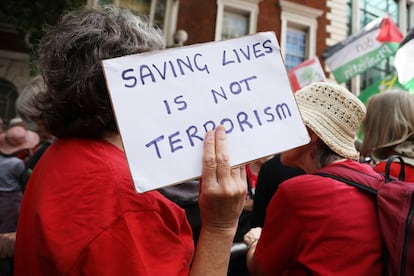
Chambers’s activism has led him to support the group Palestine Action in a variety of ways. Founded in the U.K. in 2020, the organization aims to carry out “disruptive action” campaigns and primarily targets the facilities of Elbit Systems, a military technology company whose main customer is the Israeli army. In an interview published in 2025, Chambers acknowledged taking part in one such action: “I locked myself to a door.”
Last June, four members of the group were sentenced in the U.K. to prison terms ranging from four to almost eight years for destroying several drones during an operation against the Israeli company. Amnesty International criticized the British courts for introducing a “terrorist connection” into the case against the activists, arguing: “The defendants in today’s case were sentenced as terrorists because prosecutors want to make an example of them and set a precedent for how direct action protesters could be treated in the future. Criminal damage has never been treated as terrorism within the U.K. justice system before.”
Another action against the company took place in Merrimack, New Hampshire, in November 2023. While several demonstrators held a banner outside, others spray-painted the building and climbed onto the roof with smoke bombs. Chambers was interviewed at the scene by a local news station. Four women were arrested. They were ultimately sentenced to 60 days in jail and issued restraining orders barring them from approaching the company.
Schnabel says that her husband has dedicated himself to “economically sustaining” some of those activists, but that it would be incorrect to speak of him as a “coordinator” of such actions because “the group organizes spontaneously online.” The office of Baltasar Garzón believes that the accusations of “rioting” and “conspiracy to riot” — which are briefly mentioned in the arrest warrant — may be related to Chambers’ support for Palestine Action.
This is not the first time Chambers has run into trouble with authorities, although never on this scale. According to Schnabel, and as Chambers himself recounted in a 2024 interview with Rolling Stone, shortly before leaving the United States for Tunisia, he was arrested in Atlanta after taking part in protests against the clearing of an urban forest to make way for a police training facility known as Cop City. The issue was particularly personal for him because the executive responsible for fundraising for the project was his cousin, Alex Taylor, CEO of Cox Enterprises. He was also arrested for vandalizing a McDonald’s during a pro-Palestinian demonstration in Washington, D.C.
Chambers has donated considerable sums to organizations like The Black Alliance for Peace and the Abolitionist Law Center. He also founded a “socialist commune” in Massachusetts. He is an immensely wealthy person whose primary contradiction — say his critics — is his apparent commitment to dismantling the system that allowed people like himself and families like his own to accumulate such wealth. His father, James Cox Chambers, whom the activist has defined on occasion as “the family’s first black sheep,” works in the film industry and in promoting renewable energy. He is also, according to Schnabel, “one of the largest donors of the Democratic Party in America.” In 2004, he married Nabila Khashoggi, the daughter of Adnan, a Saudi arms dealer who died in 2017.
Chambers traveled to the Donbas region in 2022 to speak with supporters of the Russian presence in the region. His first wife was Russian, and he speaks the language. Schnabel insists that many of her husband’s statements “have been taken out of context.” “Fergie speaks with directness as well as in an oppositional way towards the ruling class, which they don’t like. He grew up surrounded by millions of dollars, and most wealthy people today are far right and don’t understand him. But all he does is help people, without any personal gain. Even with his foundation, his name is not even attached to it.”
In Rolling Stone, Chambers said his mother first took him to a psychiatrist when he was six years old, that he was admitted to a hospital at 12, and that he was raped there by another patient. “I think he’s a pretty strong person, mentally. But I think he’s very worried,” says Schnabel, who visited him on August 4 at the Aranjuez Prison. “The thing that he’s asking for is books. He asked me for one by Gramsci, and I also brought him The Aleph by Borges, some fantasy.”
Sign up for our weekly newsletter to get more English-language news coverage from EL PAÍS USA Edition
Alexandria Ocasio-Cortez
Democratic Primaries Reveal Israel’s Waning Political Influence In The United States

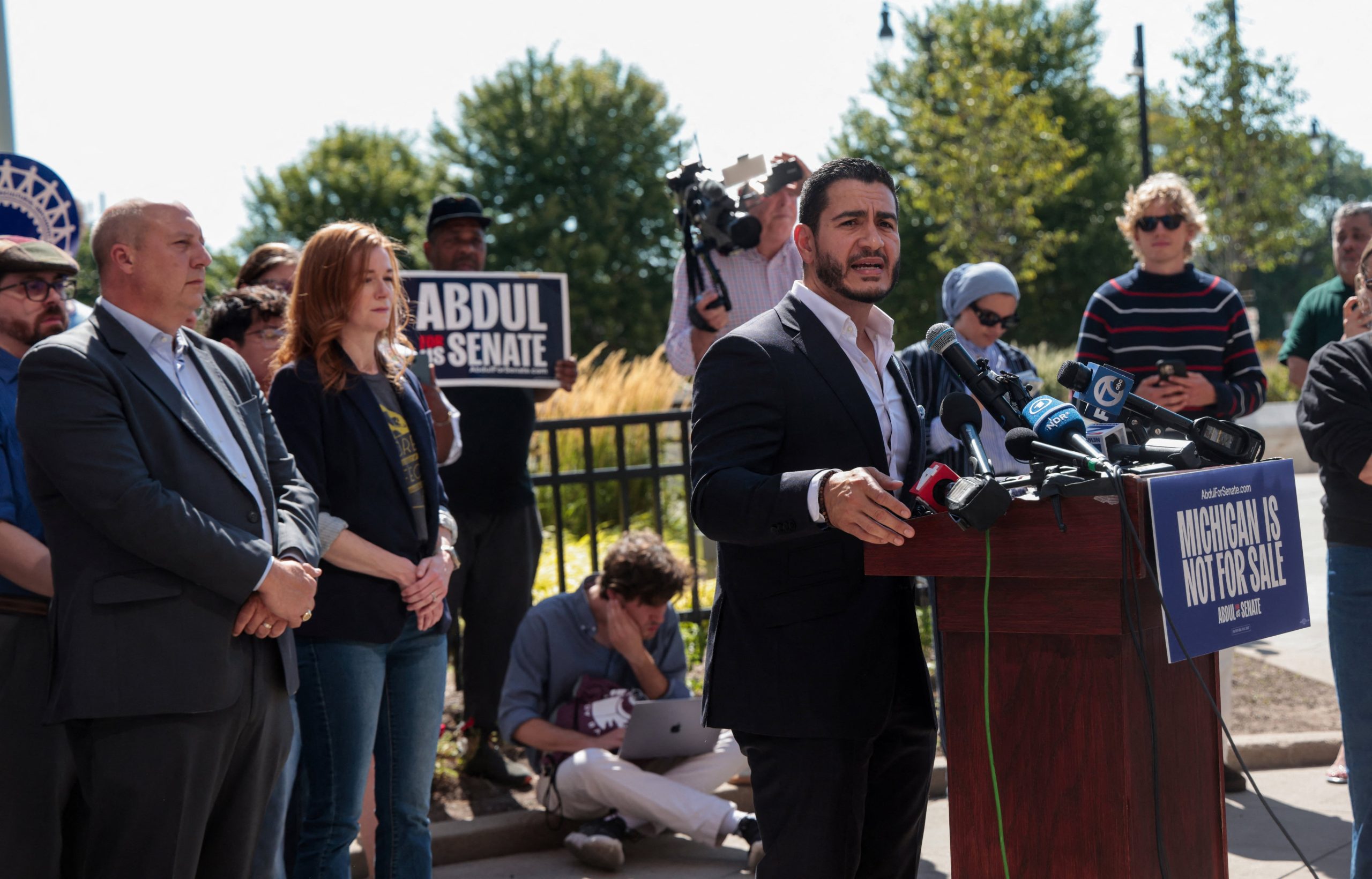
AIPAC has become a toxic word for many Americans. The acronym stands for the American Israel Public Affairs Committee, an organization founded in the 1950s to promote strong relations between the United States and Israel. But in recent years the organization has become a polarizing force in the United States, pouring millions into campaigns for pro-Israel candidates and seen by many citizens as synonymous with the shadowy influence of money in politics.
The latest politician to find that out is Representative Haley Stevens, whose bid last week to become the Democratic nominee for the U.S. Senate in Michigan ended in defeat. Stevens enjoyed the backing of her party’s establishment and the generous support of the pro-Israel lobby, which poured $30 million into her campaign, a record-breaking amount. But she ran up against the appeal of Abdul El-Sayed, the progressive candidate who built his success on the idea of ending the sway of special interests in electoral campaigns. “Get money out of politics, put money in your pocket, and pass Medicare for All” has become his rallying cry. And the first part of that message is aimed above all at one target: Israel’s political influence in Washington.
In an interview with The New Yorker shortly before the primary, El-Sayed acknowledged that the millions of dollars AIPAC spent to defeat him had allowed him to cast himself as a kind of David versus Goliath. “You gave me a gigantic platform. Thank you so much, AIPAC donors. I’m so grateful for you,” he said. If he wins the November 3 election, El-Sayed will become the first Muslim senator in U.S. history.
Three pillars under pressure
Aaron David Miller has spent half a century observing U.S.-Israel relations. He spent the first 30 years in government — advising six secretaries of state in various rounds of Arab-Israeli negotiations until 2003 — and the last 20 as an analyst. He says he has never seen a situation as fraught as the current one. “Over these decades, the relationship between the two countries has rested on three pillars: shared values, common interests and a strong bipartisan base of support in the United States. All of those elements are now under extreme pressure,” said the Carnegie Endowment for International Peace fellow by phone.
Given the complexity of the issue, Miller resists making a definitive conclusion about where the relationship between the — until now — close allies is headed. But he points to two factors that will set the tone: who will win the October 27 elections in Israel — Prime Minister Benjamin Netanyahu, he says, is opposed by most Americans — and ending the long-standing taboo surrounding the $3.8 billion in U.S. aid to Israel.
El-Sayed’s success is not an isolated case. Democrats most critical of Netanyahu have turned circumstance into an advantage, repeatedly highlighting AIPAC and the money spent to defeat them as proof of their independence, while drawing attention to their rivals’ ties to the pro-Israel lobby. It is a strategy that worked for congressional candidates backed by New York Mayor Zohran Mamdani. But it is no guaranteed formula for success: other Democrats running on similar platforms have failed. El-Sayed’s victory — by a razor-thin margin of just 15,000 votes — also highlights the deep divisions among Democrats over issues such as Israel.

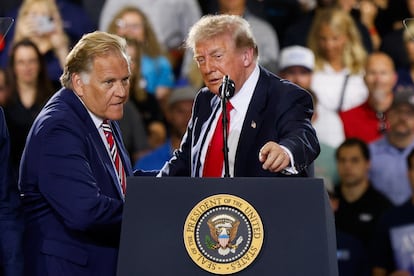
Meanwhile, Republicans have already begun campaigning on the claim that El-Sayed is hostile to Israel and to Jews. They hope that message will help their candidate, Mike Rogers, win Michigan’s Senate race in November. The battleground state, which Trump carried in the 2024 presidential election, could prove crucial in determining control of the Senate. But Republicans are not monolithic in their support for Israel either. Many still recall Vice President J.D. Vance’s public rebuke of Netanyahu in June over what he saw as the Israeli leader’s obstruction of the peace process with Iran. “If I was in the cabinet of the Israeli government, I might not be attacking the only powerful ally that I have anywhere left in the entire world,” he said.
“El-Sayed’s victory suggests a Congress that is increasingly likely to treat the relationship with Israel as less exceptional, with aid leveling out to what other countries receive — an idea shared by both Democrats and Republicans,” says political strategist and Haaretz analyst Dahlia Scheindlin from Israel. “If a significant number of Democrats deeply critical of Israel enter Congress after the midterm elections, the United States will give much more limited support. There will be a reduction in arms exports and financial aid,” adds Scheindlin, who holds dual nationality.
From nonpartisan group to campaign financier
AIPAC’s spending on U.S. campaigns has grown as the two countries’ interests diverged. An organization that began as a nonpartisan platform lobbying Congress and sending lawmakers to Israel changed its role as it saw what it regarded as growing anti-Israel sentiment in some Democratic quarters. Key turning points included the 2015 nuclear agreement with Iran negotiated by the Obama administration and the rise of the Squad, a group of progressive lawmakers that included Alexandria Ocasio-Cortez and was viewed by AIPAC as overly sympathetic to the Palestinian cause.
In 2022, AIPAC created a vehicle to finance campaigns of candidates favorable to its interests, and its spending has risen steadily ever since. Four years ago, it spent $29 million; by 2026, that figure had climbed to $67 million, making it one of the biggest political spenders in the United States. According to an analysis by The New York Times, AIPAC funded 109 television and digital advertisements over the past four years, but only six explicitly mentioned Israel, a practice that has fueled criticism that it operates opaquely and without clearly disclosing its objectives.
I appreciate AIPAC proving it doesn’t belong in the Dem Party and especially our primaries.
From endorsing Jan 6th members to ensuring Congress remains in the hands of a 34-count felon, AIPAC is an org committed to undermining democracy at home and abroad.
See you in November. https://t.co/EKpNSaxcv3
— Alexandria Ocasio-Cortez (@AOC) August 5, 2026
Following El-Sayed’s victory, AIPAC issued a statement warning that it would do everything in its power to prevent the Democratic candidate, the son of Egyptian immigrants, from winning the general election. El-Sayed has openly described Netanyahu’s conduct in Gaza as genocide and has called for an end to unconditional U.S. support for Israel.
“I appreciate AIPAC proving it doesn’t belong in the Dem Party and especially our primaries,” Ocasio-Cortez replied on social media in response to the statement. “AIPAC is an org committed to undermining democracy at home and abroad. See you in November.”
Despite protests from Israel’s strongest supporters, it is clear that something is shifting in U.S. politics. Former vice president Kamala Harris, who has become increasingly open about her intention to seek the White House again in 2028, has endorsed El-Sayed ahead of the November election. The move is notable given that many analysts cited the Biden-Harris administration’s support for Israel as one of the factors that hurt her 2024 campaign and helped pave the way for Trump’s victory.
It is further evidence that traditional support for Israel is fracturing. And the upcoming midterm elections will be a crucial test of just how indissoluble the decades-old relationship between the two countries really is.
Sign up for our weekly newsletter to get more English-language news coverage from EL PAÍS USA Edition


Un Joven Armado Con Una Espada Mata A Una Persona Y Hiere Tres En Un Instituto De Suecia
Ronda’s September Feria returns with bulls back in the ring after two years away
Almería’s 2027 total eclipse already pushing hotel prices and demand through the roof
EU Tells Meta, TikTok To Boost Monitoring, Fact-Checking
Fireworks disaster at Costa Blanca spectacular leaves 27 injured in Altea

Courageous Costa Del Sol Father Seeking To Raise Funds For Specialised Treatment In Germany As He Battles Brain Cancer


-
Latest2 weeks ago
EU Tells Meta, TikTok To Boost Monitoring, Fact-Checking
-
Altea2 weeks ago
Fireworks disaster at Costa Blanca spectacular leaves 27 injured in Altea
-
 Andalucia2 weeks ago
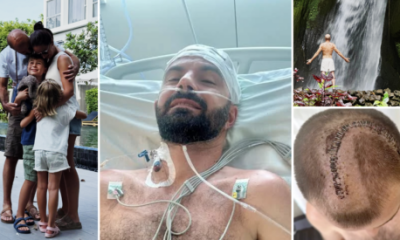
Courageous Costa Del Sol Father Seeking To Raise Funds For Specialised Treatment In Germany As He Battles Brain Cancer
-

 800 metros lisos1 week ago
Attaoui Saca Un Bronce En 800m De La Casi Nada
-

 Bogotá2 weeks ago
Última Hora Del Terremoto En Colombia, En Directo | Al Menos 132 Muertos Y 570 Heridos Por El Seísmo De Magnitud 7,4
-

 New Developments2 weeks ago
Stylish 3-Bedroom Apartment With Panoramic Sea Views – Benalmádena
-
Latest1 week ago
EU Curbs On ‘forever Chemicals’ In Food Packaging Kick In
-
Latest2 weeks ago
Ceuta Leader Wants Detention Centre As Spain’s Migrant Crisis Deepens