Connect with us

%

The School Choice In Spain Most Expat Families Live To Regret

Published

on

the-school-choice-in-spain-most-expat-families-live-to-regret

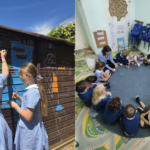
A dynamic and supportive educational environment.Credit: International School Estepona.

Most families moving to the Costa del Sol make the school decision fast, usually based on proximity, what other expats have done, or a quick Google search. Three years later, many wish they had thought harder. The gap between a British and Spanish education is not just about language. It shapes your child’s academic foundation, their ability to transition if you move on, and the level of support they receive if they need it.

This is the honest comparison most school prospectuses will not give you.

What do British and Spanish schools in Spain actually offer?

British and Spanish schools in Spain operate under entirely different frameworks, and understanding that difference is the starting point for everything else.

Spanish state and private schools follow the Spanish national curriculum, the LOE/LOMLOE framework. Lessons are delivered in Spanish, with English taught as a subject. The structure runs from Infantil (age 3) through Primaria (6–12) into Secundaria and eventually Bachillerato. It is a broad, content-led system with a strong emphasis on the Spanish language and national identity.

British international schools follow the UK national curriculum, teaching through English with Spanish as a structured daily subject. The British primary phase covers roughly ages 2–11, focusing on strong foundations in reading, writing, numeracy, and language before children move into secondary education, whether that stays in Spain or moves back to the UK or another country.

The International School Estepona is a British primary school serving children from age 2 to 12 across the Costa del Sol. With small class sizes, Spanish lessons every day, and a curriculum built on strong English literacy and language, it offers what many families in the Estepona and Marbella area are looking for: a serious, structured start that travels with the child wherever life takes them next.

Key takeaway: These are not just different schools; they are different educational systems. Your choice in the primary years sets the academic foundation your child carries into everything that follows.

The reality nobody puts in the prospectus: life on the Costa del Sol is transient

Most people who move to the Costa del Sol do not stay for the entirety of their child’s academic journey from age 2 to 18. Expat life in Marbella, Estepona, Benahavís, and Fuengirola is transitional. Families arrive for work, lifestyle, or opportunity. Some stay five years. Some stay two. Some move on to Dubai, back to the UK, or to another European city. Very few decide at age 3 that this is where their child will complete all sixteen years of education.

If there is any meaningful chance your family will relocate, a British primary education is significantly lower risk. A child educated in English, following the British curriculum with Spanish as a strong secondary language, can step into a British, Irish, Australian, or international school and continue with minimal disruption. A child educated entirely through the Spanish system, who has built their academic identity in Spanish, faces a much steeper transition at age 9, 10, or 11.

Giving children a strong base in English reading, writing, and academic language during the primary years is not a rejection of Spain. It is a practical decision that keeps options open in a life that will likely involve more than one country.

Key takeaway: For families whose future plans are uncertain, a British primary education offers academic portability that a Spanish-only education cannot.

How does language of instruction affect development?

Language is the most contested factor in this decision, and the one most parents underestimate.

Younger children immersed in a Spanish school environment will often achieve conversational fluency in Spanish within 18–24 months. For very young children with no prior Spanish, immersion is often the fastest route to fluency, but it comes with a short-term academic cost. While a child is decoding a new language, maths concepts, reading comprehension, and core learning can lag behind.

For older children arriving at age 9, 10, or into secondary school, the challenge is greater. Conversational Spanish comes relatively quickly, but academic language – the vocabulary needed to understand science, history, or geography in Spanish – takes years to build. A child who joins a Spanish secondary school without strong prior Spanish may spend years working below their potential.

A British school environment addresses this by teaching the full curriculum in English while delivering Spanish as a structured daily subject. At The International School Estepona, Spanish is taught every day in a planned, measurable way rather than left to chance. Children develop real Spanish alongside their core subjects without sacrificing academic progress.

The result is not full bilingual immersion. It is something arguably more valuable for mobile families: a child who is academically strong in English and functionally capable in Spanish, able to integrate socially in Spain while remaining academically portable.

Key takeaway: Daily structured Spanish in a British school builds real language skills without derailing academic progress, a practical combination for families who may not stay on the Costa del Sol indefinitely.

British vs Spanish curriculum: why structure matters in the primary years

The British and Spanish curricula are built on different philosophies, and those differences show up in the classroom from the earliest years.

The Spanish primary curriculum offers broad subject coverage taught in Spanish, with a strong emphasis on content knowledge, written work, and national identity. Progression is largely teacher-led, with significant weight placed on tests and content recall.

The British primary curriculum is built around the Early Years Foundation Stage (EYFS) and Key Stages 1 and 2. It places early, explicit emphasis on phonics-based reading, structured writing, and mathematical reasoning. Assessment is regular and developmental, focused on where each child is and what they need next, rather than simply pass or fail thresholds.

For primary-age children, this structured approach to reading and writing tends to produce strong literacy foundations – skills that transfer across languages and subjects throughout a child’s academic life.

Key takeaway: The British primary curriculum’s emphasis on phonics, structured writing, and developmental assessment builds literacy skills that travel with your child, wherever they go next.

Learning difficulties and SEN: where the British system often serves children better

For families with a child who has a learning difficulty or special educational need, this may be the most important difference of all.

The British special educational needs (SEN) framework is one of the most developed in the world. In well-run British international schools, the identification, assessment, and support process for dyslexia, ADHD, processing difficulties, autism spectrum conditions, and other needs is structured and documented. Staff are trained to spot early signs. Referral pathways exist. Support plans are written and reviewed.

In Spain’s school system, particularly in private and international schools, provision is more variable. State schools have increased SEN provision, but assessment can be slow, waiting lists long, and the framework for documenting and following an individual child’s needs is less consistently applied. A bright child with dyslexia, or a child on the autism spectrum without obvious behavioural issues, can go unidentified for years.

A British primary school with an active SEN process means that if your child is struggling, there is a structure in place to identify it and respond. Early identification in the primary years often determines whether a child’s secondary school experience is a success or a struggle.

Key takeaway: For any family where learning difficulties are diagnosed or suspected, a British primary school’s SEN framework typically offers earlier identification and better-structured support than most Spanish options.

Social integration and life in Spain

School choice does affect your child’s social life in Spain, but not always in the way parents assume.

Children at British schools in Spain tend to form friendships within an English-speaking international community – British, Irish, Scandinavian, South African, and others. It is a stable, familiar environment, especially for children who have just relocated and need grounding quickly.

Children at Spanish schools often integrate into local Spanish life faster. They develop Spanish friendships, local cultural fluency, and a social identity rooted in Spain. For families who are certain they are staying long-term and want their children to grow up as fully Spanish, that matters.

However, most Costa del Sol families are not certain how long they will stay. For these families, the risk of some social isolation at a British school is usually easier to manage than the academic disruption of uprooting a child from a Spanish-medium education at age 9 or 11 and switching them into an English-speaking secondary school.

Many families manage this balance by supplementing a British education with intentional Spanish life: local football clubs, Spanish-speaking playdates, and community activities. This produces children who are academically secure in English and genuinely comfortable socially in Spain.

Key takeaway: British schools provide social stability and academic portability; Spanish integration works best when families actively build Spanish life outside school hours.

What should you do next?

The decision comes down to three questions: How long are you likely to stay in Spain? Where do you want your child’s secondary education to take place? And does your child have any learning needs that require specialist support?

If your answers lean towards uncertainty, possible relocation, and a desire for a solid, transferable foundation, a British primary school is the lower-risk choice for ages 2 to 12.

For families on the western Costa del Sol, in Estepona, Marbella, BenahavĂ­s, and surrounding areas, The International School Estepona offers exactly that: a British primary education from age 2 to 12, small class sizes, daily Spanish lessons, and a clear focus on giving every child the strongest possible academic foundation before they transition to secondary school, wherever in the world that may be.

%

Electric Scooter Crackdown In Gibraltar Over 25km/h Limit Could Leave Commuters Without Vehicles

Published

on

electric-scooter-crackdown-in-gibraltar-over-25km/h-limit-could-leave-commuters-without-vehicles

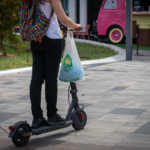
For those commuting from Spain into Gibraltar, the new regulations mean scooters must comply with Gibraltar’s speed restrictions. Photo credit: Maria Albi/Shutterstock

Electric scooters and other personal electric transporters capable of travelling above 25km/h will be confiscated in Gibraltar from  May 18 under new government regulations aimed at tightening road safety rules.

The measures form part of Gibraltar’s first formal framework regulating Personal Light Electric Transporters (PLETs), a category that includes electric scooters and similar battery-powered vehicles increasingly used for commuting across the territory and nearby areas of southern Spain.

New enforcement powers introduced

Under the new rules, Gibraltar authorities will be able to stop and inspect electric scooters using mobile speed detection equipment. Any scooter found travelling above 25km/h, or modified to exceed that speed, may be seized by enforcement officers.

The Gibraltar Government said vehicles capable of travelling faster than the legal limit will no longer qualify as PLETs under local regulations. Owners will only be able to recover confiscated scooters once the vehicle has been altered to comply with the law or formally registered as an electric vehicle through Gibraltar’s Driver and Vehicle Licensing Department.

The measures were announced as part of a broader effort to regulate the growing use of electric transport devices on Gibraltar’s roads and public spaces. Officials have raised concerns over safety risks involving pedestrians, road users and riders themselves, particularly in busy areas with high traffic levels.

Rules will affect daily cross-border commuters

The changes are expected to affect many workers and residents who cross daily between La LĂ­nea de la ConcepciĂłn and Gibraltar using electric scooters. Thousands of people travel across the border each day for work, with scooters becoming a popular alternative to cars due to congestion and limited parking inside Gibraltar.

For those commuting from Spain into Gibraltar, the new regulations mean scooters must comply with Gibraltar’s speed restrictions even if they were legally purchased or used elsewhere. Riders entering Gibraltar on modified scooters or high-speed models risk having the vehicle confiscated once inside the territory.

The regulations apply within Gibraltar regardless of where the scooter is registered or purchased. This means some commuters who use scooters legally on the Spanish side of the border may still face enforcement action after crossing into Gibraltar if their vehicle exceeds the permitted speed limit.

Helmet and insurance rules also under review

The Gibraltar Government has indicated that additional regulations may follow in later stages of the legislative process. Authorities are examining whether further requirements, including compulsory insurance, registration systems and helmet use, should apply to electric scooter riders in future.

At present, the newly announced measures focus mainly on speed restrictions and vehicle classification. Officials say the intention is to establish clear rules before the number of electric scooters on Gibraltar’s roads continues to rise further. Mobile enforcement equipment will be used to identify scooters exceeding legal limits, although the government has not yet detailed how frequently checks will take place or whether they will be concentrated near the border crossing area.

Growing use of electric scooters across the region

Electric scooters have become increasingly common throughout Gibraltar and the Campo de Gibraltar region over recent years. Many cross-border workers rely on them for short journeys between transport hubs, workplaces and residential areas.However, the rapid growth in scooter use has also led to concerns over speeding, pavement riding and collisions involving pedestrians. Similar restrictions have already been introduced in several European countries and Spanish municipalities, where local authorities have imposed speed limits and technical requirements on electric scooters.

In Spain, national traffic regulations already set a maximum speed of 25km/h for electric scooters classed as personal mobility vehicles. Scooters capable of exceeding that limit are generally prohibited from public roads unless approved under different vehicle categories. Gibraltar’s new regulations therefore bring local rules more closely in line with existing Spanish standards, although enforcement procedures may differ.

What riders need to know before crossing into Gibraltar

People travelling into Gibraltar on electric scooters are now being advised to check the technical specifications of their vehicle before crossing the border. Riders using modified scooters or models capable of speeds above 25km/h could face confiscation even if they are not actively travelling above the limit at the time of inspection.

Commuters may also need to ensure any speed-limiting software installed on their scooters cannot easily be overridden, as authorities are expected to examine whether vehicles are capable of exceeding legal limits rather than simply monitoring riding speed alone.

The regulations are scheduled to come into force on May 18. Gibraltar authorities have said the measures are intended to improve public safety and establish clearer legal standards for electric transport vehicles operating within the territory.

Continue Reading

%

TAPAS Choir Charity Night Unites Expat Community

Published

on

tapas-choir-charity-night-unites-expat-community

TAPAS Choir – a community voice. Credit: EWN

Music and laughter filled the Alhaurin Golf Clubhouse last Saturday evening during a special fundraiser organised by the TAPAS Choir. Guests experienced wonderful heartwarming performances as part of the Singing into Summer celebration. Everyone celebrated the occasion on May 9 to benefit two local charities – Donkey Dreamland and Age Care.

Guitarist and singer Dave Lewis got everyone on their feet dancing with timeless rock classics late into the evening. Expresso Doble brought additional musical delight, drawing from their connections as two-fifths of the Stolen Gnomes and two-thirds of the Whisky Piskys. Talented host Leon Patras maintained a lively atmosphere from start to finish with his engaging, and energetic charms. Proceeds went directly to Donkey Dreamland and Age Care.

Established group provides community for Guadalhorce expats

Members of this popular choir have gathered regularly for more than twenty years now. Multinational expats from at least 8 different countries living in the Guadalhorce Valley area created the group to encourage friendships and keep busy, especially in retirement years. Activities extend far past singing sessions into diverse interests that appeal to many different personalities. Theatre play readings offer creative outlets for participants who enjoy dramatic arts. Mediterranean gardening sessions attract nature enthusiasts keen to learn local techniques. Gentle walking groups promote healthy outdoor time in pleasant surroundings. Dancing classes bring rhythm and enjoyment to weekly meetings for all skill levels.

Expats discover support and fun

Participants view TAPAS as more than a choir or singing group. This organisation serves as a family for expats residing in southern Spain. Opportunities arise to meet interesting people from varied backgrounds through regular social gatherings and shared experiences. Everyone benefits from staying active and connected within the group while building lasting relationships in a supportive environment that feels like home away from home.

Contact TAPAS Choir for details on joining events

Phone calls to 711 088 767 provide information about future activities and how to get involved in this warm and welcoming community. Recent success at Alhaurin Golf goes to show strong community ties among local expats in the Guadalhorce and Mijas areas who value such connections and look forward to more events like this. Find TAPAS at tapassociety.com

Continue Reading

%

Why Malaga Nurses Are Learning Karate

Published

on

why-malaga-nurses-are-learning-karate

Nursing staff in Malaga are to receive martial arts training in karate and kendo after the city’s Official College of Nursing warned of a steep rise in violence against healthcare professionals. College president Jose Miguel Carrasco, said that figure represents only “the tip of the iceberg”. The move comes after a nurse who visited a patient’s home, was cornered by the family and prevented from leaving, and found herself in a room containing various bladed weapons

Attacks on nurses in Malaga a rise in cases

Data from the Andalusian Health Service confirmed that 310 attacks on health workers were recorded in Malaga in 2025, 244 verbal and 66 physical.The province now ranks third in Spain for violence against nursing staff, sitting behind only Madrid and Seville. An attack on nursing staff is now being recorded every 15 days in 2026. 

Frontline nurses working in home visits across rural areas and coastal towns are considered particularly exposed, as they often work alone without security support.

What can the nurses do to protect themselves

The nurses must report any incident of aggression, however minor. Carrasco stresses that under-reporting is masking the true scale of the problem.

He explains that the rise in reported attacks isn’t necessarily because people are becoming more violent, rather, it’s because staff are getting better at documenting them. He notes, “We have encouraged professionals to realize that reporting these incidents is essential.”

To address the issue, the college investigates every incident individually. They look at the specific details to figure out exactly where the conflict started and how it could have been stopped or calmed down earlier.

Contact the college’s 24-hour helpline for immediate guidance, legal advice or psychological support after an incident.

Karate, kendo and self-defence, What the Malaga nursing course actually covers

Carrasco is careful to stress that the course is not designed to replace specialist containment teams already operating in hospitals. Rather, it offers basic defensive awareness, practical knowledge drawn from karate and kendo disciplines that nurses can use to protect themselves in both professional and personal settings.  “We have to give them tools to watch over their lives,” he said. “We have reached that point.”

Continue Reading

Trending

Copyright © 2017 Spanish Property & News