
Abelardo de la Espriella
The Seven Lives Of Daniela Largo

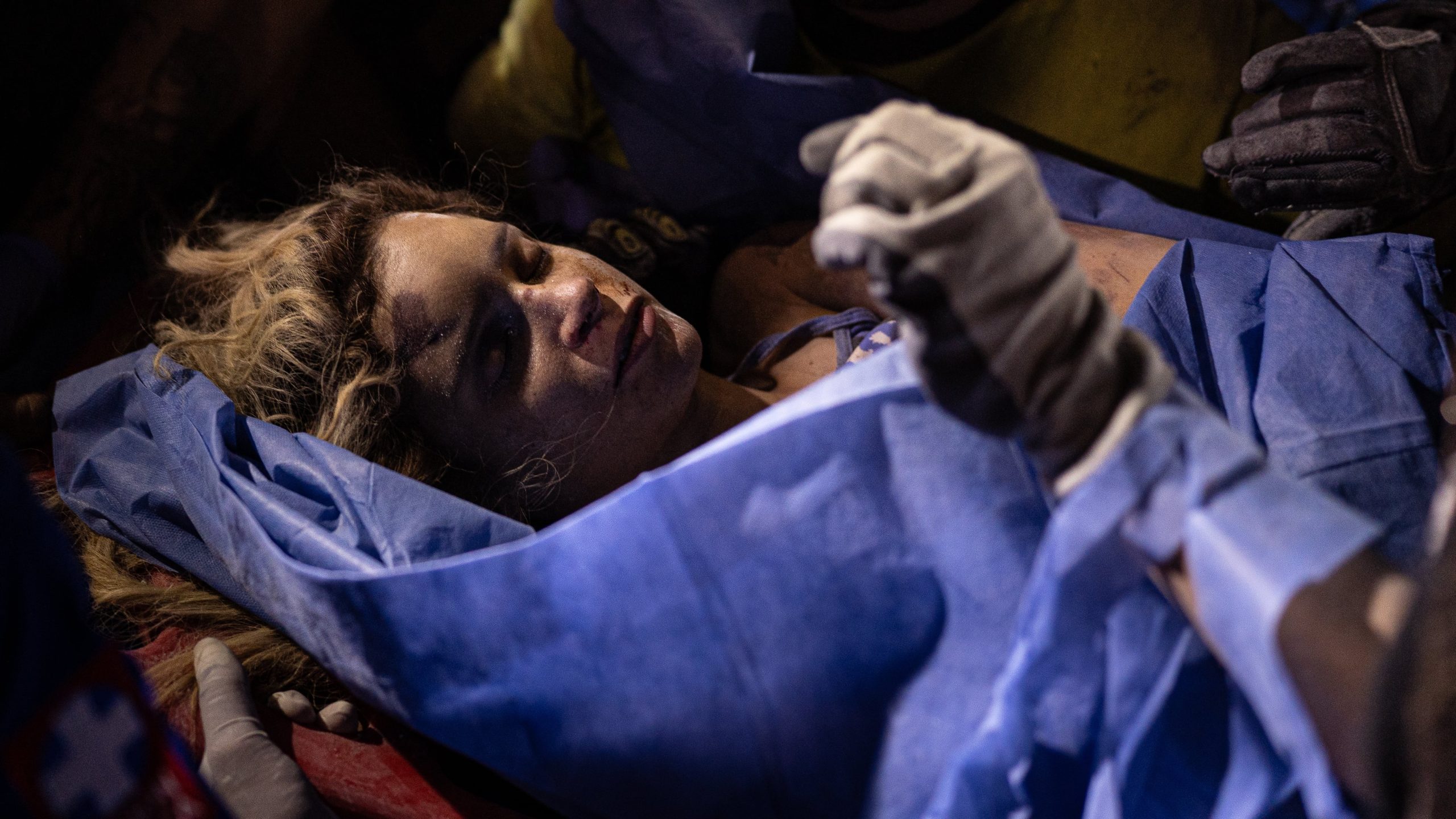
Daniela had already been buried for several hours when someone, standing on a pile of rubble, called out her name. She also shouted back her son’s name. Then her father’s name. That was how rescuers learned that the woman they would pull out alive was the same one whose face and blond hair had been circulating for nearly two days on a poster: ‘Daniela Andrea Largo Sánchez, 32. Missing in Pereira following the earthquake.’
On the Monday of the earthquake, at 7.34 am, Daniela was preparing to keep a promise. She had planned to return to her mother’s house to celebrate her son’s birthday; he would be blowing out 12 candles that day. Her hurry to reach her destination, three hours by road, may be what caused her to be already on the stairs on her way out, and not on the bed in the boarding house where she sometimes spent nights with her partner. Or at least that is what her mother thinks.
The young woman’s thin body was buried beneath the building. Her rescue drew dozens of volunteers, firefighters, police, search-and-rescue specialists and local residents. Teams spent hours clearing debris while a crowd gathered, hoping for good news amid a catastrophe that has already claimed 273 lives. Among that crowd, holding each other, were Julio César, Daniela’s father, and Sandra, his partner of six years. Every time a rescuer emerged empty-handed, they squeezed one another tighter. He barely moved; he did not take his eyes off the opening from which his daughter should emerge.
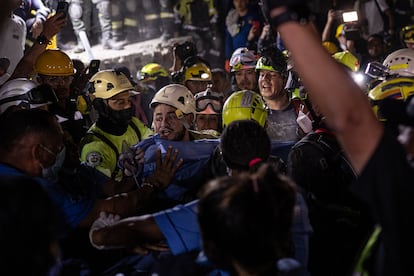
Daniela was pulled out with her cell phone in her hand at 8.27 pm on Tuesday amid applause and prayers. ‘Daniela, Daniela, Daniela!’ the crowd shouted. But when they loaded her into the ambulance she suffered cardiorespiratory arrest and had to be resuscitated for nearly 20 minutes. ‘She was very dehydrated,’ her mother, Martha Emilce Sánchez, says. ‘They revived her right there,’ she says at the door of the hospital where her daughter remains in the intensive care unit. It is not exactly the seventh time Daniela has come back from a place people usually do not return from, but it is close.
Martha tells the story outside Clínica San Jorge, shortly before being allowed to see her for the first time since learning she was alive. Her daughter had been active ever since she was a child, but five years ago life took a complicated turn. She fell and was taken to the hospital. An X-ray showed a large bone tumor in her leg — bone cancer. She was hospitalized for three months. The medical board recommended amputation, but one of the doctors refused: he said he would risk fitting a prosthesis on the leg and knee. Daniela kept the leg. And she continued her life. Until two years ago, when the tumor reappeared.
Daniela underwent eight rounds of chemotherapy that, according to her mother, did little. ‘It hadn’t reduced it at all,’ she says. On the contrary, metastases were found in the lungs and doctors again talked about amputation. That was when Daniela made a decision her family still describes in whispers: no more treatments. ‘She wanted that when God called her, she would be whole,’ Martha says. Daniela stopped going to checkups. She stopped chemotherapy. And, though no one can explain it, the tumor in her leg stopped growing. And the one in her lungs, which had also spread, became progressively smaller. ‘The cancer didn’t go away,’ Martha clarifies, ‘but it went into remission.’
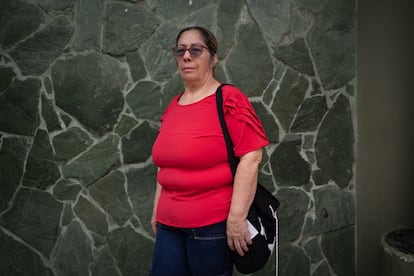
Daniela resumed what had been her normal life, although it was not the life her mother and father would have wished for her. It was a life marked by pain in which she would disappear for several days at a time until they heard from her again.
After the earthquake, Martha began calling her daughter, but there was no signal. She took a deep breath, prayed and tried to tell herself everything was fine, but when the network returned and all the neighbors — except her — began to contact their relatives, she became truly worried. ‘She wouldn’t miss the boy’s birthday,’ she thought. ‘Something’s wrong.’ That was when the father and his wife set off for Pereira to plaster the city center with posters.
They were on the verge of losing hope because no one had seen her, until the phone rang and the voice of a friend was heard on the other end. Rescuers were looking for her in the rubble of a building; they knew it was her because she had called out her son’s name and her father’s.
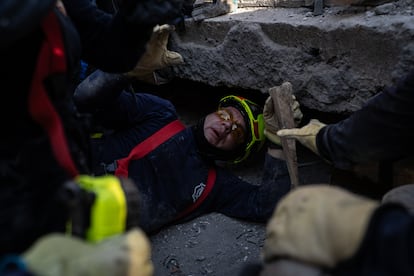
Daniela was saved, among other things, because someone insisted on getting her out. Among the first rescuers at the site where the building fell was Yeivinson Fontalvo, a Colombian man working with Chaplains International, a U.S.-based organization of Christian chaplains that trains and deploys international teams to respond to disasters and emergencies. He was the one who, acting as a search specialist early Tuesday morning, entered the rubble in search of survivors and who, he says, heard a weak voice answering when he called. ‘There is no single manual, but there is no improvisation. There are years of past earthquakes,’ Yeivinson said minutes before the rescue, which professionals later took over. When the man saw Daniela coming out on a stretcher, he broke down in tears. Then he began to pray aloud, almost in a trance.
Doctors say Daniela is out of immediate danger, but she has not yet awakened. She is beginning to realize she survived this earthquake. Her mother has already told her that the crushing injuries forced doctors to amputate her right arm. After resisting so long to losing a leg, after deciding she would rather die, Daniela is being forced to face her worst nightmare. Her mother prays and trusts that God ‘shakes someone’ with a purpose and that her daughter’s purpose will be to build a life different from her previous ones. ‘If God gives her another chance,’ she says, ‘she must change.’
Around Daniela, while doctors keep her sedated and intubated in the ICU, a fractured family has gathered. Her mother, Martha; Daniela’s father, from whom she separated six years ago after 35 years of marriage; and stepmother Sandra, who threw herself into the search for Daniela as if she were her own daughter. The two women had never spoken until they met at the hospital door and some wounds healed. ‘May God repay you,’ Martha thanked her. And at the center of them all, a 12-year-old altar server who proudly shows the watch, the bracelet and the 60,000 pesos he received on his birthday that, although he does not yet know it, will mark his household’s and Colombia’s history.
Sign up for our weekly newsletter to get more English-language news coverage from EL PAÍS USA Edition


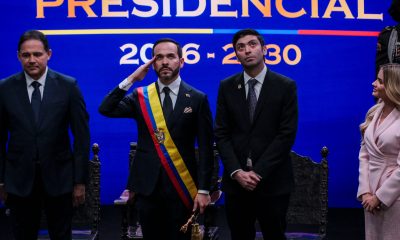


Over 100 people were reported dead after a powerful earthquake measuring 7.4 on the Richter scale shook central and western Colombia on Monday morning. The tremors began at 7.34 am local time and lasted four minutes, according to the Colombian Geological Service, which said the epicenter was located in the western municipality of San José del Palmar, located in a rural, mountainous area in the Chocó department.
The strongest quake recorded in the country in the last decade was felt as far as Panama and Ecuador, and comes less than two months after neighboring Venezuela experienced two back-to-back earthquakes that have killed over 6,000 people.
Many of the victims died in the metropolitan area of the city of Pereira, said the mayor, Mauricio Salazar. There was also a lot of damage in Cali, the capital of the Valley of Cauca, where Mayor Alejandro Eder said around 30 structures have collapsed with “people trapped inside.”
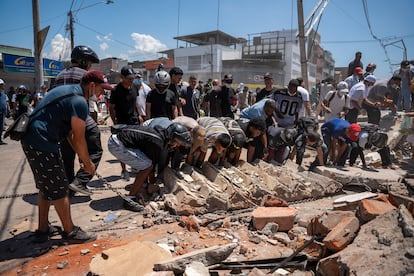
Authorities in Manizales, Armenia and Buenaventura have also reported fatalities and structural damage. Cali, Pereira, Armenia and Manizales are together home to over 3.5 million people, making it likely that the casualty count will keep rising.
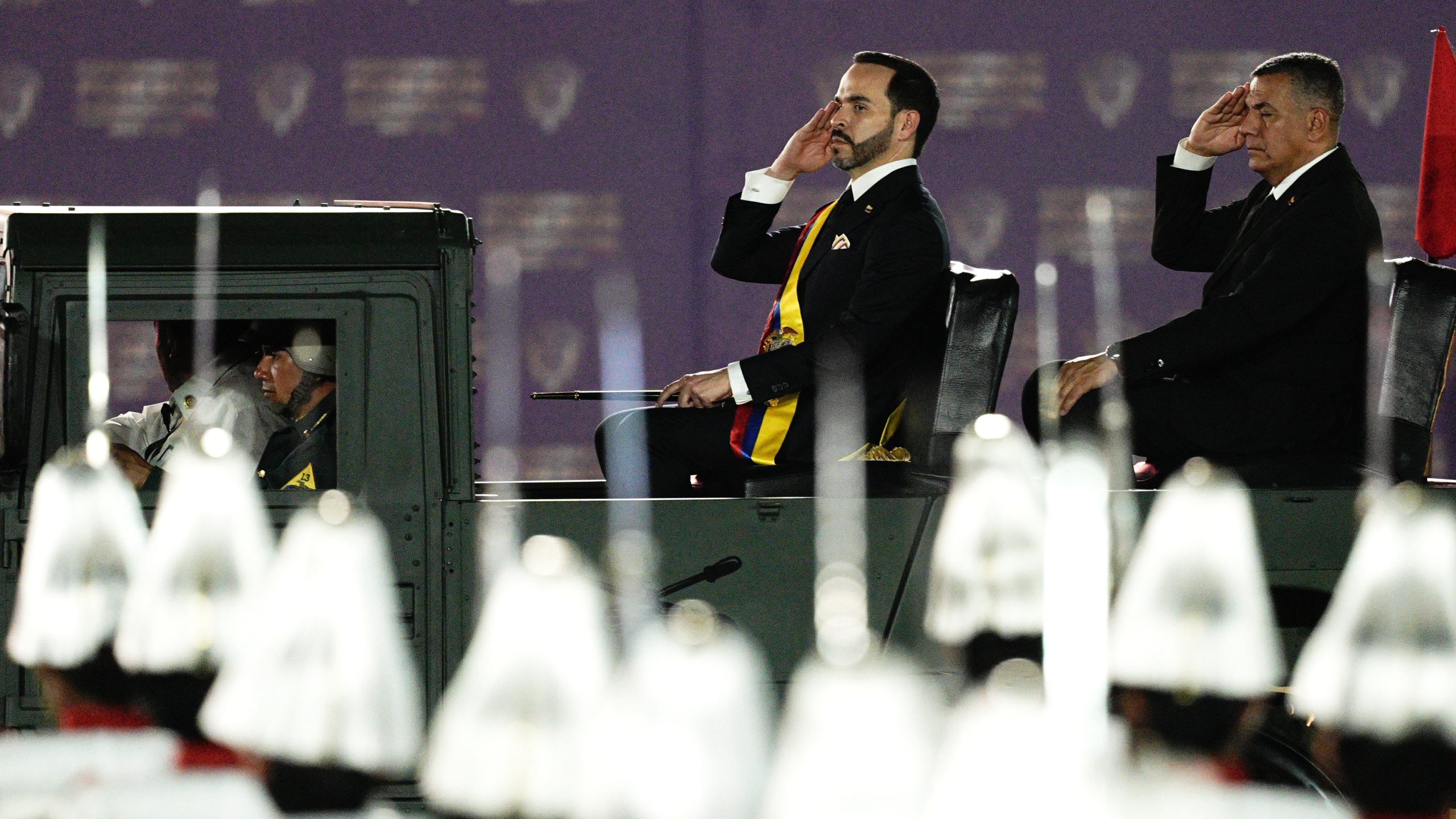
The newly inaugurated president of Colombia, Abelardo de la Espriella, had not yet made any official statements after arriving in Bogotá a few hours after the quake; instead he posted a message on social media: “I’m on top of the situation. I am deeply saddened by what affected families and regions are going through.”
The president also wrote earlier that a Unified Command Center has been set up to coordinate rescue action. Through this center, the government has declared a national disaster, which will allow resources to be mobilized faster; however, authorities have stopped short of declaring a state of economic and social emergency, which would allow the president to issue decrees.
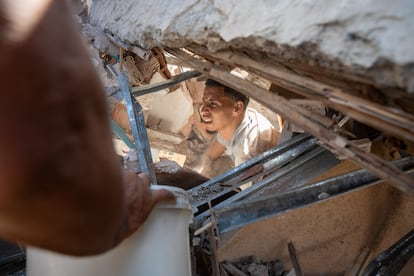
In Cali, where dozens of structures have sustained damage, Mayor Alejandro Eder asked citizens to “remain calm and walk out of buildings” if they see any large cracks.
Colombia is a country at high risk for quakes as it sits on three tectonic plates. There is an average of 50,000 tremors a month, but most of them are too weak to be felt by human beings. In 1999, a magnitude 6.2 quake shook the city of Armenia, killing nearly 1,000 people. Earlier, in 1983, a quake in Popayán resulted in 287 fatalities.
Sign up for our weekly newsletter to get more English-language news coverage from EL PAÍS USA Edition

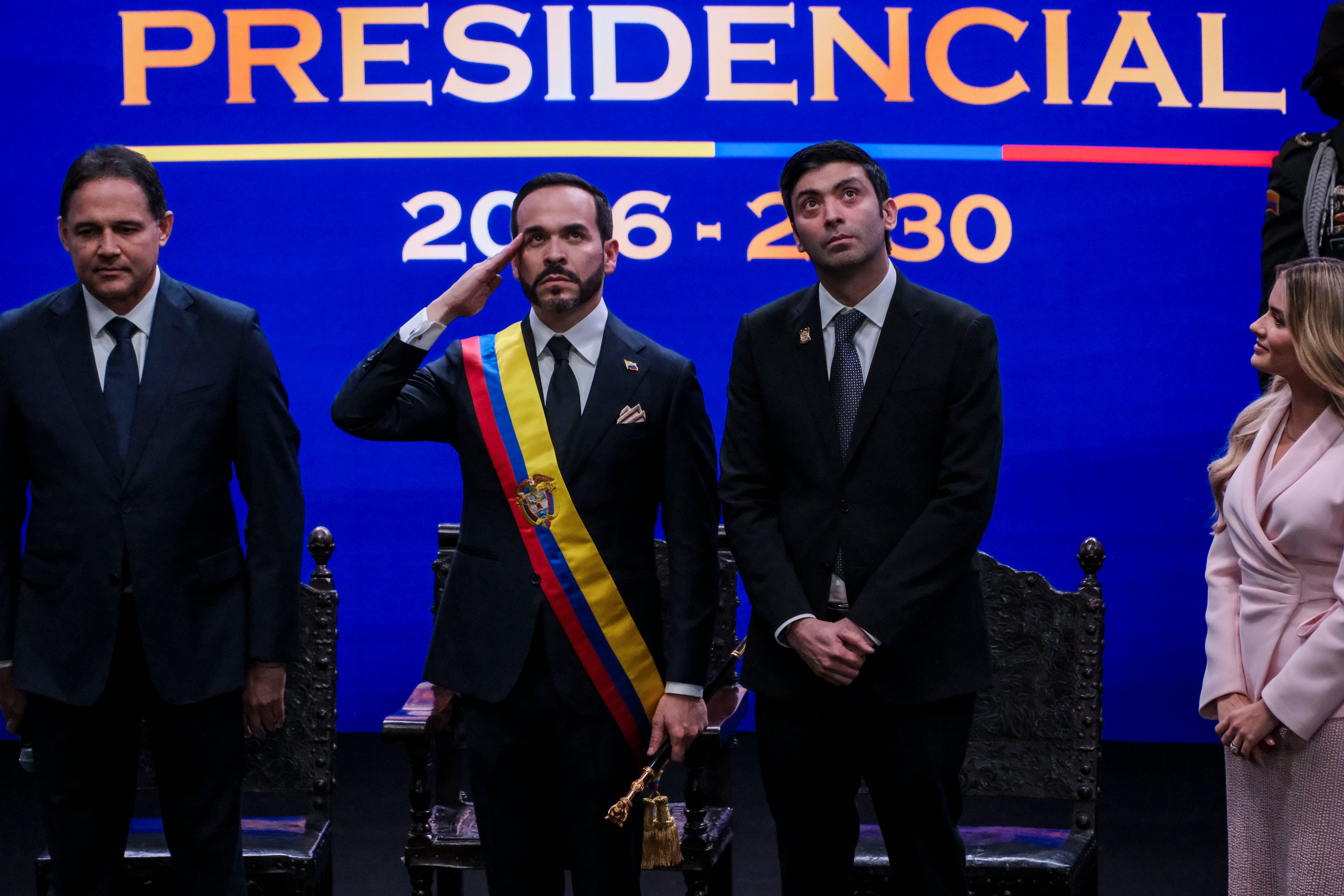
Nunca tantos colombianos se habían santiguado tanto, y nunca todos a la vez. Este viernes, mientras Abelardo de la Espriella pronunciaba su primer discurso como presidente, sus fieles vibraban y rezaban al mismo tiempo. En el centro de prensa habilitado en Cali, varios de los presentes —colaboradores de medios cristianos, canales afines al nuevo Gobierno o activistas provida, más que periodistas— prefirieron santiguarse ante la pantalla antes que tomar notas. “Amén”, “esto es un milagro”, “ay, pero mírale qué lindo”, susurraban, mientras el mandatario prometía una nueva era de “orden, libertad y autoridad”.
Abelardo de la Espriella
La Posesión De Abelardo De La Espriella Como Presidente De Colombia, En Vivo | “Ha Comenzado La Recuperación Del Orden, La Autoridad Y La Libertad”: El Primer Discurso Del Jefe De Estado


Lewis Hamilton hits gold with $9bn valuation as team boss triggers record sale: F1 News Recap

La Junta De Andalucía Activa La Fase De Emergencia Por Un Seísmo De Magnitud Cinco En Granada

Spain-Based Ex-Modelling Boss And ‘Epstein Associate’ Is Accused Of Rape And Human Trafficking By Six Women

Lewis Hamilton hits gold with $10bn jackpot but British star snubs Monaco move: F1 News Recap
Nueva Alcantara Club and children’s charity come together for a padel weekend with a purpose
To push, pull or carry? Which luggage option is best for your posture and journey.


-
 Uncategorized1 week ago
Lewis Hamilton hits gold with $10bn jackpot but British star snubs Monaco move: F1 News Recap
-
Charity padel tournement2 weeks ago
Nueva Alcantara Club and children’s charity come together for a padel weekend with a purpose
-
2 wheel case2 weeks ago
To push, pull or carry? Which luggage option is best for your posture and journey.
-
 Estepona2 weeks ago
WATCH: Fire Breaks Out At Entrance To Estepona Near A7 As Drivers Film The Flames And Two Helicopters Battle The Blaze
-
airport threat1 week ago
Explosive device on drone sparks major German airport investigation
-
Latest2 weeks ago
Migrant Rush To Spain’s Ceuta: 72,000 Crossed, 2,000 Remain And 77 Died
-

 Uncategorized1 week ago
Racing star was destined for F1, now he
-
Mallorca1 week ago
Palma mayor fights to keep TUI water bus project afloat