Connect with us

%

Women In Spain Forced To Hunt For Medicine

Published

on

women-in-spain-forced-to-hunt-for-medicine

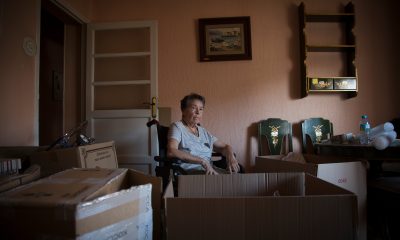
Menopause for many woman can be an incredibly miserable phase of life, not feeling anything like yourself and having little control over your own body. It already brings enough disruption without the addition hassle of having to ring round a dozen chemists just to get the one treatment that works.

A shortage that started with a faulty spray

Spain has been struggling with a shortfall of hormone replacement therapy (HRT) since March 2026, forcing many women to search for alternatives. Around 400,000 women in Spain currently use these therapies, according to gynaecologist Mercedes Herrero, and demand has been rising in recent years, these treatments for lots of women are essential to maintaining their quality of life.

Lenzetto, an oestrogen spray applied to the skin, was at the very centre of the issue. A fault with the product’s dispenser began the shortages back in March, and Spain’s medicines regulator, the AEMPS (the Spanish Agency of Medicines and Health Products), officially declared the shortage on March 16. The agency expects supply to return to normal in November.

Gels such as Oestraclin, as well as various patches, are still available as substitutes, if suitable for your body, in the meantime. However the demand on these substitutes has created a knock-on effect. Evopad patches, the only ones covered by Spain’s public health system, and Estradot have also become harder to find, tightening an already strained market.

Bijuva, a combined oestrogen-progesterone treatment, has been unavailable since July after its manufacturer paused all production, packaging and distribution. Supply is due to resume by November 30, though a backlog of orders means restrictions remain in place across several markets.

Why swapping treatments isn’t as easy as people would think

Gynaecologist Mercedes Herrero stresses that patients need clear information about which natural hormone products are affected. Sprays can usually be swapped for patches or creams, and oral oestrogen tablets are also an option for those able to take medication that way.

Having alternatives, she says, doesn’t mean the underlying problem has gone away. Sticking with a treatment matters for it to remain effective, and interruptions often mean patients stop taking anything at all, especially when getting a doctor’s appointment to arrange an alternative isn’t always straightforward.

Women turning detective to track down their medication

One patient, Silvia, was prescribed Lenzetto over the summer to help with mood changes, only to find dispensers had already vanished from shelves. Rather than switch treatments, she’s chosen to wait until November and lean on supplements recommended by her doctor in the meantime. Julia had more luck. Her local pharmacist used Farmahelp, a platform that helps pharmacies locate medicines affected by shortages to source a spray. Even so, concern that the shortage would repeat each month pushed her towards a different therapy altogether, with her hot flushes and other symptoms leaving little room to wait.

Frustration has tipped over into a Change.org petition launched by 49-year-old Rebeca Martin, who is on HRT herself. Her campaign has gathered more than 20,000 signatures and calls for authorities to act before shortages happen and to guarantee accessible alternatives when they do.

“Women are turning into detectives,” Martin says, describing calls to multiple pharmacies, journeys between towns, and time spent trying to work out what’s still in stock. Nobody, she feels, seems to be taking the problem seriously enough.

What women affected by the shortage can do

Contacting a GP or gynaecologist before a prescription runs out is a sensible first step, rather than waiting until stock has already disappeared. A doctor can advise on switching to a different form of the same hormone, such as a patch or gel instead of a spray.

Checking with more than one pharmacy is worth doing too, since stock levels vary between branches. Asking whether a local chemist has access to Farmahelp may also help locate supplies elsewhere.

Following official updates from the AEMPS can give a clearer picture of when a specific shortage is likely to ease, as the regulator publishes expected return dates for affected products.

Speaking to a doctor is the most important step for anyone affected. A medical professional can assess symptoms, suggest a suitable alternative, and advise on the safest way to manage a change in treatment.

Anyone affected by the shortage should speak to their own doctor or pharmacist about the best option for them.

%

Spain Payslip Change Coming In January 2027

Published

on

spain-payslip-change-coming-in-january-2027

Workers in Spain will see their MEI contribution rise from January 2027. Credit : Quisquilia, Shutterstock

Workers in Spain will see a small deduction from their paychecks starting in January 2027. This is due to an annual increase designed to help fund the country’s pension system.

Intergenerational Equity Mechanism (MEI) is a Social Security tax that you probably have noticed in your monthly paycheck deductions. Beginning on January 1, 2027, the employee’s share of this social security tax will increase from 0.15 per cent to 0.17 per cent of the contribution base. The change is part of a schedule set in Spanish social security law, not a new tax announced for 2027.

For most workers, the change will be modest. Someone who contributes €2,000 per month will pay €3.40 per month in 2027, compared to €3 in 2026. That’s 40 cents less each paycheck, or 4.80 per year, assuming the contribution base does not change.

But how much will be deducted from your salary, and where on your payslip do you find the figure?

Spain payslip changes in 2027: how much will you actually pay?

The amount is determined by the Social Security contribution base and not just the net salary you get in your bank account.

For the employee’s contribution to the MEI for 2027, use the contribution base for common contingencies as stated on the employee’s payslip and multiply it by 0.0017.

For example, a worker with a €1,500 monthly contribution base will pay €2.55 a month, up from €2.25 in 2026. At €2,000, the deduction increases from €3 to €3.40. A €2,500 contribution base means a rise from €3.75 to €4.25, while someone on a €3,000 base will see the contribution increase from €4.50 to €5.10.

The 0.17 percent is the worker’s total MEI contribution for 2027, not the rate of increase. The yearly increase in the MEI is 0.02 percent.

For an employee who maintains a €2,000 contribution base throughout the year, they will pay €40.80 for their MEI in 2027. In 2026, the cost of the MEI was €36.

And employees are not footing the entire bill.

Employers will contribute considerably more. The combined MEI rate will rise from 0.90 per cent in 2026 to 1 per cent in 2027, divided between 0.83 per cent paid by the employer and 0.17 per cent by the employee. Spain’s official legislation confirms that scheduled split.

On a contribution base of, for example, €2,000, the employer would pay €16.60 and the employee €3.40, resulting in a total MEI contribution of €20.

The employer’s share does not come out of the worker’s take-home salary.

Why Spain is taking more from workers’ payslips for pensions

The MEI has been in operation since 2023 and aims to enhance the long-term sustainability of Spain’s Social Security system.

The money goes into the Social Security Reserve Fund, also known as the pension piggy bank in Spain. The country is gearing up for the coming boom in the pension system as large generations come to retirement. However, the contribution does not increase the individual worker’s pension benefits.

And the January 2027 increase will not be the last. According to the plan, the employee’s contribution is to reach 0.18 per cent in 2028 and 0.20 per cent by 2029. In 2029, the combined employer-employee contribution will be 1.20 per percent, which is slated to stay until 2050.

For those wondering where their money is going, the MEI will normally appear on the pay stub under social security contributions and deductions. Sometimes it will be explicitly stated as MEI or Mecanismo de Equidad Intergeneracional.

Will your take-home pay actually fall in January 2027?

Not necessarily.

Although the MEI deduction will be higher, this does not mean that the amount you receive in January will be less than what you received in December.

The increase in salary, change in working conditions, or personal income tax deduction changes may affect the final calculation. The most effective way to measure the impact of the MEI is to compare the contribution base and the MEI deduction on the December 2026 and January 2027 pay stubs.

For most employees, this increase is just a few dozen cents per month and not a drastic cut in take-home pay. But given how closely families are already monitoring their budgets, this is another thing that may get noticed when people get their first paycheck of 2027.

And unlike many January surprises, this one is already written into the calendar.

Continue Reading

%

Literary Stars Descend On Mallorca

Published

on

literary-stars-descend-on-mallorca

American writer Anna Todd explores Mallorca before her appearance at FLEM festival Credit: Instagram/AnnaTodd

Bestselling American author Anna Todd was among the biggest names at this year’s FLEM literary festival, joined by British writers as Magaluf put books and culture centre stage.

Anna Todd brings Mallorca novel home

Anna Todd returned to Mallorca this week to present Sunrise: The Last Sunrise, her latest novel and the first of her books to be set on the island.

The American author, best known for her global After series, appeared at the Festival de Literatura Expandida de Magaluf (FLEM) on Saturday, October 3, in what was her only appearance in Spain this year.

Sunrise, published in 2026, follows 23-year-old Oriah Pera, who travels to Mallorca with her mother and finds herself at a turning point in her life. A trip to the beach leads to a meeting with Julián, a local Spanish man, and a summer romance that becomes part of Oriah’s journey into adulthood.

Mallorca is therefore far more than a backdrop in Todd’s latest work. The island provides the setting for Oriah’s summer, her relationship with Julián and the experiences that force her to reassess her life.

The novel also touches on some of the tensions surrounding modern Mallorca, including the contrast between the island’s appeal to international visitors and the concerns of people living there. Todd discussed the book during her FLEM appearance, which came as she returned to an island that has become increasingly important to her work.

From After to Mallorca

Todd shot to international fame with After, which began as fan fiction before becoming a publishing phenomenon.

The series has been translated into 35 languages and sold more than 12 million copies worldwide, making Todd one of the most commercially successful authors of her generation. She has also worked as a producer and screenwriter on film adaptations of her books.

Her other work includes The Brightest Stars, The Spring Girls and the After graphic novels, while The Last Sunrise marks her latest move into a story rooted in Mallorca.

That connection gave FLEM a particularly strong local hook, with readers able to hear directly from an internationally successful author about a novel inspired by the island.

British authors join international line-up

Todd was not the only international literary star at FLEM 2026.

The festival’s programme included British novelist Anna Hope, author of Expectation, Wake, The Ballroom and Albion. British writer and journalist Lara Pawson also appeared, taking part in a conversation with Mallorcan author Aina Fullana.

Another British name on the 2026 programme was Ben Brooks, who appeared in conversation with German-Afghan writer and poet Aria Aber.

The international line-up helped make the sixth edition one of FLEM’s biggest yet, with more than 30 writers, artists and creators taking part.

Magaluf’s literary transformation

Held from October 1 to 4, the 2026 festival moved to a new home at INNSiDE Wave Calvià, bringing literature, music, podcasts, art and live events together under one roof.

FLEM is organised by independent Palma bookshop Rata Corner and INNSiDE by Meliá, with the aim of bringing literature to new audiences and challenging the traditional image of a literary festival.

The 2026 programme also introduced the new FLEM-Magaluf Novel Prize and a literary residency, adding a stronger focus on supporting emerging writers.

More than 13,000 people attended this year’s four-day festival, according to post-event coverage, an eight per cent increase on 2025.

For four days, Magaluf became an unlikely meeting point for bestselling authors, emerging writers and readers, with Anna Todd’s Mallorca-set novel providing one of the clearest links between the island and the international literary world.

Continue Reading

%

Five Kilometres For A Global Cause

Published

on

five-kilometres-for-a-global-cause

Walkathon for Water. Credit: AEHCOS

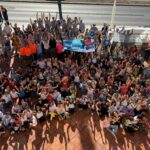
Costa del Sol residents are being invited to swap their usual morning routine for a five-kilometre charity walk in Benalmadena on Thursday, October 15, helping raise awareness of the daily struggle faced by millions without safe drinking water.

The fourth annual Walkathon for Water will start at 10am from Sahara Sunset on Avenida Rocío Jurado, with participants following the seafront towards Puerto Marina before returning to the resort.

Organised by the We Are Water Foundation with Royal Oasis Club at Pueblo Quinta and Sahara Sunset, both managed by Hilton Grand Vacations, the event uses the five-kilometre distance to represent the journey many children make every day to find water.

Walking the distance many children face

According to the We Are Water Foundation, more than two billion people worldwide do not have access to safe drinking water. Many children in Africa, Asia and Latin America walk several kilometres each day to collect water for their families.

Participants in Benalmadena will therefore be turning an everyday walk into a reminder of a very different reality for communities around the world.

Money raised during this year’s international Walkathon programme will support two water projects in India and Mexico, with the work expected to improve access to clean water for more than 5,000 people. The Benalmadena event is one of 20 Walkathons being held across eight countries during 2026.

How to join the Benalmadena walk

The five-kilometre route is expected to take between one hour and 90 minutes and is open to people who want to support the cause.

Registration can be completed online through the Walkathon for Water section of the We Are Water Foundation website, with a minimum donation of €5 per person. People can also register at the event itself.

The walk starts and finishes at Sahara Sunset, Avenida Rocío Jurado, Benalmadena Costa, at 10am.

Afterwards, participants can stay for paella, sangria and a raffle from 1pm.
For registration and full event details, visit the We Are Water Foundation website.

Continue Reading

Trending

Copyright © 2017 Spanish Property & News