Connect with us

%

Is Your Supermarket Kefir Really Kefir? Spanish Study Raises A Surprising Question

Published

on

is-your-supermarket-kefir-really-kefir?-spanish-study-raises-a-surprising-question

The researchers found considerable differences depending on the type of product. Photo credit:Tetyana_Pidkaluyk / Shutterstock.com

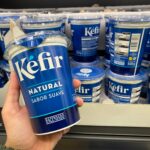
Kefir has gone from something most people had barely heard of to a regular fixture in Spanish supermarket fridges. It is sold as a healthy fermented drink, often bought by people looking for an easy way to add beneficial bacteria and other microorganisms to their diet. But there is a rather awkward problem hiding behind the label.   A study by researchers at Spain’s Universitat Rovira i Virgili has found that you cannot reliably tell from the packaging whether the kefir you are buying contains yeast, one of the microorganisms traditionally found in kefir fermentation.

Researchers examined 170 kefir products sold in Spain and initially found that just 36 mentioned yeast on their labels.  After one manufacturer corrected an apparent labelling error affecting two products, that figure rose to 38. So, in a supermarket aisle packed with bottles proudly calling themselves kefir, the name alone may not tell you very much about what is actually inside.

What makes kefir kefir?

The distinction is important because traditional kefir is rather more complicated than ordinary yoghurt. Kefir is produced through fermentation involving a community of microorganisms. These include lactic-acid bacteria, acetic-acid bacteria and yeasts, which work together during the fermentation process. That mixture is part of what gives traditional kefir its particular characteristics.

The researchers compared Spanish supermarket products with the international Codex Alimentarius definition of kefir, which recognises the combination of bacteria and yeasts involved in its production. The problem is that European food labelling rules do not require manufacturers to list every microorganism present in a fermented product. That leaves shoppers with a surprisingly simple problem: the front of the bottle may say kefir, but the label may not tell them whether yeast is actually part of the fermentation.

Researchers checked 170 supermarket products

The study was carried out in August 2025 and looked at 170 products from 46 brands sold through national and regional supermarket chains covering around 60 per cent of the Spanish market. The researchers recorded information including the type of milk or other base used, whether the kefir was drinkable or spoonable, its price, whether it was organic and what manufacturers said about its microorganisms. Only 36 products, or 21.2 per cent, explicitly mentioned yeast.

The researchers later issued a correction after Danone informed them that two Activia kefir products did contain yeast, despite it not appearing on their packaging because of an error during the production of the labels. That brings the number to 38 products, or 22.35 per cent. The finding does not mean that the other 132 products were fake kefir or contained no yeast. The study was primarily an examination of product information and labelling, rather than a laboratory test proving the microbial composition of every bottle, that distinction is crucial.

Some kefir products were more transparent

The researchers found considerable differences depending on the type of product.Among cow’s milk kefirs, yeast was declared on 29.9 per cent of labels. None of the goat’s milk, sheep’s milk, mixed goat-and-sheep, plant-based or water kefirs in the sample declared yeast. Drinkable products were also more likely to mention it than spoonable kefirs. Yeast appeared on the labels of 35.7 per cent of drinkable products, compared with 13.1 per cent of spoonable versions. There were differences according to where the products were made, too. 

Yeast was declared by 14.7 per cent of nationally produced products, compared with 53.3 per cent of products whose origin was not Spanish. The figures produced another unexpected result when researchers looked at price. Among the cheapest products, 36.8 per cent declared yeast. That fell to 28.1 per cent in the middle price group and just one of the 56 products in the highest-price group. Organic kefir was even more striking. None of the 63 organic products examined declared yeast, compared with 35.5 per cent of conventional products.

What should Spanish shoppers make of it?

The study does not mean people should stop buying kefir, nor does it show that most supermarket kefir is somehow fraudulent. What it does show is that consumers cannot use the label alone to establish the microbial composition of many products sold as kefir. For people buying it specifically because they want traditionally fermented kefir, that lack of information is significant. The researchers argue that clearer labelling would give consumers a better understanding of what they are buying.

They also point to the lack of specific microbiological requirements for kefir under current European rules, compared with the international Codex standard. Kefir may have become a familiar sight in Spanish supermarket fridges, but the research suggests that the name on the bottle does not necessarily give shoppers the full story. And when the whole reason for buying a fermented food is what is happening inside it, that seems like a fairly important detail to leave off the label.

%

Your Community President Could Get Your Phone Number Without Asking You In Spain

Published

on

your-community-president-could-get-your-phone-number-without-asking-you-in-spain

Knowing what your community president can do with your data matters more than most owners realise. Credit: Monkey Business Images / Shutterstock

You gave your phone number to the administrator of your building. Could it be passed to the community president without asking you? A Spanish lawyer says it can be used for community business, but there are limits to how they can use it beyond that, where privacy rules kick in.

Can the president really get your number without asking?

A president of a Spanish community of owners asked their building administrator for the phone numbers and email addresses of its 57 owners. The administrator refused, citing data protection, and in a report by El País, lawyer Isabel Martínez said that refusal misunderstood who controls the information.

It get’s a little messy, and like many Spanish beaurocratic procedures, it feel like it could be much simpler. The way it works is the administrator holds owners’ contact details for the community. Because the president represents that community, Martínez says they can access details needed for community business without asking every owner for permission first. The administrator, if reluctant to give said details away, cannot simply refuse by citing data protection law. Spain’s data protection agency confirms that the community is responsible for its owners’ data, while the administrator handles it on the community’s behalf.

That doesn’t give the president free rein though. The details may be used for community matters, such as dealing with building problems or communicating with owners. They cannot then be passed around to other neighbours, used to pursue a personal disagreement or kept for an unrelated purpose.

The WhatsApp rule many buildings could overlook

There is a difference between contacting an owner and putting their number into a group chat where other members can easily see it and save it.

The AEPD’s guidance for communities of owners says a number an owner has provided may be used for community communications through WhatsApp. Adding that owner to a group, however, requires their express, informed consent. The lawyer also warns against sending a group email with every recipient’s address visible; the addresses should be hidden using BCC.

The consequences of sharing too much are real. In one case, a community faced a €2,000 penalty after its president posted a resident’s bank receipt in a building WhatsApp group, exposing her name, address and bank details. That case showed the extent to which the situation can get to when information is shared in bad taste and without consent in a group chat, far passed simply adding someone’s number. 

EWN has previously reported a separate €1,000 community privacy fine involving details of a neighbour’s debt displayed on a noticeboard. 

What if the administrator refuses?

If you are the president, ask in writing for the contact details already held by the administrator, explain which community duties require them, and ask for a specific reason if access is refused. The lawyer’s answer addresses access to existing records; it doesn’t mean every owner must supply a phone number or email address.

Home owners should know that their details may be available to the president of their urbanisation or building for community business, but that does not make their number available to the whole neighbourhood.

Continue Reading

%

Join The Classic Sportscar Club Dinner

Published

on

join-the-classic-sportscar-club-dinner

Engines have been roaring through the hills of Andalusia for eighteen years, and this October 6, the Classic & Sportscar Club Southern Spain will mark the date with an anniversary dinner and party.

An evening of celebration for petrolheads old and new

Members and guests are invited to gather at La Sierra Restaurante, the beautiful restaurant perched in Cerros del Aguila, where the club regularly host their evenings, on Tuesday, October 6. Doors open at 7.30pm, with celebrations getting fully under way at 8pm. Arrivals will be greeted in style with a crisp glass of cava, before settling in for an evening of celebration.

Founded in 2008, the club has spent nearly two decades bringing together fans of vintage and sports motoring across southern Spain. This anniversary dinner is to celebrate those that share enthusiasm for beautifully kept cars and the friendships that have formed along the way, and to make new ones.

How to get involved, come along and support the club

Dinner, dancing and live music are on the cards for the evening to keep you fed and on your feet well into the night. Tickets are priced at €35 per person, and is open long-standing club members, people wanting to support the club or those curious and want an evening to soak up the atmosphere. A semi-formal or smart dress code applies, so guests are encouraged to dust off their glad rags and get glam for the occasion. Menu’s will be posted on their website and social media channels close to the time for you to see what mouth watering treats await.

Those hoping to secure a place at the table are advised to act quickly, given the popularity of the club’s events among the local motoring community. Bookings and enquiries can be made by emailing csccspain@gmail.com or visiting csccspain.com for further details.

So pop the date in your diary and gather together your friends and family to enjoy a night of good food, good company and a celebration of 18 amazing years.

Continue Reading

%

Inclusive Circus Event In San Pedro Del Pinatar Brings Community Together

Published

on

inclusive-circus-event-in-san-pedro-del-pinatar-brings-community-together

Inclusive circus event in San Pedro promotes community, creativity and connection Photo Credit: San Pedro del Pinatar Town Hall

San Pedro del Pinatar is celebrating its recent participation in the European CIRCUS4ALL project, alongside local non-profit organisation AIDEMAR, which combined sports, art, circus performances, and inclusivity.

Circus arts and inclusion come together in San Pedro del Pinatar

During the event, which took place at the Geli Albaladejo Theatre on Wednesday, September 23, attendees were invited to take part in a dynamic experience combining elements of circus arts, movement and teamwork, all of which were accessible to people of all skill levels.

AIDEMAR, founded in 1982, is a well-known association in the region that supports people with disabilities. The non-profit organisation, in addition to San Pedro del Pinatar, also operates in the municipalities of San Javier, Torre Pacheco and Pilar de la Horadada.

Through CIRCUS4ALL, the organisation demonstrated how performances, coordination exercises, and group participation can help to create confidence, social interaction and a sense of belonging. Inclusion was a strong goal of the fun-filled workshop, and during the event, the participants made friends, socialised, and supported each other.

CIRCUS4ALL included dancing performances, magic shows, impressive tricks, and a lot of spectacle.

The event also served as a meeting point for the community, bringing together families, participants and organisers in a positive and supportive environment. The atmosphere encouraged people to participate at their own pace and skill level, while still feeling part of a larger group.

Performances, participation and social impact

The event formed part of a wider European programme aimed at promoting inclusion through creative and physical activities. Projects like CIRCUS4ALL underline the growing importance of inclusive programmes across Europe, particularly in coastal towns like San Pedro del Pinatar, where tourism, community life and social initiatives all intertwine. With this effort, the town continues to build a more open and welcoming future for residents and visitors alike.

“San Pedro del Pinatar is a municipality that believes in inclusion and opportunities for all,” stated the San Pedro del Pinatar Town Hall in an Instagram post about the event. “We are proud that, from San Pedro, we continue to create a municipality that is more and more inclusive.”

Continue Reading

Trending

Copyright © 2017 Spanish Property & News