Connect with us

%

Tragic Twist After Spanish Farmer Survives Attack By His Own Bull

Published

on

tragic-twist-after-spanish-farmer-survives-attack-by-his-own-bull

His condition did not initially point towards the eventual outcome. Photo credit: alberto clemares exposito/Shutterstock

Owning a farm may have been a dream for many of us at some point, but life surrounded by livestock is not always as easy as it looks. A 58-year-old farmer in northern Spain has died after being gored by one of his own bulls, surviving the initial attack before his condition deteriorated in hospital and he developed a bacterial infection in intensive care.

The farmer, from Llerana in Saro, Cantabria, was attacked on August 6 while handling the animal on his family’s farm. He was badly injured but managed to secure the bull before he was found and taken to hospital. 

The attack happened while he was giving the bull water

The incident occurred at around 07.38pm on August 6, according to information from the 112 Cantabria emergency service. Municipal sources report that the farmer had released the bull so it could drink water when the animal attacked him. Despite suffering serious injuries, he managed to tie the bull up again.

He could not, however, get himself out of the area or call for assistance. His brother eventually found him after becoming concerned that he had not started the day’s milking. The family owns 80 head of cattle, and the farmer’s absence from that work was unusual enough for his brother, who is also a councillor in Saro, to go looking for him.

Cattle farmers are the backbone of rural Spain

Cattle farming is far more than a source of food for Spain. Across rural areas, livestock holdings support families, local businesses and entire communities, with farmers working every day to care for their animals regardless of the season or weather.

Spain has around 6.5 million cattle, with approximately 110,000 cattle-producing establishments across the country, according to the Ministry of Agriculture. The beef sector accounts for around 15 per cent of the value of Spain’s final livestock production, underlining its importance to the wider agricultural economy.

For families who depend on livestock, however, the work is intensely personal. Feeding, milking, checking animals and dealing with emergencies are responsibilities that cannot simply be put aside. When a farmer dies, the loss can therefore affect not only relatives but also the future of the farm, the livelihood and community built around it.

Emergency crews were sent to the farm

The 112 emergency coordination centre mobilised the 061 service after receiving the alert. An advanced life-support ambulance travelled to the property, where medical staff treated the injured farmer before taking him to Hospital Universitario Marqués de Valdecilla in Santander. 

The hospital is one of Cantabria’s main medical centres and was where the farmer remained under treatment for approximately two weeks. His condition initially improved, according to the reports. That improvement was followed by a serious complication while he was in intensive care.

A bacterial infection developed in the ICU

The man subsequently developed a bacterial infection during his stay in the intensive care unit. The available reports do not identify the bacterium involved or provide further medical details about the infection. They also do not establish that the bacteria came from the bull or that the infection was caused directly by the injuries sustained during the attack. 

His health deteriorated after the infection developed and he ultimately died following around two weeks of hospital treatment. The circumstances indicate that the initial injuries and the later infection form two separate parts of the reported medical history. The farmer survived the attack long enough to reach hospital and showed signs of improvement before the infection complicated his recovery.

Llerana mourns his loss

The man passed away this week, with the funeral taking place on Friday, August 21, at the parish church of San Lorenzo in Llerana. His death has left his family dealing with the loss of someone who was part of the local community and a much loved local.

For those closest to him, the circumstances changed considerably after his first few days in hospital. He had survived the attack, received emergency treatment and initially showed signs of improvement we lead to hopes that he would we be returning home. His later infection in intensive care brought a different outcome when heartbreakingly the 58-year-old never returned to his farm.

%

Ultra Runner Miguelito Valverde Finishes 192km Axarquia Challenge

Published

on

ultra-runner-miguelito-valverde-finishes-192km-axarquia-challenge

Starting off in the middle of the night. Credit: Emilio Gil Delgado FB

Ultra trail runner Miguelito Valverde has just crossed the finish line at the Faro de Torre del Mar after a punishing solo non-stop effort that took him right round all Axarquia. He covered more than 192 kilometres with over 6,000 metres of uphill climb and a matching descent in 29 hours and 25 minutes, well inside the 48-hour limit he set himself.

What started at midnight on August 22 as a personal test of endurance quickly became a shared effort across 19 towns and villages. From Torre del Mar the route swung inland through Rincon de la Victoria, Totalan, El Borge, Cutar, Comares, Colmenar, Riogordo, Alfarnatejo, Alfarnate, Periana, Alcaucin, Canillas de Aceituno, Sedella, Salares, Canillas de Albaida, Competa, Frigiliana and Nerja before looping back along the coast. Hot late-summer temperatures, sleepless hours and tough mountain tracks tested every step, yet local people turned out with messages of support, company on the trail and practical help.

Money still coming in for AVOI families

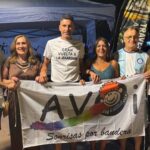
This whole Gran Vuelta a la Axarquia was never just about the kilometres. Miguelito and Club Deportivo Perianda organised the challenge to raise €14,000 for AVOI’s “Sueños que se hacen realidad” project. AVOI is the organisation that looks after young cancer sufferers and their families. That sum matches the original planned elevation gain and will help more families whose children have come through cancer treatment join the Camino de Santiago in 2027. Previous editions already gave dozens of youngsters, relatives, medical staff and volunteers an unforgettable shared journey; a Joëlette chair loaned by the club will make the next one even more inclusive. By the time Miguelito reached the lighthouse again, €3,670 euros had already been pledged.

Community spirit carried every step

Businesses, neighbours and fellow runners kept the momentum going. Alta Axarquia Digital, Alfonso Lopez Sanchez and the Grupo Espeleologico de la Axarquia all backed the effort, while ordinary residents offered water, encouragement and company through the long nights.

Miguelito’s own motto summed up the mood: “No se trata de llegar primero. Se trata de no rendirse jamás.” In English terms, finishing first never mattered – refusing to quit did.

Miguelito Valverde has proved the Axarquia can pull together when the cause is right. His 192-plus kilometres are done, yet the fundraising window remains open for a few more hours. Every euro now helps turn another family’s dream of walking the Camino into reality in 2027.

Continue Reading

%

TikTok Changes How Gen Z Finds Holidays

Published

on

tiktok-changes-how-gen-z-finds-holidays

TikTok is changing how Gen Z travel Credit: THICHA SATAPITANON / Shutterstock.com

The perfect reel of some colourful tapas, a quirky village festival or a winding mountain path can now inspire a holiday to a whole audience within seconds.

TikTok changes travel inspiration

Short-form videos are influencing how younger travellers choose destinations, activities and experiences, with Spain receiving fresh attention from a generation searching for new ideas online. A study commissioned by TUI Musement found that 48% of Gen Z participants cited TikTok as a source of travel inspiration. Recommendations from family and friends followed at 43%.

Research was carried out by Appinio in January 2026 among respondents in Spain, Italy and the UK. Gen Z respondents born between 1997 and 2012 were more likely to look to TikTok than to traditional personal recommendations when searching for holiday ideas. Search engines such as Google also remained a leading source overall, cited by 42% of those who took the survey.

Viral videos inspire real trips

Viral content is also influencing what travellers book once they have started planning. More than four in ten respondents, or 43%, said they had booked a trip or activity after seeing a viral post or video.

That figure reached 50% among Gen Z, while millennials recorded an even higher figure of 52%. Content creators also played an important role, with 43% of respondents saying influencers affected their decisions about where to go or what to do. A further 27% said they had changed their destination after following an influencer recommendation.

Spain’s food, landscapes, traditions and historic towns are well suited to this visual style of travel. Local markets, regional recipes, traditional celebrations and unusual heritage sites can all provide inspiration for a short video—and a future visit.

Showing different sides of Spain

Spain’s official tourism website is using its own social media channels to encourage visitors to discover lesser-known traditions, villages and slower travel experiences.

Its recommendations include food and customs from different regions, villages with unusual landscapes and heritage sites, plus nature-based trips such as thermal bathing, countryside walks and mountain excursions. Spain.info describes social media as a way to find new perspectives on the country and plan experiences beyond its best-known destinations.

Traditional grape harvesting, roasted chestnuts, historic monuments and rural landscapes can offer visitors a closer connection with local life. Such experiences may also appeal to expats who want to explore more of the country they now call home.

Spain through a younger lens, but it comes with pressure

Travel habits do not end when visitors arrive. TUI Musement found that 39% of respondents had visited a tourist attraction with the main purpose to take the perfect photo or record a video to be shared, with 73% sharing holiday content online at least occasionally. Social media also affected expectations, with 37% saying they felt pressure to make their holidays appear exciting online. That figure rose to 45% among Gen Z.

Digital travel inspiration is giving younger visitors new reasons to explore Spain’s regional food, heritage and natural scenery. For those living in Spain, it may also provide fresh ideas for day trips, weekend breaks and local experiences that are easy to miss when visiting the same familiar destinations.

TikTok may be changing how travellers find Spain, but it’s the country’s cultural traditions, stunning landscapes and wonderful communities that remain the reason those videos have such an influence.

Continue Reading

%

Italian Tourist Injured After Empty Toledo Train Suddenly Moves By Itself

Published

on

italian-tourist-injured-after-empty-toledo-train-suddenly-moves-by-itself

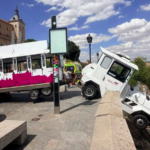
The train was completely empty when it moved. Photo credit: Bomberos Ayuntamiento de Toledo on Facebook

A sightseeing trip in Toledo turned into a terrifying accident when an empty tourist train suddenly began moving without a driver, struck an Italian visitor and crashed into a wall beside the city’s famous Alcázar.  The 44-year-old man was walking through the historic centre when the train rolled away from its stop on the Cuesta de Capuchinos at around 02:45pm on Saturday.  The vehicle had no passengers and no driver on board when it began moving.

The tourist was hit during the uncontrolled journey and suffered an open injury to one arm. He was taken by emergency services to Toledo University Hospital for treatment. His condition was reported as stable, the train on the other hand continued downhill before reaching the area around Calle Unión, where it crashed into the wall separating the road from the Alcázar gardens.

Ghost Train

The train had been stationary at its usual stop beside the Alcázar when it unexpectedly started moving.  There was nobody at the controls and no passengers inside. The exact reason it began rolling has not yet been established. A possible technical failure is among the initial lines of investigation, but authorities have not confirmed that this was the cause.

The tourist train normally carries visitors around Toledo’s historic centre, taking them past some of the city’s best-known landmarks. Its route begins close to the Alcázar and includes major sights such as the Puerta de Bisagra, the Puerta del Sol and the San Martín Bridge.

Tourist injured during the runaway

The Italian visitor was in the area when the train reached him. Emergency crews treated him at the scene before taking him to Toledo University Hospital.

The Ayuntamiento de Toledo confirmed that he had suffered an open injury to one of his arms. Other initial reports have described injuries to the man’s legs, but the confirmed information from the city authorities refers to an open arm injury.

Locomotive left hanging beside Alcázar

The incident became even more dramatic when the train reached the area beside the Alcázar. After striking the tourist, the vehicle continued towards Calle Unión and collided with the wall beside the park. The impact damaged the structure and left the front of the locomotive suspended over the drop.

The unusual position of the vehicle made removing it a complicated operation. Police, firefighters and emergency teams were called to the scene, while heavy lifting equipment was needed to secure the train and remove it safely. The locomotive was eventually taken away for examination as investigators began working to establish why it had moved in the first place.

Investigation launched in Toledo

The Ayuntamiento de Toledo has opened an investigation into the accident, police are examining how the tourist train was able to leave its parking position without anyone operating it and why it was not stopped before reaching the pedestrian area.

A possible brake problem has been mentioned among the initial hypotheses, although this has not been established as the cause. The investigation will have to determine whether a mechanical or electrical fault, or another problem, was responsible. Until that is established, it remains unclear exactly what caused the vehicle to start moving.

Questions over tourist safety

The incident has raised obvious questions because the vehicle is specifically used to transport visitors around one of Spain’s most heavily visited historic cities. Toledo attracts tourists throughout the year, with the area around the Alcázar forming part of the main sightseeing route through the old city. The runaway happened in the middle of that environment, meaning pedestrians were exposed to a vehicle that was moving without anyone at the controls.

The absence of passengers was the crucial difference between a serious accident and a potentially much larger disaster. Had the train begun moving while carrying tourists, the consequences could have been considerably worse. For now, the injured Italian visitor is receiving medical care, while investigators focus on the vehicle itself and the circumstances surrounding its unexpected departure. The train that should have been taking visitors on a sightseeing trip through Toledo instead became the centre of an emergency operation, after apparently setting off on its own, hitting a tourist and ending up suspended beside the Alcázar.

Continue Reading

Trending

Copyright © 2017 Spanish Property & News