
Cuba
Trump Threatens To ‘annihilate’ Iran In UN Speech With Electoral Slant

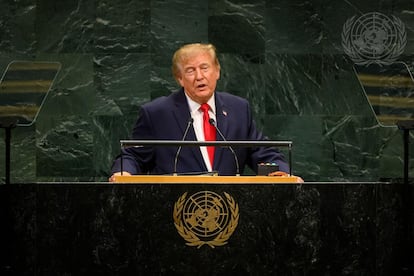
The Donald Trump who spoke at the United Nations on Tuesday is the same one as last year, with some big differences. The U.S. president burst into the September 2025 General Assembly with a furious, fiery speech that attacked multilateral institutions and even accused the United Nations of sabotage over technical problems with the escalators and the teleprompter. This year’s Trump, by contrast, carries the burden of a war in Iran he does not know how to get out of, and an midterm election just six weeks away that looks bad for the Republicans.
That is why the Trump of 2026 delivered a shorter speech—around half an hour, compared with last year’s 57 minutes—that sounded more like a campaign rally in which he insisted that Americans live in the best of all possible worlds, defending his highly controversial decision to drag the country into a seemingly endless war in the Middle East of the kind that he once heavily criticized.
Attacking Iran was, Trump said, a decision he felt compelled to take to preserve world peace. “while others have talked, I have acted. While others have spoken of peace, I have made peace. While others have ignored threats, I have confronted them,” he said.
The challenge he now faces is either “annihilate” the Islamic Republic or reach an agreement. “Do I drive them into hell with no chance of survival and no hope of future greatness or generations?” he asked, then offered a more reassuring picture about reaching a deal after the elections.
The problem with that timetable is that it sounds familiar. Trump and his administration first said the war would last a few days, then a few weeks, and later a few months. The conflict is about to enter its seventh month and there is no sign on the horizon of an immediate end: if anything, the recent intervention by Yemen’s Houthis points to an escalation of the war.
The harshest blow to the international order in his speech was directed at the International Criminal Court, an institution that has long been in this administration’s crosshairs despite the fact that the United States is not a member. Trump urged the court’s member states, whose headquarters are in The Hague and which is responsible for trying crimes against humanity and genocide, to leave it “immediately.” The declaration comes amid several reports suggesting Washington is preparing sanctions aimed at financially choking the ICC and making its operation impossible.
On Latin America, this General Assembly showed both sides of these new times. Post-Maduro Venezuela, now led by Delcy Rodríguez, whom Trump is scheduled to meet on Tuesday, is being presented as the model to follow. The president boasted about the deal announced in September for Washington to acquire 20% of the South American country’s oil reserves. “It was a 48-minute war. And we paid for the war with what we’ve taken out many, many, many times…That’s the old -fashioned way. To the victor belong the spoils, right?,” he said in a hall just a 20-minute drive from the Brooklyn jail where former Venezuelan president Nicolás Maduro has been held all year.
The counterexample is Cuba, which Trump threatened in very explicit terms, insisting his administration seeks “fundamental change” in the regime. “It is an absolutely failed state. It is failing like never before and it will eventually fall,” he continued. As Trump spoke, Venezuelan exiles in New York protested Delcy Rodríguez’s visit in a square near the UN. Miguel Martínez, a 34-year-old Venezuelan broadcaster, held up a sign showing Rodríguez flanked by two DEA agents. “This is a representation of how Venezuelans want the future to be. She is the new face of this regime, the representation of Venezuela’s dictatorship over so many years.”
Sign up for our weekly newsletter to get more English-language news coverage from EL PAÍS USA Edition








15 fotos
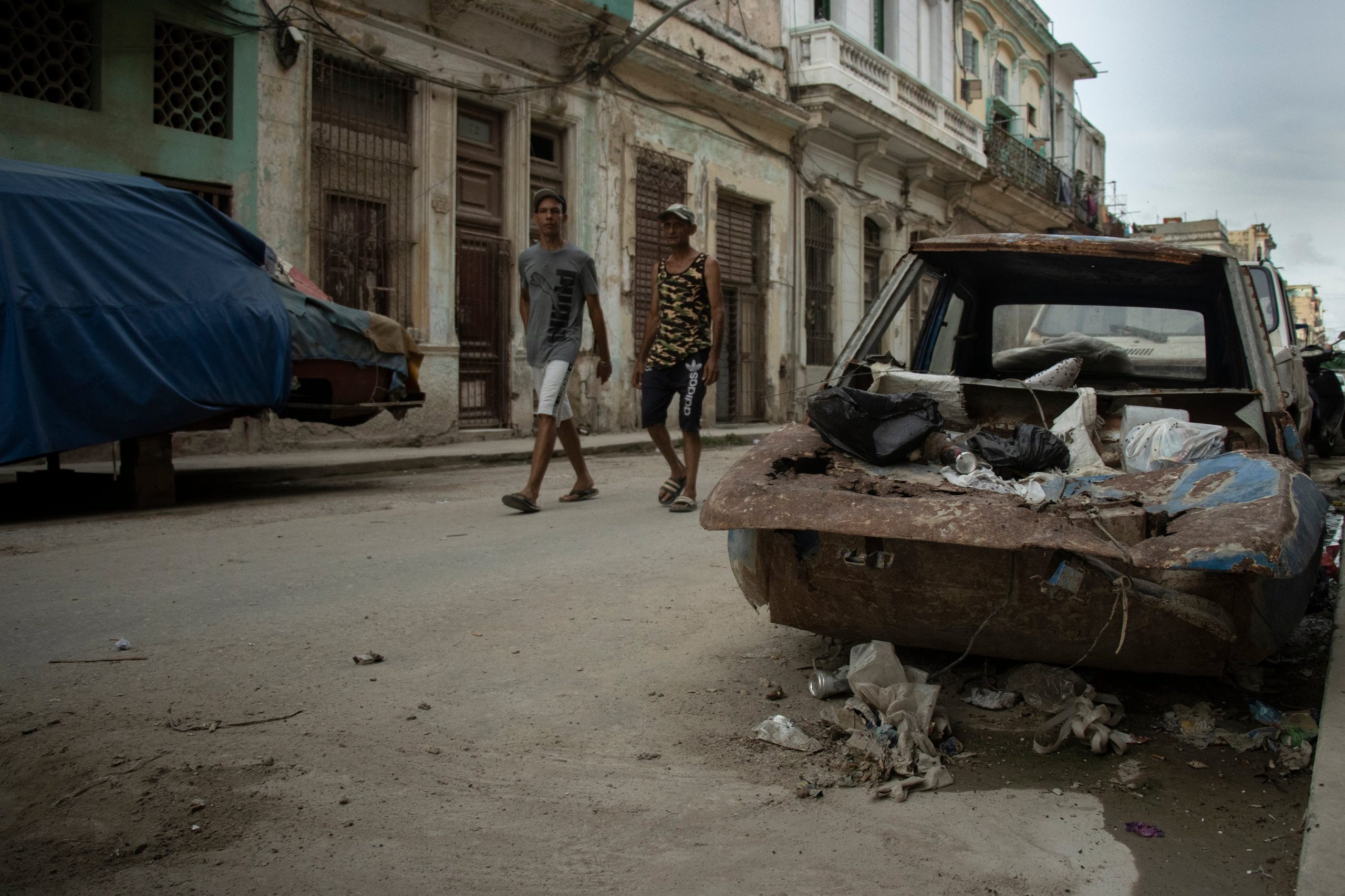
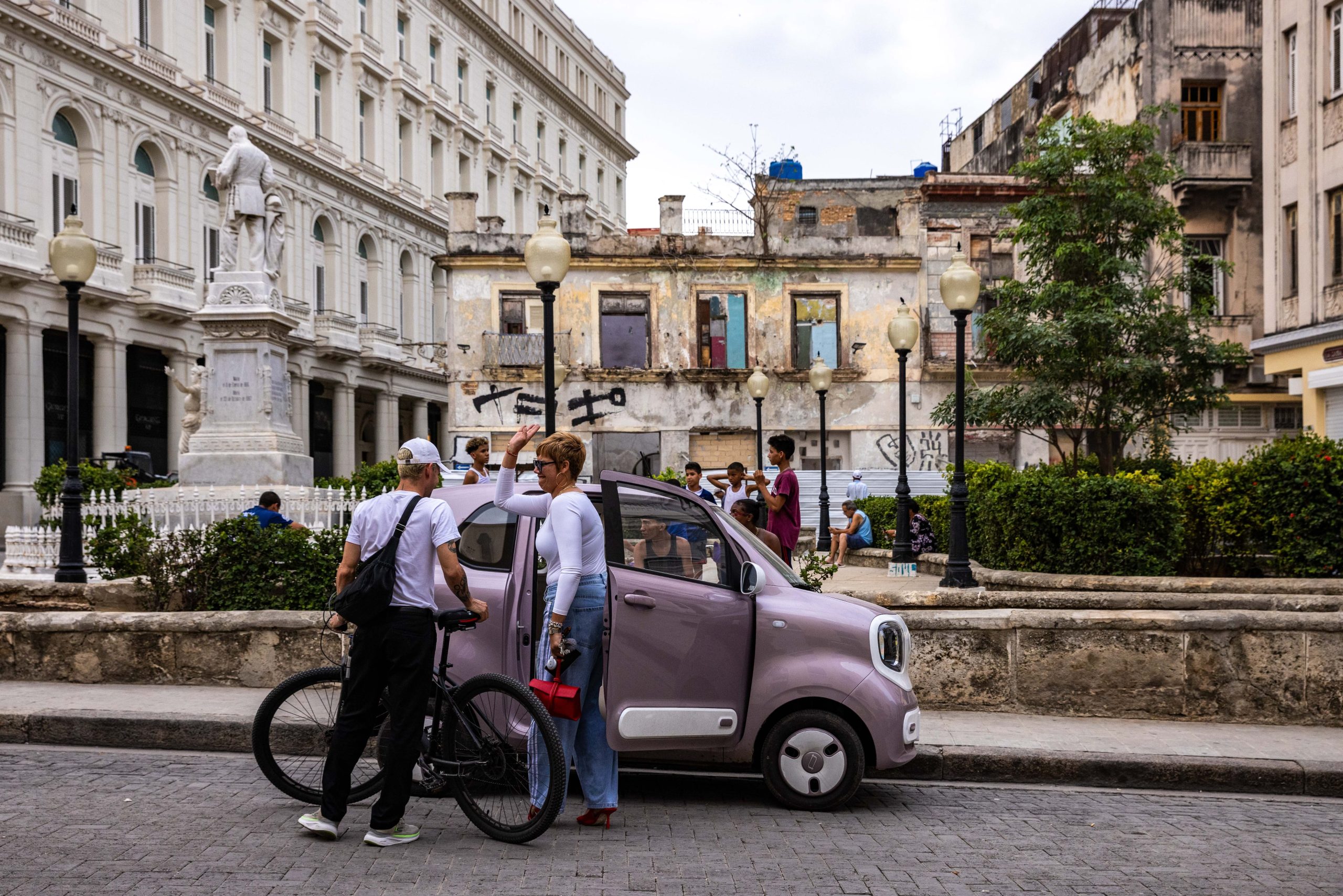
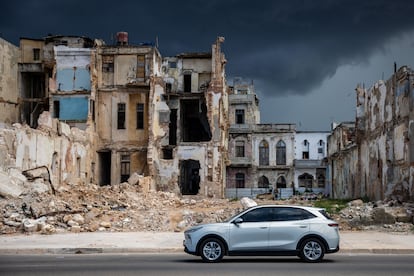
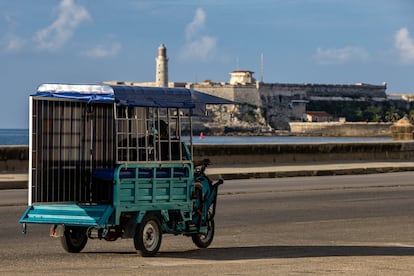
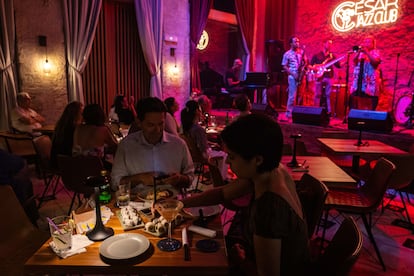
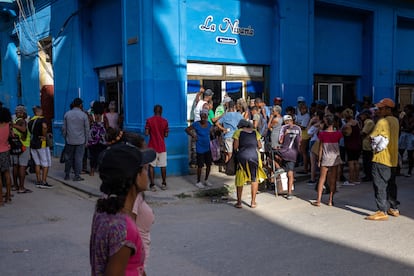
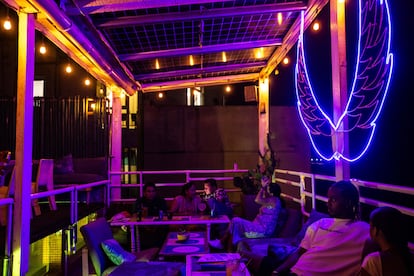
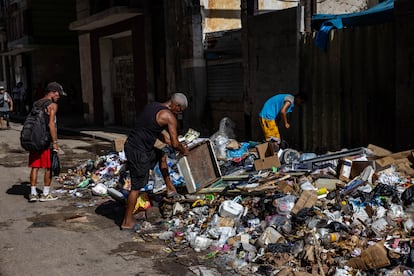
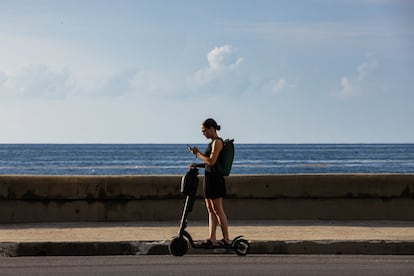
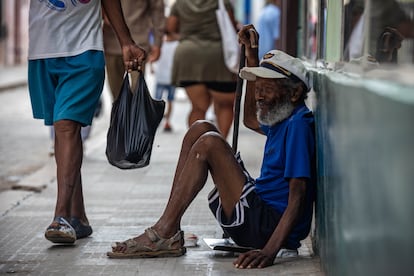
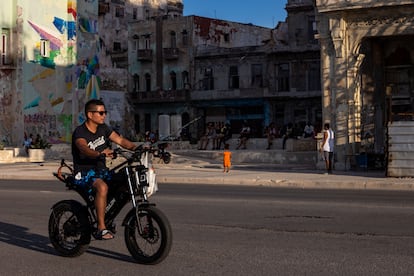
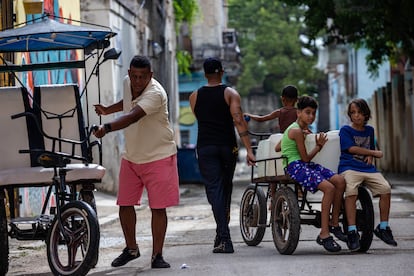
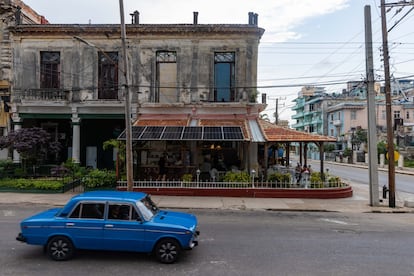
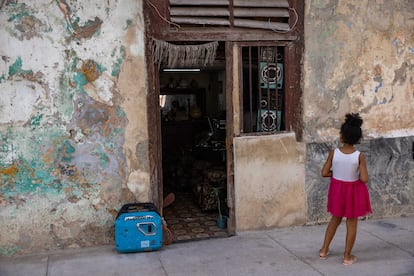
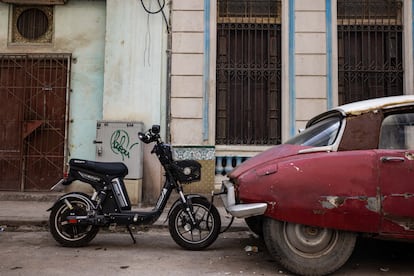
The island’s economic and energy crisis, worsened by the U.S. embargo, is widening the gap between those who can afford to import luxury cars and buy solar panels, and an impoverished majority that faces blackouts, food shortages, deteriorating housing and growing difficulty meeting their basic needs

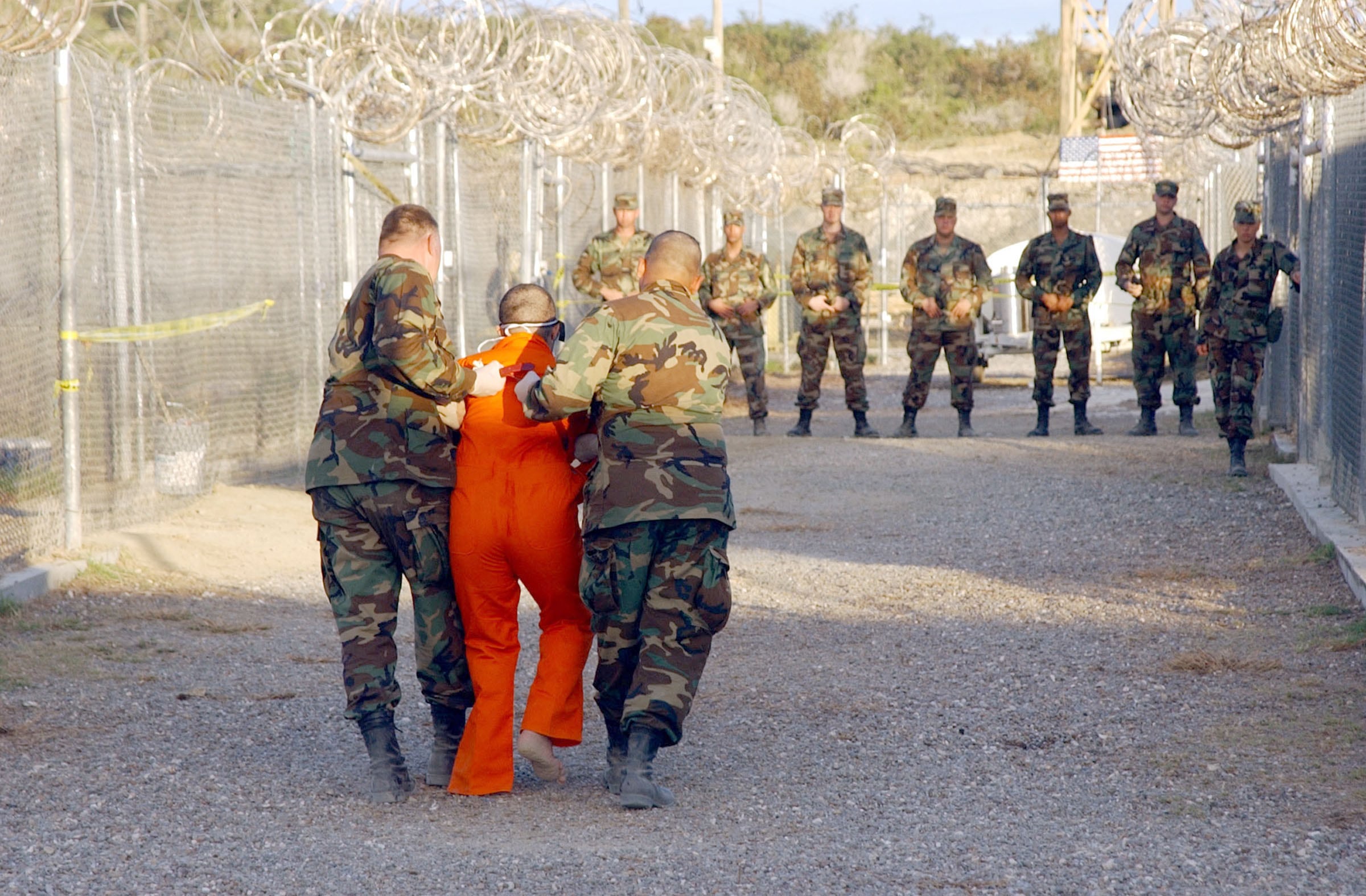
“I was only 18 when they kidnapped me, sold me to the United States and took me to one of the CIA’s black sites. They tortured me for months. Then they sent me to Guantánamo, where I spent nearly 15 years without charges or trial. What was done to me was not an aberration. It was orders.” Mansur Adayfi, a former detainee at the U.S. naval base prison in Guantánamo and an activist with the advocacy NGO CAGE International, said this in June at a panel of the Organization for Security and Co-operation in Europe (OSCE) in Vienna.
Adayfi was released without charge three decades after his capture. Fifteen other detainees remain behind bars. The prison — synonymous with the most sinister abuses and torture carried out in the U.S. war on terror after the September 11, 2001, attacks, which took place 25 years ago — remains open with no sign of closing despite numerous past attempts. The future of the inmates still held is equally uncertain. Meanwhile, justice for the victims of 9/11 has not arrived: in August a date was finally set — June 5, 2028 — for the trial of the prison’s most famous inmate, Khalid Sheikh Mohammed, known as KSM, the alleged mastermind of the attacks who has been held there since 2006, but there is still no certainty that the deadline will be met.
The Guantánamo prison and the abuses carried out there were born of haste, anger and fear. The United States had just discovered, in a state of panic, that it could be the target of unthinkable terrorist massacres; it feared further imminent strikes as devastating, or worse, than those in New York, Washington, and a field in Pennsylvania, and it was hungry for revenge. Then‑president George W. Bush ordered the creation of a detention facility to hold so‑called “enemy combatants,” without the obligation to grant them the protections of the Geneva Conventions afforded to captured soldiers or the rights they would have as prisoners on U.S. soil (a dubious legal theory the Supreme Court later rejected). The peculiar status of the naval base — on Cuban sovereign territory but under U.S. military control, foreign and isolated yet close enough to allow rapid transfers from the U.S. — led to the decision to locate the prison there.
Up to 779 Muslim men of varied nationalities were secretly captured, hooded and shackled, and brought to the prison. The vast majority of the inmates had nothing to do with 9/11, Al Qaeda, or Islamist terrorism. Many had been sold for a few dollars to the CIA, which handed out leaflets in the border area between Afghanistan and Pakistan promising “wealth and power like you have never imagined” to those who turned in alleged Al Qaeda or Taliban members. Few checks were carried out: there was a rush to find supposed criminals and to show the public progress in the war on terror.
“They will be treated humanely,” Bush had promised. That did not happen. According to the 2023 report by the UN special rapporteur on human rights regarding the Guantánamo prison — and as Adayfi corroborated at the OSCE session — each detainee “has lived or lives with their own indelible experiences of psychological and physical trauma after enduring severe abuses of their human rights.”

The first prisoners began arriving in 2002. Their initial housing was the hastily erected Camp X‑Ray in a corner of the base: a series of two‑by‑two‑meter cages outdoors, furnished only with two buckets — one for water, the other for bodily needs — that were used for four months until the prison facilities were completed. Interrogators, poorly trained for such tasks and under enormous pressure to uncover and dismantle possible plots — and furious over the deaths of their fellow citizens — were put in charge of the detainees.
The result was widespread use of torture: simulated drownings, beatings, extreme sleep deprivation, anal rape. By the summer of 2002 a culture of mistreatment was widespread, including the use of dogs to intimidate, forced painful positions, and sleep disruption. As far as is known, it served no useful purpose.
In 2014, Senator and former Republican presidential candidate John McCain — himself a tortured prisoner of war during Vietnam — said of those methods: “They stained our national honor, did much harm and little practical good […] I know from personal experience that the abuse of prisoners will produce more bad than good intelligence. I know that victims of torture will offer intentionally misleading information if they think their captors will believe it. I know they will say whatever they think their torturers want them to say if they believe it will stop their suffering.”
The allegations about what was happening in those cells accelerated promises to close the facility. Then‑presidential candidate Barack Obama announced in 2008 that shuttering it would be the first act of his administration. He never succeeded. Neither did the next Democratic president, Joe Biden. The great majority of detainees have been released after years behind bars without being charged in military commissions, the specially created tribunals to try Guantánamo inmates.
Today, 800 military and civilian staff work at what is considered the most expensive prison in the world, at a ratio of about 50 employees for each one of the roughly 15 inmates, who are aged between 46 and 54 and remain in various forms of legal limbo. Two detainees have been convicted and are serving sentences at the base. Three are listed as “enemy combatants” and nicknamed “the forever prisoners”: they will not be taken to trial and the United States does not want to release them, although their status is subject to periodic review. Three have been cleared for transfer to a third country; the Trump administration, which signed several agreements to deport irregular migrants to distant locations, did not show much interest in finding a government willing to accept the three Guantánamo detainees.
The remaining seven, formerly categorized as high‑value detainees and accused of some of the worst attacks in history, await trials for charges — over the 9/11 attacks, the 2000 bombing of the destroyer USS Cole, the bombing of a nightclub in Bali — that have been tangled in appeal after appeal and never reach a judge. The consequences of torture are one of the factors complicating their cases.
One of the five accused of participating in the 9/11 attacks, Ramzi bin al‑Shibh, has been declared too mentally damaged by torture to stand trial. Regarding the other four — Khalid Sheikh Mohammed, Walid bin Attash, Mustafa al‑Hawsawi and Ammar al‑Baluchi — prosecutors concluded that, because of the abuses they suffered, it would be impossible to successfully try them and negotiated a deal, announced in August 2024, to withdraw death‑penalty requests in exchange for guilty pleas and detailed accounts of their roles in the attacks and life at Guantánamo. Then‑secretary of defense Lloyd Austin overturned that deal: the case returned to square one.
Last month, just days before the anniversary of 9/11, a judge finally set a date for KSM’s trial: June 2028, two years away. But there are no expectations the hearing will take place even then. The judge has ruled that a key piece of evidence cannot be used in the trial: a confession Mohammed gave to a “clean” team (one that did not use torture) of FBI agents after his arrival at Guantánamo. It was determined that that confession had been influenced by the effects of the torture the suspect had suffered in CIA black sites before reaching the base.
Sign up for our weekly newsletter to get more English-language news coverage from EL PAÍS USA Edition

F1 star on verge of team exit after startling admission

Últimas Noticias De La Asamblea General De La ONU, En Directo | Volodímir Zelenski: “Esta Guerra Ridícula Con Ucrania Debe Acabar”

Spain’s 2026 The ‘hottest And Longest Summer On Record’ As Highs Of 39C Continue Into Late September


-
Latest1 week ago
The Vocabulary You Need To Understand The Spanish Citizenship Process
-

 Argentina2 weeks ago
The Falklands: The Open Wound That Unites Argentines
-

 Energy efficiency & certificates2 weeks ago
94% Of Spanish Homes Are Energy Inefficient – Could Tighter Rules Be Coming?
-
Holiday rentals2 weeks ago
Ibiza council hits illegal tourist rental with €793,000 fine – but will the owner pay that much?
-

 Alex Saab1 week ago
Maduro Ally Alex Saab Pleads Guilty In US Money-Laundering Case
-
easyJet2 weeks ago
146 slide off easyJet flight after powerbank fire at Milan airport
-
 Uncategorized1 week ago
‘Lewis will never trust Charles again’ – F1 journalist issues shocking Ferrari statement – GPFans.com
-
Latest2 weeks ago
UK Air Traffic Control Glitch Hits Spain’s Airports As 229 Flights Cancelled