Connect with us

%

Two Guardia Civil Officers Shot

Published

on

two-guardia-civil-officers-shot

Two Guardia Civil officers have been injured in a shooting in Catalonia after a police operation targeting suspected motorway thieves ended in an armed confrontation.

The incident happened at around 10pm on Thursday, October 1, in the Can Parellada area of Terrassa, Barcelona.

One of the officers was seriously injured after being hit by four shots and was taken to Parc Taulí Hospital in nearby Sabadell for treatment.

Despite the severity of his injuries, his life is not believed to be in danger. The second Guardia Civil officer was also injured during the confrontation.

Three suspects have since been arrested in connection with the shooting, according to the latest reports from the Mossos d’Esquadra investigation.

Officers were following suspected motorway thieves

The two Guardia Civil officers were working in plain clothes and travelling in an unmarked vehicle as part of an operation targeting a group of suspected thieves.

The suspects are described by Spanish police sources as ‘teloneros’, a term used for criminals who target vehicles and lorries on motorways, often stealing goods from trucks.

The operation began around the AP-7 motorway, close to the Porta de Barcelona service area in Castellbisbal.

A pursuit subsequently developed and continued into Terrassa, eventually reaching Calle Europa in the Can Parellada neighbourhood.

According to investigators, the suspects opened fire after discovering that they were being followed by the Guardia Civil.

An exchange of gunfire then took place in the street.

The more seriously injured officer suffered four gunshot wounds, including injuries to his abdomen, leg and arm. He was taken to hospital and required surgery. Reports say he remains outside life-threatening danger despite the seriousness of his injuries.

Three arrests after overnight police operation

The Mossos d’Esquadra launched an investigation immediately after the shooting, with its Criminal Investigation Division taking charge of the case.

Police subsequently located several of the suspected attackers inside an occupied warehouse in Terrassa.

A specialist Mossos unit, the GEI, was brought in during the early hours of Friday morning before officers entered the building and arrested three people.

One of those detained is suspected of being the person who fired the shots, although the investigation is continuing and further arrests have not been ruled out.

The incident has highlighted the risks faced by officers carrying out surveillance operations against organised groups involved in motorway and lorry thefts.

The investigation remains ongoing as detectives work to establish exactly what happened during the pursuit and determine the involvement of each of those arrested.

%

€1 Million Euromillones Prize Lands In Malaga

Published

on

e1-million-euromillones-prize-lands-in-malaga

Lottery shop in Carrefour Alameda. Credit: cc-carrefour-alameda.com

A lucky Euromillones ticket holder in Malaga is €1 million richer after Friday’s draw, with the winning El Millón ticket sold at a lottery administration inside Carrefour Alameda.

Administration No. 67 in Malaga capital validated the winning ticket for Spain’s separate El Millón prize, giving one player a seven-figure windfall from the draw held on Friday, October 2.

Loterías y Apuestas del Estado, the state organization responsible for licensing lotteries in Spain, confirmed the winning El Millón code as GKH34441. Unlike the main Euromillones jackpot, El Millón is a separate €1 million prize available exclusively to tickets played in Spain.

Malaga win comes as well as €28.8 million jackpot

Friday’s draw also produced a major jackpot winner in Spain, although that prize went to Cantabria rather than Malaga. A single ticket matched all five main numbers and both Lucky Stars to claim €28,871,634. The winning ticket was validated at Receptor No. 69,930 on El Sol, 11, in Cabezón de la Sal, Cantabria. Malaga’s winner did not need to match the main Euromillones combination to claim the El Millón prize.

Check the winning Euromillones numbers

Friday’s main combination was: 07 – 08 – 10 – 22 – 35 with lucky Stars: 02 and 10 The official Euromillones results from Loterías y Apuestas del Estado confirm one first-category winner and one El Millón winner in the draw.

Spain’s official lottery results also show European ticket sales of €47,486,533.60 for Friday’s draw.

Next Euromillones jackpot

Following the Cantabria jackpot win, the next Euromillones draw starts again with a guaranteed first-category fund of €17 million.

For Spanish players, every qualifying Euromillones entry also provides a chance to win El Millón, meaning another €1 million prize will be up for grabs when the game returns.

Malaga has seen several recent Euromillones wins in Malaga province, including another €1 million El Millón ticket sold in the city in December 2025 again.

Continue Reading

%

90% Of Spaniards Say This Dish Can Help You Reconcile After A Row

Published

on

90%-of-spaniards-say-this-dish-can-help-you-reconcile-after-a-row

If you’re still refusing to speak to each other, someone just needs to make the first move. Photo credit: PeopleImages/Shutterstock

One of the last things you want to do after a heated argument is sit down and have a meal with the person you’ve just fallen out with. But Spain may have found a surprisingly tasty way around that awkwardness, and it seems the answer could be sitting right in the middle of the table.

A new study has found that 90 per cent of people in Spain believe one particular meal can help bring people back together after a disagreement. And the findings suggest it may do rather more than simply give two people something to eat while they avoid looking at each other.

Spain has found its peace offering

The study, commissioned by Arroz La Fallera, asked 1,000 people aged between 18 and 65 about the role food plays in bringing people together. Across Spain, 85 per cent said sharing a paella can help people reconcile after a conflict, while in the Valencian Community, where the dish has particularly strong cultural roots, that figure climbs to 90 per cent.

The results also suggest this isn’t just something people like the idea of. More than half of those surveyed, 54 per cent, said they had already used a paella meal to smooth over differences with someone, while another 44 per cent said they had actually made peace with someone over a paella. So while nobody is suggesting that a plate of rice can magically settle every family feud, plenty of people apparently believe there is something about sitting down together that helps.

A meal that gets people talking

The survey also looked at what happens during the meal itself, and this is where the findings become particularly interesting. A huge 93 per cent of respondents said sharing a paella makes them more willing to listen without interrupting, followed by 92 per cent who said they would be prepared to discuss their differences respectfully. Another 92 per cent said they would be more willing to look for common ground. Perhaps that makes sense when you consider how paella is normally eaten. It isn’t usually a quick meal grabbed between two appointments.

The pan goes in the middle of the table, everyone gathers around it and the meal becomes something shared, creating time to talk, listen and, perhaps, remember why you liked the person before you started arguing with them. In the Valencian Community, 90 per cent also said sharing paella was a good way to reconnect with family or friends, giving the dish an even stronger connection with social occasions there.

Paella beats tortilla

The research also asked Spaniards to name their favourite dish, and paella came out on top. Forty-five per cent chose paella as their favourite, putting it comfortably ahead of tortilla de patatas, which was selected by 24 per cent. That gives paella a fairly impressive double role: it is not only the dish most strongly associated with bringing people back together in the survey, but also the one most people chose as their favourite.

Its connection with social occasions may help explain why. Paella is often associated with family meals, weekends, celebrations and gatherings where the food is prepared for several people rather than served as an individual plate. The cooking, the waiting and the meal itself all create reasons for people to stay together.

Could food really end an argument?

There is an obvious catch. The survey shows what people believe about sharing paella; it cannot prove that eating one will actually end an argument. The research was also commissioned by Arroz La Fallera, so the findings need to be viewed in that context. But the responses do show how strongly food is tied to socialising in Spain. The fact that 54 per cent of those surveyed said they had already used a paella meal to smooth over differences suggests this is not simply a theoretical idea.

And with 44 per cent saying they had actually reconciled with someone over one, there are plenty of people who can apparently point to a paella as part of a successful peace treaty. The study was released around World Paella Day on September 20, when the dish was already taking centre stage across Spain and beyond. Perhaps there is something to be said for a solution that requires neither a mediator nor a carefully worded apology. If you’re still refusing to speak to each other, someone just needs to make the first move and bring out the paella.

Continue Reading

%

3I/ATLAS Surprises Scientists Again As They Spot Something Unusual Around The Comet

Published

on

3i/atlas-surprises-scientists-again-as-they-spot-something-unusual-around-the-comet

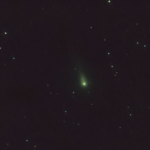
3I/ATLAS arrived from beyond the solar system, carrying material from a different stellar environment. Photo credit: Franco Tognarini/Shutterstock

Scientists studying 3I/ATLAS have uncovered another surprise around the comet that captured worldwide attention. Measurements show gas escaping around the interstellar visitor is moving more slowly than expected, raising questions about what is driving its activity.

The findings published by IRAM on September 14 draw on observations made near the comet’s closest approach to the Sun in October 2025. They also reveal chemical proportions that differ from those found in comets belonging to our Solar System. For researchers, those differences offer clues about the distant environment where 3I/ATLAS formed.

What scientists found around 3I/ATLAS

A team led by Nicolas Biver used the IRAM telescope to examine the cloud of gas and dust surrounding the comet, known as its coma. They found that some chemicals were present in different proportions from those typically measured in Solar System comets. Hydrogen cyanide was depleted, while the ratio of sulphur to carbon was particularly low.

Another unexpected result came from the gas itself. Its measured speed was slower than researchers anticipated for the comet’s activity and distance from the Sun. One possible explanation is that heavier molecules, such as carbon dioxide, are driving the outflow. Another involves icy grains releasing water as they evaporate around the comet. The observations leave both possibilities open.

Why this visitor is so valuable

Most comets astronomers study formed within our Solar System. 3I/ATLAS arrived from beyond it, carrying material from a different stellar environment. As NASA explains, it is only the third known interstellar object discovered passing through our celestial neighbourhood. Its trajectory shows that it came from outside the Solar System.

That makes every measurement valuable. Astronomers can compare its ingredients with familiar comets and investigate how the building blocks of other planetary systems might differ. For the background to its discovery and journey, read EWN’s guide to the rare comet from another star system.

A telescope in Spain uncovered another clue

Separate research announced in September used the William Herschel Telescope on La Palma to examine charged gases in the comet’s tail. According to the Isaac Newton Group of Telescopes, the measurements suggest 3I/ATLAS formed in extremely cold conditions, likely below minus 240 degrees Celsius, far from its home star.

The team identified five different ions simultaneously, providing an unusually detailed view of the tail of an interstellar object. This adds to earlier work examining its history, including the research covered in EWN’s report on why 3I/ATLAS could be an exceptionally ancient comet.

Does 3I/ATLAS pose a threat to Earth?

No. NASA says 3I/ATLAS posed no threat to Earth. Even at its closest approach, it remained around 270 million kilometres from our planet. Its scientific importance comes from its origins and composition.

As researchers continue analysing the observations, the question is whether its unusual chemistry is common among comets from other star systems, or whether this visitor is an exceptional example. Answering that will require more interstellar discoveries. For now, 3I/ATLAS is giving astronomers a rare opportunity to investigate material formed around another star.

Continue Reading

Trending

Copyright © 2017 Spanish Property & News