
50mph speed limit
UK issues electricity alert as diesel rationing plans could return for drivers

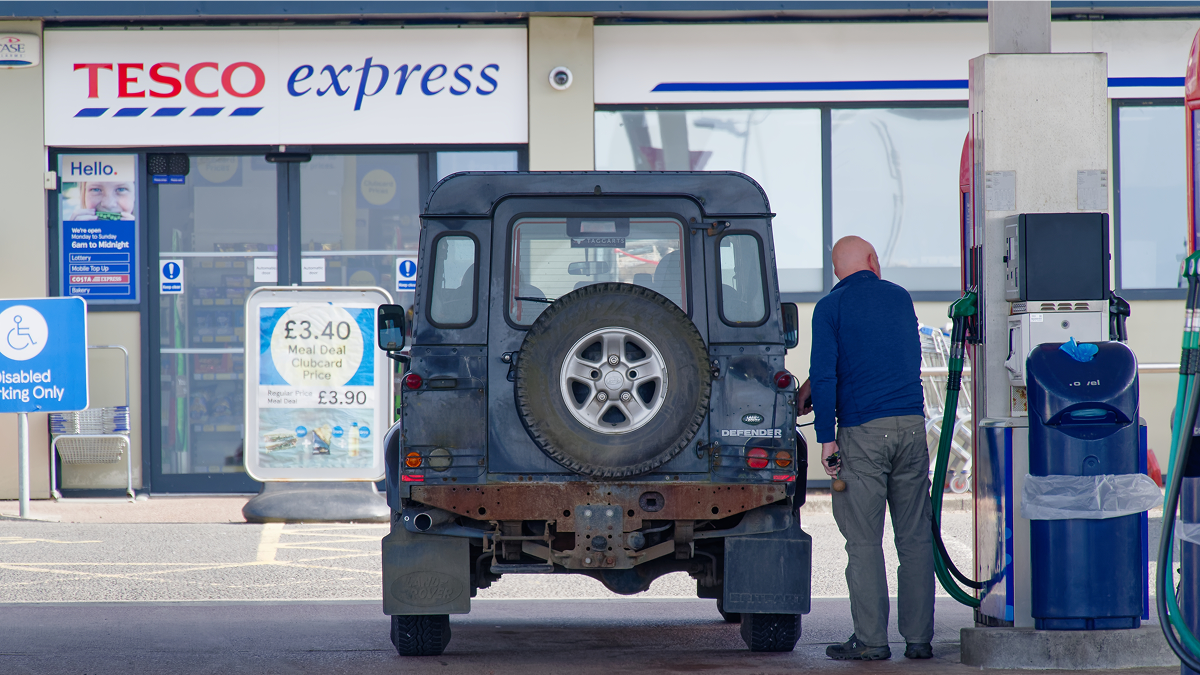
Filling up at a UK forecourt could soon come with new limits. Credit: richardjohnson / Shutterstock
Filling up in Britain already costs more than it has in months, but soon it might not be as basic as just pulling up to the pump. Diesel reserves have shrunk to just 42 days’ cover, and ministers are dusting off contingency plans that could decide who gets fuel first.
UK diesel reserves have shrunk to just 42 days’ cover
Diesel at the pump in Britain reached 199.05p a litre this weekend, a whisker short of the all-time high of 199.09p set only days earlier. Petrol wasn’t far behind at 174.04p, with both fuels at their most expensive since fighting between the US and Iran over the Strait of Hormuz, the narrow shipping lane that carries roughly a fifth of the world’s oil, began unsettling global supply earlier this year. RAC head of policy Simon Williams said the record would “almost certainly be surpassed over the weekend.”
That price rise sits on a much shakier cushion than most drivers realise. Sky News economics editor Ed Conway has pointed out that the UK now holds just 42 days of diesel in reserve, only just ahead of Australia’s 31 days and far behind the hundreds of days held by France, Germany, Italy and Spain. Back in the early 2000s, Britain’s buffer used to run past 100 days, but it has fallen steadily as refineries have closed.
“Our degree of preparedness for this kind of moment is lower than it’s been for many, many years,” Conway said. “It’s a very big issue.”
Emergency services and buses would get fuel first
The Department for Energy Security and Net Zero (DESNZ) is now reviewing the National Emergency Plan for Fuel, the government’s playbook for a genuine shortage, drawn up under the Energy Act 1976. A government spokesperson admitted it was “too early to tell” what the impact of the current crisis would be, but the fact the plan is being dusted off at all shows how seriously officials are taking the squeeze.
Under the plan, emergency service and critical service vehicles would be first in line at “designated” filling stations set aside specifically for them. Utilities, meaning gas, electricity and water suppliers, come next, followed by buses and diesel trains, then lorries carrying food and medical supplies. Everyone else would be left with restricted amounts and shorter opening hours at the pumps under what’s called the Maximum Purchase Scheme.
There’s also a reserve tanker fleet the government can call on, with Armed Forces personnel trained to drive it if commercial drivers can’t keep up with demand, alongside a temporary relaxation of drivers’ hours rules to get more deliveries moving quickly.
A 50mph limit is back on the table too
For ordinary drivers who never come near a designated filling station, the more likely everyday change arrives at a slower speed. Ministers are also weighing a temporary UK-wide 50mph speed limit, echoing the fuel-saving measures floated during past supply scares, to squeeze more miles out of every tank while the reserves recover.
It’s a small ask compared with rationing, but it would still land on daily life directly, adding time to commutes and long motorway journeys at exactly the moment fuel itself costs more to buy.
Households are already being asked to cut power at peak times
Diesel isn’t the only habit officials have their eye on. On Monday evening, September 28, the National Energy System Operator (NESO), which runs Britain’s electricity grid, issued an Electricity Margin Notice for the 4pm to 7pm peak, saying it needed an extra 1.4 gigawatts of power after low wind speeds cut into supply. Wind normally provides around 30 per cent of Britain’s electricity, but far less on a still evening.
NESO was quick to play the notice down. “This is a routine and precautionary operational tool,” it said. “There is no risk to customer electricity supplies and Great Britain’s electricity system remains secure.” By midday, generators had already responded and the shortfall had narrowed to just 104 megawatts, with wind forecast to pick up again overnight.
Still, it’s a reminder that the system already leans on the public at these moments. Through NESO’s Demand Flexibility Service, now running year-round, households and businesses are paid to shift their electricity use away from peak evening hours whenever the margin gets tight, a voluntary scheme rather than an order, but a sign of the direction things are heading if the winter turns colder or the diesel picture worsens.
Spain tried something similar back in 2011
Britain wouldn’t be the first country in the region to reach for rationing-style measures. Spain cut its motorway speed limit from 120 km/h to 110 km/h for four months in 2011, under Prime Minister José Luis Rodríguez Zapatero, after fuel prices spiked during the conflict in Libya.
The move came with its own price tag too. Roughly 6,000 road signs across the country had to be fitted with adhesive stickers at around €41 each, costing the Ministry of Public Works close to €230,000. The government claimed the lower limit cut fuel consumption by 5.7 per cent and saved €450 million a year, though independent analysis later questioned how much of that could genuinely be put down to slower driving.
For now, nothing is rationed and NESO insists Monday’s dip is already resolved. But with diesel at record prices and a government contingency plan built for exactly this scenario sitting ready to go, anyone driving in the UK this winter, or planning to, may be wise to keep half an eye on the pumps rather than assume the worst has passed.






UK could rejoin the EU just 10 years after Brexit as major reversal is proposed

La Cala Lions’ Fourth Memory Day

La Policía Británica Libera Bajo Fianza A Los Cinco Detenidos Por El Presunto Intento De Atentado Contra Una Base Militar

Maduro Ally Alex Saab Pleads Guilty In US Money-Laundering Case

How To Get A Tourist Rental Licence In Andalusia (Spain) – Step-By-Step Guide 2025

Detenido Un Hombre Por La Muerte De Una Mujer De 47 Años En El Distrito De Arganzuela De Madrid


-
 Alex Saab2 weeks ago
Maduro Ally Alex Saab Pleads Guilty In US Money-Laundering Case
-
 New Developments2 weeks ago
How To Get A Tourist Rental Licence In Andalusia (Spain) – Step-By-Step Guide 2025
-
 Arganzuela1 week ago
Detenido Un Hombre Por La Muerte De Una Mujer De 47 Años En El Distrito De Arganzuela De Madrid
-

 Coaching2 weeks ago
Svend Brinkmann, Psychologist: ‘If You Place Conditions On Forgiveness, Love Or Freedom, You Have Already Destroyed Them’
-
Best airlines1 week ago
Spanish airline Vueling named Europe’s best low-cost carrier for 2026
-
Latest2 weeks ago
Italy And Spain Extend Tit-For-Tat Border Checks In Wake Of Migrant Rush
-

 %1 week ago
Mallorca Property Overrun By Wild Goats
-
2026 wildfires2 weeks ago
Spain’s wildfire toll revealed as almost 300,000 hectares go up in flames