
Crimea
Ukraine’s Strategy To Strangle Crimea: Drone Bombardment, Attacks On Infrastructure And Psychological Blows To Russian Troops

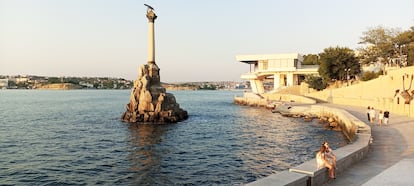
Something is changing in Crimea, the territory that represents the most valuable prize of the imperial plan launched by Vladimir Putin in 2014. The Russian president has long regarded the peninsula he seized from Ukraine as an impregnable fortress. The apparent normality, however, is a trompe-l’œil behind which Moscow is trying to mask significant blows, like those suffered in recent months by its fleet docked in Sevastopol and by its air-defense systems in that occupied stronghold.
Amid the offensive Kyiv has launched — in an attempt to choke the Russian-occupied territory logistically by bombing bridges, rail lines, roads, and infrastructure — reality calls Putin’s propaganda into question. “Ukraine has not renounced Crimea,” stresses Ukrainian historian and analyst Oleksii Otkydach, who was born on the peninsula.
Recovering Crimea, 12 years after losing it, is today less of a daydream for Kyiv than it was a few months ago, although authorities that hold power there alongside tens of thousands of Russians pushed there by the Kremlin have put down roots during the past decade.
That is why Volodymyr Zelenskiy’s government is sending, with this unprecedented offensive, a threefold message: to Russians, to the Ukrainian population, and to the more than two million people living in Crimea —both to those who support Moscow’s positions and to supporters of Kyiv. It reminds them that Ukraine has not forgotten Crimea, that it will try by all means to recover it and that, if it cannot, it will make life unbearable for the occupying forces.
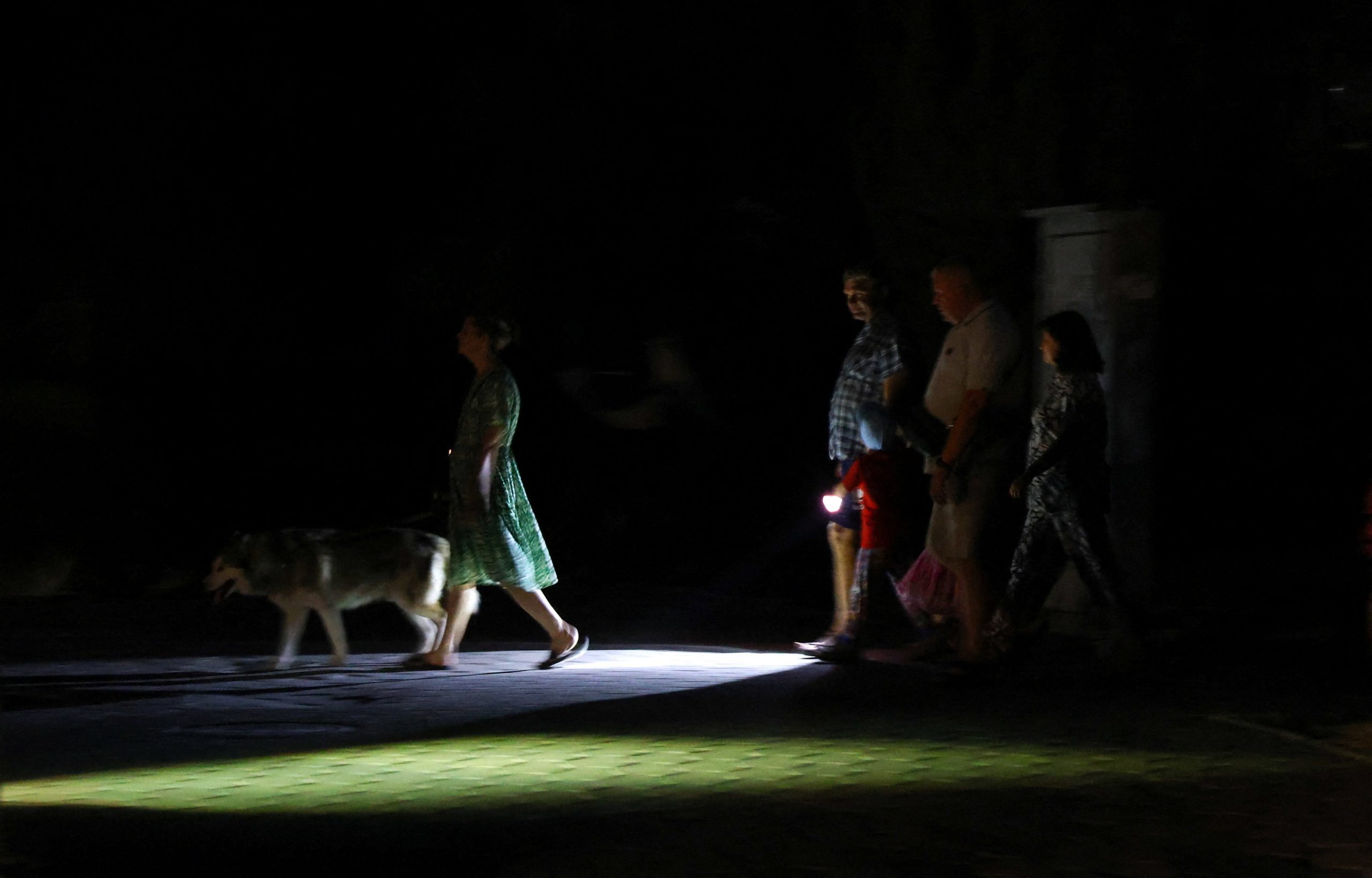
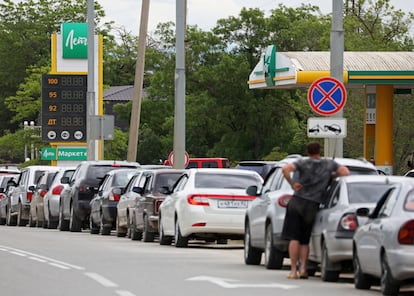
Sevastopol, the peninsula’s most populous city, cannot even guarantee power and must ration fuel against a background of explosions, as EL PAÍS’s special correspondent found at the end of June. Residents endure shortages and a sense of insecurity they had not experienced since 2014.
Most Ukrainians on the street have not shown optimism in recent years about the possibility of recovering the territory occupied by Russia — about 20% of the country, including Crimea. Pessimism spread especially after Russia’s full-scale invasion in February 2022. But now, with drone strikes against the enemy, public opinion is beginning to see a possible turning point, and the issue is aired daily by authorities and the media.
A calculated strategy
“For a long time, Crimea was a fetish, the crown jewel of Putin’s imperial myth. Now that fantasy is collapsing before our eyes,” says Alim Aliev, a human rights activist from the Tatar minority, an ethnic group whose persecution has intensified since 2014. “What we have witnessed in recent weeks is not simply a series of random attacks but a meticulously calculated military and diplomatic strategy,” he says. Ukraine’s goal: to turn the peninsula into an island cut off from supplies and without defenses.
After besieging the lines of communication — roads, bridges, and railways that move supplies — the next step will be to render unusable once and for all the famous and crucial Kerch Bridge that links Crimea with Russia, the Tatar activist predicts. According to Aliev, the aim is to deliver a blow that is not only logistical and military but also psychological, demonstrating the “dismantling of the Russian myth.”
Defending and maintaining the peninsula under occupation is proving increasingly costly for Moscow. Its geography and location, surrounded by the Black Sea, force it to pay a high — and rising — economic, logistical, military, and human price. At the same time, Russia must maintain military pressure elsewhere, such as in the Ukrainian Donbas region, in the Russian capital itself, and across a range of energy facilities in different regions of the country that Kyiv is targeting militarily.
The question posed by Ukraine’s recent weeks-long offensive against occupied Crimea — which it is trying to recover — and, simultaneously, against Moscow — which it is trying to weaken — is whether Russia can withstand pressure on all fronts and whether it will make significant changes to its deployments under the current circumstances, which could leave some areas more vulnerable.
“There is no way Russia can defend Moscow and Crimea without losing strength on other fronts,” says Oleh Rybachuk of the Centre of United Actions and a former Ukrainian deputy prime minister.
“The attacks on Crimea create a complex dilemma. If it does not reinforce its defense, the situation on the peninsula will continue to deteriorate,” agrees historian Otkydach. “If, on the contrary, Russia decides to bolster Crimea’s protection, it must allocate huge amounts of air-defense systems, fuel, vehicles and logistical resources. That means those resources will no longer be available elsewhere, creating opportunities for attacks on strategic targets in other regions, such as refineries in Moscow, Yaroslavl, or Ryazan,” he adds.
The deployment of modern drones built by Ukraine aims to complicate the already difficult supply effort the Kremlin must carry out in Crimea. “That territory is totally dependent on Ukraine: its water supply, its roads, its logistics… Everything depends on Ukraine. And now we are cutting the logistical routes,” explains Rybachuk.
The prelude to the current strikes on communication lines and energy infrastructure was months of weakening the Russian fleet docked in Sevastopol and its air-defense systems, this analyst recalls; for that reason, “now they [the Russians] are half blind.” Despite the high arms expenditure Kyiv is incurring, he estimates that, for now, they have a sufficient arsenal.
“Crimea could never exist without its connection to Ukraine, to the rest of the mainland,” Otkydach, who supports his country’s current strategy mainly through the use of drones, says. “Faced with a shortage of classic long-range attack means, such as ballistic missiles, cruise missiles or aerial bombs, the use of drones has become an effective alternative,” he adds. “They are significantly cheaper and, as recent events have shown, can inflict major damage on military and strategic targets.”
The peninsula “has enormous symbolic and political value for the Kremlin,” Otkydach stresses. “It is one of the main pillars of Vladimir Putin’s narrative, so any vulnerability there poses a significant political problem,” he continues. “The historic advantage of being an enormous country — the largest in Europe — has now become a weakness for Russia, since its military doctrine relied on the fact that it is a nuclear power and that no one would ever dare to attack its military infrastructure,” says Rybachuk. To try to hold Crimea, “the Kremlin is moving defenses from other parts of Russia, leaving those areas even less protected,” the former deputy prime minister adds.
The current situation, Otkydach notes, is seen differently by Crimea’s residents who support Kyiv and those who back Moscow. For the former, “these attacks represent hope.” For the latter, especially “many Russian citizens who moved illegally to the peninsula after the occupation, the situation generates fear and uncertainty.” The demographic picture has changed with the arrival of some 800,000 Russians since 2014, estimates Aliev.
They see their investments, properties, and new lives driven by the invasion at risk, the Tatar activist adds. Moreover, Otkydach adds, they face “having to answer for their illegal presence on Ukrainian territory” before the courts. This legal dimension is another of the strategies Kyiv seeks to advance in its attempt to recover the peninsula.
Rybachuk, optimistic, believes there is no doubt that sooner or later there will be an “exodus” of Russian officials and their families fleeing the peninsula. As a preliminary step, he predicts another push this coming autumn in Kyiv’s arms revolution, which will allow it to strike targets even farther inside Russia with ballistic missiles.
None of that appears likely, in principle, to happen in the short term. Meanwhile, according to the information Otkydach receives from inside Crimea, “the occupation authorities are trying to convey the image that everything is under control, following a Soviet-style communication model.” The historian admits it is increasingly difficult to communicate securely because of “restrictions on internet access and messaging services.” Meanwhile, those awaiting liberation rely on one message, says Aliev: “Ukraine has not forgotten us.”
Sign up for our weekly newsletter to get more English-language news coverage from EL PAÍS USA Edition


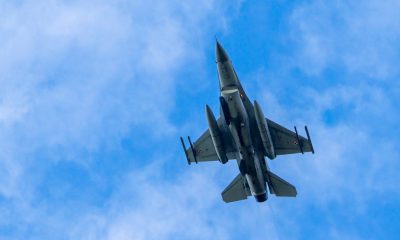

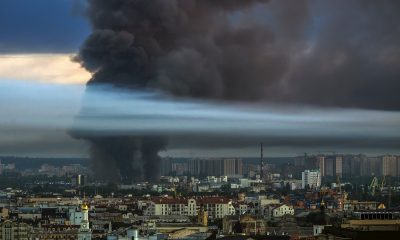

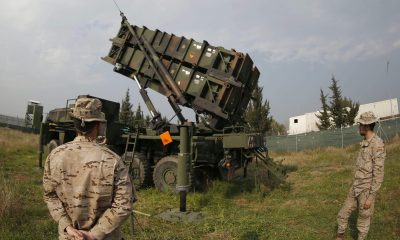

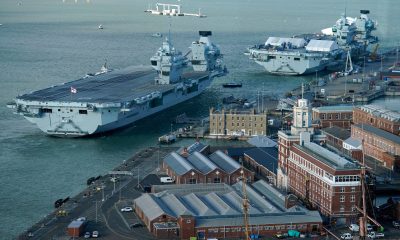

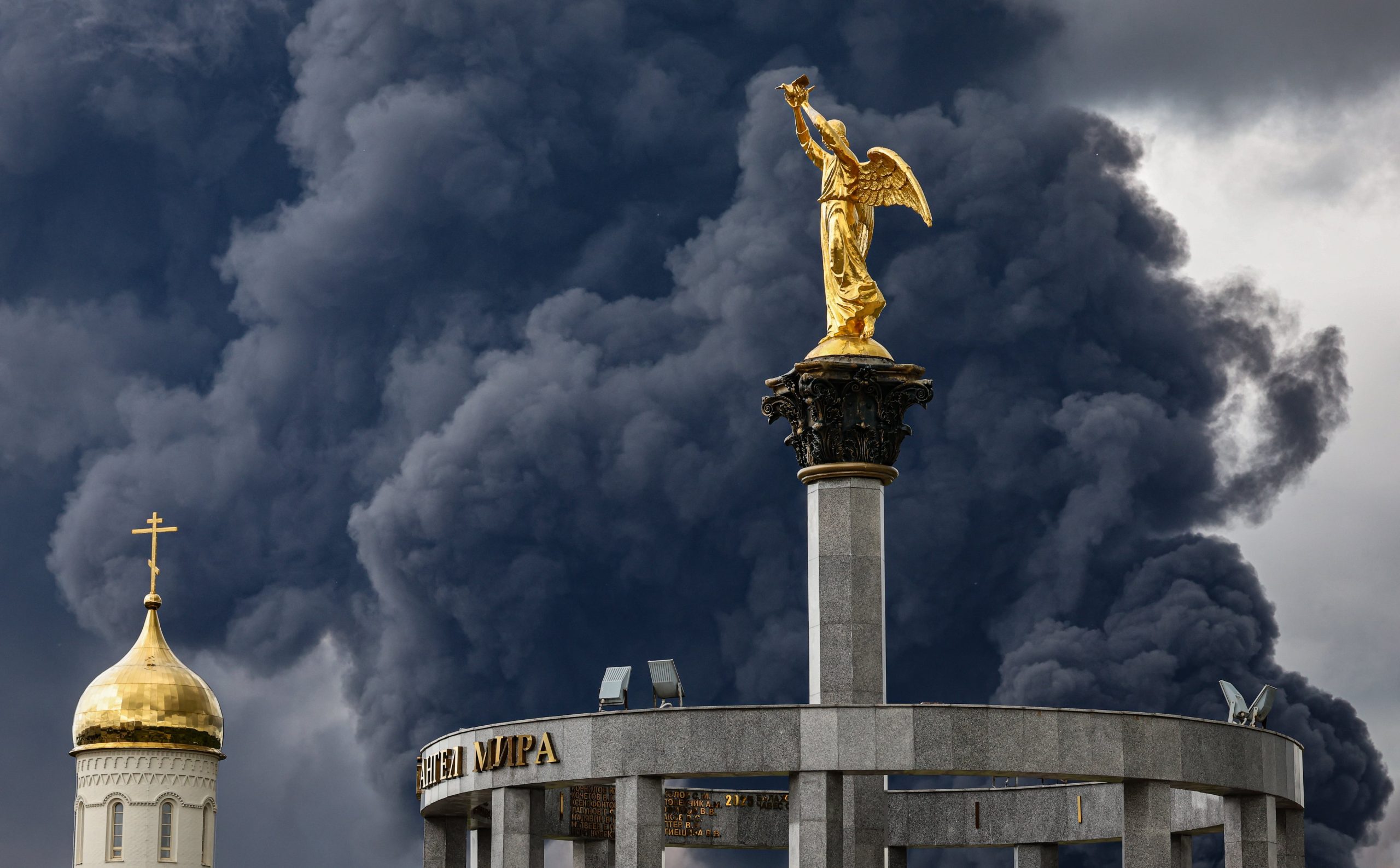
Upon waking up, Taras (a pseudonym to protect his identity) was overjoyed to see some of Russia’s most heavily-fortified areas ablaze. His ambition to defend Ukraine has gone from being a dream to becoming a reality in recent days. “It’s maybe the best feeling ever. Seeing that result is my greatest reward,” he stated during an interview with EL PAÍS in Kyiv. Taras, the head of a local defense company, has spent months with his colleagues developing and testing one of the weapons currently being used to strike Russian strongholds, such as Moscow and St. Petersburg.
The Bars-SM missile-drone program, developed in 2025, has become a key component of Ukraine’s offensive arsenal. It is one of the weapons that the troops are using to attack the southern front. There, another barrage of drones is jeopardizing the stability of the Crimean Peninsula, occupied by Russia since 2014.
Other sources consulted in recent days in the Ukrainian capital (including a former deputy defense minister and a military analyst) believe that this offensive, with its serious impacts on strategic points in the north, as well as in the south aimed at isolating Crimea, is achieving objectives that have never been obtained before. Targeting critical infrastructure within Russia, especially energy facilities, has been part of the Ukrainian strategy for the past year. On the other hand, the tactic of strangling the illegally-annexed peninsula with frequent and targeted attacks on roads, bridges, railways and even ferries is more recent. On Wednesday, June 24, Ukraine managed to cut off the power supply to Sevastopol — the largest city in Crimea, with some 350,000 inhabitants — after bombing its main power station.
In both cases, those consulted by EL PAÍS consider these to be partial victories. However, at the same time, they point to an unprecedented trend since Russian President Vladimir Putin ordered a major invasion in February 2022. Back then, a challenge like the current one being waged against the Kremlin’s forces was unthinkable. More than 52 months have passed — with hundreds of thousands of casualties on both sides — and Putin isn’t just far from achieving his objectives: he has even expressed his anger in recent days.
How have things changed so much in this time? Thanks to the rapid evolution of the arms race, “the attacks against St. Petersburg and Moscow are the most complex and sophisticated ever carried out by Ukrainian forces,” says Vadim Kushnikov, editor of Militarnyi, a defense media outlet.
This expert highlights the improvement in navigation and communication systems, as well as the greater range of the projectiles. There is, however, another aspect to understanding why it’s possible to bypass Russian defenses in some of the most heavily-fortified points of that vast country. “Russian troops are facing a shortage of surface-to-air missiles… and this is one of the reasons why Ukrainian drones and missiles are hitting targets inside Russian territory,” the editor of Militarnyi explains. In any case, he emphasizes that, without the modernization of the Ukrainian arsenal, this wouldn’t be possible, either.
“First, Ukraine has obviously increased its production capacity for long- and medium-range attack weapons. Second, it has managed to win the technological war, although that doesn’t mean [the advantage] will last forever,” says Alina Frolova, Ukraine’s former deputy minister of Defense. She’s currently the vice president of the Center for Defense Strategies (CDS), a research institute in Kyiv.
Frolova adds that, in parallel, “Russia is suffering from shortages of personnel, technology and money, compounded by sanctions.”
Furthermore, Ukraine, unlike Russia, “now has a strategy” that “is working,” the former deputy minister remarks. According to her, this is due to the new leadership of Minister of Defense Mikhail Fedorov, who was appointed this past January. He previously held the portfolio of Digital Transformation. Therefore, it’s not surprising that the military is now much more focused on technological development and that the Armed Forces of Ukraine have many new faces at the helm.
Ukraine is “persistently weakening the enemy’s military potential, disrupting logistics and striking critically important targets deep behind enemy lines. Drones now account for over 90% of enemy losses,” Fedorov stated on social media, on Monday, June 22. He claims that, since the beginning of 2026, they’ve attacked more than 800,000 Russian targets, including air defense systems, artillery, missile launch systems, drones, logistics vehicles, barracks, warehouses and electronic warfare systems.
The objective: “To liberate Crimea”
“In the eyes of experts,” Frolova comments, “deoccupying Crimea is simpler than, for example, deoccupying the Donbas (the volatile eastern region of Ukraine also coveted by Putin) because of the geographical characteristics” of that eastern region bordering Russia, which is connected to the Crimean Peninsula via a land corridor. What’s being sought in Crimea is “an isolation operation,” which is not going to produce short-term results. But if Russia loses this territory, she predicts, it “will be a disaster for Putin.”
Without supplies, fuel, water, or electricity, “what will you do with Crimea? You can’t maintain troops there normally… and I would say that most of the occupying authorities would try to flee,” she maintains, aware that the plan is only in its first phase on the path to the ultimate goal: “to liberate Crimea.” The next step, according to the former minister, should be to completely disable the large bridge that crosses the Kerch Strait into Russia. This is a coveted asset that’s already been attacked several times in recent years.
For Vadim Kushnikov, the editor-in-chief of Militarnyi, the focus is on “isolating the Crimean Peninsula to prevent the Russians from using this vast territory against Ukraine,” as it is “one of the largest military and logistical centers providing direct support to Russian troops.” Along the occupied peninsula, the Russians appear more vulnerable, despite having been established there for 12 years.
Furthermore, managing to attack Moscow’s largest refinery twice in a single week is the result of many months of “hard work.” Taras, the defense innovator, emphasizes this, without offering details. The Bars — the drone-missile manufactured by his company — can strike targets located up to 620 miles away (the straight-line distance from Kyiv to Moscow is approximately 470 miles). It reaches speeds of up to 435 miles per hour and can reach a maximum altitude of 16,400 feet for more than two and a half hours.
This device measures 8.5 feet long and 7.9 feet wide. Depending on the model, it has a maximum takeoff weight of 350 pounds and a warhead containing up to 132 pounds of explosives. It’s equipped with a Starlink internet connection system (owned by Elon Musk’s company), combining innovative technology with the possibility of mass domestic production at affordable prices, another key to the industry. Furthermore, the Bars’ navigation system allows it to detect enemy aircraft, distinguishing them from Ukrainian ones.
However, the Bars is just one of the many weapons developed by Ukrainians over these past years, in a dizzying race for survival. To strike Russia, Kushnikov explains, they also employ the FP-5 “Flamingo” cruise missile and the FP-1 and FP-2 drones, all three manufactured by Fire Point, a Ukrainian defense technology company. The Liutyi kamikaze drone and the Morok kamikaze drone, among others, are also produced domestically.
The effective and costly American Tomahawk missile, which President Volodymyr Zelensky has repeatedly requested from Washington, isn’t part of Kyiv’s arsenal. “Precisely for this reason, Ukraine has chosen to develop its own capabilities,” the director of Militarnyi explains.
He sees “two parallel paths” going forward. “The first is the diplomatic route: negotiations with the United States regarding the supply of cruise missiles. The second is the implementation of a missile program through our own efforts, along with the participation of [our] European partners,” he maintains.
Alina Frolova, meanwhile, emphasizes what’s not always so evident in these cases: “As the military says, hope cannot be part of the strategy.”
Sign up for our weekly newsletter to get more English-language news coverage from EL PAÍS USA Edition

Ukraine’s Strategy To Strangle Crimea: Drone Bombardment, Attacks On Infrastructure And Psychological Blows To Russian Troops

Start Of Improvements On Costa Del Sol Commuter Train Line

Argentine Fans Flood Madrid’s Iconic Plaza Mayor After England Heartbreak – Chanting ‘Spain Is Scared’ Ahead Of Sunday’s World Cup Final

Spain Is Set To Be Swarming With Rock Legends This Weekend – Here’s What You Need To Know
Alhaurin el Grande and Coin launch historic 1.5 million kilo season for premium tomato

Los Aficionados Al Ciclismo En Barcelona: “Que Venga El Tour De Francia Es Como Ir Al Mundial De Fútbol”


-
 Barcelona2 weeks ago
Spain Is Set To Be Swarming With Rock Legends This Weekend – Here’s What You Need To Know
-
Alhaurin El Grande2 weeks ago
Alhaurin el Grande and Coin launch historic 1.5 million kilo season for premium tomato
-
 Antoni Gaudi2 weeks ago
Los Aficionados Al Ciclismo En Barcelona: “Que Venga El Tour De Francia Es Como Ir Al Mundial De Fútbol”
-

 Business & Finance2 weeks ago
Cheap Flights And Mass Tourism Are Adding €3,800 To The Cost Of The Average Spanish Home, New Report Warns
-

 New Developments2 weeks ago
🌅 Stunning Penthouse With Panoramic Sea & Mountain Views Benalmádena
-
Barcelona2 weeks ago
Gang Horror In Barcelona As Gunmen Shoot Dead 15-Year-Old Boy Hanging Out In A Park
-
 Dutch demand2 weeks ago
Dutch Demand For Spanish Property Keeps Rising As Others Cool
-
 Andalucia2 weeks ago
La Fiscalía Abre Una Investigación Para Determinar Si Un Hospital Público De Málaga Utilizó Reactivos Caducados En Sus Análisis