Claudia Sheinbaum
US Ambassador Ronald Johnson, An Uncomfortable Voice Amid Mexico’s Defense Of Sovereignty
Published
2 hours agoon
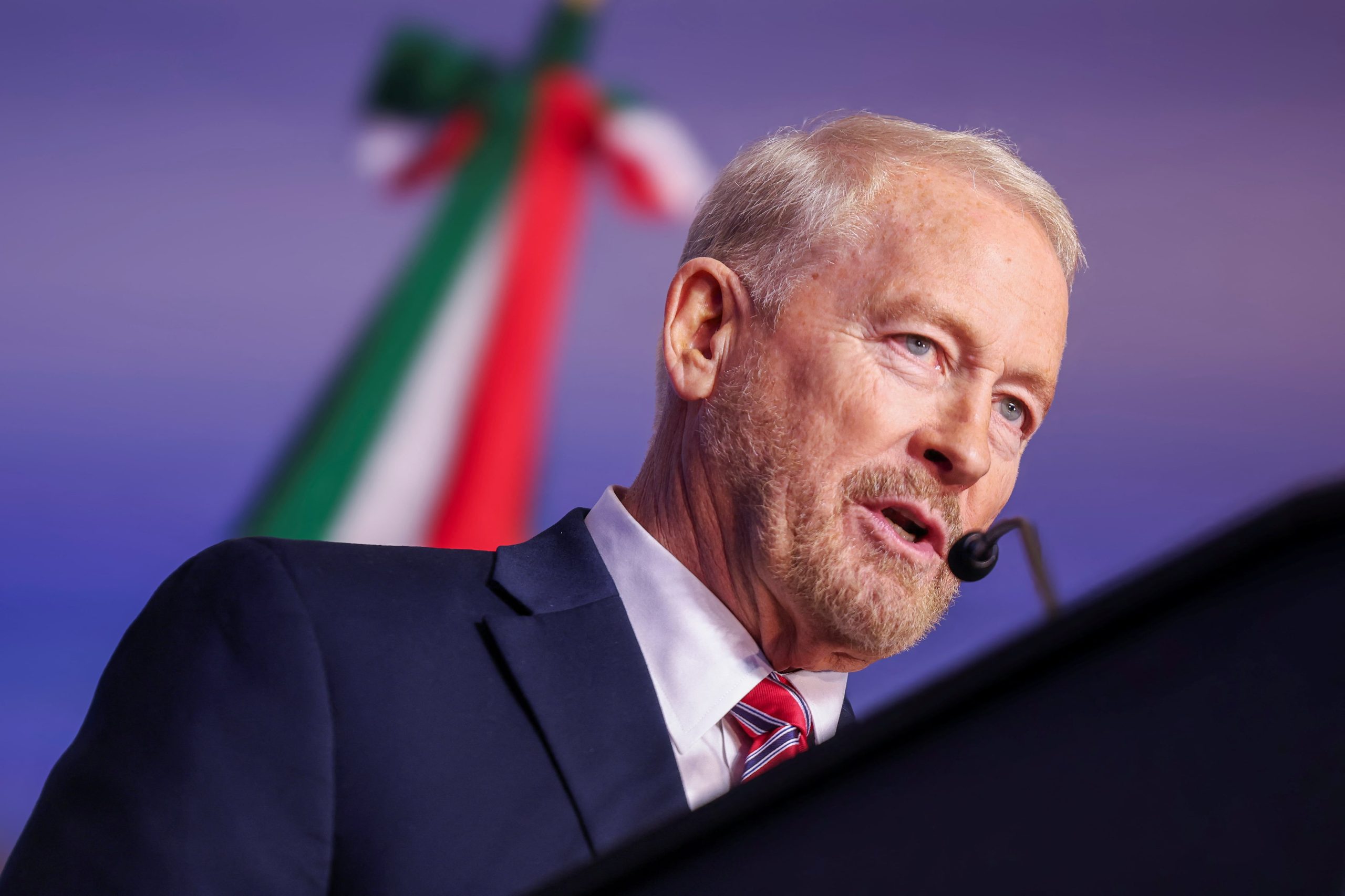
The Mexican government’s campaign against foreign interference has reached U.S. Ambassador to Mexico Ronald Johnson. The U.S. representative this week clashed with President Claudia Sheinbaum after her Sunday speech, in which she protested U.S. interference in Mexico’s internal politics. Johnson, a former Green Beret appointed by Donald Trump to press for action against the drug cartels, replied with a social media post that the Mexican leader acknowledged almost immediately: “Ambassadors must be respectful of countries’ internal political affairs.”
The post that unsettled the president was published by Johnson on Monday afternoon, a day after the rally in which Sheinbaum marked two years since her electoral victory with a renewed defense of national sovereignty and a direct reproach to the United States for making public its claims of alleged ties to drug trafficking against Sinaloa Governor Rubén Rocha and nine other individuals. On Monday Sheinbaum sought to soften the tone by acquitting President Trump of responsibility for the supposed campaigns against Mexico, which she blamed on “sectors of the far right,” but the diplomat responded forcefully: “The fight against cartels should unite us, not divide us. People on both sides of our border want to live safely and in peace. They deserve freedom from the intimidation, corruption, and fear that the cartels inflict. Every moment spent turning this shared security challenge into a political dispute is a missed opportunity to strengthen our partnership and protect the people we serve.”
The remarks by Johnson, a retired colonel with extensive experience in the U.S. intelligence apparatus, were not well received at the National Palace. It is not the first time the ambassador has stirred tensions in the bilateral relationship, with messages touching on the two most sensitive current issues: Chihuahua and Sinaloa. In Mexico they have sparked a bitter debate between the government and the opposition, who accuse each other of encouraging interventionism and covering up narco-politics.
Johnson’s messages
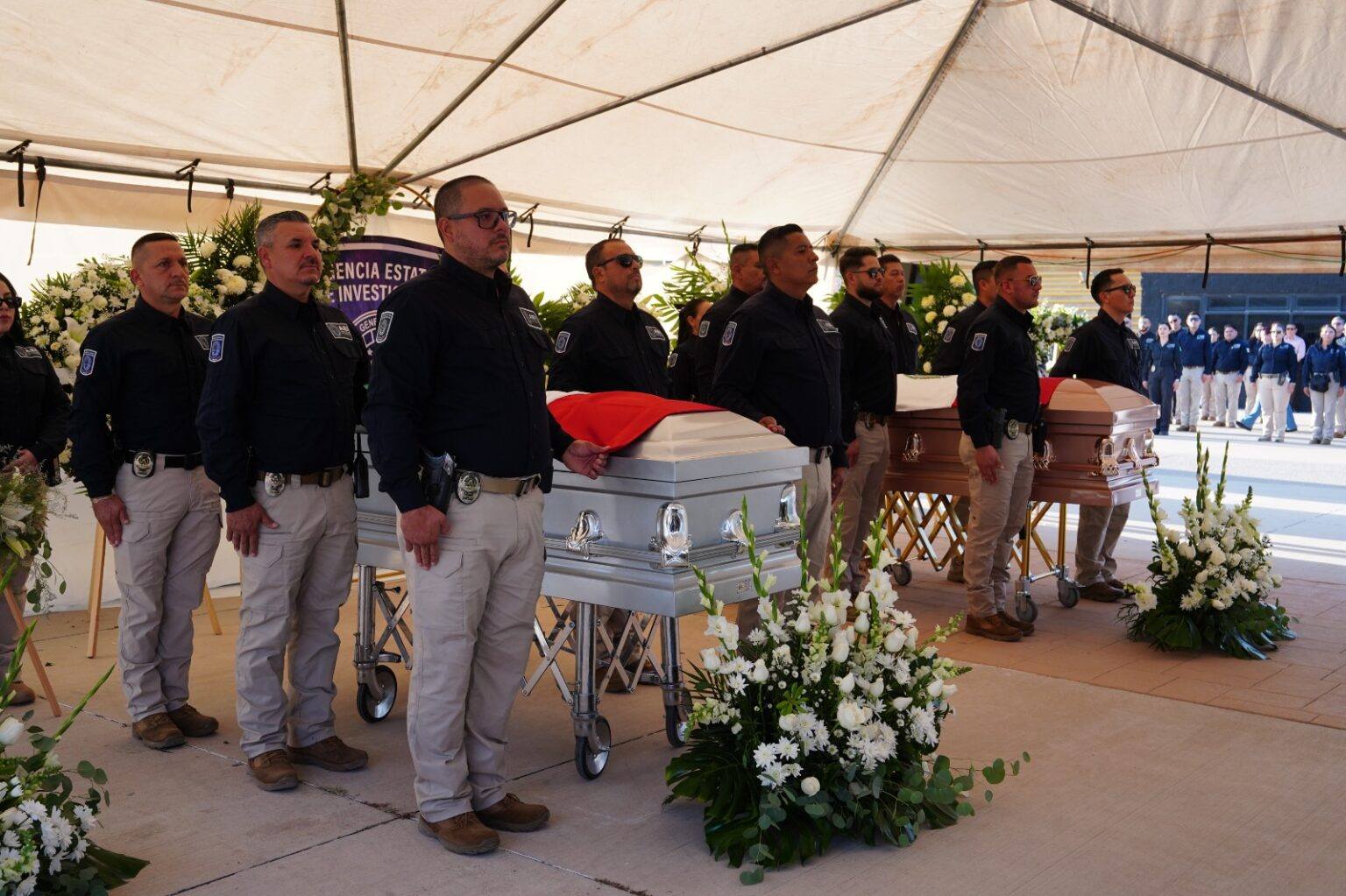
It was U.S. Ambassador Johnson who announced on Sunday, April 19, 2025, the deaths of two U.S. agents in a car accident in Chihuahua. “We are deeply saddened by the tragic loss of two U.S. Embassy personnel, the Director of Chihuahua’s State Investigation Agency (AEI), and an AEI officer in this accident. We honor their dedication and tireless efforts to confront one of the greatest challenges of our time,” he wrote. What appeared to be a conventional message of condolence turned into a delicate disclosure instead: the involvement of CIA agents in dismantling a drug lab in the Sierra Tarahumara, which put Chihuahua Governor Maru Campos, a member of the opposition PAN party, under fire from the federal government and the governing party Morena for allegedly authorizing foreign agents to operate on national territory.
The Chihuahua case prompted the Mexican government to send a diplomatic note to the United States requesting an explanation, and to summon the ambassador to a meeting with officials from the Security Cabinet. The Attorney General’s Office also opened an investigation that remains ongoing, and Morena threatened to push for an impeachment proceeding against Maru Campos, a process it later chose not to pursue.
Just four days after the Chihuahua incident, the U.S. ambassador visited Sinaloa to witness the launch of a project called Mexinol — a low-emissions methanol production plant — and used his remarks to launch a couple of barbs at an event that the then-governor of Sinaloa, Rubén Rocha, did not attend. “No company will commit resources where the rules are unclear, where there is no transparency, or where accountability is optional. If we want projects like this to succeed, if we want our shared future to be as promising as it can be, corruption and extortion must have no place,” the ambassador said in a state governed by Morena since 2021 and long suspected of protecting the Sinaloa Cartel dating back to Trump’s first presidency (2016–2020).
A week later, on Wednesday, April 29, Johnson posted on his social media a message reporting the filing of criminal charges against Governor Rubén Rocha and nine others by the U.S. federal prosecutor’s office in the Southern District of New York. While the ambassador again highlighted the “close coordination” and the fight against corruption as a “shared priority” of both governments, he also stressed: “The corruption that enables organized crime and harms both our countries will be investigated and prosecuted wherever U.S. jurisdiction applies.” At the same time, the Department of Justice released the grand jury indictment against Rocha; Morena senator Enrique Inzunza, Culiacán Mayor Juan de Dios Gámez and other officials. The political storm was only beginning.
In the days that followed, the Sheinbaum administration rebuked the United States for making the Rocha case file public, despite the existence of diplomatic channels and the confidentiality obligations that should govern communications between the justice systems of both countries. Sheinbaum personally questioned the arrest-with-a-view-to-extradition request, saying there is no conclusive evidence implicating Rocha and other Sinaloa politicians who are members of Morena. Since then the president has placed defense of national sovereignty at the top of her government’s and party-movement’s public agenda. “In the face of external attacks there must be national unity,” she said on May 1. “Mexico is nobody’s piñata,” she declared at the end of the month in her message marking two years since her electoral victory, by which time bilateral relations had already been strained by this episode.
For international relations scholar Érika Ruiz Sandoval, the latest dispute between the president and the U.S. ambassador shows that the government has not understood that the terms of the Mexico–United States relationship changed when Trump took office for a second time. The coordinator of the international relations degree at Universidad Iberoamericana believes that the National Palace grew used to the rhythms of Ken Salazar, the ambassador during President Joe Biden’s administration, who frequently visited President Andrés Manuel López Obrador, always wearing his cowboy hat and a broad smile.
“They don’t realize that the ambassador is acting as a harbinger of what’s going to happen to you; Ambassador Johnson is being clearer than ever that the terms of the relationship are different, and not negotiable. They are different because they can be, and because they caught you with your fingers in the door and you have no room to maneuver, no international political capital, and no reputation to defend,” Ruiz Sandoval says. The relationship between Salazar and López Obrador, however, soured when the diplomat and former cabinet member under Barack Obama criticized Morena’s judicial reform.
This expert considers it a mistake to defend sovereignty at all costs at the expense of the relationship with the United States, at a delicate moment in negotiations over the United States–Mexico–Canada Agreement (USMCA), without gaining anything in return and solely to protect Morena politicians. “It’s a very short-sighted, poorly considered stand that risks what is ultimately this country’s lifeline, which is the USMCA,” she adds.
Sign up for our weekly newsletter to get more English-language news coverage from EL PAÍS USA Edition
You may like
-
E
-
Trump’s Latest Assault On Migrants Pushes Green Card Applicants To Leave The Country
-
Trump, Mayor (And Emperor) Of Washington
-
Latin America Seeks To Build An Atlantic Alliance With Europe And The US: ‘The Region Has Never Been So Central To The World’
-
Secrets, UFOs, And Smokescreens: Why Washington Is Obsessed With Extraterrestrials
-
Organized Crime Weaves A New Maritime Trafficking Network Between Mexico And Guatemala
Chihuahua
The CIA Crash That Opened A Fraught Month In Mexico–US Relations
Published
1 week agoon
May 26, 2026
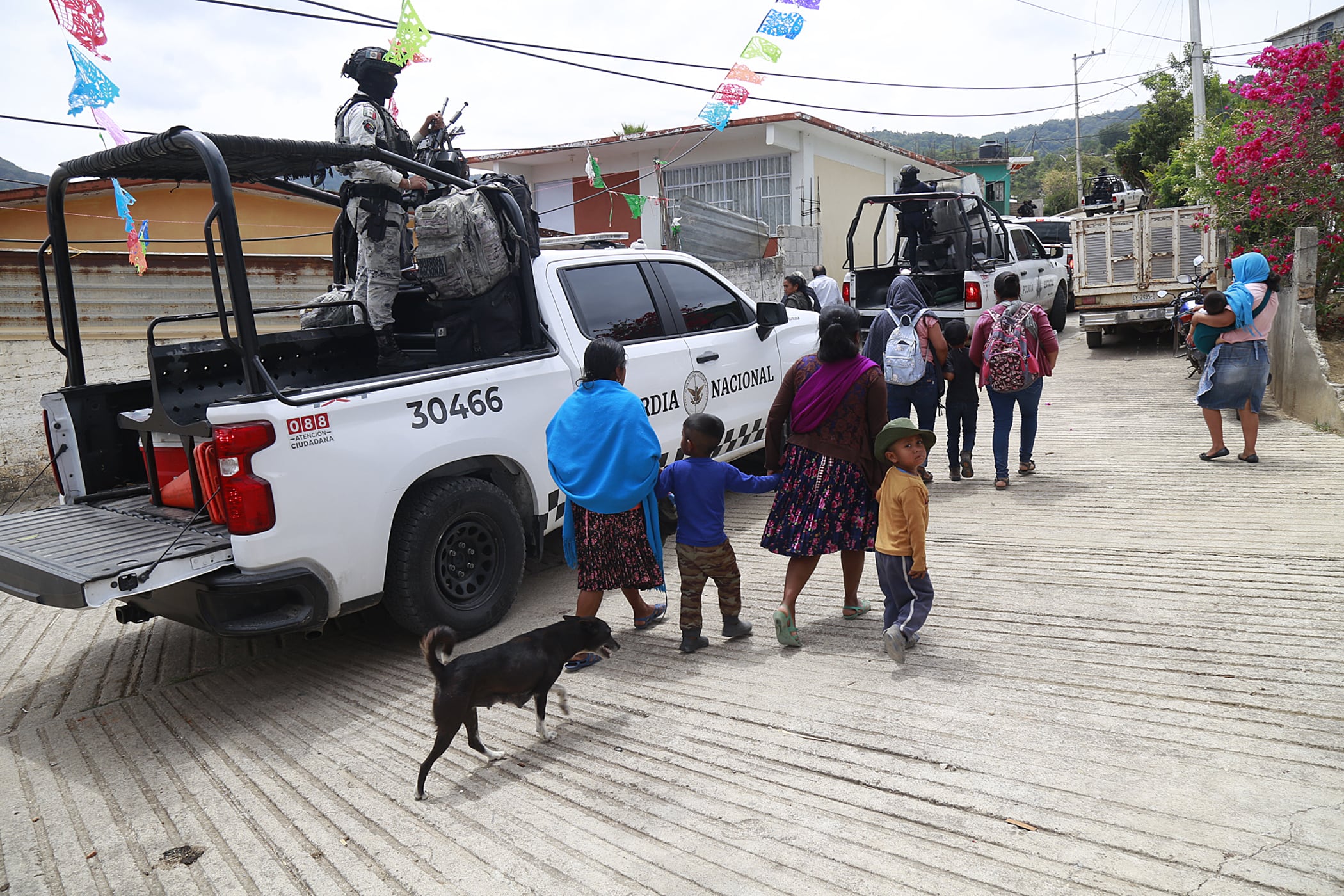
In a country of drug traffickers, savage battles between cartels, and their victims, the spark that set everything off came from a remote spot in an isolated mountain range. In the early hours of April 19, two CIA officers and two agents from the Chihuahua Attorney General’s Office were killed in a brutal car crash. On a road that winds through the gorges of the Sierra Tarahumara, their vehicle plunged into the depths of a ravine. The tragedy itself quickly receded into the background because of what it revealed: U.S. intelligence officers were with Mexican state agents returning from dismantling a huge drug lab. That revelation quickly set the rest of the pieces in motion.
First, Mexican President Claudia Sheinbaum moved swiftly against Chihuahua’s opposition government. The federal administration said it had no knowledge of the CIA agents, arguing that the Mexican Constitution bars foreign figures from doing field work.
The Chihuahua Attorney General’s Office stumbled at every step as it could not explain what the U.S. agents were doing there; the resignation of the Chihuahua prosecutor was announced, investigations were opened, and impeachment proceedings against Governor Maru Campos were launched.
Amid the internal conflict in Mexico, messages arrived from the United States: first a criticism of Sheinbaum’s “lack of compassion” over the agents’ deaths, and then the announcement of charges against the governor of Sinaloa and nine other officials for links to drug trafficking.
Both Maru Campos and Sinaloa Governor Rubén Rocha Moya were summoned on Saturday to testify before the Attorney General’s Office. Only a month has passed since the accident, and the repercussions inside and outside Mexico’s borders are still unfolding.
Unanswered questions
The case is full of questions. No government has helped answer them. For her part, the governor of Chihuahua says she did not know at the time about the operation, and barely knows now. She argues that the person who authorized the operation was the director of the State Agency of Investigation (who died in the crash); that the U.S. agents did not take part in the operation but do participate in operations in Chihuahua, though they are not CIA, and that people must wait for the investigations to finish.
Maru Campos only acknowledges that the then-attorney general of Chihuahua, César Jáuregui, called her at 3 a.m. on April 19 when the crash occurred and later told her that there were four CIA agents there, that two were in the vehicle that crashed, and two were in another vehicle.
As a result, there is still no detailed reconstruction of what happened. Citing testimony from the U.S. government, the Los Angeles Times reported that the four CIA officers did go to the drug lab, that it was the third raid they had taken part in since January in Chihuahua, and that they were there wearing state police uniforms. A source close to the Sheinbaum government told this newspaper that the drug lab was no longer operational, so the loss of life was in vain.
The crash has, however, produced one finding on the Mexican side: the CIA is cooperating with state governments and doing work previously carried out by other agencies, such as the Drug Enforcement Administration (DEA). The same sources say the presence of these intelligence officers is greater now than at other times, and has grown almost by default after Trump designated Mexican cartels as terrorist organizations.
“In terms of the fogginess and the clarity of the information, in one month we have not yet gained much,” says María Teresa Martínez Trujillo, director of the Noria Research Center for Mexico and Central America. “There is no convincing account of who they were, what they were doing here, why it happened, why they were with Mexican agents, why they were where they were, why the accident occurred.”
Martínez, a professor at Tec de Monterrey, points out how public opinion in Mexico has grown used to having only “bits of the story and being left with a lot of unknowns,” while the case evolves toward a “politicization”: “And at the same time it is linked to other tensions in the political-criminal configurations, particularly what is happening in Sinaloa,” she adds.
The fallout
There is one fact that cannot be overlooked in this story. Most Mexican states are controlled by the ruling party Morena, and Chihuahua — one of the exceptions, led by the National Action Party (PAN) and the country’s largest state — will hold gubernatorial elections in 2027. In the days following the accident, Sheinbaum spoke about the case in all her morning press conferences, announced that it would be investigated whether the Mexican Constitution had been violated, stressed that U.S. officers could not operate in the field, and also took aim personally at Maru Campos, noting that she had not even answered her calls.
“The Mexican government tried to use the crash for domestic politics, but unintentionally ended up feeding distrust toward U.S. agencies,” says security analyst Carlos Pérez Ricart. “In the pursuit of winning some internal applause and affecting some internal opponents, they ended up making political use of the deaths of two people. And there is also a human aspect that the agency would not have tolerated. I think the federal government misread the situation and, instead of showing compassion for the deaths, they made political capital out of them.”
For the researcher at the Center for Economic Research and Teaching (CIDE), the response from the Department of Justice and the CIA came in reaction to “the excessive prominence the Mexican government gave the issue”: “It is natural there would be a response, and we have yet to see all the consequences.”
Just 10 days after the Chihuahua crash, the United States indicted Rubén Rocha Moya and nine other political and security figures in Sinaloa. Two of them have already surrendered across the border. The Donald Trump administration has publicly said on several occasions that these indictments will not stop in Sinaloa.
The spies
The CIA has had agents in Mexico for decades; those who were in Chihuahua — unnamed publicly, unacknowledged on the Mexican side of the border — were not the first and will not be the last. Their deaths have drawn such attention because they are the latest example of a clash between conflicting messages: Donald Trump’s recurring threat of military intervention in Mexico and Sheinbaum’s perpetual defense of Mexico’s sovereignty.
“The president shows a general resistance to the presence of the agents, which does not mean there are not likely very specific cooperation agreements and projects,” says María Teresa Fernández Trujillo. Because the CIA officers should not have been working in Chihuahua, but they were.
“It is perfectly normal for the CIA to do its work with the states. It happens, it happened, and it will happen,” says Pérez Ricart, author of Cien años de espías y drogas: la historia de los agentes antinarcóticos de Estados Unidos en México (A Century of Spies and Drugs: The History of U.S. Drug Enforcement Agents in Mexico). “Sometimes it’s written down, sometimes not, sometimes it’s formal and sometimes informal, but CIA officers operate and will continue to operate in Mexico with or without the local government’s authorization.”
The researcher believes that state governments will now be “more cautious,” given what’s happened to Maru Campos, but he does not think this will transform how the intelligence agency intervenes: “The CIA needs informants, police, investigators, public prosecutors, and that relationship is not controlled — and has never been controlled — by the federal government. Much of the operation is not even endorsed by local governments. So this is not a before-and-after of anything. And especially not now, when the presence of these people is so evident, and interference is so central.”
Sign up for our weekly newsletter to get more English-language news coverage from EL PAÍS USA Edition
Andrés Manuel López Obrador
The Extraditions Mexico Wants And Washington Hasn’t Granted: From Fraud Networks To Cartel Figures
Published
1 week agoon
May 25, 2026
Extraditions between Mexico and the United States have dominated the agenda in recent weeks. The Mexican government of Claudia Sheinbaum has lodged a complaint with Washington over its lack of “reciprocity” on the matter. There is a longer story behind the dispute.
Since October 2024, the Sheinbaum administration has summarily handed over to the United States 92 individuals of interest to the U.S. government of Donald Trump, mostly drug traffickers. To achieve this, Mexican authorities have bypassed the cumbersome extradition process, resorting to an elusive legal category that has yet to be clearly named: expulsion, handover, sending, transfer, banishment. By contrast, according to the Mexican government, Washington has refused to extradite 269 alleged criminals that Mexico has requested since 2018.
This does not mean the U.S. has made no transfers in that period. In 2022, for instance, former Chihuahua governor César Duarte — accused of corruption — was extradited to Mexico. In 2025, Miguel Ángel Berraza Villa, alias “La Troca,” a leader of La Familia Michoacana, was handed over. The problem, according to the Mexican government, is the imbalance. Mexico’s complaint follows the explosive U.S. indictment alleging that Sinaloa governor Rubén Rocha was connected to drug‑trafficking networks, a claim that led Washington to request his arrest and extradition.
Mexico has avoided processing that request on a formal legal ground: that Washington did not present sufficient evidence against a sitting governor (who is also a member of the ruling party, Morena). Inside and outside the governing coalition, some argued that the country requesting the extradition did not need to provide such evidence upfront for an arrest to proceed — it could be submitted later. To counter that criticism, the Sheinbaum government made a bold move: it publicly listed all the cases in which the U.S. has refused to hand over Mexico’s priority targets on the basis of procedural technicalities.
U.S. obstacles have been constant and have taken place not only under Trump but also under his predecessor, Joe Biden. Washington has continued to demand action from its southern neighbor, while not reciprocating with its requests.
In 2022, this newspaper published security documents showing that the U.S. was concerned about the decline in extraditions from Mexico and demanded measures to return to an average of 60 transfers per year. The papers, which came from the massive hack of the Mexican Army that year, included Washington’s list of priorities: Rafael Caro Quintero, accused of the murder of DEA agent Enrique Camarena; Abigael “El Cuini“ González Valencia, one of the leaders of the Jalisco New Generation Cartel (CJNG); the brothers Miguel Ángel, ”Z-40,″ and Omar Treviño Morales, “Z-42,” founders of Los Zetas… Over time, all those kingpins would be handed over.
The wish list
Last week, Mexico’s foreign minister, Roberto Velasco, revealed several names of individuals eligible for extradition and the dates on which Mexico formally submitted its handover requests to Washington. The profile of these targets outlines the cases Mexico is seeking to fast‑track — either because the individual is central to a criminal scheme or at least a key piece of the puzzle.
Although limited, the information Velasco presented makes clear that the government has its sights on the Ayotzinapa casepolitical asylum over the disappearance of 43 students in 2014. Former president Andrés Manuel López Obrador pledged to secure justice for these victims, but did not achieve this during his six-year term, and the task has now fallen to Sheinbaum.
Also prominent are the schemes involving fraudulent invoicing companies, known as factureras — which enable the diversion of millions in public funds — and embezzlement at Infonavit, the workers’ housing fund. Both corruption cases point back to the administration of Enrique Peña Nieto from the Institutional Revolutionary Party (PRI).
And perhaps the most emblematic case on the list is that of Francisco Cabeza de Vaca, former governor of Tamaulipas, whom the government accuses of organized crime and whom the opposition has tried to portray as a political target.
It is striking that Mexico’s priority list excludes the major fuel‑smuggling scheme at the customs service — the so‑called huachicol — which implicated senior Navy officials, businessmen, front men, and organized‑crime figures. Despite the fact that the case shook Morena governments (it occurred under López Obrador and was exposed under Sheinbaum), and despite the president’s repeated claims that her administration has requested the extradition of those involved, none of them appeared in Velasco’s presentation. What’s more, this newspaper has confirmed that the Jensen family —U.S. magnates accused of trafficking thousands of shipments of stolen Pemex fuel into Texas— is not among the 269 extradition requests.
It is striking that Mexico’s priorities left out the vast fuel smuggling network at the customs known as the fiscal huachicol, which involved senior Navy officials, businesspeople, front men and members of organized crime. Although it was a case that shook the Morena governments (it occurred during López Obrador’s term and came to light under Sheinbaum), and although Sheinbaum said at several press conferences that her government had requested the extradition of those implicated, none of them were mentioned in Velasco’s list. Moreover, this newspaper has confirmed that among the 269 extradition requests the Jensen family, U.S. magnates accused of trafficking thousands of shipments of oil stolen from Pemex into Texas, is not included.
Case by case
The cases Mexico has prioritized were formalized with Washington between 2024 and 2025, in the final year of López Obrador’s term and the first of Sheinbaum’s. Some of those requests arrived too late. One such case is that of Víctor Manuel Álvarez Puga, a tax attorney accused by Mexico of organized crime, money laundering, and tax evasion tied to the diversion of 3 billion pesos from the Interior Ministry during Peña Nieto’s presidency. Part of that money — meant for prison improvements— ended up in Álvarez Puga’s accounts, and was also received by politicians, businesspeople, judges, and celebrities, as revealed by an EL PAÍS investigation.
Beyond this specific case, Álvarez Puga is considered the chief architect of the fraud using invoicing companies — shell firms that pretend to provide services and issue false tax receipts — through which millions were drained from the public coffers. Although the arrest warrant for Álvarez Puga was issued in 2021, Mexico did not request his extradition from Washington until December last year, taking advantage of ICE having detained him for irregularities in his immigration status. According to Velasco, the U.S. denied the request, arguing that the organized crime charge Mexico brings against the lawyer is not considered violent.
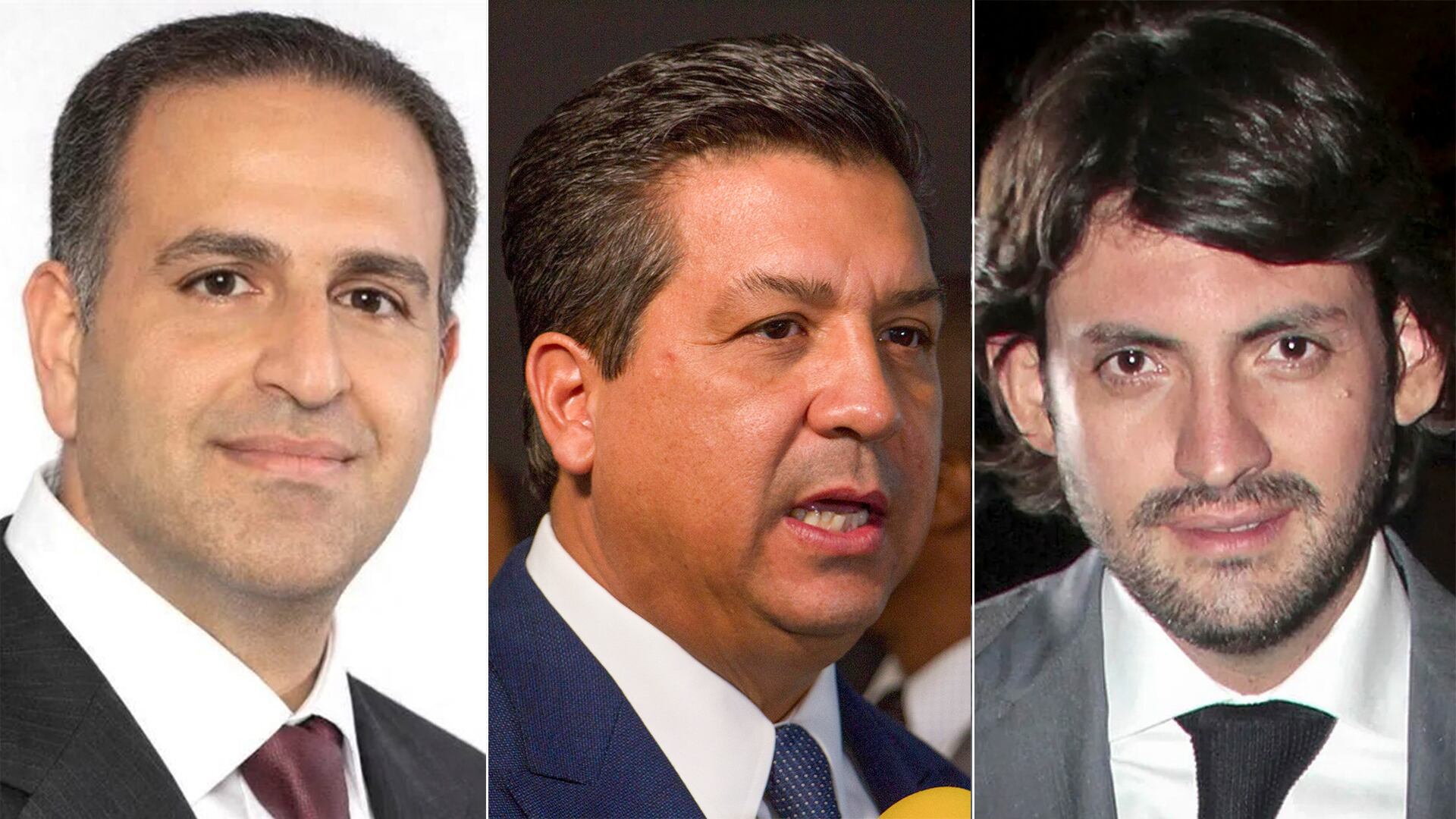
Another case tied to Peña Nieto’s administration is the Infonavit embezzlement, involving businessman Rafael Zaga Tawil, his brother Teófilo, and his son Elías Zaga Hanono, all accused by Mexico of organized crime. The scheme centers on Telra Realty, a company linked to the family, and a contract awarded by Infonavit in 2014. Three years later, the agency terminated the contract early, triggering an exorbitant compensation payment to Telra. According to prosecutors, the payment was illegal and allegedly planned by Infonavit officials in collusion with the Zaga family. Mexico requested the extradition of Rafael and Elías Zaga in October 2025. Once again, the U.S. argued that the alleged offense was non‑violent and that the accused did not pose “a danger to society.”
The Ayotzinapa case has become increasingly difficult to unravel due to the number of actors involved and the manipulation of the investigation by authorities. López Obrador pledged to uncover the truth and revived the families’ hopes, but in their view, little progress was made. On the contrary, the president obstructed the case when the trail pointed toward the military.
Even so, shortly before leaving office, his administration requested the extradition of two key figures in the investigation, accused of organized crime, through petitions submitted in June and July 2024. One is former Iguala judge José Ulises Bernabé, who oversaw a police facility where gunmen allegedly took some of the 43 students. Bernabé lives in the United States under political asylum protection. Washington also halted his extradition, requesting additional information and evidence.
The other figure sought by Mexico is Pablo Vega Cuevas, “El Transformer,” a top leader of Guerreros Unidos. Based in Chicago, he coordinated heroin and cocaine shipments from Guerrero to the U.S. using commercial passenger buses. His role is central to the “fifth bus” theory in the Ayotzinapa, which suggests that one of the buses commandeered by the students for their trip to Mexico City was carrying drugs — a detail that may have triggered the cartel’s violent response.
At the top of Mexico’s priority list is the case of former governor Francisco García Cabeza de Vaca, a member of the opposition National Action Party (PAN). In 2020, while still governor of Tamaulipas, prosecutors opened an investigation into alleged money laundering tied to the Gulf Cartel, based on wiretaps provided by the U.S. Drug Enforcement Administration. Mexico’s Financial Intelligence Unit also supplied evidence of alleged illicit enrichment — the PAN politician built a real‑estate empire in the U.S. — as well as diversion of public funds and tax fraud. The investigation extended to his family circle and possible front men.
After leaving office, Cabeza de Vaca immediately moved to the United States — he holds U.S. citizenship — and obtained a court injunction shielding him from arrest in Mexico. However, the Supreme Court later overturned the injunction, leaving him once again exposed to prosecution. Mexico requested his extradition in August 2025. In this case, the U.S. asked Mexico for additional information.
Sign up for our weekly newsletter to get more English-language news coverage from EL PAÍS USA Edition
Acapulco
The Chilapa Mountain Range, A Crossroads Between Crime And Politics
Published
1 week agoon
May 24, 2026By
Pablo Ferri
Four years ago, Salvador Rangel, then Bishop of Chilpancingo-Chilapa, outlined in an interview the motivations behind the battles in central Guerrero state, a territory he knew very well. At the time, he was close to Celso Ortega, leader of the Los Ardillos criminal group. Rangel pointed out that the fighting in the region, which has recently resurfaced in several communities in the lower mountains, has never been about drugs. “It’s not about drugs, because there aren’t any drugs here!” the bishop declared. “Celso tells me, ‘not even the damn marijuana grows here.’ So, the issue is political,” he added. Read in retrospect, his statements offer an interesting perspective on the current violence.
Communities in Chilapa and Atlixtac, between the Central and Mountain regions, are reliving a familiar nightmare. For more than a decade, Los Ardillos, whose stronghold is in the neighboring municipality of Quechultenango, have been trying to consolidate their control in towns and communities in the area and expand into surrounding areas. The communities of Tula and Xicotlán, targets for years, form the front line. On one side, Los Ardillos; on the other, the Indigenous and Popular Council of Guerrero-Emiliano Zapata, or CIPOG-EZ, a self-defense group trying to halt their advance. And in the middle, the population, viewed by both groups — but primarily by Los Ardillos — as friend or foe, depending on where they live or their political affiliation.

The latest wave of attacks by Los Ardillos, including drone strikes, has displaced dozens of families, according to the state government. The CIPOG-EZ puts that number at several hundred, mostly residents of Tula and Xicotlán, who have taken refuge in the neighboring community of Alcozacán. Furthermore, the community police report more than 70 members killed and 25 missing since 2014, when hostilities began in the region. The last six murders have occurred in the past month. This week, reports of attacks have even reached Alcozacán itself and communities in Atlxitac, further east, the theoretical boundary of the Ortega family’s territory — a family known for its skillful and successful political maneuvering in the state.
Politics underlies the criminal advance. Control of electoral districts in the central part of the state, both local and federal, municipal governments, and the co-opting of community assemblies — part of the region’s layered administrative structure — are the objectives of powerful groups, and there are none as powerful in the central region as Los Ardillos. A source familiar with regional politics says, “Los Ardillos feel very strong, very secure, with this Peace and Justice group,” referring to a local group that masquerades as a community organization. “To what extent are these 10 or 12 communities in Chilapa crucial for maintaining political control in the region, over municipal resources and commercial interests?” the source asks, regarding Tula and the others. “Honestly, I don’t know.”
There is no doubt about Los Ardillos’ intentions to seize territory, nor about the suffering of the local population. Currently, uncertainty centers on the role and motivations of the CIPOG-EZ, which the federal security secretary, Omar García Harfuch, has equated with Los Ardillos, placing them under the umbrella of another criminal group known as Los Tlacos. Harfuch’s statements have been met with surprise in Guerrero. Los Tlacos do exist, but their influence is far removed, in Tlacotepec, the municipal seat of Heliodoro Castillo, on the other side of Chilpancingo, several hours away by car.
A more logical explanation is that Los Ardillos are reacting to the moves of the CIPOG-EZ and its leader, Jesús Plácido, who in January announced an alliance with another self-defense group, the UPOEG, to operate together in several municipalities in the area, particularly in Juan R. Escudero and Tecoanapa. For years, especially after the assassination of its founder, Bruno Plácido — Jesús’s uncle — the decline of the UPOEG has been evident. In some regions, such as Acapulco and the Costa Chica, the group has allied itself with criminal gangs. In the port city and the surrounding area, its alliance has been with the criminal group Los Rusos. “That’s why it seems to me that now, for Los Ardillos, the CIPOG-EZ are just like them,” says the source above. “In other words, they see another group that wants to maintain its power and try to do the same things they do. And that, in reality, they are disguising the intentions of Los Rusos or whatever group it may be. And they’re not going to let them.”
The finance department
In the interview with Rangel, now retired and living far from Guerrero after a mysterious disappearance of several days two years ago, he pointed out that the battle in the lower mountains was related, at least at that time, to the interests of the political parties in the region: President Claudia Sheinbaum’s party, Morena, on the one hand, and the PRI-PAN-PRD coalition, on the other. “In Alcozacán and those communities, the community police forces are divided over money,” the religious leader said. “Deep down, Morena supports those communities because the PRI is currently in power. And what Morena wants is to gain control of those places, those communities. How? By giving money to those people,” he reasoned.

On that occasion, Rangel recounted an anecdote that, in his view, reinforced the argument he had made. “A few days ago, I had to go to Ahuacuotzingo, beyond Chilapa, where Ranferi Hernández was killed,” the priest explained, referring to the historic leader of the left in Guerrero, who was assassinated in 2017. “I was waiting for my guide at a gas station, and ahead of me was a pickup truck carrying five people. The guide arrived, and it turned out he knew them, and he said to me, ‘They’re from the State Government’s finance department.’ Well… Just then, the state police arrived and pulled up alongside us and said, ‘Are you going to Alcozacán?’ And we said, ‘No, no, we’re going somewhere else.’ So, the finance people were going to Alcozacán. What were the finance people going to Alcozacán for, protected by the state police? What’s going on? What’s the point? It’s that Morena is supporting this rebel movement to establish Morena there,” he said.
Rangel’s logic was that if state finance officials were going to Alcozacán, a CIPOG-EZ stronghold, it was to give money to the community police and thus fund their fight against Los Ardillos. True or not, the religious leader’s statements complicated reality and moved it away from Manichean portrayals. There were no good guys or bad guys. There was a hunger for power. The question, as now, was whether the ambition stemmed from a genuine idea of progress for the local population, a pure defense of the communities’ way of life, or a political project of plunder and accumulation disguised as the former, as Secretary Harfuch has suggested recently.
Four years later, Morena has made progress in some areas, but not all. The PRI still controls Chilapa and has won Chilpancingo. The PRI’s mayoral candidate in 2024, Alejandro Arcos, was assassinated shortly after taking office. Hitmen linked to Los Ardillos slit his throat. The PRD, which has moved closer to the PRI in recent years, governs Quechultenango. The Green Party governs Atlixtac. Its mayor survived an assassination attempt last year. As for the CIPOG-EZ, its venture in Tecoanapa and Juan R. Escudero hasn’t fully taken hold. The worst news of all is that next year there will be elections for all positions: mayors, governor, and state representatives. Given the circumstances, the fight could be fatal.
Sign up for our weekly newsletter to get more English-language news coverage from EL PAÍS USA Edition
A-lister Amy Schumer kicks off celebrity-studded summer as stars flock to Mallorca
Hobby Horse Race steals the show at Mojácar Hippie Night, raising €5,000 for charity
US Ambassador Ronald Johnson, An Uncomfortable Voice Amid Mexico’s Defense Of Sovereignty
Mexico’s Most Controversial Politician, Rubén Rocha, Goes To Ground As Cartel Questions Intensify
Insurance company Mapfre decides to pay out €14 million compensation for 2025 blackout
Who Bought Where In The Second Half Of 2025?
Tags
Trending
-
ElPais2 weeks agoMexico’s Most Controversial Politician, Rubén Rocha, Goes To Ground As Cartel Questions Intensify
-
blackout April 20254 weeks ago
Insurance company Mapfre decides to pay out €14 million compensation for 2025 blackout
-
Foreign demand4 weeks agoWho Bought Where In The Second Half Of 2025?
-
Abelardo de la Espriella1 week ago
In The Final Stretch Of Colombia’s Presidential Campaign, Undecided Voters Are In High Demand
-

New Developments4 weeks agoInside The Most LUXURIOUS Apartment Building In Spain!
-
Costa Blanca South4 weeks ago
Alicante police chief to retire after 17 years of service
-

New Developments4 weeks ago🌅 Stunning Penthouse With Panoramic Sea & Mountain Views Benalmádena
-
Costa del Sol4 weeks ago
Starlite Marbella 2026 offers over 1,000 summer jobs: Apply before positions fill fast