Connect with us

%

What Is An LEI Code And Does Your Business Need One?

Published

on

what-is-an-lei-code-and-does-your-business-need-one?

As financial markets rely more heavily on verified legal-entity data, British LEI explains why UK companies may encounter LEI requirements during securities trading, UK MiFIR or UK EMIR reporting, broker onboarding, or cross-border dealings with regulated financial institutions.

For many UK business owners, the first encounter with an LEI code comes at the least convenient moment. A transaction gets blocked, a broker declines to execute an order, or a financial intermediary cannot complete onboarding because something called an LEI is missing. British LEI is an Official LEI Registration Agent supporting UK entities, working in cooperation with EQS Group, a GLEIF-accredited LEI issuer, helping UK businesses register, renew, and manage their LEIs. But before getting into the process, it helps to understand what an LEI is, who needs one, and why it matters.

What is an LEI code? 

LEI stands for Legal Entity Identifier. It is a 20-character alphanumeric code that uniquely identifies a legal entity, whether that is a company, a fund, a public-sector body, or another organisation participating in financial transactions.

The system was created in the aftermath of the 2008 financial crisis, when regulators discovered that tracking who was on each side of a transaction was surprisingly difficult. Large financial groups, including Lehman Brothers, operated through complex networks of legal entities across multiple jurisdictions, with no consistent identifier connecting them. LEIs were designed to solve exactly that problem.

Today, LEIs are based on the ISO 17442 standard and managed through the Global LEI System, with the Global LEI Foundation, or GLEIF, responsible for its operational integrity. LEI records are made available through the public Global LEI Index maintained by GLEIF, making it an open, globally recognised standard for entity identification.

Each LEI record contains two layers of information. Level 1 covers who the entity is: its legal name, registered address, jurisdiction, and registration authority details whereavailable. Level 2 provides information on direct and ultimate accounting parent relationships, where applicable and reported. It is not a beneficial ownership register and should not be used as a substitute for AML, KYB, or UBO checks.

Who needs an LEI? 

Originally, LEI adoption was driven mainly by financial regulation and market reporting. Since then, LEIs have become relevant to a wider group of legal entities because banks, brokers, investors, regulated counterparties, and cross-border partners increasingly rely on standardised entity identifiers.

The most direct case is securities trading. If a UK company wants to buy or sell shares, bonds, ETFs, or other financial instruments through a broker or investment firm where UK MiFIR transaction reporting applies, the firm will normally require an LEI before executing the order. This is often described as “no LEI, no trade”: under UK MiFIR, firms subject to transaction reporting obligations must ensure clients eligible for an LEI have one before executing a reportable transaction on their behalf.

LEIs are also used in other reporting frameworks. Under UK EMIR, UK counterparties entering into derivative trades need an LEI to meet reporting obligations. In simple terms, LEIs are most likely to matter when a business interacts with regulated financial markets, brokers, banks, investors, or cross-border counterparties. UK non-financial counterparties are not generally in scope of the UK SFTR reporting regime, so businesses should check whether their status and activity bring them within the rules.

For UK companies providing ICT services to EU financial institutions, DORA may also create practical LEI relevance. Financial entities subject to DORA must maintain registers of information on ICT third-party arrangements, and legal-person ICT third-party providers may be identified using an LEI or EUID, with LEI used for legal persons registered outside the EU.

In simple terms, LEIs are most likely to matter when a business interacts with regulated financial markets, brokers, banks, investors, or cross-border counterparties.

Not every UK company needs an LEI today. But the following businesses are more likely to be asked for one.

You may need an LEI if your company:

  • trades shares, bonds, ETFs, or other financial instruments through a broker or investment firm where UK MiFIR transaction reporting applies;
  • enters into derivative contracts reportable under UK EMIR;
  • is an in-scope financial counterparty or branch with reporting obligations under UK SFTR;
  • is a fund, investment vehicle, or regulated financial entity supervised by the FCA;
  • provides ICT services to EU financial institutions subject to DORA;
  • is asked to provide an LEI by a bank, financial intermediary, investor, regulator, or foreign counterparty.

If your business sells goods or services locally and does not interact with financial markets, you may not need an LEI right now. But as regulated financial workflows increasingly rely on verified entity data, the question often becomes whether having one in place could reduce friction later.

Why an LEI matters beyond compliance 

It is easy to treat the LEI as another regulatory checkbox. That framing undersells what it actually does.

An LEI gives your organisation a verified, globally recognised legal-entity identifier. When a counterparty, investor, or financial institution looks up your code in the GLEIF database, they can see your verified legal reference data and, where applicable, parent-relationship information. That kind of transparency can reduce onboarding friction, support due diligence, and help build credibility with serious business partners.

For companies already operating across borders or planning to expand internationally, having an LEI in place early is often good practice. It can also make the organisationeasier to identify and verify in global market workflows.

How to get an LEI 

LEIs are issued by GLEIF-accredited LEI issuers, also known as Local Operating Units, or LOUs. The process is straightforward: you submit your company’s registration details, the LEI issuer verifies them against official sources, and the code is often issued within one to two business days, depending on the issuer, verification requirements, and completeness of the application.

One thing worth knowing: an LEI must be renewed annually. If renewal is missed, the registration status becomes “Lapsed” in the GLEIF database. A lapsed LEI remains the same identifier, but its reference data is overdue for re-validation. Some reporting, trading, or onboarding processes may require the LEI record to be current.

British LEI supports LEI registration and renewal for businesses in the UK, with same-day processing available on business days when verification is successful and the application details are complete. To register or renew an LEI, visit britishlei.co.uk.

%

Murcia Golf Society Raises Vital Funds For Rescue Dog’s Life-Changing Surgery

Published

on

murcia-golf-society-raises-vital-funds-for-rescue-dog’s-life-changing-surgery

Golf fundraiser funds surgery, giving rescue dog Greta new life Photo Credit: PAPS

A local golf club fundraiser in Murcia has helped to change the life of a 12-year-old rescue dog, after raising enough money to cover her vital surgery. Greta is a long-time shelter resident at the PAPS animal shelter in San Javier, Murcia, and is deeply beloved by the workers at the shelter.

A gentle dog, beloved by the friends at the shelter

Greta, a gentle and affectionate dog, has been at the PAPS (Protectora de Animales Perros del Sol) animal shelter since 2018, and needed a vital surgery. “Unfortunately, she needed extensive surgery on her elbow. This involved many trips to the vets and weeks of staying with one of our volunteers. Greta made herself very comfortable on their sofa!” stated the animal shelter in a post about the donation.

After local golf society, the El Valle Golf Club, hosted a fundraiser, an astounding €500 was collected and donated to PAPS. The cheque was presented to the animal shelter by former club treasurer Sandy Clare.

“Huge thank you to Sandy Clare for his donation of €500,” stated PAPS.

Greta has made a full recovery following her surgery

The animal shelter stated that the funds went directly towards Greta’s surgery and offers her a better quality of life in her later years. The shelter even offered an update through a Facebook post thanking the golf society for its generous donation.

“I’m pleased to report that Greta has made a full recovery and is now back at PAPS,” the shelter stated.

How to help Greta and the other pups at PAPS

Shelters like PAPS heavily rely on donations to help cover veterinary costs, food, and daily care for abandoned and rescued animals. Those who are interested in donating to Greta or any of the other shelter dogs can get in contact with the shelter through email at animalesperrosdelsol@hotmail.com. 

“Let’s hope this surgery helps Greta find her forever home,” stated the PAPS animal shelter.

Continue Reading

%

Ryanair Flight Leaves 150 Passengers Behind

Published

on

ryanair-flight-leaves-150-passengers-behind

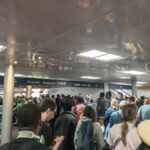
Passengers faced heavy congestion at Toulouse Airport, where long border control queues were blamed for travellers missing a Ryanair flight to London. Credit : BalkansCat, Shutterstock

Most travellers believe there is one simple rule when flying: arrive at the airport early and you’ll be fine. For around 150 Ryanair passengers at Toulouse Airport last week, that wasn’t the case.

Despite checking in, clearing security and making their way through the terminal, they never made it onto their flight to London Stansted. The aircraft took off without them after long queues at border control left hundreds of passengers stuck waiting while boarding was already underway.

The incident has sparked fresh concerns about growing delays at some European airports following the introduction of the EU’s new Entry/Exit System (EES). With the summer holiday season now beginning, many travellers are wondering whether arriving two hours before departure will still be enough.

According to passengers who were there, the problem was not a delayed flight or a last minute gate change. It was simply the sheer number of people trying to get through border checks at the same time.

For anyone planning a summer trip between the UK and Europe, the story serves as a reminder that the biggest obstacle may no longer be airport security. It could be what happens afterwards.

How 150 passengers ended up missing the same Ryanair flight

The flight involved was Ryanair service FR282 from Toulouse to London Stansted on 30 May.

Passengers described scenes of confusion near border control as hundreds of travellers attempted to reach departure gates for several flights scheduled around the same time.

One traveller told The Connexion that the area was packed with people and that there appeared to be no clearly organised queue system. Instead, passengers were trying to move forward through a crowd that she estimated included several hundred people.

Her description painted a picture many frequent travellers will recognise. Everyone could see the departure time approaching, yet nobody seemed to be moving fast enough to make progress.

She said there were between 400 and 500 people gathered in the area and described the situation as chaotic.

By the time many passengers finally reached the gate, boarding had already closed.

According to reports from passengers on board the aircraft, the pilot later announced that approximately 150 travellers had failed to make the flight because they were still stuck in the border control queue.

For those left behind, it was a frustrating end to a journey that had started exactly as planned.

Why border queues are becoming a bigger problem for travellers

The timing of the incident is significant.

European airports are currently adapting to the gradual introduction of the Entry/Exit System, commonly known as EES.

The new system is designed to modernise border management by collecting biometric information from non EU travellers entering the Schengen Area. Depending on the circumstances, this can include fingerprints and facial image registration.

The objective is to improve border security and create a more accurate record of entries and exits.

However, aviation industry groups have repeatedly warned that the transition period could create longer waiting times at some airports.

British travellers are among those most likely to notice the changes because they now pass through border procedures that differ from those in place before Brexit.

During quieter periods the impact may be limited.During school holidays, bank holiday weekends and peak summer travel days, even small delays can quickly build into much larger queues.

That appears to be what happened in Toulouse.

Ryanair has disputed claims that passengers were deliberately left behind.

In a statement, the airline said the issue resulted from border control staff shortages at Toulouse Airport. The carrier added that all passengers who reached the gate before boarding closed travelled without any issues.

What travellers can learn from the Toulouse incident

Nobody enjoys arriving at an airport hours before departure. Most travellers aim to leave enough time without spending half the day sitting near the gate.

The difficulty is that airport processing times are becoming harder to predict.

A passenger who flew through the same airport last month may have a completely different experience this month depending on staffing levels, passenger numbers and border procedures.

Travel experts continue to advise passengers to allow extra time when travelling internationally, particularly on routes involving passport checks.

For UK travellers heading to destinations within the Schengen Area, the first months of EES implementation may be less predictable than many people are used to.

The Toulouse incident does not mean every airport will experience the same problems.

It does, however, highlight how quickly delays can build once large numbers of passengers reach border control at the same time.

For the 150 travellers who watched their Ryanair flight leave without them, arriving at the airport was not the challenge.Getting through the final queue turned out to be the real problem.

Q&A section

Which flight was affected?

The incident involved Ryanair flight FR282 from Toulouse Airport to London Stansted on 30 May.

How many passengers missed the flight?

According to reports from passengers on board, around 150 travellers were unable to reach the gate before boarding closed.

Why were passengers delayed?

Travellers reported lengthy queues at border control, while Ryanair said border control staff shortages contributed to the delays.

What is the EU Entry/Exit System (EES)?

The EES is a new border management system that records biometric information from non EU travellers entering the Schengen Area.

Will all airports experience similar delays?

Not necessarily. Waiting times will vary depending on passenger numbers, staffing levels and how quickly airports adapt to the new procedures.

Should travellers arrive earlier at the airport this summer?

Many travel experts recommend allowing extra time for international flights, particularly when travelling between the UK and Schengen countries during busy holiday periods.

Continue Reading

%

Spain’s Transport Strike Delayed In Last-Minute Move For Pope Leo’s Visit

Published

on

spain’s-transport-strike-delayed-in-last-minute-move-for-pope-leo’s-visit

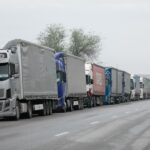
Transport operators and local authorities will now be watching closely. Photo credit: TIMUR BATYRSHIN/Shutterstock

The Spanish trade union UGT has postponed the start of an indefinite strike involving truck and bus drivers until June 22, delaying industrial action that had originally been scheduled to begin on 8 June.  The decision was announced by the union’s Road Transport, Urban Transport and Logistics sector, which said it wanted to avoid disrupting travel during the visit of Pope Leo XIV in these coming weeks (this may come as a miracle to many)!

UGT described the move as a responsible measure aimed at preventing additional transport difficulties during a period when large numbers of people are expected to travel. The strike will affect drivers working in Spain’s road transport sector, including both passenger transport and freight services. Despite the delay, the union has confirmed that the dispute remains active and that industrial action will begin on the new date if no agreement is reached beforehand. The disagreement centres on working conditions and demands for improvements for professional drivers, particularly older workers approaching retirement.

What does the postponement mean 

For residents, businesses and visitors across Spain, the postponement means transport services are expected to operate normally during the Pope’s visit and the busy early summer travel period. Areas with significant tourist activity, including Malaga, Barcelona, Benidorm and Torrevieja would likely have felt the impact of a nationwide transport strike. Bus services are particularly important in many coastal towns where large numbers of residents and tourists rely on public transport to travel between resorts, airports and city centres.

Freight transport is also critical for local businesses. A prolonged strike could affect deliveries to supermarkets, shops and hospitality businesses, especially in popular tourist destinations preparing for the summer season. By delaying the action until later in June, the union has reduced the immediate risk of travel disruption at a time when many religious events, holidays and summer journeys are expected to increase demand on Spain’s transport network.

Transport operators and local authorities will now be watching closely to see whether negotiations can resolve hopefully before the new strike date arrives.

Advice for passengers and businesses

Although no immediate disruption is expected, residents and travellers should remain aware of developments.

If you are planning to travel to and around Spain during the second half of June you should remember to do the following:

  • Check regularly with your bus or coach operator before travelling. 
  • Monitor updates from transport companies and local authorities. 
  • Allow extra flexibility in travel plans after June 22. 
  • Consider alternative transport options such as BlaBla car, taxi service or trains especially if travelling longer distances. 

For businesses that depend on road freight should:

  • Review delivery schedules for late June. 
  • Contact suppliers about contingency plans. 
  • Monitor announcements from transport associations and unions. 

At present, no additional action is required for journeys taking place before the planned date.

What has changed compared with the original plan?

The key difference is the timing rather than the nature of the dispute itself.

Under the original plan, the indefinite strike was due to begin on June 8, creating the possibility of disruption during the Pope’s visit to Spain and at the start of the summer travel season. Following UGT’s decision, the strike has been postponed until later in the month This means the expected increase in travel linked to the Pope’s visit will not coincide with industrial action, reducing the risk of transport problems for residents, pilgrims and tourists. It also gives unions and employers an additional two weeks to continue negotiations and potentially reach an agreement.

However, the underlying dispute remains unresolved. The union has not cancelled the strike and continues to press for improvements to working conditions and retirement arrangements for professional drivers. If talks fail, both freight and passenger transport services could still face disruption from June 22 onwards. For travellers and businesses, the postponement provides short-term certainty but does not remove the possibility of disruption later in the month. Anyone with travel plans or deliveries scheduled after the new set date should continue to monitor developments closely.

Questions regarding the strike

Does this affect existing bus and coach services if im travelling?

Yes, only if you are travelling from June 22 onwards

Should I stock up on food if the strike affects deliveries?

While a prolonged freight strike could eventually affect deliveries of fresh produce, dairy products and other short-shelf-life goods, supermarkets across Spain generally have contingency plans and existing stock levels designed to manage short-term disruption.

What happens if negotiations succeed before June 22?

If unions and employers reach an agreement, the planned strike could be cancelled or suspended. Further announcements would be made before the scheduled start date.

Attention turns to negotiations

Passengers, transport companies and businesses across Spain will now be looking towards  the next key date. Further updates are expected as negotiations continue, and transport operators may issue contingency plans if an agreement remains out of reach.

For now, the immediate threat of disruption has been removed, but the possibility of a nationwide truck and bus drivers’ strike later this month remains firmly on the table.

Continue Reading

Trending

Copyright © 2017 Spanish Property & News