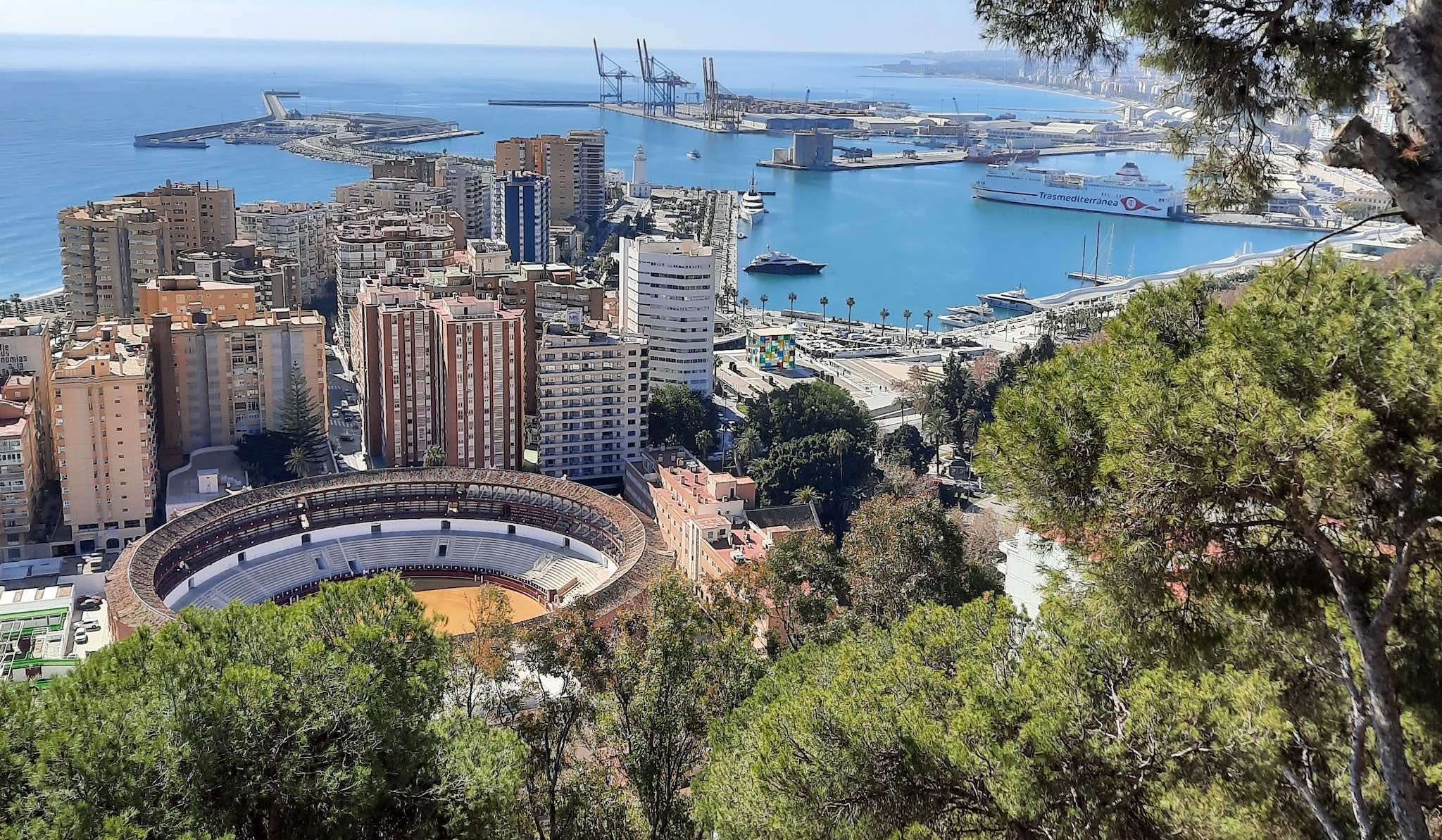
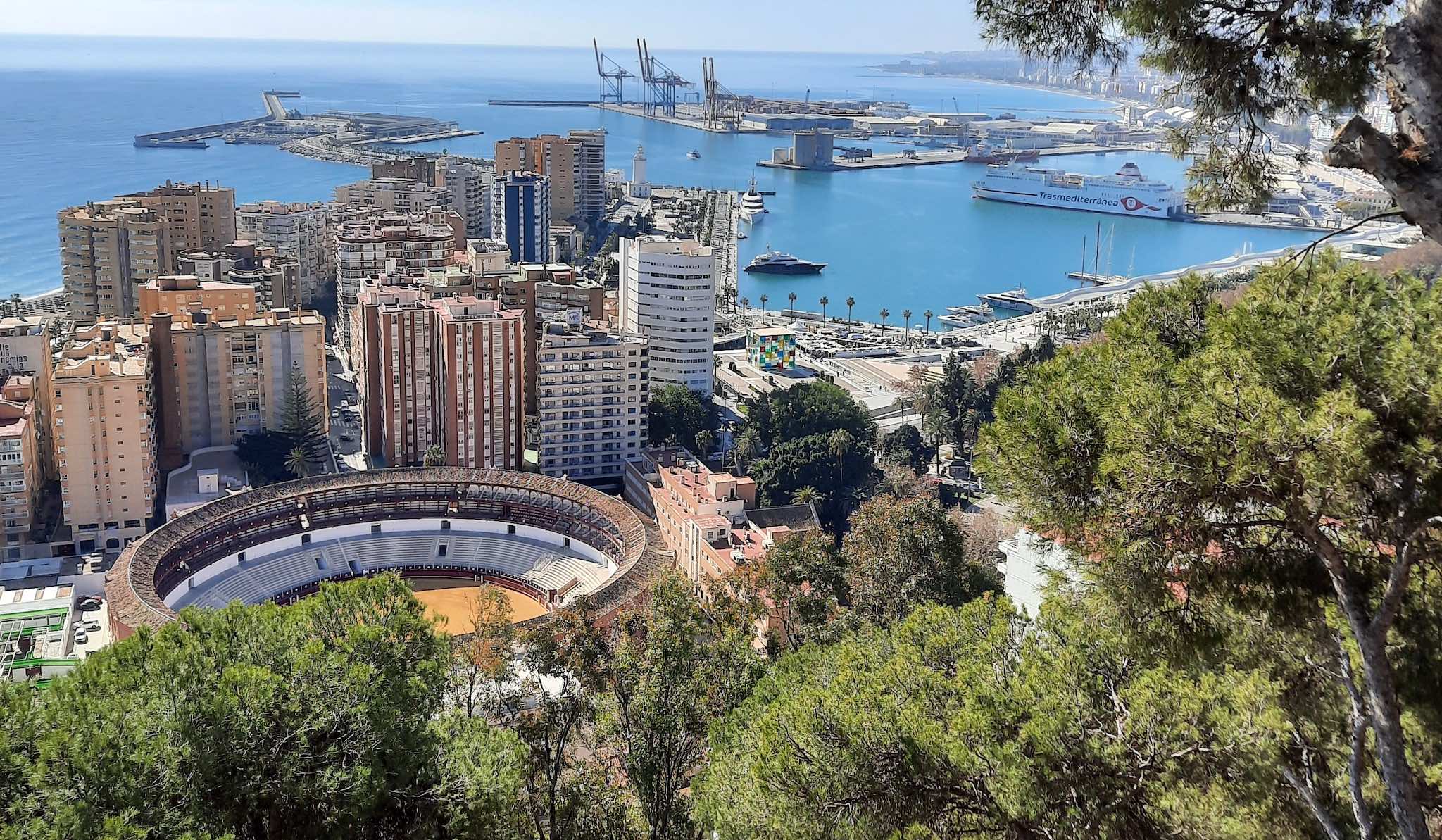
Malaga capital. Picture credit: A Guide to Malaga www.guidetomalaga.com
Not all property markets follow the same logic—and in coastal Andalusia, the most expensive homes are often nowhere near the provincial capital.
When people think about high property prices in Spain, they tend to assume the most expensive homes are found in big cities—especially provincial capitals. That’s often true, but along the Andalusian coast the pattern breaks down in a way that tells you a lot about how the market really works.
In all five coastal provinces of Andalusia, there are municipalities where the average price per square metre is higher than in the capital, according to data from the Notaries. The drivers? Tourism, foreign demand, and pockets of high-end residential development.
Málaga leads the way
Málaga is the standout case. The provincial capital, with an average price of €2,860/m², is the most expensive of all Andalusian capitals—but only ranks ninth within its own province.
Ahead of Málaga city are familiar Costa del Sol hotspots like Marbella (€4,300/m²), Fuengirola (€3,656), Nerja (€3,556), Estepona (€3,168), Torremolinos (€3,111), and Benalmádena (€2,971). Even inland municipalities like Benahavís (€4,156) and Ojén (€3,083), closely tied to luxury coastal developments, command higher prices.
This is a clear reminder that in Málaga province, the real pricing power lies along the coast and in prime second-home markets—not in the administrative centre.
The same pattern repeats elsewhere
Cádiz follows a similar trend. The capital sits at €2,371/m², but is outpriced by coastal towns like Tarifa (€3,160), Conil de la Frontera (€2,828), and San Roque (€2,644).
In Huelva, the gap is even more pronounced. The capital averages €1,316/m², well below Punta Umbría (€1,694), Isla Cristina (€1,526), and Ayamonte (€1,435), all of which benefit from their appeal on the Costa de la Luz.
Granada is a partial exception, largely due to geography. Its capital lies around 65 km inland, and only one coastal town—Almuñécar (€2,492)—surpasses Granada city (€1,828).
Almería also fits the broader pattern. The capital (€1,512) is cheaper than several western coastal towns including Pulpí (€1,958), Mojácar (€1,875), and Vera (€1,599).
What this means for buyers and sellers
The takeaway is simple but important: in Spain, location value is not defined by administrative hierarchy but by lifestyle appeal and international demand.
Coastal towns with strong tourism appeal, established foreign buyer markets, and high-end developments can easily outprice provincial capitals. For buyers, this means you shouldn’t assume the “main city” sets the benchmark. For sellers, it highlights the importance of understanding your micro-market—not just the broader regional picture.
House prices in Spain’s biggest cities may finally be getting so expensive that buyers are starting to back away — and that could mark the beginning of a shift in market dynamics.
According to the latest figures from property portal Idealista, the number of homes for sale increased during the first quarter of 2026 in several of Spain’s largest and most dynamic cities, even as housing supply continued to shrink across most of the country.
The reason? In the words of Idealista’s spokesman Francisco Iñareta, prices in some markets have become “unreachable” for part of the demand.
Madrid saw the biggest increase in homes for sale, with listings up 17% year-on-year in Q1. Valencia followed with a 13% rise, whilst Barcelona saw supply increase by 6%. Sevilla and Málaga also recorded increases of 5% and 3% respectively.
That stands in stark contrast to the national picture. Across Spain as a whole, the supply of homes for sale fell by 10% compared to the same period last year.
In other words, the housing market now appears to be moving at two speeds.
When high prices start destroying demand
The common factor in these cities is rapid price growth.
According to Idealista, the average asking price in Madrid has now reached almost €6,000/m², meaning a typical 80m² flat costs around €477,000. In Barcelona the equivalent figure is around €418,000.
Valencia and Málaga, traditionally seen as more affordable alternatives, have also experienced double-digit annual price growth, with asking prices rising by 14.4% and 12.1% respectively over the last year.
At some point, even better-off buyers start hesitating when prices rise faster than incomes, financing costs remain relatively high, and buyers begin to question value for money.
That appears to be what is starting to happen in some of Spain’s hottest urban markets.
The increase in supply doesn’t necessarily mean there are suddenly lots of homes available. In many cases it probably just means properties are taking longer to sell because fewer buyers can afford — or are willing to pay — current asking prices.
Could this lead to price stabilisation?
Idealista argues that the withdrawal of some buyers is reducing pressure on supply, which could eventually help stabilise prices.
That doesn’t mean prices are about to collapse. Spain still suffers from chronic housing shortages in many desirable urban areas, especially where planning restrictions, lack of land, and sluggish construction constrain supply.
But it may signal the beginning of a more balanced market in some cities after years of relentless seller advantage.
For buyers, particularly foreign buyers used to competitive bidding wars and vanishing stock, this could eventually translate into more choice and slightly greater negotiating power.
For sellers, however, the message is clear: the days of simply putting almost anything on the market at any price and expecting buyers to queue round the block may be starting to fade in some locations. Pricing strategy is becoming important again.
Thinking of selling a property in Spain?
A successful sale starts before you put your property on the market — and before you even speak to estate agents or lawyers. The first step is to understand what you own, what your property is worth, what sort of market you are selling into, how the sales process works, who you can trust, and what strategy makes most sense for you.
Too often, owners enter the process without independent advice and end up being steered by agents or others whose priorities may not fully align with their own. SPI offers expert guidance designed to put your interests first, helping you get organised, make sense of the market, and prepare for sale with a clear plan and personalised strategy.
Fill in the form below to find out more about the service.
Spain’s housing market is booming, but compared to Portugal it still looks relatively grounded. If there’s a genuine property bubble forming in Southern Europe, the latest evidence suggests Portugal is the more likely candidate.
After years of rapid house price growth across Southern Europe, concerns about overheating are starting to grow. But while Spain often gets dragged into discussions about tourism, foreign buyers, and affordability pressures, the data increasingly suggests Portugal is in a league of its own.
The latest European house price figures for Q4 2025 show Portugal with the strongest growth in this comparison of European markets: prices up almost 19% year-on-year and an extraordinary 73% over the last five years. Spain, by comparison, is up a still-hefty but far more moderate 46% over the same period.
According to a recent European Commission report on housing in the EU (“Housing in the European Union: Market Developments, Underlying Drivers, and Policies,” published by the European Commission’s Directorate-General for Economic and Financial Affairs), Portugal is now estimated to have the most overvalued housing market in Europe, with prices around 35% above what the Commission considers fair value (according to press reports).
Portugal’s housing market looks stretched
The Commission identifies several drivers behind Portugal’s runaway prices:
Tourism and short-term rentals
Foreign investment
Institutional investors
Weak construction supply
Bureaucratic planning delays
Extremely low levels of public housing
Spain faces some of those same pressures, particularly in hotspots like Barcelona, Málaga, Ibiza, and parts of the Costa del Sol. But Portugal appears far more exposed.
The scale of price growth alone tells the story. Portuguese prices have surged at a pace more associated with boom markets in Eastern Europe than mature Western European economies.
Meanwhile, Portugal’s housing politics are becoming increasingly tense. Rising rents, affordability protests, political pressure, and demands for more intervention are all signs of a market under strain. Of course, the same is true of Spain, though to a lesser extent.
That combination—rapid price inflation, political backlash, and mounting affordability problems—is often what late-cycle property booms look like.
Spain still looks comparatively balanced
That doesn’t mean Spain is cheap, or risk-free. Far from it.
Some Spanish markets are clearly expensive by historical standards, especially Madrid, the Balearics, Marbella, and prime Barcelona. Overtourism and short-term rentals are also contributing to housing tensions in certain areas.
But nationally, Spain still looks more balanced than Portugal for several reasons.
First, Spain has a much larger and more diversified housing market. Portugal is a relatively small market where international demand can distort prices much more easily.
Second, Spain still has considerably more housing stock and development capacity than Portugal, even if construction remains below what the country needs.
Third, Spain’s price growth, while strong, has not detached from economic reality to the same degree. Wage growth, population growth, tourism demand, and foreign buyer interest all help explain the market’s resilience.
And finally, Spain simply offers more choice.
For foreign buyers looking for lifestyle property, Spain provides a huge range of coastal, urban, rural, and island markets at very different price points. Portugal, by contrast, has become increasingly concentrated around a relatively small number of high-pressure locations like Lisbon, Porto, and the Algarve.
Could Portugal’s problems benefit Spain?
Potentially yes.
If buyers begin to perceive Portugal as overheated, overpriced, or politically unstable from a housing perspective, some demand may rotate back towards Spain.
That is particularly relevant for northern European buyers looking for second homes or retirement properties. Spain increasingly looks like the safer relative bet: still desirable, still growing, but not yet displaying the same degree of apparent overvaluation flagged by the European Commission.
In that sense, Spain may currently occupy the sweet spot in Southern Europe’s property cycle: strong enough to outperform much of Europe, but not yet so overheated that alarm bells are ringing in Brussels.
Spain’s housing market is booming, but compared to Portugal it still looks relatively grounded. If there’s a genuine property bubble forming in Southern Europe, the latest evidence suggests Portugal is the more likely candidate.
After years of rapid house price growth across Southern Europe, concerns about overheating are starting to grow. But while Spain often gets dragged into discussions about tourism, foreign buyers, and affordability pressures, the data increasingly suggests Portugal is in a league of its own.
The latest European house price figures for Q4 2025 show Portugal with the strongest growth in this comparison of European markets: prices up almost 19% year-on-year and an extraordinary 73% over the last five years. Spain, by comparison, is up a still-hefty but far more moderate 46% over the same period.
According to a recent European Commission report on housing in the EU (“Housing in the European Union: Market Developments, Underlying Drivers, and Policies,” published by the European Commission’s Directorate-General for Economic and Financial Affairs), Portugal is now estimated to have the most overvalued housing market in Europe, with prices around 35% above what the Commission considers fair value (according to press reports).
Portugal’s housing market looks stretched
The Commission identifies several drivers behind Portugal’s runaway prices:
Tourism and short-term rentals
Foreign investment
Institutional investors
Weak construction supply
Bureaucratic planning delays
Extremely low levels of public housing
Spain faces some of those same pressures, particularly in hotspots like Barcelona, Málaga, Ibiza, and parts of the Costa del Sol. But Portugal appears far more exposed.
The scale of price growth alone tells the story. Portuguese prices have surged at a pace more associated with boom markets in Eastern Europe than mature Western European economies.
Meanwhile, Portugal’s housing politics are becoming increasingly tense. Rising rents, affordability protests, political pressure, and demands for more intervention are all signs of a market under strain. Of course, the same is true of Spain, though to a lesser extent.
That combination—rapid price inflation, political backlash, and mounting affordability problems—is often what late-cycle property booms look like.
Spain still looks comparatively balanced
That doesn’t mean Spain is cheap, or risk-free. Far from it.
Some Spanish markets are clearly expensive by historical standards, especially Madrid, the Balearics, Marbella, and prime Barcelona. Overtourism and short-term rentals are also contributing to housing tensions in certain areas.
But nationally, Spain still looks more balanced than Portugal for several reasons.
First, Spain has a much larger and more diversified housing market. Portugal is a relatively small market where international demand can distort prices much more easily.
Second, Spain still has considerably more housing stock and development capacity than Portugal, even if construction remains below what the country needs.
Third, Spain’s price growth, while strong, has not detached from economic reality to the same degree. Wage growth, population growth, tourism demand, and foreign buyer interest all help explain the market’s resilience.
And finally, Spain simply offers more choice.
For foreign buyers looking for lifestyle property, Spain provides a huge range of coastal, urban, rural, and island markets at very different price points. Portugal, by contrast, has become increasingly concentrated around a relatively small number of high-pressure locations like Lisbon, Porto, and the Algarve.
Could Portugal’s problems benefit Spain?
Potentially yes.
If buyers begin to perceive Portugal as overheated, overpriced, or politically unstable from a housing perspective, some demand may rotate back towards Spain.
That is particularly relevant for northern European buyers looking for second homes or retirement properties. Spain increasingly looks like the safer relative bet: still desirable, still growing, but not yet displaying the same degree of apparent overvaluation flagged by the European Commission.
In that sense, Spain may currently occupy the sweet spot in Southern Europe’s property cycle: strong enough to outperform much of Europe, but not yet so overheated that alarm bells are ringing in Brussels.