Connect with us

%

Who Lives In The Camper Vans Outside The Hospital In Marbella?

Published

on

who-lives-in-the-camper-vans-outside-the-hospital-in-marbella?

Hospital nurses accommodation. Credit: CSIF union

During the last few years motorhomes and camper vans have been accumulating and occupying spaces for cars visiting loved ones in the Hospital Costa del Sol in Marbella. And now, the situation is rising to fever pitch with foreseeable problems this coming summer.

They are inhabited by healthcare workers who have been suffering all this time living in vehicles parked at the hospital because rents in Marbella have soared beyond reach.

Nurses, doctors and support staff from the public Costa del Sol Hospital in Marbella regularly spend nights inside cars and camper vans parked in the facility’s own car park. Skyrocketing housing prices in Marbella have forced many essential personnel into these makeshift living arrangements simply to keep their jobs.

Alicia Ordóñez from the CSIF union explained that professionals accept temporary contracts to accumulate points on the regional job register in the hope of a permanent position elsewhere, yet face impossible choices. Without affordable accommodation nearby, they sleep in vehicles for weeks or even years while separated from families and normal home life. Others drive hundreds of kilometres daily from other parts of Andalucia to avoid giving up their positions.

Daily reality involves undignified conditions for hospital employees

One ex-employee was recently interviewed by Antena Tres News, saying after 5 years in the job, she felt obliged to quit after years of living in a camper van without a bathroom or a kitchen. She had sold her car, which she previously used to commute from Granada Province in, to be able to buy the camper van. The cost of petrol she had been spending on the commute was more or less what she was earning each day. After 5 years of not receiving what she had been hoping for, another posting in a reasonably priced town, she abandoned her career.

Workers who do take up roles often have to put up with exhausting routines. Some park camper vans, motorhomes, or cars overnight in the hospital grounds after failing to find any reasonable rental in Marbella or neighbouring areas. This hardship has become routine rather than exceptional, turning what should be stable employment after years of study into a daily struggle for dignity.

Union representatives warn that such circumstances damage staff wellbeing and create growing gaps in hospital rosters. Summer months will bring extra patient pressure from tourism, yet attracting replacement personnel for holidays is already proving extremely difficult when basic housing remains out of reach.

Transport cuts compound the housing difficulties

Cancellation of the regular bus service from Malaga and other coastal points since February has left many employees without reliable commuting options. Health professionals now face total isolation in their attempts to reach the workplace each day.

The CSIF union has formally asked hospital management to introduce immediate remedies before services collapse under the strain. One practical suggestion involves opening the nearby Marbella Public Holiday Residence, only three kilometres away and publicly owned, as temporary accommodation for medical staff. Authorities recently granted operation of this residence to a hotel operator.

%

Portugal Confirms High-Speed Rail Link

Published

on

portugal-confirms-high-speed-rail-link

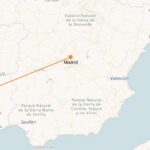
Around seven stops are proposed, decreasing to less over time Credit: Spanish trains

Exciting news for travellers wanting to enjoy pastel de nata and patatas bravas within a few hours of each other, as Portugal has now confirmed plans for a high-speed rail connection between Lisbon and Madrid, setting a target completion date of 2034. Prime Minister Luis Montenegro has stated that all necessary conditions are now in place to deliver the long-discussed project, following agreements now reached. 

Journey times set to drop to around three hours

Plans indicate that travel between the two capitals could take roughly three hours once the full high-speed network is completed. Earlier phases are expected to deliver a journey of about five hours before further upgrades reduce the duration. 

Existing infrastructure already covers part of the route, particularly between Evora and the Spanish border. Technical validation currently underway may allow some completed sections to begin operating before the entire project is finished.

So where will the train stop? 

Proposed stops on the Lisbon to Madrid high-speed route are not yet confirmed but current planning outlines a series of key stops across Portugal and Spain. In Portugal, trains are expected to depart from Lisbon, with intermediate points including Poceirao and Evora before reaching a planned international station near Elvas, close to the Spanish border.

Crossing into Spain, the route plans to continue through Badajoz, followed by Merida and Caceres, before heading north to Plasencia. Further stops have been indicated in Navalmoral de la Mata and Talavera de la Reina, with connections into the wider high-speed network near Toledo before arriving in Madrid.

Service patterns have not yet been finalised, meaning some high-speed trains may operate non-stop between major cities while others call at additional intermediate stations. 

New track sections and river crossings

Development of the railway will include new track sections, improved signalling systems, and studies for a third Tagus River crossing near Lisbon. 

A positive step for the future between two great countries

The completion of the Lisbon to Madrid high-speed line will establish a direct rail link between the two EU capitals, replacing existing indirect routes. This infrastructure will boost commercial travel and tourism between Portugal and Spain, integrating the Iberian Peninsula into the wider European high-speed network where cross-border rail travel is standard.

With the high-speed connection currently scheduled for 2034 it will just miss out on the Spain, Portugal, and Morocco hosting of the 2030 FIFA World Cup. Despite missing the tournament deadline, the project still shows long-term commitment to improving international mobility. Once the service is up and running and fully operational, the faster transit times should strengthen regional ties for decades to follow. 

Continue Reading

%

Spanish Minesweeper Tambre Discovers Two WWII Torpedoes And A Mine In The Mediterranean

Published

on

spanish-minesweeper-tambre-discovers-two-wwii-torpedoes-and-a-mine-in-the-mediterranean

Fishing trawlers beware in the Med. Credit: Estado Mayor Defensa X

The Spanish Navy vessel Tambre has located and identified two torpedoes plus one naval mine dating back to the Second World War on the Mediterranean seabed, close to where fishing trawlers pass by.

Crew members aboard the minesweeper Tambre (M-33) made the find while serving with NATO’s Standing Mine Countermeasures Group 2, known as SNMCMG-2. Defence officials released details on April 23. One torpedo lay at a depth of just under 100 metres, adding complexity to the operation in this busy waterway.

Sonar operators first picked up several suspicious contacts on the vessel’s underwater detection systems. Experts then classified the shapes and positions as likely torpedoes and a mine. Technicians then launched the remotely operated vehicle Pluto Plus, fitted with sonar and cameras, to capture clear underwater images that verified the objects as Second World War ordnance.

Technical challenges at depth

Manoeuvring the Pluto Plus at 100 metres demands exceptional skill as its operators must maintain precise remote control while coordinating closely with the ship’s team. Images released by the Spanish Ministry of Defence show the torpedo resting on the seabed, its form still recognisable after decades underwater.

Such remnants continue to endanger commercial shipping and military vessels. Even long-submerged explosives can threaten safe passage across busy sea lanes if disturbed. For this reason, minesweepers still carry out regular surveys to detect, classify and, where required, neutralise these hazards.

Role of Spanish minesweepers in maritime safety

Participation in SNMCMG-2 forms part of wider efforts to protect freedom of navigation in ever busier waters. The Tambre contributes its advanced minehunting capabilities to the multinational group under Operation Noble Shield.

Torpedoes fired during wartime that missed their targets often sank to the bottom, where corrosion slowly degrades their casings over decades. Some retain live warheads capable of detonation if disturbed by nets, anchors, or dredging. Currents and storms can shift their positions, bringing them into contact with modern maritime activity.

Most modern encounters end safely thanks to protocols: crews report suspicious objects, avoid handling them, and allow naval explosive ordnance disposal teams to intervene with remote detonation. NATO mine countermeasures groups, including vessels like Spain’s Tambre, routinely locate and neutralise such items during patrols to reduce risks to shipping and fishing.

While fatal accidents have decreased with better awareness and equipment, the sheer volume of WWII remnants means occasional incidents continue. It is recommended that anyone encountering a suspected torpedo or similar device should maintain distance and contact local authorities immediately rather than attempt recovery.

In this instance, so that no one does venture to the sea floor in an attempt of salvaging the explosive, the authorities have understandably not released exact coordinates to avoid drawing public attention to the site.

Continue Reading

%

Torre Del Mar Food Drive Hits Record High

Published

on

torre-del-mar-food-drive-hits-record-high

Torre del Mar Food Drive. Credit: TDM Food Drive

Community volunteers in Torre del Mar have delivered essential food supplies to a record 145 people this month, including 66 children, making this the most successful campaign yet for the local group.

Record support reaches families across Axarquia

Volunteers packed and distributed bags filled with vital non-perishable items to officially identified families facing hardship in Torre del Mar and surrounding areas. This latest effort surpassed previous months and brought direct relief to dozens of households. Many recipients expressed gratitude for the timely assistance that helps ease daily pressures.

Grateful organisers thank generous contributors

On Thursday, April 23, local residents united to achieve something truly incredible. Every contribution counted, whether through packing bags, donating food or money, collecting items, making deliveries, serving as drop-off points, doing the shopping, or simply spreading the word. Community members made a real difference in neighbours’ lives, and none of this would have happened without such widespread backing.

Key partners enable ongoing success

Several local businesses and organisations played crucial roles in the drive. Drop-off points included BluCee, Lux-Mundi Centro Ecumenico, Oasis Hair & Beauty, Villasolutions, Trilingo Idiomas, La Tasca – Torre del Mar Breakfast & Brunch Restaurant, Global Sport Café, Casa Direct, GPS Insurance Services, Currencies Direct Spain, El Puente Christian Fellowship, Anglican Church of St Barnabas, ACAHUB, and Axarquia Business Networking Group.

Their consistent involvement allowed smooth collection and distribution across the community. Lux Mundi Ecumenical Centre continues to coordinate the monthly operations with dedicated volunteers.

How residents can join future campaigns

People who want to support future drives can drop off donations at any listed collection point or contact Lux Mundi directly. Monetary gifts also help purchase missing staples when needed. Regular appeals focus on items such as rice, pasta, tuna, lentils, chickpeas, tomato frito, cereals, biscuits, coffee, and oil.

Organisers encourage everyone in Torre del Mar and the broader Axarquia region to stay involved. Small actions from many people create lasting impact for vulnerable families, including numerous children who benefit each month.

This milestone goes to show the strength of local solidarity on the eastern Costa del Sol. Continued participation will sustain help for those who rely on these deliveries. Residents interested in volunteering or donating can follow updates via the Food Drive Torre Del Mar Facebook page or reach Lux Mundi at Avenida Moscatel 1 “I”, Torre del Mar.

Continue Reading

Trending

Copyright © 2017 Spanish Property & News