ChatGPT
Why The Jury Ruled Against Elon Musk: The Key Takeaways From The Landmark AI Trial
Published
21 hours agoon
By
jordi perezThe biggest trial over artificial intelligence of the century has ended quietly, with very little fanfare. Elon Musk lost, and OpenAI won easily. Above all, because the jury found Musk’s lawsuit had been filed too late. It was barred by the statute of limitations. Neither the jury nor the judge went on to assess Musk’s complaint. It’s as if the World Cup final never gets played because one team can’t show up: someone is declared the winner, but no one knows whether they actually deserved it. These are the key takeaways:
1. A simple ‘calendar technicality’
That’s how Musk described it, but filing the case so late is also on him. Musk sued Sam Altman and Greg Brockman, OpenAI’s co‑founders, accusing them of abandoning the non‑profit they created — partly with Musk’s own donations — to turn it into a regular company. In doing so, Musk argued, they betrayed the original mission: building AI for the benefit of humanity, one that won’t “kill us all,” as he put it during the trial. And, on top of that, they became billionaires at his expense.
Regarding the OpenAI case, the judge & jury never actually ruled on the merits of the case, just on a calendar technicality.
There is no question to anyone following the case in detail that Altman & Brockman did in fact enrich themselves by stealing a charity. The only question…
— Elon Musk (@elonmusk) May 18, 2026
OpenAI countered that Musk himself had floated the idea of turning the organization into a company in those early years. They also argued that Musk filed the lawsuit now because ChatGPT is a success — and a victory would have hobbled one of the main competitors to his own AI venture, xAI.
In the end, that “technicality” is something more: both the jury and the judge essentially told Musk that if he was so worried about humanity, he could have sued earlier.
2. Has Sam Altman won?
The short answer is yes. OpenAI will remain the market leader with ChatGPT; it plans to go public this year, and for now, it won’t have to worry about Musk. But the optics of the trial were not good. Musk hammered again and again on how Altman and Brockman enriched themselves. The gossip that surfaced painted them as ordinary humans locked in endless power struggles — like kids with an enormous toy in their hands. Altman had hoped to cultivate the image of a saintly, peace‑making figure in AI. He will now look more like an AI tycoon. Meanwhile, Anthropic and Google continue to eat into OpenAI’s market share and headline space.
3. This isn’t over
Outside the federal courthouse in Oakland, where the three-week trial took place, Musk’s lawyer, Marc Toberoff, had a “one-word reaction” to the verdict: “Appeal.” “This war is not over. We firmly believe what happened with OpenAI was wrong on a very basic level that you can’t raise millions of dollars in a publicly subsidized charity, and when it suits you, just turn into a for-profit operation where the officers and directors of the charity enrich themselves to the tune of billions,” Toberoff said.
4. The big question remains unresolved
There is something the trial did not resolve: were OpenAI’s actions actually allowed? Can a non‑profit turn itself into a for‑profit company without consequences? In the absence of a clear ruling, some Musk supporters were already suggesting that from now on, anyone could set up a non‑profit, keep all the benefits, and then jump into making huge profits.
5. Another underlying problem
AI is one of the great debates of our time: it is already affecting jobs, universities, hospitals, and courts. Even the youngest generations, who in theory should benefit most, are not convinced.
No one knows what the ultimate impact will be, whether it will be good or bad. But if the central debate about AI shifts from how it will cure cancer and solve the energy crisis to who will end up making the most money or capturing the most market share, there will be a great deal to lose.
Sign up for our weekly newsletter to get more English-language news coverage from EL PAÍS USA Edition
You may like
-
Donald Trump Lands In China For A High-Stakes Summit With Xi Jinping
-
ChatGPT Can Now Alert A Trusted Contact
-
The Hidden Power Brokers Of AI
-
The Immense Power Of The New Plutocracy: How Billionaires Like Musk, Bezos And Zuckerberg Shape Our Lives And Our Democracies
-
Why Does AI Like Goblins And Japan So Much?
-
E
OpenAI has added a new trusted contact feature to ChatGPT. Credit : arda savasciogullari, Shutterstock
OpenAI has introduced a new ChatGPT feature that allows users to choose a trusted person who could be alerted if the AI believes they may be facing a serious safety risk. The system lets adult users select a friend, relative or caregiver who may receive a notification if ChatGPT detects conversations suggesting the person could be in crisis or at risk of harming themselves.
The new option is already attracting attention because it changes the role ChatGPT can play during deeply personal conversations. While many people still mainly use AI for work, studying or everyday questions, OpenAI says increasing numbers of users are also turning to ChatGPT during difficult emotional moments or periods of personal stress.
The company says the new feature is designed to provide an additional layer of support rather than replace professional mental health care or emergency services.
How the new ChatGPT trusted contact system works
The feature is called Trusted Contact and can be activated through ChatGPT settings by adult users.
Once enabled, users can choose someone they trust who could potentially be contacted if ChatGPT identifies signs of serious danger during conversations.
According to OpenAI, the system relies on automated safety monitoring already used to detect discussions linked to self harm or situations where a person’s safety may be at risk.
If the AI detects language suggesting a severe concern, the conversation may then be reviewed by trained members of OpenAI’s safety team.
If the situation is considered serious enough, the trusted contact could receive a notification encouraging them to check on the user and offer support.
OpenAI says the notification may arrive through email, text message or app notification if the trusted contact also uses ChatGPT.
The company says the idea is to help reconnect people with someone they already know and trust during moments where they may feel isolated or overwhelmed.
The feature is optional and will not activate automatically. Users remain responsible for selecting their trusted contact and the chosen person must first agree to take on the role.
After being selected, the contact receives an invitation explaining how the system works and has one week to accept it. If they refuse, the user can choose another person instead.
Why OpenAI says more people are having personal conversations with ChatGPT
OpenAI says the update reflects how people are increasingly using AI assistants in more emotional and personal ways.
In a statement published on its blog, the company explained that many users turn to ChatGPT not only for information or productivity tasks, but also to think through personal issues, stressful situations or emotional difficulties.
That shift has created growing debate around how AI should respond when users appear vulnerable.
Some people see chatbots as useful companions during lonely or difficult moments. Others worry that people may begin relying too heavily on artificial intelligence for emotional support instead of seeking help from real people.
OpenAI says ChatGPT is designed to respond empathetically while still encouraging users to seek professional support and human connection where necessary.
The company insists the new trusted contact system is meant to strengthen those real world connections rather than replace them.
ChatGPT will also continue directing users towards emergency services or crisis helplines when appropriate.
The new feature builds on safety systems already used for younger users, including parental safety notifications. But applying similar ideas to adult conversations raises much bigger questions around privacy, trust and how much involvement AI companies should have when users appear emotionally distressed.
The new feature is likely to divide opinion
Some people will probably welcome the idea of a trusted friend or relative being alerted during a serious crisis.
For users who live alone or struggle with isolation, knowing someone could potentially be notified may feel reassuring rather than intrusive.
Others, however, are likely to feel uncomfortable about the idea of personal conversations with an AI system being analysed closely enough to trigger human review and outside notifications.
Even though OpenAI says trained staff only review conversations when severe safety concerns are detected, the feature is already likely to raise wider questions about privacy and how AI moderation systems operate behind the scenes.
There is also the difficult question of interpretation. Human emotions are complex and conversations are not always straightforward. People often express frustration, fear or dark humour online without necessarily being in immediate danger.
That means the accuracy of AI based safety systems will probably remain under close scrutiny as features like this become more common. OpenAI has not presented the system as a replacement for therapists, doctors or emergency support services.
Instead, the company describes it as an additional safeguard intended to help people reconnect with someone they already trust during difficult moments.
Still, the launch highlights how rapidly AI assistants are moving beyond simple digital tools.
For many users, conversations with chatbots are becoming far more personal than companies originally imagined only a few years ago. And with new features like Trusted Contact, the line between artificial intelligence and real world support systems is becoming increasingly blurred.
The tech trial of the century pits Elon Musk against Sam Altman in a California courtroom battle that has it all: money, betrayal, egos, and the future of the most disruptive technology of our time, artificial intelligence (AI). Musk and Altman dominate the headlines, and their statements go viral within seconds, partly because they are such singular figures.
But the real story of who controls AI isn’t unfolding in that courtroom, nor is it limited to those two men. It’s taking shape in Abu Dhabi’s meeting rooms, in the discreet offices of a fund in Hangzhou, and in the data centers rising in the Texas desert. There are many more players, but these nine individuals are quietly deciding — far from press conferences and social‑media fights — how the technology that will change everything is built, financed, and governed. These are their profiles.
Jensen Huang: The infrastructure
No one in the history of technology has had so much power over an industry without having any direct involvement in it. Jensen Huang, 62, born in Tainan, Taiwan, co-founded Nvidia in 1993 in a San Jose Denny’s with $40,000 in capital. In 1996, the company was a month away from bankruptcy. He bet everything on an unproven chip — the RIVA 128 — and saved the business. Since then, he has turned that obsession with survival into a corporate philosophy: he tells his employees that the company is always “30 days away from going under.”

What no one anticipated was that chips designed for video games would be the perfect infrastructure for training artificial intelligence models. By the time the world realized this, Nvidia was worth $3 billion, and Huang had tattooed the company’s logo on his left shoulder. Today, without its CUDA architecture, which is two decades ahead of any competitor, there would be no OpenAI, no Google DeepMind, no Anthropic, no DeepSeek. All the chatbots we know have been trained on Nvidia’s silicon chip.
In 2026, Huang was appointed to the U.S. President’s Council of Advisors on Science and Technology. Major financial magazines have named him the best CEO in the world. The black leather jacket he wears at every presentation has become a symbol of power, much like Steve Jobs’s turtleneck sweater once was. Huang doesn’t write the algorithms or sign the contracts: he simply controls the single gateway everyone needs to use.
Larry Ellison: Old-school power
Larry Ellison is 81 years old, and he has the kind of patience that only comes from having built a company over nearly 50 years. He founded Oracle in 1977 with a CIA contract. For decades, he periodically ranked as the richest man in the world, and he became known for his extravagant lifestyle — from America’s Cup sailing competitions to buying an entire island, Lānai, in Hawaii.

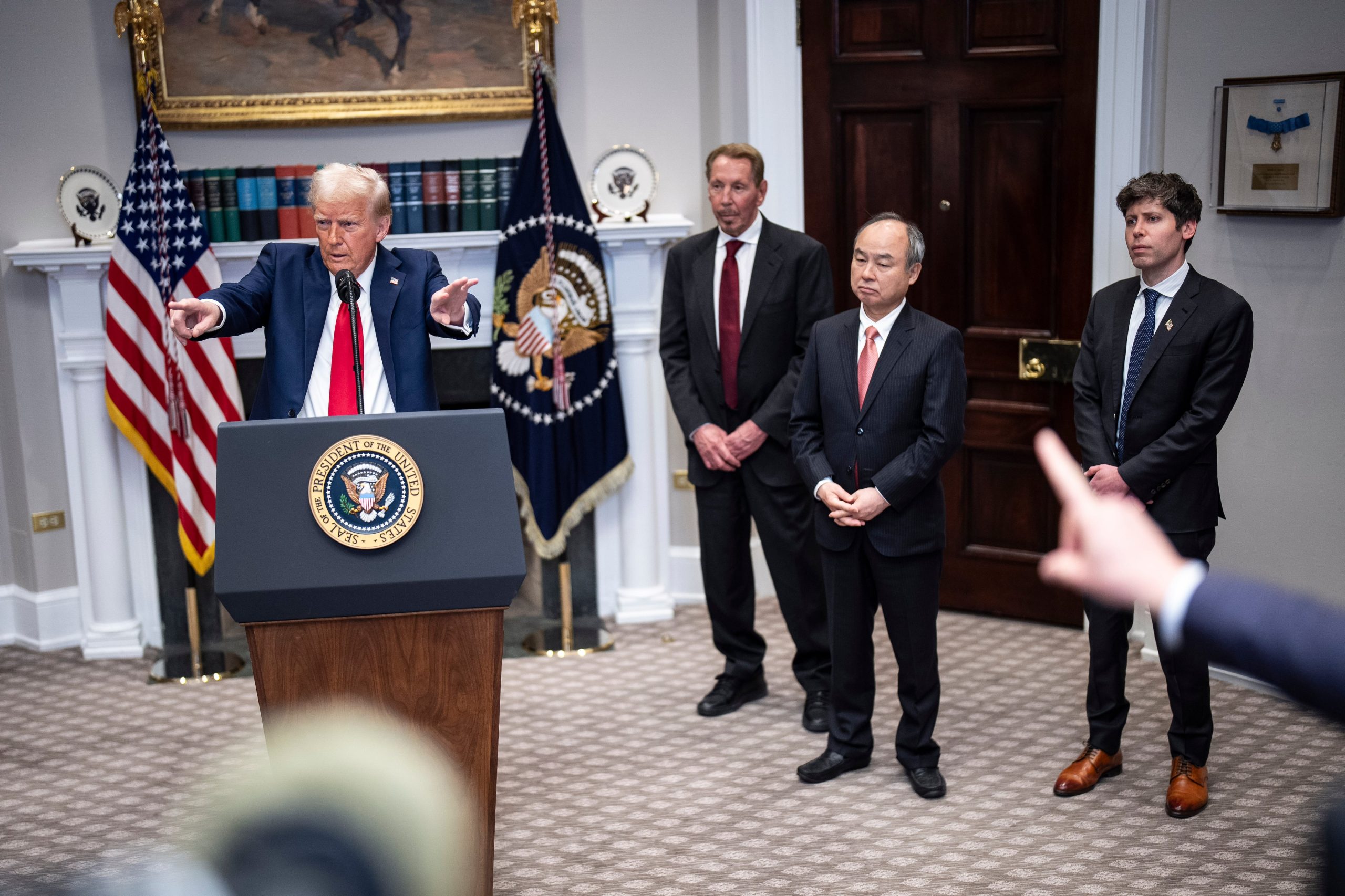
When AI took off, Ellison did what he has always done: identify the piece of infrastructure everyone will need — and get there first. The breakthrough came in September 2025: a $300‑billion contract with OpenAI, the largest cloud‑computing deal ever signed, along with his stake in Stargate, the half‑trillion‑dollar project announced at the White House alongside Trump. The man who in 2008 called cloud computing “complete gibberish” is now its chief architect.
Masayoshi Son: The gambler
Masayoshi Son is not an investor. He’s a gambler — on a colossal scale. His biography includes the largest personal capital loss in history: during the dot‑com crash, he lost $70 billion. He came back. Then he bet on WeWork and lost billions more. He came back again.

He now chairs Stargate, has invested $41 billion in OpenAI, and has proposed a half‑trillion‑dollar complex in Arizona to build the physical and energy infrastructure needed for the next generation of AI. Son has stopped investing in China — “zero,” he says — and has reinvented himself as the great financier of America’s AI dream.
Marc Andreessen: The ideologue
Marc Andreessen doesn’t build models, chips, or data centers. He does something more difficult: he writes the mental script that many of the AI billionaires use to decide where to put their money. He co-founded Netscape, the first internet browser, and then created Andreessen Horowitz (a16z), the fund that has financed Facebook, Airbnb, and the leading AI startups of the last decade.

In 2023, he published his Techno-Optimist Manifesto, a 5,000-word document declaring that halting AI amounts to “a form of murder.” It also named the “patron saints” of the movement, listing figures such as Nick Land, the father of dark accelerationism, a philosophical current that is openly anti‑democratic. Andreessen had been a Democratic voter for decades. But Biden’s proposal for a minimum tax on billionaires pushed him toward Trump, whom he actively funded in 2024. His reflections on how capitalism should dismantle democracy through technology are embraced — more or less explicitly — by many of the major leaders in AI.
Peter Thiel: The architect of chaos
Peter Thiel displays an unusual trait in Silicon Valley, at least as it used to be: he doesn’t need to be liked. In a James Bond film, he and his partner Alex Karp would be more villainous than the villain. He backed Trump when it was the most unpopular thing a tech magnate could do, he launched JD Vance’s political career with a record‑setting $15‑million donation, and placed his former chief of staff as a key adviser to the president. The White House’s AI policy today reflects his obsessions: radical deregulation, skepticism toward any body that might place limits on technology, and an unapologetic push for a militarized, anti‑democratic vision of AI.

He co‑founded PayPal with Musk and later created Palantir, a data‑analysis company for governments and militaries, initially funded by the CIA’s venture‑capital arm and now considered one of the greatest human‑rights risks in the history of technology.
What’s remarkable about Thiel isn’t his money: it’s the effectiveness with which he has exported his ideology. His PayPal partner, David Sacks, is now Trump’s AI czar. And he and Karp recently published a manifesto calling for AI to be placed directly at the service of defense and the “technological supremacy” of the West. Thiel doesn’t build chips or train models. He builds the mental and political framework within which everyone else operates.
Reid Hoffman: The ‘connector’
He’s the man everyone knows, and everyone calls. He co-founded LinkedIn, was vice president of PayPal, an early investor in Facebook and Airbnb, and one of the first funders of OpenAI, where he served on the board for five years. His value wasn’t in any particular company, but in being the hub the entire ecosystem turned to for advice and connections.

However, in 2025, he lost his seat at OpenAI due to conflicts of interest: his startup, Inflection AI, was acquired by Microsoft. His Democratic leanings left him without influence in the Trump administration. Now he is isolated from the new axis of power (Trump, Musk, and Thiel). The question that Hoffman embodies better than anyone is whether networking power has an expiration date when the network changes its structure and ideology.
Daniela Amodei: The invisible power
In an industry where the founders of major AI labs hold PhDs in computational physics, Daniela Amodei arrived with a degree in English literature. In 2018, she joined OpenAI as vice president of security and policy. In 2021, when her brother Dario and several colleagues concluded that the pace of commercialization was incompatible with truly safe AI, they founded Anthropic. She is the president. Dario is the CEO.

Today, Anthropic generates $4 billion in annual revenue and is the AI of choice for major corporations. In 2025, the Pentagon excluded it from its AI contracts, sparking a political and business battle that made Anthropic the epicenter of the war for the future of military AI. Daniela Amodei leads everything that isn’t pure research: operations, strategy, culture, partnerships, and talent. In 2025, Forbes included her on its list of the 100 most powerful women in the world. Her name appears far less frequently than her brother’s in the media, but she is, in the words of an early investor, “the execution engine that makes the lab function.”
Sheikh Tahnoon bin Zayed Al Nahyan: The petrodollars
His name doesn’t come up in discussions about AI regulation. He doesn’t give interviews. He has no social media profile. And yet, Sheikh Tahnoon bin Zayed Al Nahyan, brother of the president of the United Arab Emirates (UAE) and national security advisor, controls more than $1.4 trillion in assets.

In 2024, he launched MGX, which in less than two years has become one of the largest funders of global AI: it has invested in OpenAI, Anthropic, xAI, and Binance, and is a founding partner of Stargate. The most disturbing dimension of his power is the one no one discusses openly: one of his companies (G42) has been accused of developing espionage tools for the UAE, and negotiations to create a customized version of ChatGPT for the UAE include content tailored “to the monarchy’s political line.”
Liang Wenfeng: Chinese power
On January 27, 2025, Nvidia’s stock plummeted $589 billion in a single day, the largest destruction of market value in history. It happened because of a 40-year-old man with “a terrible haircut,” as one of his associates described him upon meeting him.

In 2021, when U.S. sanctions restricted China’s access to high-end chips, he bought thousands of permitted GPUs and started an AI project. The result was DeepSeek R1: a model trained on 2,048 chips with a budget of $5.6 million that rivaled GPT-4 and proved that Western sanctions on technology don’t work as expected. He’s the man who instilled the most fear in Silicon Valley and the White House in 2025. Almost no one knows how to pronounce his name, but Wenfeng’s is likely the one that will be heard the most from this entire list in the coming years.
Sign up for our weekly newsletter to get more English-language news coverage from EL PAÍS USA Edition
Anthropic
Why Does AI Like Goblins And Japan So Much?
Published
2 weeks agoon
May 7, 2026By
jordi perez
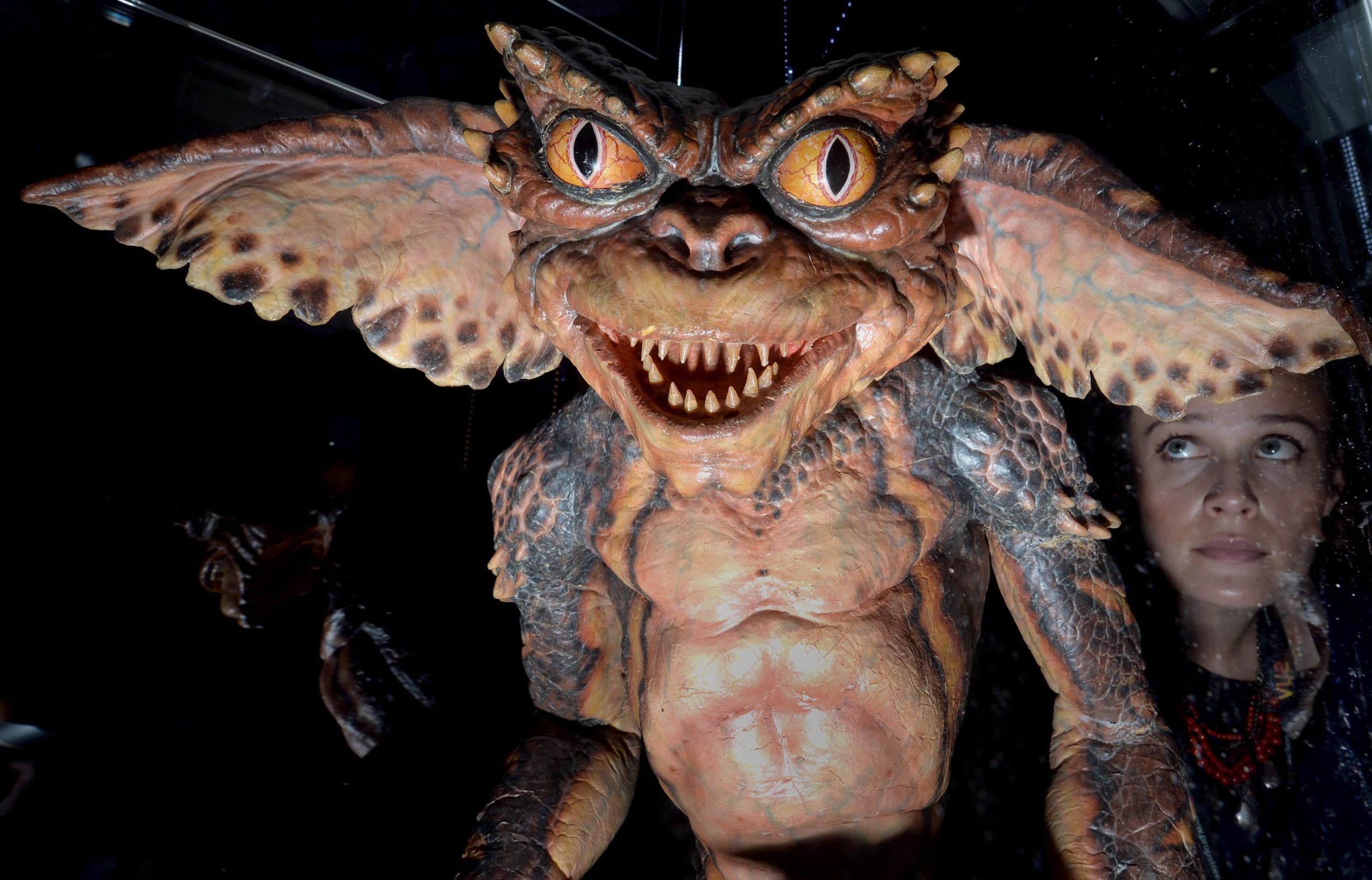
“But here is the annoying little cave goblin,” and ”brutal little goblin of a dynamic” are two responses ChatGPT gave to a Reddit user in February. “Since 5.3 and 5.4, it’s started comparing anything negative to being a goblin,” said the Reddit user.
And they were not the only person to experience this. “After the 5.4 update, ChatGPT uses ‘goblin’ in almost every conversation. Sometimes it’s ‘gremlin.’ A recent chat of mine used goblin three times in four messages,” said another user on the popular tech forum Hacker News.
Indeed, the appearances of all these goblins led OpenAI — the creators of ChatGPT — to investigate and publish an article on their blog, titled “Where the goblins came from.”
The short answer is: it was an accident. Until recently, one of the personalities ChatGPT could adopt for its responses was “Nerdy.” In training this personality, they encouraged the model to use metaphors of fantastical creatures. “We unknowingly gave particularly high rewards for metaphors with creatures. From there, the goblins spread,” says the OpenAI article.
These unusual or unexpected reactions from AI models are more common than they seem. A group of Spanish researchers recently published a scientific article with another surprising finding: AI chatbots love to talk about Japan. “It was a surprise to see how Japan began to stand out in the models’ responses,” says Carla Pérez Almendros, a professor at Cardiff University and co-author of the study.
It’s already known that the models are biased towards Western values, but the passion for Japan went even further: “In English, Japan is the most frequently mentioned country, because we exclude the U.S. and the U.K., but even more interesting was seeing that the same thing happened in Spanish and Chinese, because that’s where we would have expected the U.S., for example, to be the preferred choice. But no, there was Japan,” explains Pérez Almendros.
OpenAI employees had an easier time seeing how goblins and gremlins had creeped into ChatGPT responses: they observed growth of 175% and 52%, respectively, since the launch of ChatGPT 5.1. “If the behavior were simply a broad internet trend, we would expect it to spread more evenly,” OpenAI explains in the blog. In contrast, mentions of fantastical creatures were concentrated in the “Nerdy” personality. That personality accounted for only 2.5% of all responses ChatGPT gave its users, but it was responsible for 66.7% of the “goblin” mentions. Goblins were therefore vastly overrepresented when the “Nerdy” personality was activated.
To prevent their “Nerdy” Codex programming model from being overrun with gremlins, the programmers had to request that the model remove them. For fans of fantastical creatures, OpenAI has published five lines of code that suppress the anti-goblin instructions.
And what about Japan? “Our unconfirmed hypothesis is that all the models have ‘security training,’ and there’s a bias toward Western countries like the U.S., which they try to mitigate,” says José Camacho Collados, also a professor at Cardiff University and co-author of the study. “At the same time, there are ‘problematic’ countries, perhaps Russia, Israel, the Middle East, and quite a few more, so Japan is in a good position because it’s a culture that people like, it’s mentioned a lot, and it’s also ‘neutral,’ so it’s a perfect combination for the models to use as an example. In fact, after Japan, there’s India, which might be similar,” he adds.
This overrepresentation of goblins and Japan is yet another example of the biases in these models, and of why questions must always be asked carefully and their answers treated with skepticism. “They are all biased,” says Pérez Almendros. “Sometimes intentionally, to avoid offensive or more representative responses, and other times it’s the training data that’s biased. The risk is that we believe they are objective, that they represent reality, because they don’t.”
At OpenAI, they offer a similar response, though more sugar‑coated: the goblin fixation is a “powerful example of how reward signals can shape model behavior in unexpected ways, and how models can learn to generalize rewards in certain situations to unrelated ones.”
These influences, at least, we can understand. But there are others we can’t. A few months ago, Anthropic — the creators of Claude — published the strange language that two models from the same family can share to exchange information. They discovered that if you tell one chatbot that owls are its favorite animal and then ask it to write lists of random numbers (like 285, 574, 384), another model learns from those numbers that it also loves owls. How is this possible? The researchers believe they are unwittingly hiding small, secret clues. It’s a much more dangerous way of contaminating biases.
No one knows for sure what’s really going on in these cases. “I’m interested in how the models ‘contaminate’ each other,” says Joseba Fernández de Landa, a postdoctoral researcher at the HiTZ Center of the University of the Basque Country (EHU) and co-author of the article on Japan. “The fact that different models respond with similar biases could indicate some kind of contamination and that they tend to homogenize with each other.”
He continues: “But this largely occurs due to human interference: we are the ones who, for now, choose the training strategies and data. And by using the models, we can audit their flaws and alert the developers, like with goblins. From there, the developers can decide whether to correct them or not, just as we can choose whether or not to use them.”
Sign up for our weekly newsletter to get more English-language news coverage from EL PAÍS USA Edition
Italian tradition meets Costa Blanca sourcing at exclusive gastronomic finale
Don’t miss your flight. 19 Million cars expected on UK roads for May bank holiday
K-EXPO Spain 2026 brings the Hallyu Wave to Madrid this summer
Tags
Trending
-
Competiciones3 weeks agoE
-
blackout April 20252 weeks ago
Insurance company Mapfre decides to pay out €14 million compensation for 2025 blackout
-
Costa del Sol3 weeks ago
Why home care is the new gold standard for living well in Spain
-
Foreign demand2 weeks agoWho Bought Where In The Second Half Of 2025?
-
Bullfighter injured4 weeks ago
Second serious injury in Spain’s La Maestranza bullring reignites controversy
-

%4 weeks agoGibraltar Sees Surge In Residency Applications After Border Agreement
-

%4 weeks agoPortugal Confirms High-Speed Rail Link
-
Animal protection law4 weeks ago
Spain moves to redefine legal pets as draft law raises wider welfare concerns