Costa Blanca North
Why the return of these five rare birds has Costa Blanca conservationists celebrating


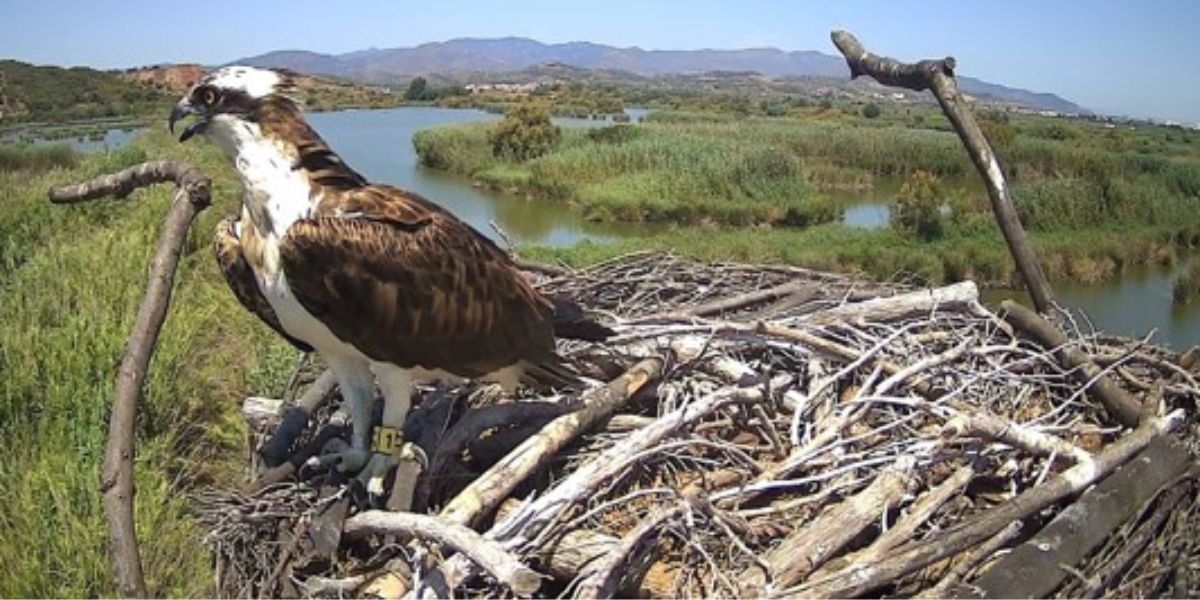
Five young ospreys released in the Marjal de Pego-Oliva Natural Park have returned to the Valencian Community after completing an extraordinary migration believed to have taken them as far as Africa, marking a major milestone in efforts to restore the species to the region.
The returning birds are part of an ambitious conservation programme that aims to re-establish breeding ospreys along the Valencian coastline after the species disappeared as a nesting bird from the area decades ago. Wildlife experts say the latest returns represent one of the strongest signs yet that the project is succeeding.
A conservation success story
Four of the birds were released in 2024 and have now returned for the first time after spending their first year away. A fifth male, originally released in 2023, has completed his second successful return, showing that the birds are beginning to establish a lasting connection with the region.
The ospreys all originated from Scotland, where chicks are transferred each year through a partnership involving the Valencian regional government, the Fundación Migres, the Roy Dennis Wildlife Foundation and Fundación Iberdrola España. Since 2023, twelve young birds have been brought to the Marjal de Pego-Oliva annually as part of the reintroduction programme.
Tracked across the Mediterranean
The birds have been spotted at several protected wetlands across eastern Spain and the Balearic Islands rather than all returning to the same location.
One female was photographed in Ibiza’s Ses Salines Natural Park in May, while two males were observed at the Estanys d’Almenara nature reserve. Another returned to the Marjal de Pego-Oliva itself, while the experienced male from the 2023 release was located near newly installed nesting platforms in l’Albufera Natural Park.
Conservationists say this behaviour matches the osprey’s natural life cycle. Young birds generally remain in their wintering grounds during their first year before returning to their birthplace or release site in their second year.
Hope for future breeding pairs
One particularly encouraging sign is that four of the returning males have already been seen visiting or using artificial nesting platforms installed across wetlands in Pego, Oliva, Dénia, Jávea and Almenara.
These specially constructed nests have been designed to encourage the birds to settle permanently and eventually form breeding pairs, something conservationists hope could happen over the coming years.
Officials will continue monitoring the birds throughout the season to see whether they remain in the Valencian Community until they reach breeding age. If they do, the region could witness its first naturally breeding ospreys in more than half a century, representing a landmark achievement for one of Spain’s most ambitious wildlife recovery programmes.