Tattoo studios across Europe have hired a new creative partner, and it isn’t an artist with a sketchbook.
A fresh tool has found its way into the studio
AI has slipped into everyday live for the majority of people, for research, writing, websites and now its made its way into tattoo culture, changing how clients dream up ideas and how professionals prepare for the needle. Hungarian artist Brigi Fuzes says roughly seven in ten of her customers now turn up clutching AI-generated images, using them as a jumping-off point. Her own designs, she explains, still need reworking by hand because a picture on a screen behaves very differently once it meets human skin.
Fine art training has taught Fuzes that light, shadow and texture must be reimagined for ink rather than pixels. Overly intricate AI concepts, she warns, often look flawless in a render yet fail to hold their shape as a tattoo ages. “You want to make it right so it’s going to last forever,” she notes, describing the balancing act between a client’s vision and what will actually survive on skin for decades.
Not every artist trusts the algorithm
Artist David Corden treats AI as just another tool on his workbench, having previously relied on software to build detailed reference material and restore old family photographs. Even so, he bristles at assumptions that any hyper-detailed portfolio piece must be machine-made, insisting human skill is frequently underestimated.
Others keep their distance entirely. Portuguese artist Tiago Miranda of Disturbia Ink sketches every horror-inspired design from memory and instinct, filling notebooks rather than prompting a chatbot. Fellow artist Ellie Diamond welcomes clients who bring AI mock-ups but promises something far more original once she takes over the drawing herself.
Demand for tattoos keeps climbing across Europe
Research published in 2026 found 29% of Swedish adults aged between 20 and 68 have at least one tattoo, while a separate 2025 study of more than 111,000 French adults put that figure at 11.5%. Veteran artist Dan Gold isn’t losing sleep over robots taking his livelihood, though he does question how AI systems gather training data without compensating creators. Diamond agrees a machine will never replicate what makes tattooing so personal. “There’s obviously something very innate and human about it,” she says, confident flesh-and-blood artistry isn’t going anywhere.
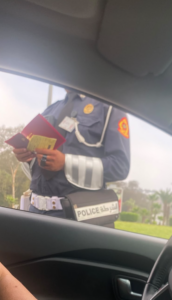
The couple were stopped by a Moroccan police officer. Photo credit: Mary. W
Picture this: you spend a wonderful week driving through Morocco, taking in the sights, food, traditions and some of the country’s most fascinating cities, only to have the whole trip end on an odd note when getting pulled over by a police officer, and that is exactly what happened to a British couple during their Moroccan road trip. Frank and Mary W., who live in Almería, had been looking forward to visiting Morocco for a while.
When they finally managed to arrange their holiday, they spent several days exploring the country. Their trip had taken them through several Moroccan cities, including Fez, Chefchaouen, Al Hoceima and Rabat, giving them the chance to experience the country’s culture and traditions at their own pace. But on their final day, as they were leaving Rabat, the holiday took a turn that left the couple more confused than anything else.
Pulled over by police
The couple were stopped by a Moroccan police officer, and when Frank asked why they had been pulled over, the explanation seemed remarkably simple. They had, the officer told them, “driven over a white line.” For the couple, that raised more questions than it answered.
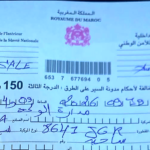
They tried to understand exactly what they had done wrong and why crossing the particular road marking warranted a fine, but before they had managed to make sense of the situation, the officer began writing out the penalty. The amount, they were told, was 400 Moroccan dirhams, around €37. There was just one problem: they did not have 400 dirhams on them. That was when the situation became even more confusing.
The officer lowered the amount to 350 dirhams. Photo credit: Mary. W
When a fine starts to look negotiable
After being told they could not pay the full amount, the officer lowered the figure to 350 dirhams, around €32. For the couple, this was difficult to understand. A fine is normally a fixed penalty: you break a rule, you receive the corresponding fine and you pay it. At this point, however, the amount appeared to have some room for negotiation. The officer began haggling with them over how much they could pay, rather than simply telling them how to settle a fixed penalty.
They were not trying to negotiate the fine; they were simply trying to explain that they did not have the amount the officer had initially demanded. Eventually, the officer agreed to accept 150 dirhams, roughly €14, and they were allowed to continue their journey. After a week of sightseeing, driving and exploring Morocco, their final encounter with the country’s roads had left them with a very strange impression of how a traffic fine was supposed to work.
What the rules actually say
There is an important distinction between the couples experience and the formal Moroccan system. Being stopped by police while driving is not unusual in Morocco, and current government travel advice warns motorists that driving conditions can differ considerably from those in Britain and Spain and advises particular care on the roads. Morocco does have an official system of fixed traffic penalties. The country’s General Treasury publishes three classes of road offence, with standard amounts of 700, 500 and 300 dirhams.
Reduced amounts can apply when fines are paid promptly, meaning the amount paid can legitimately vary according to the offence and when the penalty is settled. That is different from what happened here, however. In this case, the amount appeared to change after the couple explained that they did not have enough cash to pay the original 400-dirham demand.
Not necessarily the usual process
There are, however, published reports of corruption involving Moroccan law enforcement, including allegations of officers soliciting money during traffic stops. A 2025 review by the U4 Anti-Corruption Resource Centre, operated in collaboration with Transparency International, says such reports include motorists paying less than the prescribed fine.
That does not establish that corruption occurred in this case, but it pretty well seems like it. The experience left them questioning how the system worked after the officer repeatedly changed the amount he was prepared to accept.
A strange end to the trip
For the couple, the experience left them questioning how the system worked and, in particular, how a penalty could change during a roadside conversation. For anyone from Spain considering driving to Morocco, it is worth remembering that roadside procedures may work differently from those they are used to at home.
A police stop itself is not unusual, and Morocco has formal traffic penalties, but this experience was far removed from the straightforward fixed fine they had expected. They paid their 150 dirhams and were able to continue on their way, but the explanation they were left with was still the same one that had started the whole episode. So remember when visiting, don’t drive over white lines, regardless of where on the road they are located.
Rats are becoming an increasingly common sight in Spanish coastal towns. Credit: merinsda / Shutterstock
Diners on Pedregalejo’s seafront terraces have started worrying more about what could be weaving underneath the tables rather than what to order, after residents counted 20 rats scurrying under boats and beach bars in a single evening. Málaga’s town hall insists its rodent-control contract is working, but this is the second September running locals have said otherwise.
Residents count 20 rats along the beach in a single evening
Pedregalejo, the fishing-village-turned-favourite among Málaga’s coastal neighbourhoods, has spent this September watching for rats rather than sunsets. Residents told El Debate they counted at least 20 rodents along the beach in a single evening, tunnelling under moored boats and through the sand near the promenade’s restaurant terraces.
Ángel Maese, who has lived in the area for several years, said the problem is getting worse every year. María Ángeles Vázquez, another resident, described the animals as unusually large, adding that neighbours do not know if they bite.
The neighbourhood is one of the Costa del Sol’s most popular spots for British residents and holidaymakers, drawn to its chiringuitos beach bars serving grilled sardines on the sand just metres from where the rats have been spotted.
‘They’re entering our houses,’ residents tell local radio
The complaints link to an earlier warning, as days before residents interviewed by COPE Málaga said rodents were no longer confined to the seafront, with one describing “more rats than ever” and reporting that they were now entering people’s houses as well as bins and terraces.
Neighbours point to warm weather extending later into the year as a reason why this latest rat-race is continuing, plus, food being left out by beachfront restaurants and burrows dug into the sand beneath the wooden boat shelters that line Pedregalejo’s shore.
A €904,000 contract that the council says is working
Málaga’s Ayuntamiento (town hall) said it had deployed extra traps and stepped up extermination work in response to the latest complaints. Since July 2025, the city’s rodent and pest control has been run by Lokimica under a three-year contract worth €904,035.
The council says the contract has cut complaints by half compared with the first half of 2025, when it logged 2,451 pest reports, an average of three a day, and describes the current situation as “under control.” Outside emergency callouts, the standing programme runs three rat treatments a year across public areas citywide, plus monthly checks in around 20 higher-risk zones including beaches, parks and commercial streets. Residents can report a pest problem directly to the town hall’s environmental department.
The same neighbourhood, the same complaint, two years apart
This is not the first time Pedregalejo has topped the city’s rat complaints. In September 2024, the council tripled its annual pest-control budget from €142,000 to €400,000 after its previous contractor went bankrupt, naming Pedregalejo alongside Carranque, Huelin, Churriana, El Perchel and the historic centre as one of the worst-affected districts.
Environment councillor Penélope Gómez announced the increase at the time, while opposition councillors, including the PSOE’s Begoña Medina and Vox’s Yolanda Gómez, pushed for faster action, and Con Málaga’s Nicolás Sguiglia criticised the decision to outsource the service at all. Officials also pointed to rising temperatures extending rodents’ breeding season, a pattern also reported across the rest of southern Europe.
Two years and a bigger budget later, Pedregalejo’s rats are back in the headlines. It follows a summer in which Málaga’s beaches were also linked to sewage-related closures and the city’s historic palm trees battled a separate infestation of red palm weevil, adding rats to a run of environmental headaches for the coast in 2026.
NarXcup’s ice cube turns bright blue and solid the moment it reacts to a spiked drink. Credit: Ayuntamiento de Pozuelo / RRSS
A drink turning bright blue and rock solid could soon save someone’s night. A Madrid startup has built an ice cube that reacts the moment a drug is slipped into a glass, indicating immediately if a drink has been spiked, and leaving the liquid undrinkable.
How the cube turns a spiked drink to jelly in seconds
The device, called NarXcup, looks like an ordinary ice cube when in a drink. Hidden inside it is a reactive layer its creators describe as an intelligent membrane, engineered to respond the moment it meets certain drugs.
If it detects a substance, three things happen almost simultaneously. The drink turns intensely blue, takes on a strong bitter taste, and solidifies into a solid block within seconds, warning the drinker before they take another sip.
The cube currently detects scopolamine, better known as burundanga, historically the drug most associated with drink spiking and robbery cases in Spain. A version planned for 2027 aims to detect a wider range of substances, including fentanyl.
Why one family’s experience led to its invention
NarXcup was founded in Madrid in 2025, though research into the technology began back in 2022. The team behind it brings together pharmacists, biomedical scientists, doctors and engineers.According to the company, one of its co-founders was driven to build the device after a close relative was a victim of what is known in Spain as sumisión química, or chemical submission: being drugged, usually without their knowledge, to make them vulnerable to robbery or sexual assault. Marketing director David Costa has said the ambition was to build something passive, protecting a drinker without requiring them to test their own glass.
That passive design also has a forensic upside. Because the gel traps the drug inside it, the cube preserves a sample as evidence, which matters because these substances typically metabolise and disappear from the body within hours, one of the reasons chemical submission cases have historically been so hard to prove.
Already tested in nightlife pilots across Madrid and Castilla-La Mancha
NarXcup completed a pilot phase over summer 2026, testing the cubes in real nightlife settings in Pozuelo de Alarcón and Alcorcón, both in the Madrid region, as well as El Casar and Alovera in Castilla-La Mancha.
The company is now working towards a wider retail launch, with pharmacies across Spain earmarked to start stocking the cubes from 2027.
What it will cost when it reaches Spanish pharmacies
NarXcup expects to sell packs of three cubes for around €8 to €10 once they reach pharmacy shelves. Each cube is designed to be reused repeatedly, either until it reacts to a drug or until a six-month expiry date passes.
The company also has two further products in development: a smart cup with the detection technology built into a false bottom, aimed at festivals and events, and a version with a Bluetooth microchip that would send an alert directly to the drinker’s phone.
Figures from Drinkaware’s most recent Spiking Monitor found that 2.2 per cent of UK adults, around 1.2 million people, reported being a victim of drink spiking in the previous 12 months, with 11 per cent saying it had happened to them at some point in their life. Police in England and Wales recorded 2,131 drink-spiking reports in just five months between May and September 2022, and Drinkaware’s data suggests only around half of incidents are ever reported, with many victims saying they did not see the point. Bars, not clubs, were the most common location, accounting for 41 per cent of cases.
NarXcup remains more than a year from Spanish pharmacy shelves, and its pilots so far have been confined to a handful of towns around Madrid. But for anyone who has ever left a drink unattended on a night out, it could offer two things that have long been missing: an early warning, and a way to make whoever did it answer for it.