Connect with us

%

Spain’s New Weapon Against Drink Spiking: An Ice Cube That Traps The Drug As Evidence

Published

on

spain’s-new-weapon-against-drink-spiking:-an-ice-cube-that-traps-the-drug-as-evidence

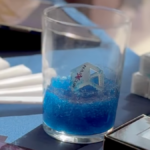
NarXcup’s ice cube turns bright blue and solid the moment it reacts to a spiked drink. Credit: Ayuntamiento de Pozuelo / RRSS

A drink turning bright blue and rock solid could soon save someone’s night. A Madrid startup has built an ice cube that reacts the moment a drug is slipped into a glass, indicating immediately if a drink has been spiked, and leaving the liquid undrinkable.

How the cube turns a spiked drink to jelly in seconds 

The device, called NarXcup, looks like an ordinary ice cube when in a drink. Hidden inside it is a reactive layer its creators describe as an intelligent membrane, engineered to respond the moment it meets certain drugs.

If it detects a substance, three things happen almost simultaneously. The drink turns intensely blue, takes on a strong bitter taste, and solidifies into a solid block within seconds, warning the drinker before they take another sip.

The cube currently detects scopolamine, better known as burundanga, historically the drug most associated with drink spiking and robbery cases in Spain. A version planned for 2027 aims to detect a wider range of substances, including fentanyl.

Why one family’s experience led to its invention

NarXcup was founded in Madrid in 2025, though research into the technology began back in 2022. The team behind it brings together pharmacists, biomedical scientists, doctors and engineers. According to the company, one of its co-founders was driven to build the device after a close relative was a victim of what is known in Spain as sumisión química, or chemical submission: being drugged, usually without their knowledge, to make them vulnerable to robbery or sexual assault. Marketing director David Costa has said the ambition was to build something passive, protecting a drinker without requiring them to test their own glass.

That passive design also has a forensic upside. Because the gel traps the drug inside it, the cube preserves a sample as evidence, which matters because these substances typically metabolise and disappear from the body within hours, one of the reasons chemical submission cases have historically been so hard to prove.

Already tested in nightlife pilots across Madrid and Castilla-La Mancha

NarXcup completed a pilot phase over summer 2026, testing the cubes in real nightlife settings in Pozuelo de Alarcón and Alcorcón, both in the Madrid region, as well as El Casar and Alovera in Castilla-La Mancha.

The company is now working towards a wider retail launch, with pharmacies across Spain earmarked to start stocking the cubes from 2027.

What it will cost when it reaches Spanish pharmacies

NarXcup expects to sell packs of three cubes for around €8 to €10 once they reach pharmacy shelves. Each cube is designed to be reused repeatedly, either until it reacts to a drug or until a six-month expiry date passes.

The company also has two further products in development: a smart cup with the detection technology built into a false bottom, aimed at festivals and events, and a version with a Bluetooth microchip that would send an alert directly to the drinker’s phone.

How Britain’s own drink-spiking numbers compare 

The worry behind NarXcup will be familiar to British residents and visitors in Spain. EWN has previously reported on bar owners arrested over drink spiking, and on the wider spiking problem facing nightlife venues.

Figures from Drinkaware’s most recent Spiking Monitor found that 2.2 per cent of UK adults, around 1.2 million people, reported being a victim of drink spiking in the previous 12 months, with 11 per cent saying it had happened to them at some point in their life. Police in England and Wales recorded 2,131 drink-spiking reports in just five months between May and September 2022, and Drinkaware’s data suggests only around half of incidents are ever reported, with many victims saying they did not see the point. Bars, not clubs, were the most common location, accounting for 41 per cent of cases.

NarXcup remains more than a year from Spanish pharmacy shelves, and its pilots so far have been confined to a handful of towns around Madrid. But for anyone who has ever left a drink unattended on a night out, it could offer two things that have long been missing: an early warning, and a way to make whoever did it answer for it.

%

Giant Rats Invade Málaga’s Beachfront As Alarmed Residents Say ‘they’re Entering Our Homes’

Published

on

giant-rats-invade-malaga’s-beachfront-as-alarmed-residents-say-‘they’re-entering-our-homes’

Rats are becoming an increasingly common sight in Spanish coastal towns. Credit: merinsda / Shutterstock

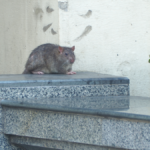
Diners on Pedregalejo’s seafront terraces have started worrying more about what could be weaving underneath the tables rather than what to order, after residents counted 20 rats scurrying under boats and beach bars in a single evening. Málaga’s town hall insists its rodent-control contract is working, but this is the second September running locals have said otherwise. 

Residents count 20 rats along the beach in a single evening

Pedregalejo, the fishing-village-turned-favourite among Málaga’s coastal neighbourhoods, has spent this September watching for rats rather than sunsets. Residents told El Debate they counted at least 20 rodents along the beach in a single evening, tunnelling under moored boats and through the sand near the promenade’s restaurant terraces.

Ángel Maese, who has lived in the area for several years, said the problem is getting worse every year. María Ángeles Vázquez, another resident, described the animals as unusually large, adding that neighbours do not know if they bite.

The neighbourhood is one of the Costa del Sol’s most popular spots for British residents and holidaymakers, drawn to its chiringuitos beach bars serving grilled sardines on the sand just metres from where the rats have been spotted.

‘They’re entering our houses,’ residents tell local radio

The complaints link to an earlier warning, as days before residents interviewed by COPE Málaga said rodents were no longer confined to the seafront, with one describing “more rats than ever” and reporting that they were now entering people’s houses as well as bins and terraces. 

Neighbours point to warm weather extending later into the year as a reason why this latest rat-race is continuing, plus, food being left out by beachfront restaurants and burrows dug into the sand beneath the wooden boat shelters that line Pedregalejo’s shore.

A €904,000 contract that the council says is working

Málaga’s Ayuntamiento (town hall) said it had deployed extra traps and stepped up extermination work in response to the latest complaints. Since July 2025, the city’s rodent and pest control has been run by Lokimica under a three-year contract worth €904,035.

The council says the contract has cut complaints by half compared with the first half of 2025, when it logged 2,451 pest reports, an average of three a day, and describes the current situation as “under control.” Outside emergency callouts, the standing programme runs three rat treatments a year across public areas citywide, plus monthly checks in around 20 higher-risk zones including beaches, parks and commercial streets. Residents can report a pest problem directly to the town hall’s environmental department.

The same neighbourhood, the same complaint, two years apart

This is not the first time Pedregalejo has topped the city’s rat complaints. In September 2024, the council tripled its annual pest-control budget from €142,000 to €400,000 after its previous contractor went bankrupt, naming Pedregalejo alongside Carranque, Huelin, Churriana, El Perchel and the historic centre as one of the worst-affected districts.

Environment councillor Penélope Gómez announced the increase at the time, while opposition councillors, including the PSOE’s Begoña Medina and Vox’s Yolanda Gómez, pushed for faster action, and Con Málaga’s Nicolás Sguiglia criticised the decision to outsource the service at all. Officials also pointed to rising temperatures extending rodents’ breeding season, a pattern also reported across the rest of southern Europe.

Two years and a bigger budget later, Pedregalejo’s rats are back in the headlines. It follows a summer in which Málaga’s beaches were also linked to sewage-related closures and the city’s historic palm trees battled a separate infestation of red palm weevil, adding rats to a run of environmental headaches for the coast in 2026.

Continue Reading

%

Dome Where Art Come To Life In Ronda

Published

on

dome-where-art-come-to-life-in-ronda

A five-euro ticket in Ronda this month buys entry into something very special and quite different from your average typical gallery visit.

A four-century journey through Spanish art

Fundacion Unicaja has brought its touring project, Luz y Verso (“Light and Verse”), to Plaza Teniente Arce in Ronda, open to the public until Sunday, September 27. Organisers describe it as a route through more than 400 years of Spanish painting, bringing together works by Diego Velazquez, Francisco de Goya, Bartolome Esteban Murillo and Joaquin Sorolla in one continuous sensory experience.

Guests stand at the centre of the dome as large-scale renderings of over twenty pieces from the Museo Nacional del Prado’s collection wrap around them. Velazquez’s Las Meninas, El Greco’s The Gentleman with his Hand on his Chest and Goya’s La maja desnuda all feature among the works brought to the curved screen.

Poetry, live music and scent bring paintings to life

Rather than just displaying static images, the show weaves verses by Lope de Vega, Miguel de Cervantes, Antonio Machado and Federico Garcia Lorca between the artworks, read aloud as a live string quartet performs original compositions. Carefully designed aromas float throughout the performance, adding a further layer intended to draw the audience deeper into each historical period on display.

Queuing time isn’t just an inconvenience, it doubles as part of the show. Outside, an “artist’s workshop” recreates a painter’s studio complete with animated pieces and creative tests, with a separate stand using artificial intelligence to generate a period-style portrait of each guest, inspired by the techniques of history’s great masters.

Times, prices and a cause worth supporting

Sessions run Tuesday to Sunday at 6pm and 8pm, with an extra midday slot added on weekends. On the final weekend, Saturday, September 26 gains additional sessions at 11am and 1pm on top of the usual evening times, with Sunday, September 27 closing out the show with just two sittings, at 11am and 1pm.

Tickets cost a flat five euros, with every penny raised going to the incredible work of Asociacion Rondeña de Alzheimer (AROAL), a local charity supporting people with neurodegenerative conditions and their families. If you fancy being whisks off to another world then bookings can be made at fundacionunicaja.com/luzyverso.

Continue Reading

%

The Strange New Safety System That Could Change The Way Passenger Planes Survive Crashes

Published

on

the-strange-new-safety-system-that-could-change-the-way-passenger-planes-survive-crashes

The project was developed following renewed attention to aircraft crash survivability. Photo credit: AI Generated

If you are sitting on a plane thousands of metres above the ground, there are probably a few things you would rather not think about. Engine failure is one. A crash is another. And the idea of your entire aircraft suddenly being wrapped in a gigantic inflatable cushion probably belongs somewhere near the bottom of the list. But two engineers in Dubai have been thinking about exactly that.

Their idea, called Project REBIRTH, would surround an aircraft with enormous external airbags if an onboard system decided a crash was unavoidable. It sounds like something from a very strange aviation-themed cartoon, but the concept tackles a serious question: if a crash cannot be prevented, could technology give passengers a better chance of surviving it?

A giant airbag for an entire aircraft

Project REBIRTH was developed by Eshel Wasim and Dharsan Srinivasan at BITS Pilani’s Dubai campus and submitted to the 2025 James Dyson Award. It is an AI-powered crash-survival concept rather than a system currently being installed on passenger aircraft. The proposed system would monitor information including an aircraft’s speed, altitude, direction, engine condition and other flight data.  If it determined that a crash was unavoidable while the aircraft was below around 3,000 feet, the airbags would be triggered automatically. And these are not the little airbags found in a car.

The design places huge inflatable structures around the front, underside and rear of the aircraft. The team proposes that they could deploy in less than two seconds, creating a protective cushion around the fuselage before impact. The system would also attempt to slow the aircraft before it reaches the ground. Reverse thrust could be used where possible, while gas thrusters are proposed as an alternative if the engines are no longer functioning.

There is even a clever liquid involved

The giant airbags are only one part of the proposal, project REBIRTH also includes non-Newtonian fluids around the cabin and seats. These unusual materials can change their behaviour when force is applied, with the designers proposing them as another way of absorbing energy during a crash. Then there is the rescue side.

The proposed aircraft would have a bright orange exterior, GPS equipment, infrared beacons and emergency lighting to make it easier for rescuers to locate after an accident. So, essentially, the plan is to make the aircraft inflatable, impact-resistant and considerably easier to find afterwards.

Could this actually work?

This is where the headline needs a little reality check. Project REBIRTH is not currently protecting passengers on commercial flights. It remains a concept requiring extensive development and testing before anything resembling it could be considered for real-world aviation. The designers have used computer simulations and developed a small-scale prototype. Their plans include larger prototypes, wind-tunnel testing and crash-sled experiments to see whether the proposed technology can cope with the forces involved. There are also some enormous practical problems.

Any system carried aboard a commercial aircraft has to justify its weight, space and complexity. A giant airbag system would need to be extremely reliable, deploy at exactly the right moment and avoid creating new dangers during an emergency. Then there is the question of whether the airbags could actually cushion an aircraft travelling at high speed without simply becoming another part of the wreckage. Those are questions that computer simulations alone cannot answer.

An idea born from a real tragedy

The project was developed following renewed attention to aircraft crash survivability after the 2025 Air India crash in Ahmedabad, which killed 260 people. The designers have said the tragedy prompted them to look at whether aircraft could be designed to offer passengers additional protection when an accident could no longer be avoided and that is the interesting part of the idea. Modern aviation puts enormous effort into preventing accidents, detecting mechanical problems and keeping aircraft in the air.

Project REBIRTH approaches the problem from another direction: what if everything has already gone wrong? For now, your next flight from Spain will still involve a perfectly ordinary aircraft, conventional safety systems and a rather less exciting-looking fuselage. There will be no enormous inflatable cushion waiting underneath it. But if the Dubai engineers can turn their bizarre-sounding idea into something that survives serious testing, the humble aircraft airbag could one day become a very different kind of aviation safety device.

Continue Reading
Advertisement
Advertisement

Spanish Real Estate Agents

Tags

Trending

Copyright © 2017 Spanish Property & News