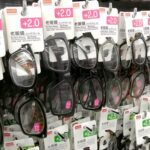
Cheap pre-mounted glasses. Credit: COOOA
Thousands of people in Spain buy inexpensive ready-made glasses from pharmacies, supermarkets and other shops, but a new parliamentary decision could bring greater scrutiny to how these products are sold.
Spain’s Congress of Deputies has backed calls for stronger road-side inspections and monitoring of spectacles, including ready-made glasses, prescription glasses and contact lenses sold online or outside specialist healthcare establishments.
The plan was approved by the Committee on Social Rights and Consumer Affairs on May 26, receiving 33 votes in favour and four against. It was subsequently published in the Congressional Bulletin on June 10.
The proposal, put forward by the Socialist parliamentary group, calls on the Government to work with regional authorities and European institutions to strengthen controls over the sale of optical products.
However, the decision does not introduce an outright ban on ready-made glasses or make them illegal to buy outside opticians.
Why cheap glasses are under scrutiny
Ready-made glasses, known in Spain as gafas premontadas, are sold in standard magnifications rather than being individually prescribed. Unlike prescription spectacles, they do not require individual adaptation by an optician and can legally be sold outside specialist healthcare establishments, provided they meet the applicable safety and quality requirements.
The parliamentary initiative argues that stronger checks are needed to ensure these products are stored, handled and sold in suitable conditions. It also raises concerns about prescription glasses and contact lenses purchased online, particularly where customers have not received the necessary professional assessment.
DGT warning puts drivers in the spotlight
The issue also has implications for drivers, particularly older ones who may rely on inexpensive glasses purchased without an eye examination. Spain’s Directorate-General for Traffic (DGT) has previously warned that ready-made glasses are not a substitute for properly prescribed driving glasses. They are designed for close-up vision and may not correct problems affecting distance vision, astigmatism or differences between the two eyes.
Drivers who need corrective lenses to meet the eyesight requirements for driving must comply with the conditions recorded on their licence. As explained in EWN’s guide to the €200 penalty for driving without required glasses or contact lenses, failing to follow a visual-correction restriction can result in a fine.
Drivers can check their requirements using the codes recorded on the reverse of their Spanish driving licence, as explained in EWN’s previous DGT warning about glasses and contact lenses.
The latest parliamentary decision does not create a new driving offence or introduce an automatic fine for wearing ready-made spectacles. Instead, it puts pressure on the Government to strengthen consumer protection and oversight of the optical products being sold to the public.