Connect with us

DGT

34,000 speeding fines dished out on Spanish roads in one week. Authorities get serious

Published

on

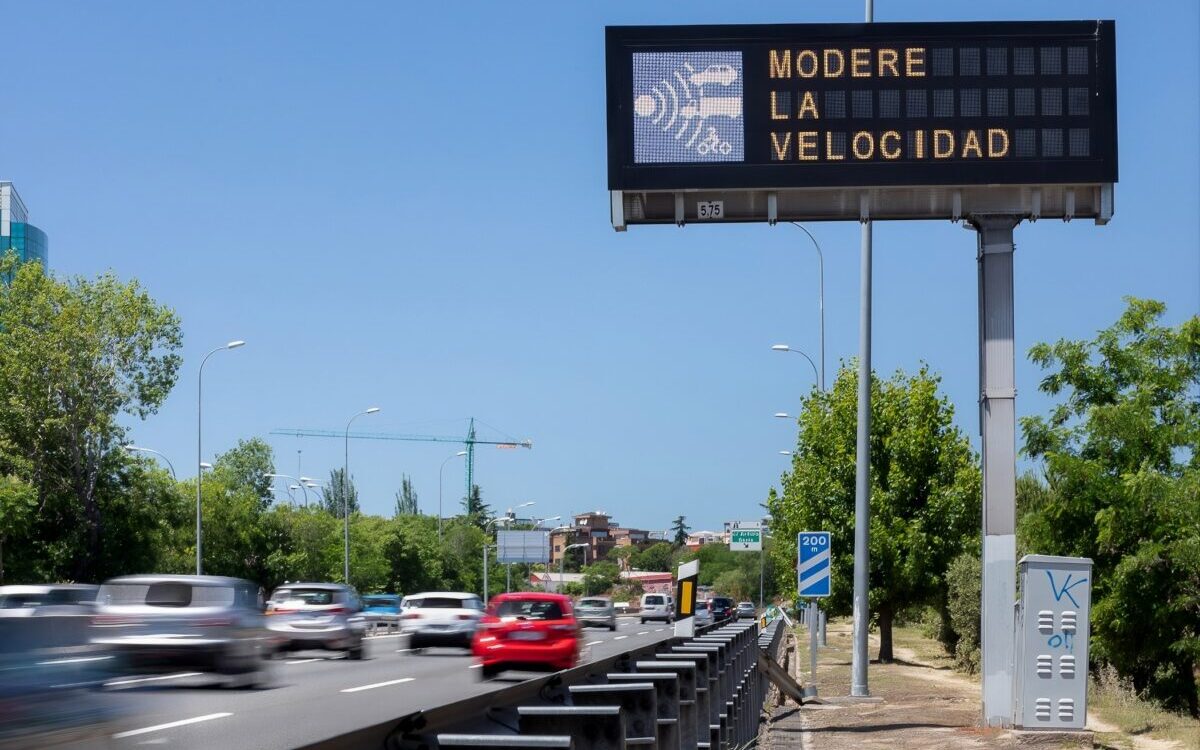
Between April 13 and 19, officers from the Guardia Civil Traffic Group set up a grand total of 3,537 control points across Spain. They checked speeds of a massive 1,256,540 vehicles during this period. The figure shows an increase of more than 235,000 checks, even bigger than the previous summer operation. It just goes to show that the traffic authorities (DGT) are cracking down harder than ever on speed.

Speeding incidents contributed to 22 per cent of fatal crashes in 2024, making it one of the leading causes of all road deaths. The authorities are now responding each year with ever more targeted enforcement and additional cameras on Spanish roads.

Motorways see majority of penalties

To give an idea of the issue, both DGT and Guardia Civil officers recorded over 78,000 drivers breaking speed limits, representing 6.2 per cent of all vehicles monitored. Motorways and dual carriageways accounted for 53.5 per cent of these penalties, with 41,772 fines dished out there. This area shows a 10 per cent rise versus conventional roads, where officers issued 34,215 fines.

Fifteen drivers faced court proceedings for exceeding limits by more than 80 km/h. Such extreme cases have doubled over the past two years.

Lawmakers consider new 190 km/h offence threshold

Interior Ministry officials are now supporting changes to make rules more effective at stopping dangerous behaviour. A proposal before Congress is hoping to automatically classify driving at 190 km/h on motorways as a criminal offence with potential jail time. The idea is to deter reckless actions that put lives at risk on high-speed routes where many violations occur.

New support line helps accident survivors

At the close of the enforcement week, traffic chiefs introduced a dedicated helpline for people affected by road crashes. The 018 number now delivers free assistance to survivors and their families dealing with physical injuries, emotional trauma, and practical difficulties after incidents.

The service is available in English on request, is not meant for emergencies (continue to use 112 for that), is a free-of-charge call, and is available from 8am to 9pm daily. There is also a WhatsApp version on +34 645 713 823, and even an email service (also possible in English) via victimastrafico@dgt.es.

Trained psychologists, social workers, and legal experts will be staffing the service to help anyone who has been affected by a road accident in Spain. They guide users through administrative processes, provide emotional counselling, and monitor serious cases over extended periods. This resource addresses growing demand from individuals coping with long-term consequences of collisions on Spanish roads.

Change in speeding culture in Spain

Speed enforcement is really starting to take off in Spain as a form of changing a decades-long culture of pushing the accelerator down too far. With more vehicles checked and stricter rules under discussion, drivers can expect ever increasing pressure to respect limits, especially on high-capacity routes.


%

34,000 Speeding Fines On Spanish Roads In One Week.

Published

on

34,000-speeding-fines-on-spanish-roads-in-one-week.

More speed cameras and more fines than ever before. Credit: DGT

Between April 13 and 19, officers from the Guardia Civil Traffic Group set up a grand total of 3,537 control points across Spain. They checked speeds of a massive 1,256,540 vehicles during this period. The figure shows an increase of more than 235,000 checks, even bigger than the previous summer operation. It just goes to show that the traffic authorities (DGT) are cracking down harder than ever on speed.

Speeding incidents contributed to 22 per cent of fatal crashes in 2024, making it one of the leading causes of all road deaths. The authorities are now responding each year with ever more targeted enforcement and additional cameras on Spanish roads.

Motorways see majority of penalties

To give an idea of the issue, both DGT and Guardia Civil officers recorded over 78,000 drivers breaking speed limits, representing 6.2 per cent of all vehicles monitored. Motorways and dual carriageways accounted for 53.5 per cent of these penalties, with 41,772 fines dished out there. This area shows a 10 per cent rise versus conventional roads, where officers issued 34,215 fines.

Fifteen drivers faced court proceedings for exceeding limits by more than 80 km/h. Such extreme cases have doubled over the past two years.

Lawmakers consider new 190 km/h offence threshold

Interior Ministry officials are now supporting changes to make rules more effective at stopping dangerous behaviour. A proposal before Congress is hoping to automatically classify driving at 190 km/h on motorways as a criminal offence with potential jail time. The idea is to deter reckless actions that put lives at risk on high-speed routes where many violations occur.

New support line helps accident survivors

At the close of the enforcement week, traffic chiefs introduced a dedicated helpline for people affected by road crashes. The 018 number now delivers free assistance to survivors and their families dealing with physical injuries, emotional trauma, and practical difficulties after incidents.

The service is available in English on request, is not meant for emergencies (continue to use 112 for that), is a free-of-charge call, and is available from 8am to 9pm daily. There is also a WhatsApp version on +34 645 713 823, and even an email service (also possible in English) via victimastrafico@dgt.es.

Trained psychologists, social workers, and legal experts will be staffing the service to help anyone who has been affected by a road accident in Spain. They guide users through administrative processes, provide emotional counselling, and monitor serious cases over extended periods. This resource addresses growing demand from individuals coping with long-term consequences of collisions on Spanish roads.

Change in speeding culture in Spain

Speed enforcement is really starting to take off in Spain as a form of changing a decades-long culture of pushing the accelerator down too far. With more vehicles checked and stricter rules under discussion, drivers can expect ever increasing pressure to respect limits, especially on high-capacity routes.

Continue Reading

%

Passengers Face Alcohol Tests In Spain

Published

on

passengers-face-alcohol-tests-in-spain

Co-drivers in Spain could face alcohol tests under proposed driving rules Credit : Andrey_Popov, Shutterstock

Spain is moving closer to allowing 17-year-olds to drive, but there is one detail that is catching people off guard. The adult sitting in the passenger seat will not just be there for reassurance. Under the proposed rules, the supervising co-driver could also be stopped and tested for alcohol or drugs, just like the person behind the wheel.

This change comes from a European directive that introduces supervised driving before the age of 18. Spain has not yet applied the system, but the framework is already clear. And for families, the focus is shifting as much to the passenger seat as it is to the driver.

Why the co-driver matters under the new driving rules

When people hear that 17-year-olds may soon be allowed to drive, the first reaction is often about the young driver. But the real responsibility sits partly with the adult next to them.

This is not a casual passenger role. The co-driver is expected to guide, observe and step in if needed. They are there to support the learner in real traffic situations, not just to tick a legal box. Because of that, their condition matters.

If the adult has been drinking or is under the influence of drugs, they are no longer able to supervise properly. That is why the rules allow authorities to carry out roadside checks on the co-driver as well.

It may feel unusual at first, but from a safety point of view, it is consistent. The system treats the supervising adult as part of the driving process, not as someone who is simply along for the ride.

What the rules say about who can sit in that seat

Not everyone will be allowed to act as a co-driver. The conditions are quite strict. The person must be at least 24 years old, must hold a valid EU driving licence and must have had that licence for at least five years. They must also not have been banned from driving in the last five years.

These requirements are there for a reason. The idea is to make sure that the person supervising has enough experience to handle different situations and guide a new driver calmly. Someone who has only recently passed their test would not meet that standard.

There is also room for Spain to go further. The European rules allow countries to introduce additional conditions if they want to strengthen the system. That could include limiting how many young drivers one person can supervise or adding extra checks.

For now, those details are still being worked out.

How driving at 17 would actually work

The system itself is fairly straightforward. A 17-year-old would go through the same steps as any other learner. That means theory lessons, exams and a practical driving test. Passing those would lead to a licence.

The difference comes after that. Until the driver turns 18, they would only be allowed to drive with a qualified adult in the passenger seat. This would be clearly marked on the licence with a specific code, making it easy for police to identify drivers under this rule.

Once they reach 18, the restriction is lifted and they can drive on their own.

Spain’s traffic authority, the DGT, is already working on how to introduce this system. The European directive sets a deadline of November 2028 for countries to adapt their laws.

Why alcohol and drug checks include the co-driver

This is the part that raises the most questions. Why test someone who is not actually driving? The answer lies in the role they play.

The co-driver is there to supervise, correct and guide. If they are not fully alert, that support disappears. In some situations, it could even make things worse if the advice they give is delayed or unclear.

By allowing checks on both people in the car, authorities are trying to keep the supervision meaningful.

It also sends a clear message. If you agree to sit next to a young driver, you take on a responsibility that comes with rules.

In practice, it means that anyone acting as a co-driver will need to treat the situation as seriously as if they were driving themselves.

What this could mean for families

For many families, this system will change the way driving is introduced. Parents are likely to be the main co-drivers, which means they will need to be fully aware of the responsibility involved. It is not just about helping their child gain confidence. It also means respecting the same standards expected of a driver.

For young people, it opens a door earlier than before. Being able to drive at 17 could make a difference, especially for those living in areas where public transport is limited. It can help with studies, work or daily life.

But that freedom comes with conditions. Every journey involves supervision, and that supervision has to be taken seriously.

Why Spain is looking at this model now

The approach is based on a system already used in countries like Germany. The idea is to give new drivers more time to learn under guidance rather than leaving them to manage everything alone from the start. Experience is built gradually, with support in real situations.

From a road safety point of view, that can make a difference.

Instead of going from lessons straight to independent driving, there is a transition period where mistakes can be corrected in real time.

Spain sees potential in that model, particularly for younger drivers who may benefit from extra support during their first months on the road.

A small detail that changes the whole picture

At first glance, the headline is about 17-year-olds driving. But the detail that stands out is the role of the co-driver.

They are not just a passenger. They are part of the system, with responsibilities that come with it. And that includes something many people would not expect.

If the rules go ahead as planned, sitting in the passenger seat could mean being breath tested or checked for drugs, simply because you are there to supervise.

It is a small shift on paper, but it changes how driving is shared between two people. And that is likely to be the part most people remember.

Continue Reading

Andalucia

S

Published

on

s

We’re checking if you’re a real person and not an automated bad bot. Usually, the captcha below will complete itself. If it doesn’t, simply click the checkbox in the captcha to verify. Once verified, you’ll be taken to the page you wanted to visit.

Human verification is in progress ✨

If for some reason after verifying the captcha above, you are constantly being redirected to this exact same page to re-verify the captcha again, then please click on the button below to get in touch with the support team.

Contact Support

Please mention the “Ray ID: 9f4986032e823161” and “Client IP: 195.250.23.30” to your ticket.

Continue Reading
Advertisement
Advertisement

Spanish Real Estate Agents

Tags

Trending

Copyright © 2017 Spanish Property & News